Lift the Burden.
Reduce the Swelling.
Living with a chronically swollen limb is exhausting. Whether arm swelling after cancer surgery or chronic leg manas, we provide CDT—the medical gold standard to safely decongest and soften tissue.
Why Diuretics ('Water Pills') Do Not Cure Lymphedema
Your lymphatic system is your body's ultimate waste removal highway, responsible for clearing fluid and proteins from your tissues. When lymph nodes are surgically removed (such as during breast cancer treatments), damaged by radiation, or compromised by vascular disease, a massive roadblock occurs. The lymphatic fluid gets trapped in your arm or leg, causing it to swell dramatically. Many patients are mistakenly prescribed diuretics (water pills) to fix this 'manas' (swelling). However, a diuretic only removes the water fraction of the swelling; it leaves behind a thick, sticky concentration of proteins. Over time, these trapped proteins cause profound inflammation, eventually hardening the soft limb into dense, heavy, fibrotic tissue.
Practitioner's Insight: When treating local patients for chronic lymphedema, we must fundamentally shift the approach from passive waiting to active fluid rerouting. A swollen limb is not merely 'retaining water'—it is suffering from a mechanical transport failure. In our clinic, Complete Decongestive Therapy (CDT) acts as the detour. We do not use aggressive massage. Instead, we use highly specific, skin-stretching Manual Lymphatic Drainage (MLD) to physically push the trapped, protein-rich fluid away from the blocked area and toward healthy, functioning lymph nodes located in other parts of your body, immediately followed by compression to prevent the fluid from rushing back.
Swelling We Expertly Manage
Is Complete Decongestive Therapy Right for You?
Compassionate Care for Chronic Swelling
In our clinical experience in Ilocos Sur, we frequently meet breast cancer survivors who feel abandoned. They beat the cancer, but are left with a heavy, swollen arm and no guidance on how to manage it. We are here to partner with you to reclaim your comfort.
Ideal indications
A heavy, swollen limb that does not go down after elevation.
Clothes, rings, or shoes suddenly not fitting on one side.
Tight, hard, red, or inflamed skin around the swollen area.
Persistent 'manas' where diuretics (water pills) have failed.
Recovery from cancer surgery or radiation involving lymph nodes.
Clinical precautions
Untreated acute skin infection or Cellulitis (must clear first).
Unmanaged Congestive Heart Failure (risk of volume overload).
Active Deep Vein Thrombosis (DVT / blood clot) in the limb.
The Reality of Lymphedema Management
We believe in empowering our patients through honesty. Lymphedema is masterfully managed, but it requires a standard of care:
It Requires Teamwork
Reducing the swelling is a partnership. If you do not wear your compression at home, gravity will pull the fluid right back down into the limb within 24 hours.
The Bandaging Phase is Bulky
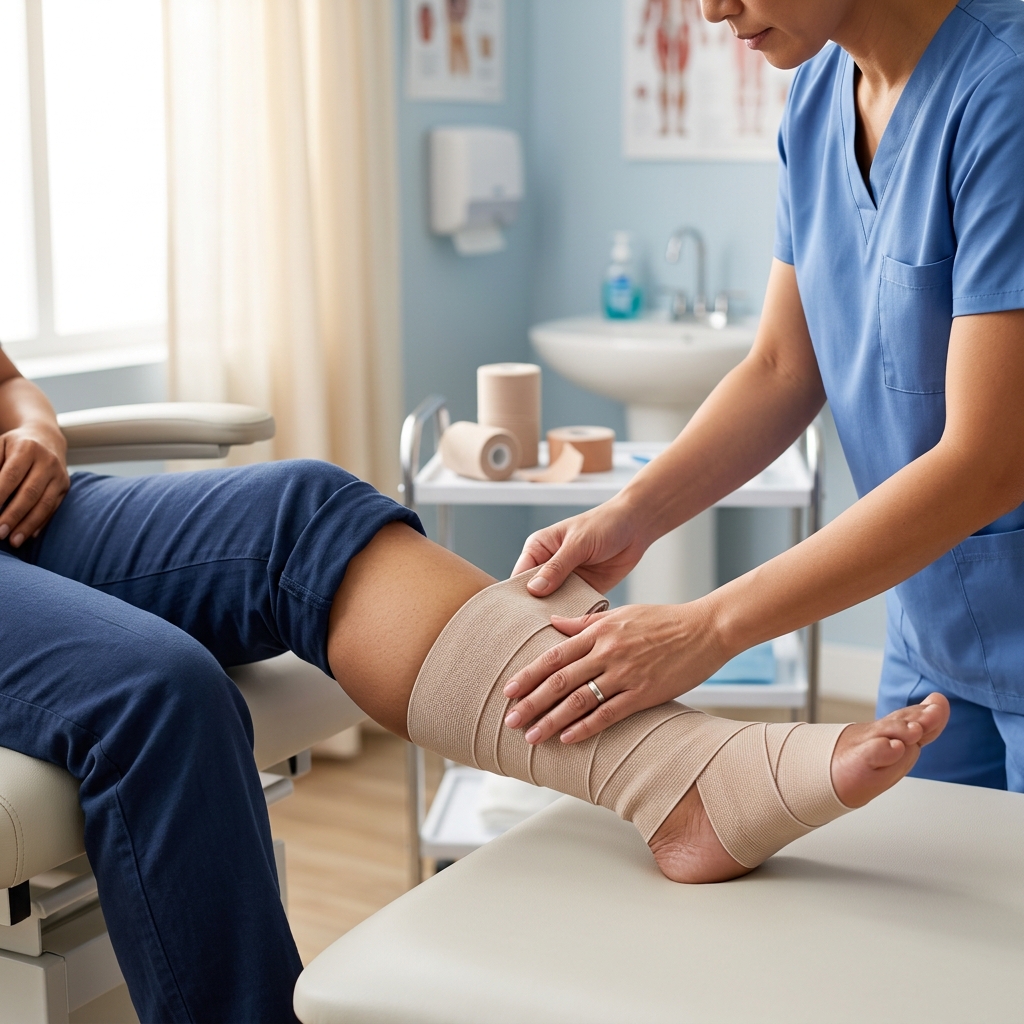
During the initial intensive phase, we wrap the limb in specialized foam and bandages. It will look bulky and feel strange for a few weeks—this is necessary to soften tissue.
Lifelong Skin Care
The skin over a swollen limb is fragile. You must become meticulous about moisturizing and treating even tiny scratches to prevent cellulitis.
Why Medical CDT Outperforms Spa Detoxes
Spa 'Lymphatic Drainage'
Light rubbing by untrained staff can collapse delicate lymph capillaries or push fluid toward removed nodes, trapping it further.
Complete Decongestive Therapy
Certified clinical protocol combining MLD, multi-layer bandaging, skin care, and movement. The only proven way to reduce volume safely.
Diuretics ('Water Pills')
Removes water but leaves thick proteins behind. These proteins cement together, causing permanent hardening (fibrosis) of the limb.
The Roadmap to Independence
Intensive Decongestion
Aggressive volume reduction through frequent clinic visits (MLD + Bandaging) until the limb plateaus at its minimum size.
Maintenance & Independence
Transition to custom garments and home care. We teach you self-MLD and provide check-ups to stabilize your long-term success.
Clinical Science & Technical Details
For our medical colleagues and highly analytical patients, we provide these transparent technical details on the pathophysiology and interventional protocols.
Advanced Systemic Screening: Cardiac Overload and Malignancy
Mobilizing massive fluid volumes back into venous circulation can overwhelm a failing heart. Compensated CHF is a relative contraindication needing strict oversight.
We also screen for 'Malignant Lymphedema' (rapid onset, proximal swelling) which requires immediate oncological clearance before starting therapy.
Managing Subcutaneous Fibrosis
Chronic presence of protein-rich fluid triggers fibroblast proliferation and polymerized protein structures (fibrosis).
We integrate targeted fibrotic mobilization and strategic foam inserts (Komprex) beneath bandages to physically break down these hardened tissues.
Inside the Procedure: The Law of Laplace in Compression Bandaging
Short-stretch bandaging follows the Law of Laplace (Pressure = Tension / Radius), requiring a distal-to-proximal pressure gradient.
Clinicians utilize synthetic cotton and foam to cylindricalize the limb, ensuring uniform working pressure and preventing dangerous tourniquet effects.
Transitioning from Short-Stretch to Medical Compression Garments
Elastic compression garments (Phase 2) are strictly for maintenance, not initial reduction. Applying them to edematous limbs can cause pain and tissue damage.
Transition only occurs once limb volume definitively plateaus after intensive Phase 1 bandaging.
Clinical Lymphedema Recovery Library
Expert guides on Complete Decongestive Therapy (CDT), complex swelling management, and long-term maintenance in Vigan City.
Manas sa Paa Gamot: Swollen Legs Treatment & Water Retention Relief
Intercepting the massive local search for 'manas' with clinical CDT solutions to physically pump fluid out.
Swollen Arm After Breast Cancer: Lymphedema Symptoms & Therapy
Specialized, empathetic recovery for breast cancer survivors managing post-op or radiation-induced arm swelling.
Edema vs. Lymphedema: Why Is My Leg Swollen and Red?
Identifying urgent cellulitis risks and differentiating standard cardiac edema from protein-rich lymphedema.
Lymphatic Drainage Massage Benefits: Does It Work for Lymphedema?
Comparing medical-grade CDT to spa massages and why diuretics often fail chronic lymphedema patients.
Compression Garments for Lymphedema & Wrapping Techniques
Guidance on short-stretch bandaging science and sourcing specialized medical garments in the Philippines.
Certified Lymphedema Specialist in the Philippines: Cost & Clinics
Transparent pricing and finding high-standard, certified clinical lymphedema care in Vigan City.
Hilot sa Manas vs. Clinical Lymphatic Drainage: Ano Ang Ligtas at Epektibo?
Why aggressive traditional hilot can be dangerous for swollen limbs compared to gentle medical MLD.
Paano Gumamit ng Compression Stockings at Bandage Para sa Manas
A Taglish guide to professional medical compression and the transition from bandaging to custom garments.
Ano ang Complete Decongestive Therapy? (Paano Ginagawa ang Lymphedema Rehab)
A simple, Taglish breakdown of the 4-step CDT process inside Dr. Rabara's clinic to remove fear of the unknown.
How We Reduce the Swelling
Meticulous Skin Care
We clean the limb and apply low-pH, medical-grade moisturizers to prevent cracking and infections.
Clinical Manual Lymphatic Drainage (MLD)
Gentle, rhythmic skin-stretching to pump trapped fluid toward healthy lymph nodes. It is painless and soothing.
Multi-Layered Compression Bandaging
Specialized 'short-stretch' bandages create a rigid wall that forces fluid out when your muscles flex.
Decongestive Exercise
Active, guided movements while bandaged create a massive pumping effect to dramatically shrink the limb.