Stop the Fall.
Preserve Their Independence.
For a senior, a fall is never just a bruise—it is a life-altering event. Our physician-led geriatric physical therapy and balance programs rebuild strength, restore confidence, and keep your aging parents safe at home.
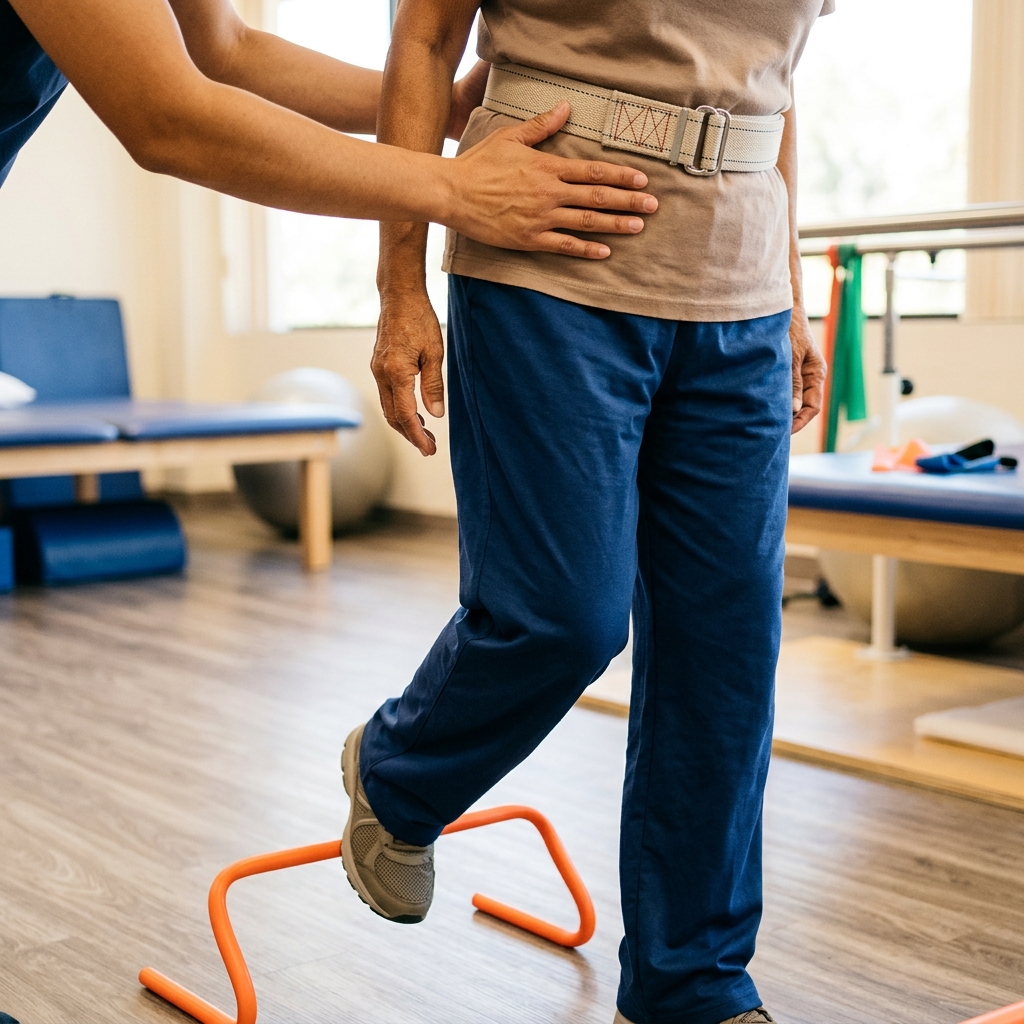
Protecting the Seniors We Love
As an adult child, watching your parents age is deeply stressful. You may have noticed them holding onto furniture to cross the living room, shuffling their feet to avoid tripping, or having "close calls" in the bathroom. You carry the constant dread of getting that phone call—the one saying they have fallen. For an elderly patient, a fall often leads to catastrophic fractures, lengthy hospitalizations, and a permanent loss of the dignity and independence they cherish.
Treating an aging body requires far more than generic exercise. Seniors frequently manage complex medical backgrounds, including hypertension, osteoporosis, and heart conditions. At Tera Care, safety is our highest mandate. As a medical doctor, Dr. Rabara rigorously screens your parent’s cardiovascular health, bone density, and current medications before a single exercise begins. We rebuild their balance safely, so you can stop worrying and they can start living confidently again.
Geriatric Conditions We Manage
Balance Therapy
Right for Your Parent?
We understand that aging parents value their independence and often hide their struggles because they do not want to become a 'burden' to their children.
Ideal indications
'Furniture surfing' (grabbing walls/chairs to navigate the house).
Suffered a recent slip, trip, or minor fall (even if uninjured).
Severely weakened after recent hospital discharge and bed rest.
Expressing a fear of leaving the house due to unsteadiness.
Clinical precautions
Currently experiencing acute, unstable cardiac symptoms (chest pain).
Completely bedbound/non-responsive without medical clearance.
Unmanaged system instability prevents any safe mobilization.
The Realities of
Senior Rehabilitation
Rebuilding an aging body is a delicate, gradual process. We prioritize slow, steady progress over aggressive, high-risk exercises:
Safety is Non-Negotiable
Your parent will never be left unattended. We utilize gait belts and parallel bars to guarantee they are 100% secure.
Muscle Fatigue is Expected
Waking up dormant muscles causes fatigue. We differentiate between healthy fatigue and dangerous pain.
Confidence Takes Time
The psychological fear of falling is just as debilitating as physical weakness. We celebrate small, functional victories.
Why Medical Care
is Different
Home Confinement
Encouraging sitting all day to avoid falling. Causes massive muscle wasting, making a severe fall inevitable when they do stand.
Physiatrist-Led Care
Dr. Rabara screens heart, bones, and meds. Therapists guide gentle, clinically secure balance protocols to restore dignity.
Generic Gyms
Standard gym equipment or unspecialized routines. Does not account for fragile bones or complex heart medications.
Phases of
Rebuilding Confidence
Assessment & Core Stability (Weeks 1-3)
Safety first. Gentle seated and supported exercises to wake up core and hip muscles without risk of a fall.
Dynamic Balance & Strength (Weeks 3-6)
Building the 'catch' muscles. Under strict supervision, we practice weight shifting and standing balance.
Functional Independence (Weeks 6+)
Real-world navigation. Practice stepping over obstacles safely to ensure independence in their own home.
In-Depth Clinical Science
Technical documentation regarding senior mobility, fracture risk, and physiological aging.
Explore the Clinical Science: Sarcopenia, Proprioception, and Polypharmacy
Sarcopenia—loss of Type II fast-twitch muscle fibers—impairs the rapid postural reactions needed to catch a trip.
We also evaluate Polypharmacy (anti-hypertensives, sedatives) which frequently induce orthostatic hypotension—a massive driver of falls.
Detailed Diagnostic Pathways for Geriatric Syndromes
For Osteoporosis, we focus on axial extension and avoid loaded spinal flexion to prevent compression fractures.
For Parkinson’s, we deploy high-amplitude neuromuscular strategies (LSVT BIG principles) to counteract gait freezing.
Bone Density Integrity and Fracture Mitigation Protocols
Mechanical fragility means the margin for error is zero. Generic gyms risk devastating hip fractures.
We utilize specialized perturbation training in a controlled environment, challenging limits of stability without ground impact.
Senior Safety & Wellness Guides
Expert resources on preventing falls, choosing walking aids, and rebuilding confidence in our aging loved ones.
Preventing Hip Fractures in Seniors: Why a Fall is Never Just a Bruise
Educate on the catastrophic nature of senior falls and the 'slippery slope' of mobility decline.
Home Safety Checklist for Seniors: Reducing Fall Risks in the Bathroom & Kitchen
A highly actionable checklist for adult children to 'senior-proof' their parents' home environment.
Balance Exercises for Seniors: Scientific Movements to Stop Furniture Surfing
Detail the clinical exercises used at Tera Rehab to rebuild walking confidence and leg strength.
Canes vs. Walkers: How to Choose the Right Walking Aid for Your Parent
Stop families from buying generic aides that increase risk. Medical criteria for walking aids.
Overcoming Kinesiophobia: Helping Your Parent Regain the Confidence to Walk
Address the psychological 'fear of falling' that leads to inactivity and more weakness.
Geriatric Physical Therapy Cost in the Philippines (Senior Wellness in Vigan)
Total financial transparency. Detail Senior/PWD discounts and investment in safety.
Takot Matumba ang Inyong Magulang? Iwas-Fracture Guide para sa mga Senior
Relatable symptom checking for local families using Filipino vernacular and 'Furniture Surfing' awareness.
Paano Palakasin ang Balanse ng Matanda? (Exercise sa Bahay at Clinic)
Simple, safe advice for families. Explain that weakness is not a permanent part of aging.
Magkano ang Therapy para sa Seniors sa Vigan? (Iwas-Pilay at Fall Prevention)
Direct booking and pricing guide for families in Northern Luzon looking for specialized clinical care.
The Safe Path to Independence
The Medical & Fall Risk Assessment
Dr. Rabara evaluates your parent's joint health, reflexes, and medication list. We conduct specific clinical balance tests to identify exactly why they are feeling unsteady.
The Balance & Strength Protocol
Using safety belts and parallel bars, our therapists gently guide your parent through exercises that strengthen the legs, improve posture, and retrain the brain's balance centers.
Home Safety & Independence
We teach your parent how to safely get out of bed, rise from a chair, and navigate stairs. We will also recommend the exact cane or walker they need, if necessary, to maximize their safety at home.