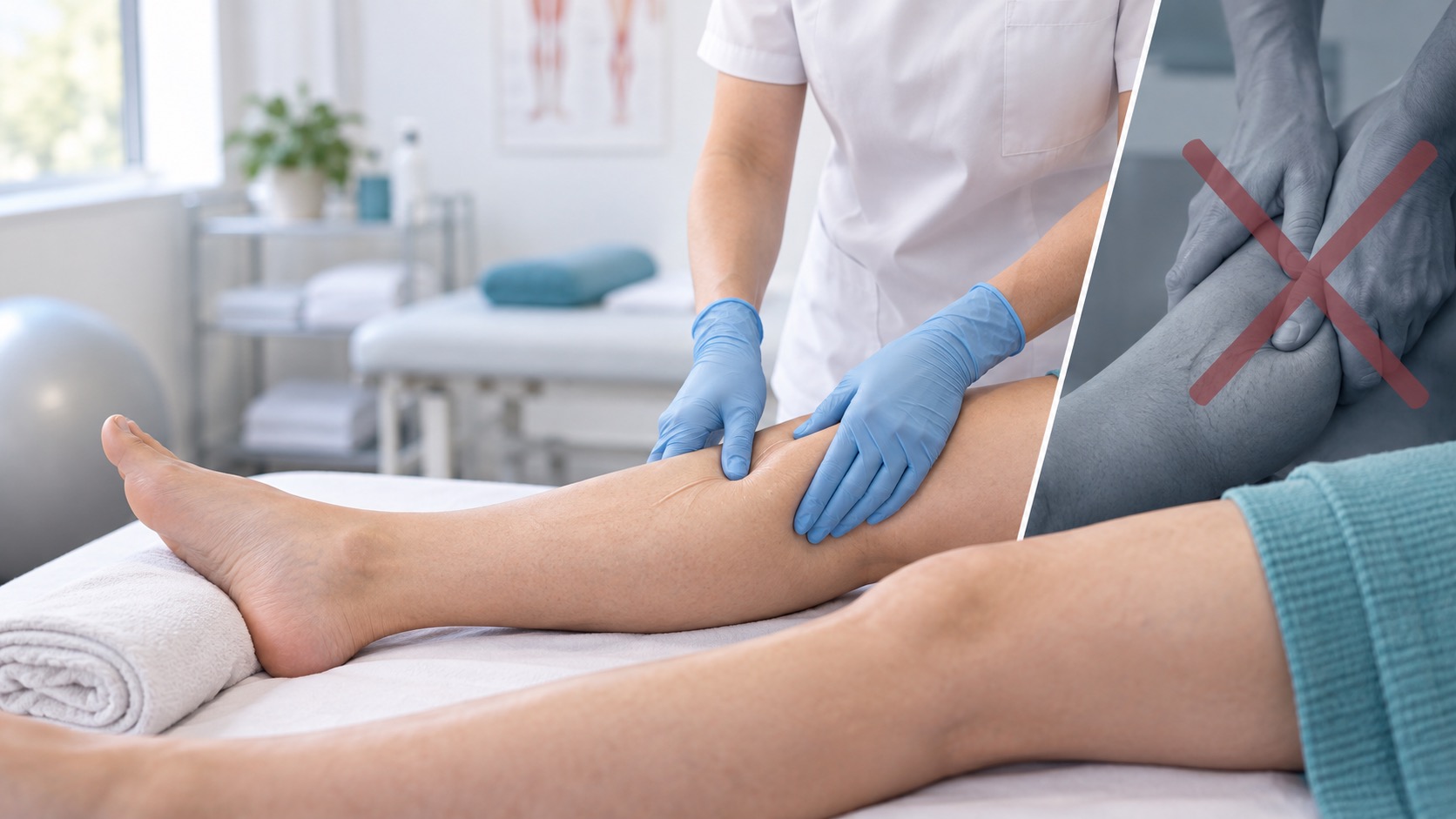
- — Ang “manas” ay patient-language para sa pamamaga, hindi diagnosis. Hindi lahat ng pamamaga ay lymphedema.
- — Clinical manual lymphatic drainage (MLD) is a light, specialized technique used in selected care plans. It is different from forceful or deep-tissue massage.
- — In breast-cancer-related lymphedema studies, MLD was associated with less pain, but pooled limb-volume and quality-of-life improvements were not statistically significant. It should not be promised as a stand-alone cure.
- — Sudden one-sided swelling, redness, heat, fever, severe pain, chest pain, or shortness of breath needs medical assessment before any massage.
- — For persistent swelling, the safer next step is an assessment that can identify the cause and decide whether MLD, compression, exercise, skin care, or another treatment fits.
If you call your swelling manas, the safer answer is not automatically “get a harder hilot” or “book lymphatic massage.” Manas describes a symptom, not a diagnosis. A clinician should look first for the cause and for signs that massage should wait. Clinical lymphatic drainage massage may be appropriate for some people after assessment, usually as one part of a plan that may include compression, skin care, exercise, and follow-up—not as a guaranteed cure (Ezzo et al., 2015; PMID: 25994425; Ramadan, 2024; PMID: 38300246). Sudden, hot, red, one-sided, or unexplained swelling needs medical evaluation before any massage.
This guide compares the treatment decision, not every hilot practitioner. A traditional practitioner may use different methods, and “massage” can mean anything from light touch to deep pressure. The clinically important questions are what pressure will be used, what condition is being treated, whether red flags were screened, and how the response will be measured. I would not diagnose lymphedema from the word manas alone.
Lymphatic drainage massage para sa manas: ano ang clinically safe?
The clinically safer choice is an assessment-first approach. The assessment should identify whether the swelling is likely lymphatic, venous, inflammatory, medication-related, or related to another medical problem before anyone decides on massage. When MLD is selected, the goal is not to force fluid out by pressing harder. It is intended to support lymphatic fluid movement through a light, adapted technique; whether it fits depends on the cause of swelling, the clinical findings, and safety screening (Ramadan, 2024; PMID: 38300246).
The gap between patient language and clinical taxonomy matters. “Manas” may mean a heavy foot after standing, pitting edema from venous disease, swelling after surgery, or a chronic limb that feels firm and tight. Those are not interchangeable. A patient who searches massage para sa manas may really be asking, “Can somebody safely touch this swollen body part?” The answer changes when there is fever, skin breakdown, a possible clot, heart failure, kidney disease, cancer treatment, or a sudden change.
Contrarian point: a stronger massage is not automatically a better drainage treatment. Clinical MLD is described as a light, specialized technique; the appropriate pressure depends on the diagnosis, tissue condition, and safety screening. The clinical decision changes from “How much pressure can I tolerate?” to “What medical problem are we trying to influence, and what signs would make touch unsafe?”
Manual lymphatic drainage: bakit iba ito sa deep-tissue hilot?
Manual lymphatic drainage is a specialized hands-on method that uses light, rhythmic skin movement rather than deep pressure or a goal of making the patient sore. It is not a relaxation label, a detox claim, or a way to prove that a treatment is working by making the patient sore. The tissue state, diagnosis, and treatment goal determine whether it belongs in a plan.
Hilot and clinical lymphatic drainage are not the same decision
Compare the technique, safety process, and clinical purpose before choosing a provider.
Best for: A trained practitioner may use a traditional technique for a different goal, but unexplained swelling must be assessed before deep pressure is applied.
Safety limit: Pain, new redness, or worsening swelling should not be treated as proof that drainage is working. Forceful massage should not delay assessment for infection, clot, heart, kidney, or venous causes.
Best for: A gentle, skin-focused technique considered for selected lymphatic problems, often alongside compression, skin care, exercise, education, and review.
Safety limit: It is not a universal treatment. The evidence is mixed, MLD may not be necessary for every plan, and safety screening remains essential.
The difference is not a judgment about culture. Hilot may be familiar or easier for some patients to arrange around work, family, distance, and cost. Those practical reasons deserve respect, but they do not remove the need to assess unexplained or changing swelling. The safety boundary is that a familiar treatment should not replace assessment when the swelling pattern is new, painful, hot, red, rapidly worsening, or associated with systemic symptoms.
Contrarian point: “gentle” is not a synonym for “weak.” MLD is described as a gentle, adapted technique, not a test of how much pressure a patient can tolerate. If swelling is infected, acutely changing, or caused by a different circulatory or systemic problem, increasing pressure does not replace diagnosis and appropriate treatment.
What is lymphatic drainage massage? Ano ang ginagawa nito?
Lymphatic drainage massage is a manual technique in which carefully controlled, light skin movement is intended to support lymphatic fluid movement. It is not a universal sequence to copy from a generic video. A clinician adapts the technique to the person's history, skin condition, swelling pattern, and clinical plan.
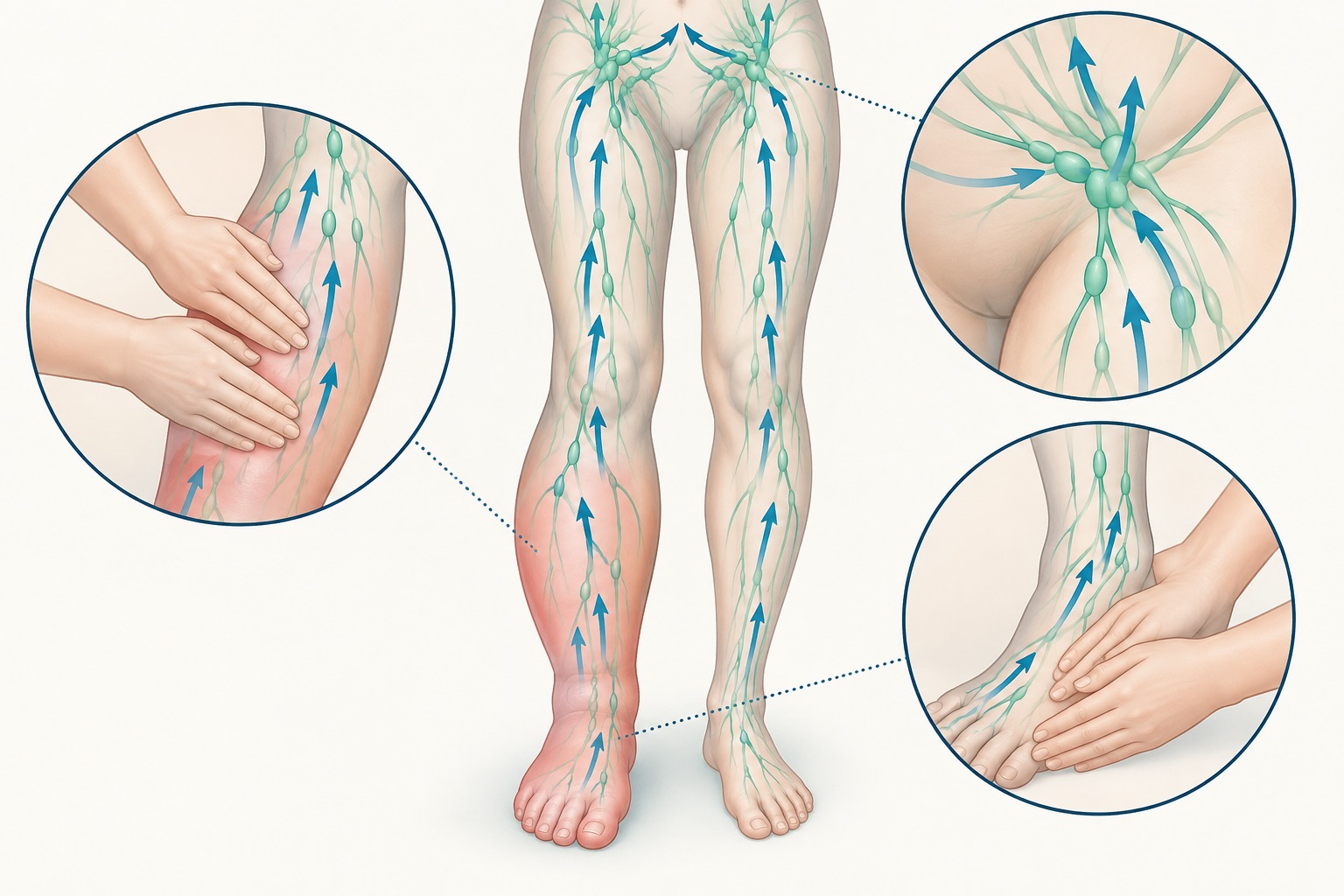
MLD is intended to support lymphatic fluid movement, but the response is not predictable from the treatment name alone. Studies in breast-cancer-related lymphedema have not shown a consistent pooled improvement in limb volume or quality of life, and MLD is generally discussed as part of a broader plan rather than as a stand-alone cure (Lin et al., 2022; PMID: 35370085; Ezzo et al., 2015; PMID: 25994425).
Contrarian point: a session that makes the limb feel lighter for a few hours does not prove that the underlying condition has resolved. Symptom relief can be useful, but the clinician should agree on a measure of change and review symptoms, function, and recurrence over time.
Lymphedema massage: kailan ito maaaring isama sa treatment plan?
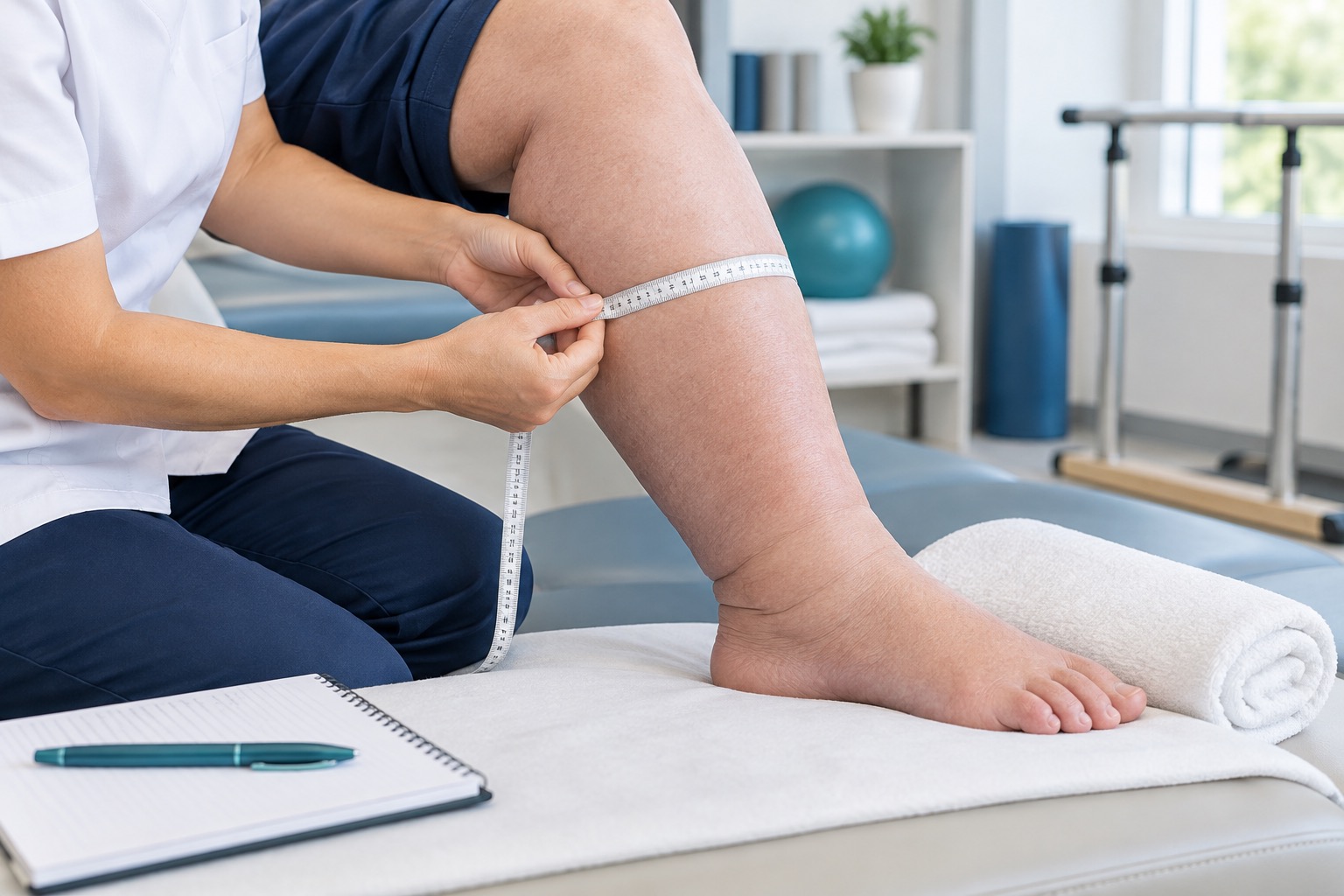
MLD may be included when the examination supports a lymphatic problem and the risks have been screened. It should not stand alone as a promise to cure lymphedema. Complete decongestive therapy, or CDT, commonly places MLD beside compression, skin care, and lymph-reducing exercise; the framework has an active reduction phase and a maintenance phase (Ezzo et al., 2015; PMID: 25994425). For breast-cancer-related lymphedema, reviews continue to describe CDT as a standard-of-care framework, while also noting problems with measurement agreement and long-term self-management (Donahue et al., 2023; PMID: 37103598).
The evidence needs honest limits. A systematic review and meta-analysis of breast-cancer-related lymphedema trials found an association with improved pain, but it did not find statistically significant pooled improvement in limb volume or quality of life (Lin et al., 2022; PMID: 35370085). A Cochrane review found small and varied trials, inconsistent volume outcomes, and no reliable basis for promising the same response to every patient (Ezzo et al., 2015; PMID: 25994425). People with different causes, severity, and duration of swelling may not respond the same way, and another cause of edema may need a different plan.
In practice, progression is not “more pressure and more sessions.” Progression means the limb remains safe, pain and heaviness are not escalating, skin is intact, the patient can follow the compression or movement plan, and the chosen measure is stable or improving. If those conditions are absent, the plan should be modified or the diagnosis revisited.
Clarify the cause before choosing massage
A Vigan assessment can separate lymphatic swelling from conditions that need a different first step.
Is lymphatic drainage massage safe? Sino ang kailangang ma-assess muna?
MLD was reported as well tolerated in the small breast-cancer-related lymphedema trials included in a Cochrane review, but that limited finding does not mean lymphatic drainage massage is safe for everyone (Ezzo et al., 2015; PMID: 25994425). Before treatment, I would want to know whether the swelling is new, one-sided, hot, red, rapidly increasing, linked to fever, or associated with chest symptoms. I would also ask about possible clot symptoms, recent surgery, cancer treatment, heart failure, kidney disease, uncontrolled blood pressure, medications, skin wounds, and infection.
Kailan dapat ipagpaliban ang massage?
Postpone self-massage and seek medical advice when the limb is acutely inflamed, red, hot, very painful, or accompanied by fever. Do not massage over suspected or untreated deep-vein thrombosis. People with unstable heart or kidney conditions need coordinated medical advice because the underlying systemic condition may require medical management before massage. These are screening decisions, not diagnoses made by an online article.
- Urgent symptoms: sudden one-sided swelling, chest pain, shortness of breath, fainting, or new severe calf pain.
- Possible infection: spreading redness, heat, fever, chills, drainage, or rapidly worsening tenderness.
- Unexplained persistent swelling: swelling that returns, spreads, or changes after a procedure or medication deserves planned medical assessment.
- Skin and circulation concerns: open wounds, fragile skin, new numbness, cold or pale toes, or color change or severe pressure from a garment require the plan to be paused and reviewed.
Contrarian point: “safe in studies” is not the same as “safe for this person today.” Research participants had defined conditions and monitoring. A patient may arrive without prior records, with several possible causes of edema and limited access to imaging. That makes focused history, examination, referral, and clear escalation rules more important, not less.
Lymphatic massage side effects: alin ang mild at alin ang red flag?
The expected response should be discussed before the session. Increasing pain, new redness or heat, rapidly worsening swelling, or breathing symptoms should not be treated as proof that the massage is “working.” Those changes can indicate that the technique, timing, pressure, or diagnosis needs review.
Masakit ba ang lymphatic massage?
Clinical MLD should not require a patient to tolerate severe pain. If the session hurts, tell the provider immediately. The tissue may be inflamed, infected, sensitized, or affected by a separate condition. The provider may reduce pressure, stop, inspect the skin, reassess circulation, or refer for medical evaluation. In the trials summarized by Ezzo and colleagues, the evidence was limited by small samples and varied methods, so a painful personal experience cannot be converted into a general claim that all MLD is unsafe (Ezzo et al., 2015; PMID: 25994425).
Hilot o clinical lymphatic drainage: paano pipili nang mas ligtas?
Choose the provider and technique that match the clinical question, not the treatment label alone. Ask what the practitioner thinks is causing the swelling, what conditions would make them stop, how pressure will be adjusted, and what result will be monitored. If the answer is only “mas madiin para lumabas ang tubig,” the plan has not yet explained the diagnosis or safety boundary.
A traditional practitioner may still be part of a patient's support system, but coordination is safer when persistent or changing swelling is assessed by a clinician first. The choice may also be constrained by distance, cost, work, and family advice. Depending on where you live, you may need to travel to a clinic or referral center, so consider bringing medication lists, cancer or surgery records, optional photos showing the change, and a timeline of when the swelling started. A clear first assessment may help you avoid repeating a painful treatment without first clarifying the cause.
Ano ang dapat kasama sa lymphedema care plan?
A reasonable plan usually has a diagnosis, a measurable goal, a safe technique, and a review date. If lymphedema is supported, CDT may combine MLD with compression, skin care, exercise, education, and maintenance rather than treating massage as a stand-alone cure (Ezzo et al., 2015; PMID: 25994425). Compression may be included in the plan, but the garment or bandage must be selected for the person's circulation, skin condition, limb shape, diagnosis, and treatment phase.
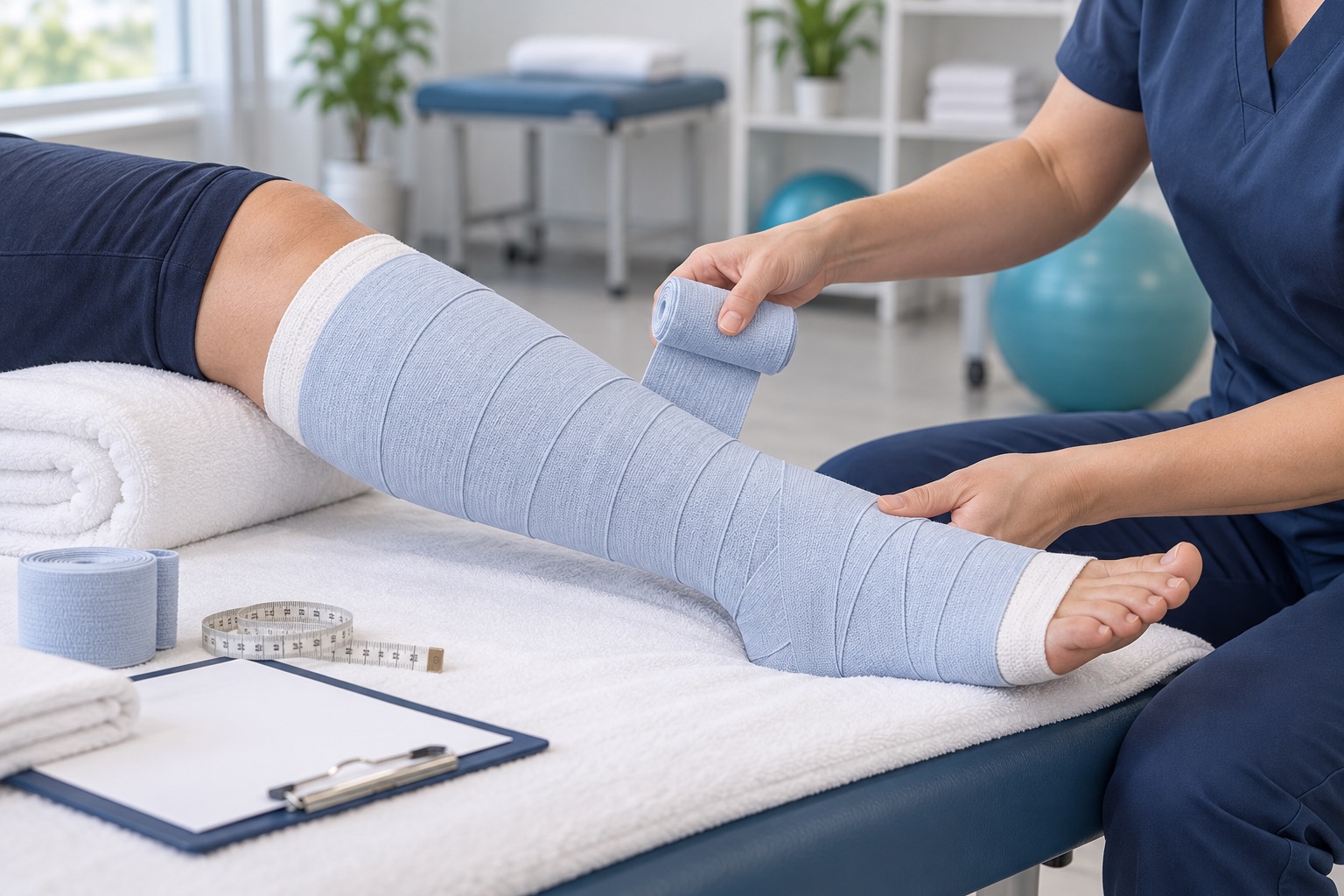
Contrarian point: the “best” plan is not always the most intensive plan on paper. The evidence supports CDT as a framework, but long-term benefit depends on whether a patient can travel, pay for supplies, protect the skin, wear the garment, and return for review. A simpler plan that is safe and followed may be more defensible than an ideal plan that the patient cannot sustain. The clinician should monitor skin changes, pain, limb measurements, walking tolerance, and the ability to manage care at home.
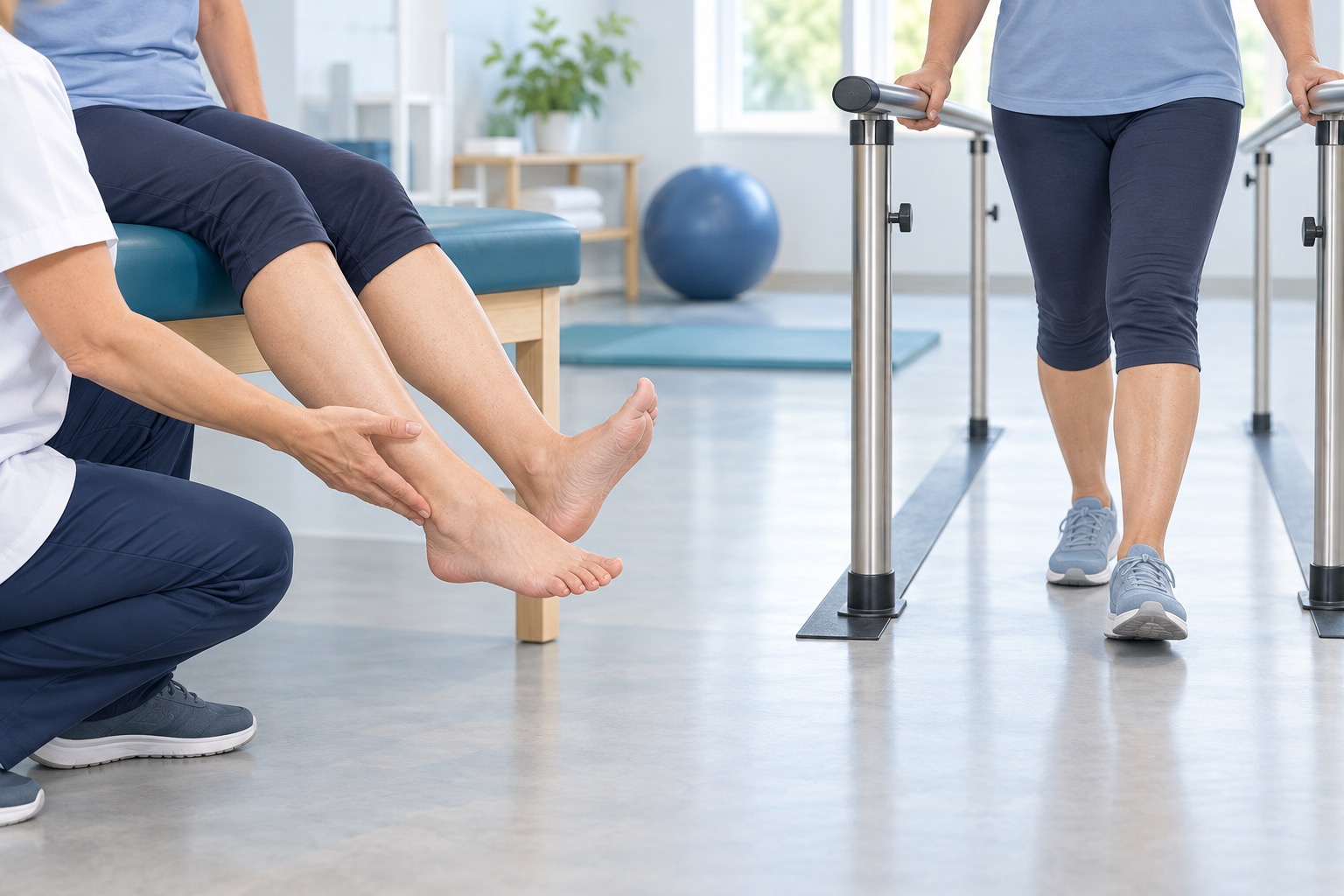
Kailan kailangang magpatingin agad para sa manas?
Seek urgent care for sudden swelling with chest pain, shortness of breath, fainting, or severe new pain. Seek same-day medical advice for a hot, red, rapidly worsening limb or fever because infection and other urgent causes need treatment before massage. Persistent swelling without those red flags still deserves a planned assessment, especially after cancer surgery or radiation, because early detection and prompt treatment are supported in surveillance models for breast-cancer-related lymphedema (McGrath et al., 2024; PMID: 38511916).
The next safe step is not to prove whether hilot or MLD is “stronger.” It is to identify what the swelling represents, decide whether touch is appropriate today, and choose a treatment goal that can be checked. That approach respects traditional care while avoiding treatment choices that do not first clarify the cause of swelling.
Mga tanong tungkol sa hilot at lymphatic drainage massage na madalas marinig?
The patient questions below reflect the practical concerns behind this comparison: pain, safety, home massage, recurrence, compression, and the difference between a symptom label and a diagnosis. The answers are intentionally conservative because the right technique depends on an examination.
Clinical realities to keep in mind
Swelling care is measured over time, not judged by how forceful a massage feels.
Gentle does not mean ineffective
MLD is designed as a controlled, light technique. More pressure is not automatically more appropriate, especially when the cause of swelling has not been assessed.
The diagnosis changes the massage decision
A swollen limb can reflect venous disease, infection, clot, medication effects, heart or kidney problems, or lymphatic dysfunction. The label “manas” cannot select treatment by itself.
Compression and follow-through matter
If MLD is used, the clinician may pair it with compression, skin care, movement, education, and follow-up. The exact combination depends on the person and the cause.
References & Clinical Evidence
- [1] Ezzo J, Manheimer E, McNeely ML, Howell DM, et al. Manual lymphatic drainage for lymphedema following breast cancer treatment. Cochrane Database Syst Rev. 2015; PMID: 25994425.
- [2] Lin Y, Yang Y, Zhang X, Li W, et al. Manual Lymphatic Drainage for Breast Cancer-related Lymphedema: A Systematic Review and Meta-analysis of Randomized Controlled Trials. Clin Breast Cancer. 2022; PMID: 35370085.
- [3] Ramadan F. Manual lymphatic drainage: the evidence behind the efficacy. Br J Community Nurs. 2024; PMID: 38300246.
- [4] Donahue PMC, MacKenzie A, Filipovic A, Koelmeyer L. Advances in the prevention and treatment of breast cancer-related lymphedema. Breast Cancer Res Treat. 2023; PMID: 37103598.
- [5] McGrath LA, Bloomfield E. Prevention, Surveillance, and Treatment of Breast Cancer-Related Lymphedema: The Role of the Advanced Practice Provider. Clin J Oncol Nurs. 2024; PMID: 38511916.
* Clinical references are provided to support the medical claims made in this article. TeraCare adheres to evidence-based practices in physical medicine and rehabilitation.

Dr. Ben Rabara
Dr. Ben Rabara is a Board-Certified Physiatrist specializing in Physical Medicine and Rehabilitation. He focuses on non-surgical, precision treatments for musculoskeletal conditions, utilizing advanced diagnostics like MSK Ultrasound.
Medical Disclaimer: The information provided in this article is for educational purposes only and does not substitute for professional medical advice, diagnosis, or treatment. Always consult a qualified physician for your specific health conditions.