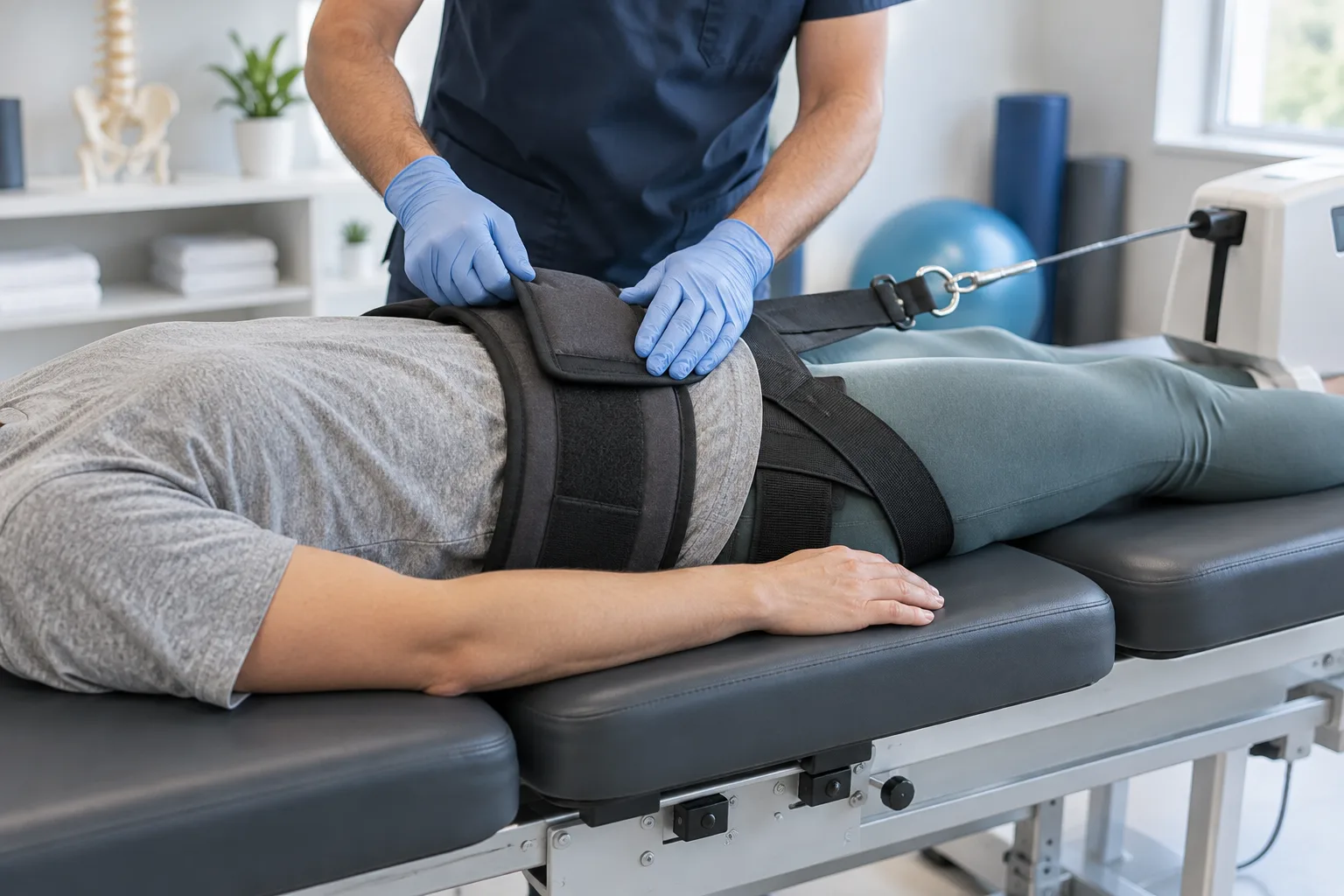
- — Spinal decompression therapy is a form of mechanical traction. Research suggests short-term benefit for some people with lumbar radiculopathy, but results vary by diagnosis, position, dose, and study quality.
- — A brief decrease in pain does not prove that a disc moved back into place or that the nerve has recovered. Function, strength, sensation, and symptom direction matter more than a dramatic table sensation.
- — Reported traction-study problems include increased pain and aggravated neurologic signs. New weakness, saddle numbness, or bladder or bowel changes require urgent assessment instead of another session.
- — There is no evidence-based universal package of 12, 20, or 30 sessions. I reassess the working diagnosis, meaningful function, and safety response before continuing.
People rarely search this topic because they want a machine description. They want to know whether the treatment can help them walk, sleep, work, or avoid a frightening next step. A person with a bulging disc may feel burning pain into the leg, tingling in the foot, a heavy back, or a sharp flare when standing. A scan can look serious while symptoms come mainly from muscle, a facet joint, or sensitized nerves.
Does spinal decompression work? My answer is careful: mechanical traction may offer short-term symptom relief for some people with lumbar radiculopathy, but the evidence does not support a universal cure, a guaranteed disc retraction, or a fixed number of visits. I first decide whether the symptoms fit a traction-responsive pattern, whether the nerve is safe to load, and whether active rehabilitation can turn a short relief window into useful function.
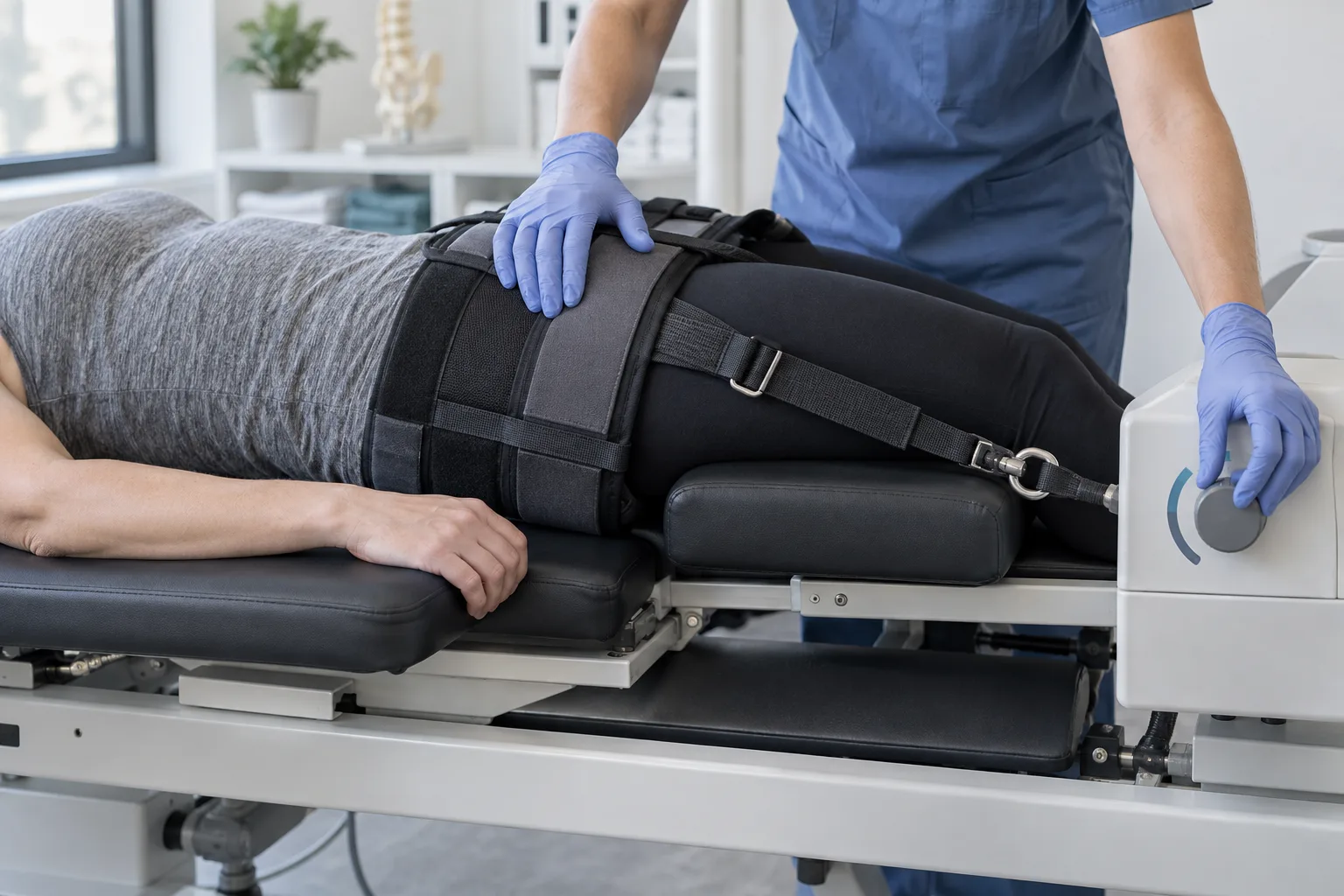
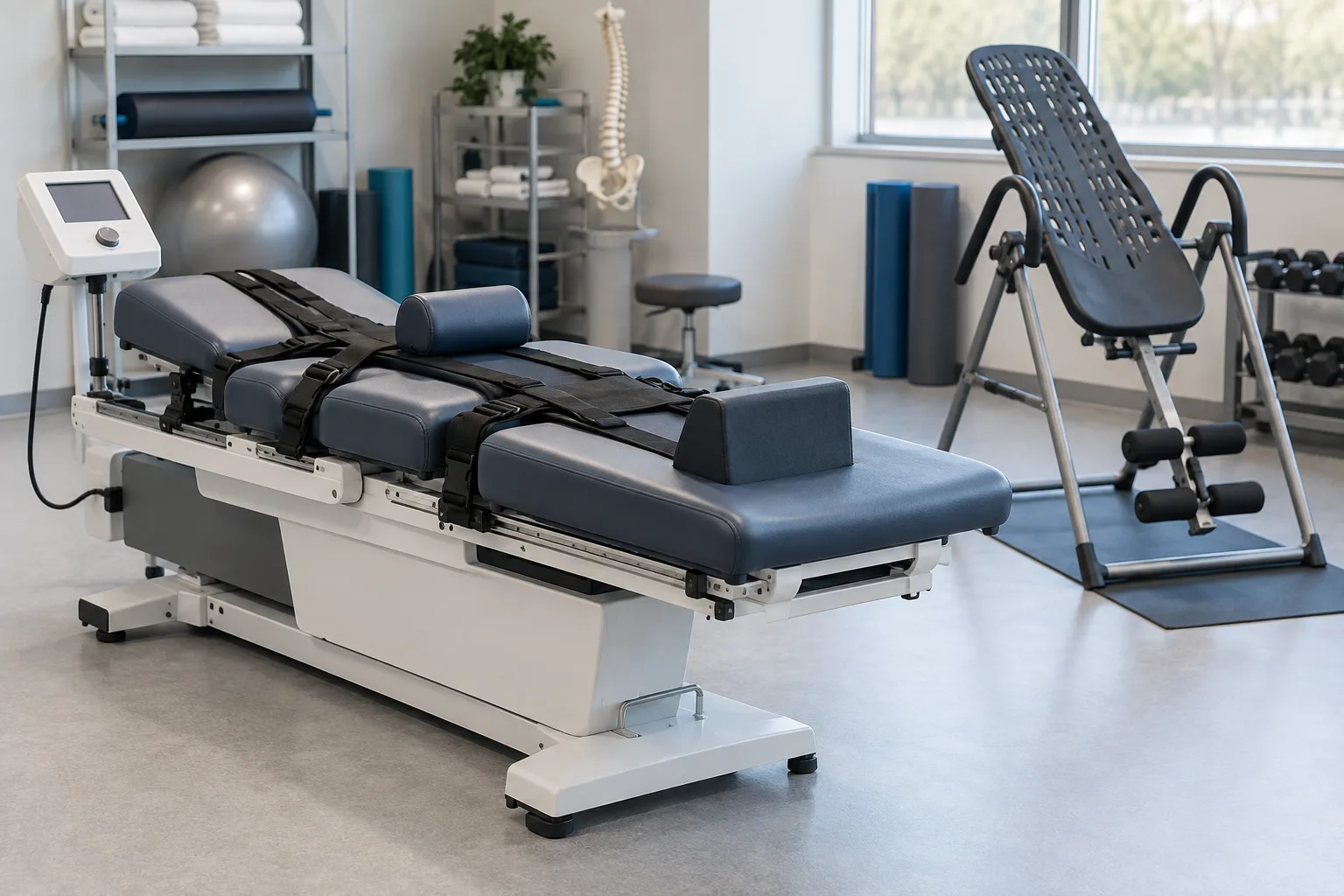
The phrase spinal decompression therapy often describes a form of mechanical traction delivered on a table. Clinically, the important questions are simpler: what force and position were used, what changed afterward, what did not change, and did the patient remain neurologically stable? A small treatment effect can still be useful, but it should not be sold as structural proof.
Does Spinal Decompression Work for Low Back Pain or Sciatica?
In my clinic, I use traction only as one possible part of a diagnosis-led plan. A 2021 review found short-term benefit for supine mechanical traction added to physical-therapist treatment in some lumbar-radiculopathy studies, while analyses of higher-quality prone studies were not significant (Vanti et al., 2021; PMID: 33382419). That result supports selective use, not a promise.
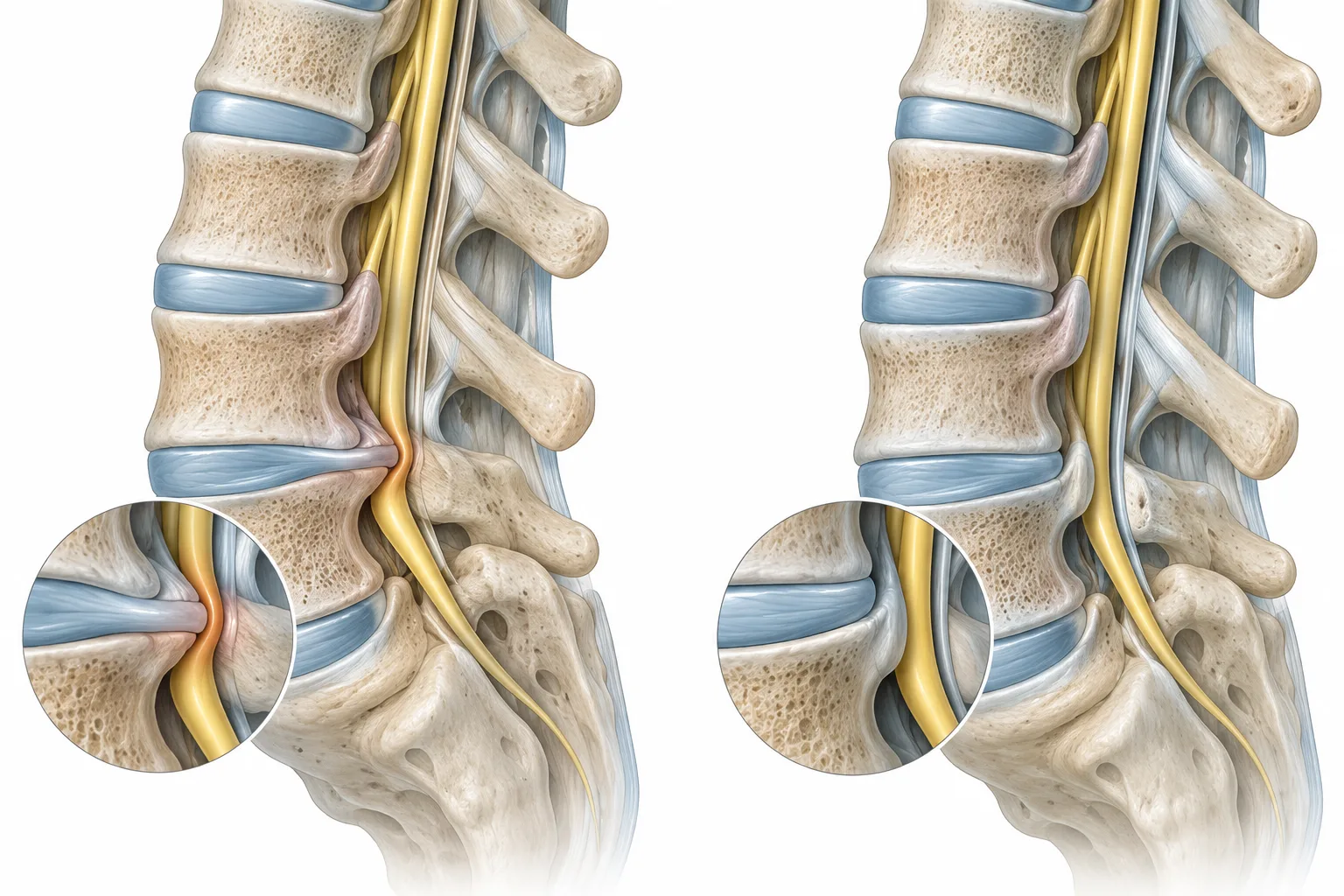
Lumbar radiculopathy means irritation or compression of a nerve root, often causing back pain with leg pain, altered sensation, or weakness. Traction can change how the spine and nerve root are loaded for a period of time. That change may make walking or exercise easier for a selected patient. It does not prove disc movement or lasting benefit after returning to work.
A Cochrane review of 32 randomized trials involving 2,762 participants found low- to moderate-quality evidence that traction made little or no difference in pain, function, global improvement, or return to work across mixed low-back-pain groups (Wegner et al., 2013; PMID: 23959683). A 2025 review reported large pooled effects across exercise, manipulation, and traction, but heterogeneity was very high at I2 = 97.9%, and subgroup evidence remained limited (Thavarajasingam et al., 2025; PMID: 41209688).
The useful correction is that “traction works” and “traction never works” are both too broad. Patient group, symptom behavior, dose, comparison treatment, and outcome measure all change the answer. I look for better walking, sleep, sitting tolerance, or leg symptoms rather than a dramatic table sensation. If only the table sensation changes, it has not shown that it helps your life.
Clarify the Cause Before Choosing Traction
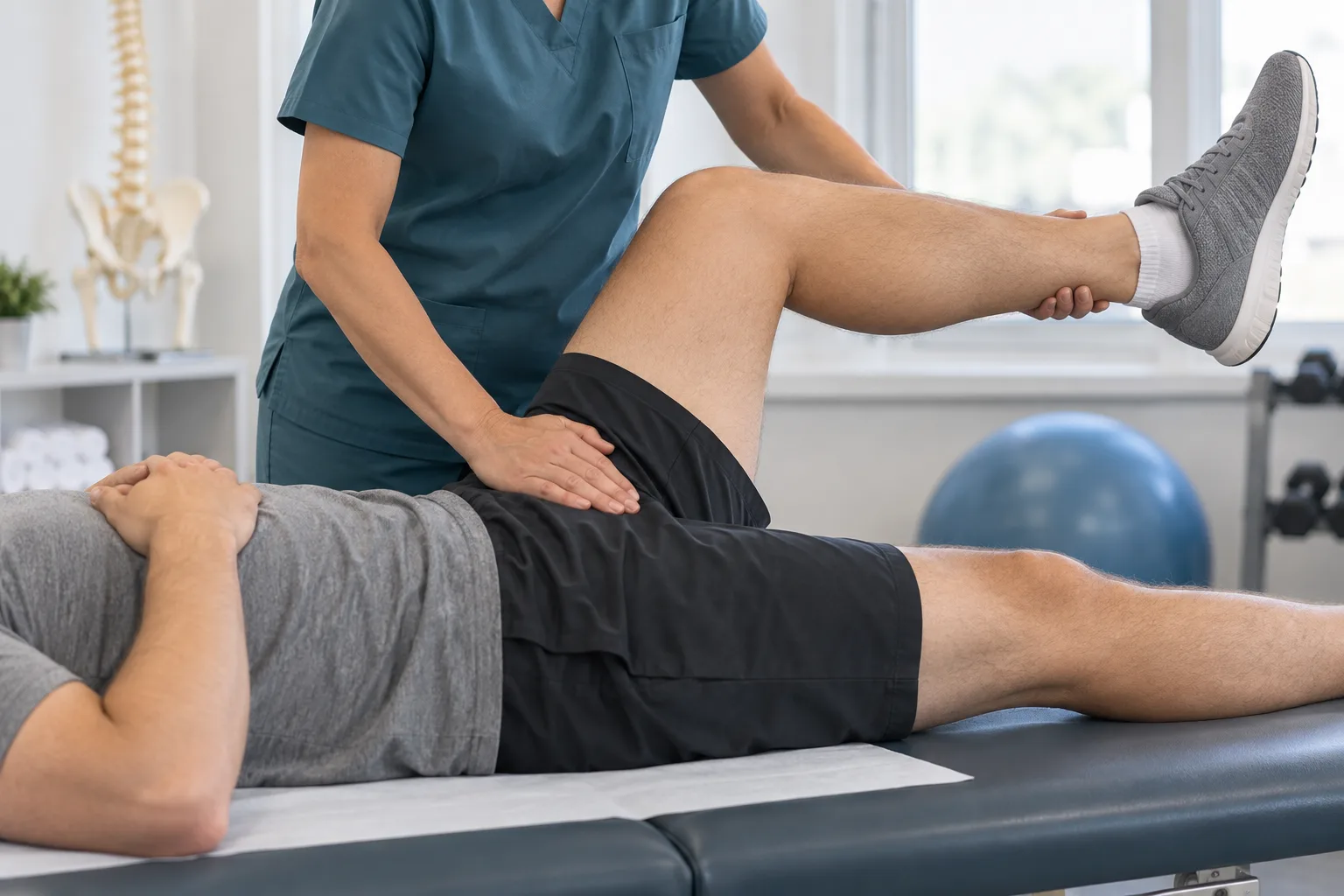
A PM&R assessment can match your pain pattern, neurologic findings, and functional goal to a safer care sequence.
What Spinal Decompression Therapy Side Effects Should You Watch For?
Spinal decompression therapy side effects can include temporary soreness or an increase in pain, but new or worsening neurologic symptoms deserve a prompt stop and reassessment. A Cochrane review found that reported traction-study problems included increased pain and aggravated neurologic signs, while many studies did not report adverse effects clearly (Wegner et al., 2013; PMID: 23959683). I do not label every flare harmless.
Mild local soreness may reflect a new mechanical load on muscles, ligaments, or joints around the treated segment. That explanation remains a hypothesis for an individual patient, not a reason to ignore symptoms. The response should settle rather than build from session to session. Track pain on a 0–10 scale, walking, sleep, leg symptoms, and any change in strength or sensation over the following day.
A common assumption is that pain after traction proves the body is “adjusting” and that the patient should continue until the course is complete. That is not a safe rule. A worsening pattern can mean the position or force does not fit the tissue, that the working diagnosis is wrong, or that a neurologic problem needs a different pathway. The evidence cannot tell us which explanation applies without examination.
- Discuss promptly: soreness that is mild, local, and clearly improving within a short period.
- Stop the session: sharp pain, spreading leg pain, increasing tingling, or a new sense of instability during the pull.
- Seek urgent assessment: new foot or leg weakness, rapidly worsening numbness, trouble walking, saddle-area numbness, or new bladder or bowel changes.
“Side effects” also include practical harm. Paying for a large package before knowing whether treatment changes function can pressure a patient to continue despite a poor response. In Vigan and nearby Ilocos communities, travel time, transport cost, work schedules, and missed follow-up can make frequent visits unrealistic. A safe plan defines when treatment will be reconsidered.
Is Spinal Decompression Therapy Safe for Everyone?
Is spinal decompression therapy safe for everyone? No. I screen for neurologic deficit, fracture or infection risk, spinal instability, recent surgery, severe osteoporosis, pregnancy-related considerations, and symptoms that may not come from a mechanical compression problem. Safety is a patient-specific decision that includes force, position, monitoring, consent, and a clear alternative if traction does not fit.
I first ask what the patient means by “pinched nerve.” Pain down the leg can reflect a lumbar nerve root, but it can also come from the hip, sacroiliac region, peripheral nerve, vascular disease, or referred pain. I check strength, sensation, reflexes when relevant, gait, walking tolerance, pain behavior, and bowel or bladder symptoms. MRI findings matter more when they match the examination and functional problem.
A review of lumbar radiculopathy describes outpatient conservative care, red-flag warning symptoms, and the role of MRI, CT, EMG, and nerve-conduction studies in diagnosis and decision-making (Berry et al., 2019; PMID: 31788391). A patient with progressive weakness, saddle numbness, new bladder retention or incontinence, fever with severe back pain, major trauma, or suspected fracture needs urgent medical evaluation rather than routine traction.
General health matters too. A clinician should review bone fragility, cancer history, infection risk, blood pressure, eye conditions, and pregnancy before an inversion-based approach. These factors make unsupervised home pulling a poor substitute for examination. A device cannot diagnose why strength is falling.
How Many Spinal Decompression Therapy Sessions Should You Try?
How many spinal decompression therapy sessions should you try? I do not prescribe a universal number from an advertisement. One small randomized trial used 10 sessions over two weeks and compared traction at 50% versus 10% of body weight, with improvement in both groups and no significant interaction between force and time (Isner-Horobeti et al., 2016; PMID: 27838140). That study cannot set your dose.
Traction studies vary in force, rhythm, duration, frequency, patient selection, and body position. A systematic review identified mechanical, auto-, manual, gravitational, and aquatic approaches, with wide variability in the traction parameters and patient characteristics (Alrwaily et al., 2018; PMID: 30237870). A 20-session package is a business format, not an evidence-based diagnosis.
I prefer a short, explicit trial with a defined review point. Before starting, record the goal, baseline pain, walking or sitting tolerance, strength, sensation, and symptom pattern. After several sessions, ask whether leg pain, sleep, or walking improves and whether benefit persists outside the clinic. If not, continuing the same dose needs justification.
What should a session trial measure?
- Symptoms: pain intensity and whether leg pain becomes less widespread or more severe.
- Neurology: stable or changing strength, sensation, reflexes, and walking control.
- Function: minutes of walking, sleep interruption, sitting, lifting, or work tasks.
- Durability: whether improvement remains after standing, traveling home, and completing ordinary activity.
Does Spinal Decompression Work Without Exercise or a Diagnosis?
Does spinal decompression work without exercise or a diagnosis? Passive traction alone rarely answers the full clinical problem. It may temporarily change loading or pain sensitivity, but it cannot test strength, rebuild work tolerance, or teach the hips and trunk to share movement. I use any relief window to support graded activity only when the examination says that movement is safe.
The tissue state changes the plan. An irritable nerve with stable strength may need a calm position, walking in tolerable doses, and careful progression. A stable disc-related pain pattern may allow directional movement or trunk endurance work. A hip disorder, fracture, infection, or progressive neurologic deficit needs another pathway.
A 2023 meta-analysis found that neural mobilization reduced pain and disability in lumbar-radiculopathy trials, but it also reported high heterogeneity, varied causes, possible publication bias, and varied study quality (Lin et al., 2023; PMID: 38137856). That supports individualized active care, not a self-prescribed nerve-stretch routine. I stop or modify an exercise when symptoms spread distally, weakness changes, or a delayed flare reduces function the next day.
At home, the safer immediate pivot is modest movement within a stable symptom range: change positions, take short walks if they do not worsen neurologic symptoms, avoid repeated bending-and-twisting under load, and record the next 24 hours. Do not hang from a door, force an inversion table, or copy a traction setting from a video. The right home action depends on the diagnosis.
Is Spinal Decompression Therapy Safe Compared With a Sudden Chiropractic Pull?
Is spinal decompression therapy safe compared with a sudden chiropractic pull? The mechanisms differ, but neither label gives automatic clearance. Mechanical traction applies a sustained or intermittent pull; a manual adjustment uses a brief clinician-delivered movement. I compare the options by diagnosis, force, body region, neurologic findings, goals, and stop rules rather than by calling one category universally safe.
“Chiropractor versus spinal decompression” can hide two decisions: who should assess the patient, and what technique might be used after assessment. A manual treatment may alter joint motion and sensory input. Traction may alter loading over time. Neither option restores a nerve simply because the patient hears a pop or feels lengthened.
A treatment category does not replace diagnosis or informed consent.
Best for
A monitored trial when examination supports a traction-compatible mechanical or radicular pattern.
Drawbacks
Evidence is mixed, doses vary, and pain or neurologic symptoms can worsen.
Best for
A selected patient with a clear mechanical goal, screening, consent, and active follow-through.
Drawbacks
Manual-therapy studies use different techniques and are often moderate or low quality.
Best for
Not a default treatment; only consider after individualized safety review.
Drawbacks
Force and position may be difficult to measure, and it cannot screen for neurologic or systemic danger.
A systematic review found that lumbar-radiculopathy manual-therapy studies used different techniques and that 93% of included publications were moderate or low quality (Kuligowski et al., 2021; PMID: 34200510). That finding does not condemn every chiropractor or clear every traction table. It tells me to avoid blanket comparisons and to explain what is known, what is uncertain, and what would make me stop.
How Many Spinal Decompression Therapy Sessions Should Pass Before Reassessment?
How many spinal decompression therapy sessions should pass before reassessment? Reassessment should happen early enough to prevent an ineffective course from becoming a financial or clinical trap. I review the response after the initial trial, and sooner if symptoms change. Stable strength, improved function, and durable symptom reduction support continuation; worsening neurology or no meaningful change supports a different plan.
I ask four practical questions. Can you walk farther or sit longer? Does sleep improve? Has the leg pain become less intense or less widespread? Can you perform the next rehabilitation task without a delayed flare? A patient may report pain dropping from 7/10 to 4/10 but still be unable to stand for five minutes. That is partial progress, not proof that the course should continue unchanged.
Evidence-to-practice decisions also reflect real access. Research may use frequent visits and close measurement, while a patient from outside Vigan may lose a day of work and pay transport for every session. If a simpler active program can be followed safely at home, it may be more defensible than an idealized high-frequency schedule that the patient cannot complete. I monitor neurologic signs, not just the appointment count, and escalate when weakness, bladder or bowel symptoms, or severe unrelenting pain appears.
Does Spinal Decompression Work When Pain Is Not Nerve-Related?
Does spinal decompression work when pain is not nerve-related? The evidence is least transferable when a patient has nonspecific low back pain without leg symptoms, a hip-driven problem, a fracture risk, or a systemic cause. I first identify the likely pain generator and the functional limitation. If the pattern does not match the studied radiculopathy or disc-herniation groups, I do not borrow their results.
A disc bulge on an MRI is common and may not be the reason a person hurts. Pain can come from muscles, facet joints, the hip, the sacroiliac region, sensitized nerves, or non-spinal illness. The phrase “pinched nerve” can therefore be a patient description rather than a confirmed diagnosis. That language gap matters because a treatment aimed at nerve-root loading may distract from the actual source.
The 2013 Cochrane review found little or no clinically relevant effect across broad low-back-pain groups and concluded that traction alone could not be motivated by the best available evidence (Wegner et al., 2013; PMID: 23959683). A 2024 review described traction as moderate evidence for short-term outcomes in lumbar disc herniation with radiculopathy but weak evidence for long-term outcomes (El Melhat et al., 2024; PMID: 38398287). Those limitations should shape the conversation before payment or treatment.
If the examination supports another driver, the plan may center on graded strengthening, movement retraining, education, medication review, targeted manual care, or a different referral. A machine can be part of care, but it should never replace asking why the pain pattern, strength, and function do not fit.
What Spinal Decompression Therapy Side Effects Mean You Should Stop?
Spinal decompression therapy side effects mean you should stop when pain spreads, strength falls, sensation changes, walking becomes less safe, or symptoms fail to settle after the session. New saddle numbness or bladder or bowel change is an emergency. I would rather pause a promising treatment and reassess the diagnosis than use a session schedule to explain away a neurologic warning.
Go to urgent care for new urinary retention or incontinence, loss of bowel control, numbness around the groin or inner thighs, rapidly progressive leg weakness, or severe back pain with fever or major trauma. These signs can indicate serious nerve compression or another condition that routine outpatient traction cannot manage. A patient should not wait for a package review, a repeat MRI, or the next available table appointment.
For non-emergency symptoms, document what changed, when it changed, the treatment position and duration, and whether the symptoms returned to baseline. Contact the treating clinician before another session. The response may require a force or position change, a different active program, diagnostic testing, or referral. Published evidence cannot turn an individual worsening pattern into a normal milestone.
Medical safety note: This page is general education, not an individualized diagnosis or treatment prescription. Seek urgent medical care for progressive weakness, saddle-area numbness, new bladder or bowel changes, fever with severe back pain, or a significant injury.
Spinal Decompression Therapy Realities
The useful result is safer function, not a dramatic pull or a guaranteed change on imaging.
Relief Is Not Proof of Repair
A short-lived reduction in pain can reflect a change in loading or sensory input. It does not prove that a disc retracted or that a nerve healed.
Dose Is Not Universal
Traction trials vary in force, rhythm, duration, frequency, position, and patient group. A fixed session package cannot be read from the evidence.
Neurologic Change Changes the Plan
New weakness, worsening sensation, saddle numbness, or bladder and bowel changes need diagnostic escalation rather than more traction.
References & Clinical Evidence
- [1] Vanti C, Panizzolo A, Turone L, Guccione AA, et al. Effectiveness of Mechanical Traction for Lumbar Radiculopathy: A Systematic Review and Meta-Analysis. Phys Ther. 2021. PMID: 33382419.
- [2] Alrwaily M, Almutiri M, Schneider M. Assessment of variability in traction interventions for patients with low back pain: a systematic review. Chiropr Man Therap. 2018. PMID: 30237870.
- [3] Wang W, Long F, Wu X, Li S, et al. Clinical Efficacy of Mechanical Traction as Physical Therapy for Lumbar Disc Herniation: A Meta-Analysis. Comput Math Methods Med. 2022. PMID: 35774300.
- [4] Isner-Horobeti ME, Dufour SP, Schaeffer M, Sauleau E, et al. High-Force Versus Low-Force Lumbar Traction in Acute Lumbar Sciatica Due to Disc Herniation: A Preliminary Randomized Trial. J Manipulative Physiol Ther. 2016. PMID: 27838140.
- [5] Wegner I, Widyahening IS, van Tulder MW, Blomberg SE, et al. Traction for low-back pain with or without sciatica. Cochrane Database Syst Rev. 2013. PMID: 23959683.
- [6] Kuligowski T, Skrzek A, Cieślik B. Manual Therapy in Cervical and Lumbar Radiculopathy: A Systematic Review of the Literature. Int J Environ Res Public Health. 2021. PMID: 34200510.
- [7] Lin LH, Lin TY, Chang KV, Wu WT, et al. Neural Mobilization for Reducing Pain and Disability in Patients with Lumbar Radiculopathy: A Systematic Review and Meta-Analysis. Life (Basel). 2023. PMID: 38137856.
- [8] Thavarajasingam SG, Ramsay DSC, Namireddy SR, Kamath AG, et al. Exercise, manipulation and traction physiotherapy in the conservative management of lumbar disc herniation: A systematic review and meta-analysis. Brain Spine. 2025. PMID: 41209688.
- [9] El Melhat AM, Youssef ASA, Zebdawi MR, Hafez MA, et al. Non-Surgical Approaches to the Management of Lumbar Disc Herniation Associated with Radiculopathy: A Narrative Review. J Clin Med. 2024. PMID: 38398287.
- [10] Berry JA, Elia C, Saini HS, Miulli DE. A Review of Lumbar Radiculopathy, Diagnosis, and Treatment. Cureus. 2019. PMID: 31788391.
* Clinical references are provided to support the medical claims made in this article. TeraCare adheres to evidence-based practices in physical medicine and rehabilitation.

Dr. Ben Rabara
Dr. Ben Rabara is a Board-Certified Physiatrist specializing in Physical Medicine and Rehabilitation. He focuses on non-surgical, precision treatments for musculoskeletal conditions, utilizing advanced diagnostics like MSK Ultrasound.
Medical Disclaimer: The information provided in this article is for educational purposes only and does not substitute for professional medical advice, diagnosis, or treatment. Always consult a qualified physician for your specific health conditions.