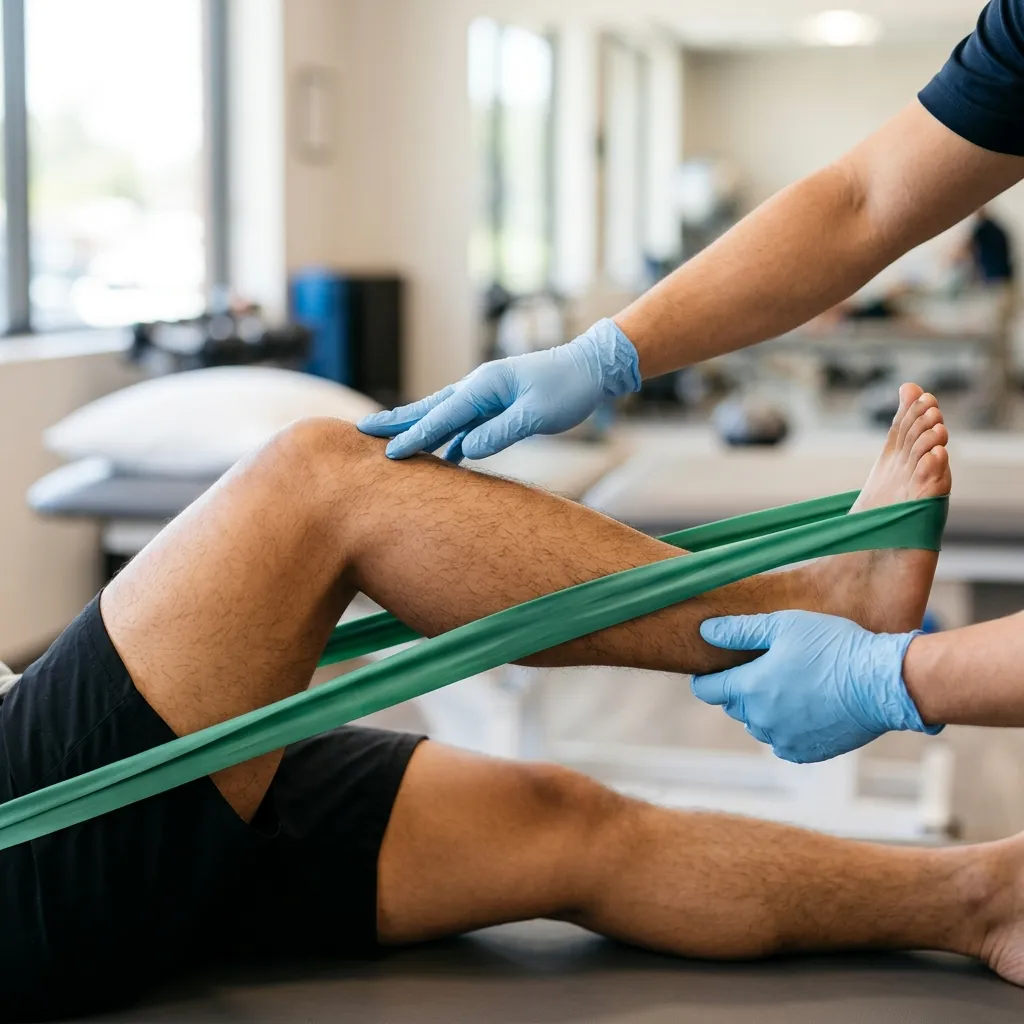
- — Task-Oriented Training (TOT) is defined as practicing meaningful daily activities (like eating or bathing) to drive brain recovery.
- — Neuroplasticity is defined as the brain's ability to reorganize itself by forming new neural connections.
- — Modified CIMT requires constraining the strong arm for just 1-2 hours daily, aiming for 400 repetitions/day to build strength safely.
- — In our clinic here in Vigan, Ilocos Sur, we combine these home foundations with advanced robotics.
The Frustration of "Learned Non-Use"
"My arm feels like a heavy log attached to my shoulder that I literally have to drag around everywhere. Nakakahiya na kailangan pa akong paliguan ng asawa ko araw-araw."
Does this sound familiar? On platforms like Reddit, YouTube, and Inspire, many stroke survivors express one of the most heartbreaking parts of stroke recovery isn't just the physical weakness—it's the feeling of becoming a "pabigat" (burden) to your family. You stare at your hand, commanding the fingers to open, but they feel stiff and catching. Out of pure frustration, you start using your "good" hand for everything.
In my clinic here in Vigan, I always tell patients about Learned Non-Use. Because trying to use the affected arm is so exhausting and clumsy, your brain simply "forgets" how to use it. The cortical map in your brain shrinks. To rebuild that map—to trigger neuroplasticity—you have to force the brain to practice meaningful, daily tasks. According to clinical studies (PMID: 35000000), task-oriented training significantly improves motor function by engaging these neural pathways.
Who is this guide for?
If you have trace movement in your affected arm (you can wiggle your fingers or slightly lift your wrist), this guide is for you. If your arm is completely flaccid (paralyzed with zero tone), focus on passive range of motion first to prevent contractures.
Constraint-Induced Movement Therapy (CIMT): The Truth
If you've researched stroke recovery, you've probably heard of CIMT. It is considered the gold standard for restoring arm function. The true clinical protocol for CIMT is brutal: you place a restrictive mitt on your good hand for 90% of your waking hours for 2 to 3 weeks, forcing you to use your weak hand for everything. Patients often describe a sharp, tingling, or radiating pain when forced to stretch stiff muscles.
While highly effective, trying this at home usually ends in tears. Patients report crying in extreme frustration just trying to pick up a plastic cup, eventually giving up entirely. According to clinical guidelines (PMID: 36742510), modifications are often necessary to ensure patient compliance and prevent emotional burnout.
The Solution: Modified CIMT (mCIMT)
Instead of 90% of your day, we recommend Modified CIMT. You constrain your good hand for just 1 to 2 hours a day during specific, intensive practice sessions, aiming for at least 400 repetitions/day.
| Feature | Traditional CIMT | Modified CIMT (mCIMT) |
|---|---|---|
| Constraint Duration | 90% of waking hours | 1-2 hours a day |
| Program Length | 2 to 3 weeks | 4 to 8 weeks |
| Dropout Rate | Very High | Very Low |
- ✓ Prevents emotional burnout: You get the neuroplasticity benefits without the overwhelming frustration.
- ✓ High repetition: During those 2 hours, you must perform hundreds of repetitions. Brain rewiring requires volume.
- ✓ The "Just-Right Challenge": The task should be hard enough that you make mistakes, but not so hard that you fail every time.
Upper Body: Real-World Filipino Household Tasks
Task-Oriented Training (TOT) means exactly what it sounds like. Instead of just lifting a dumbbell, you practice the exact movements you need to survive at home.
1. The Tabo Reach & Pour (Shoulder & Grip)
Bathing with a tabo requires grip strength, wrist extension, and shoulder stability. Spasticity often causes the fingers to curl inward, making it painful to hold the handle. Sometimes, a dull or burning pain radiates down the forearm if stretched too quickly.
- Step 1 (Dry): Sit on a stable chair. Use your good hand to pry open the spastic fingers of your weak hand and wrap them around an empty tabo. Practice lifting it to shoulder height and lowering it 30 times.
- Step 2 (Weighted): Fill the tabo 1/4 full of water. Practice the pouring motion. It will be messy. Do this over a sink or in the bath area.
- Goal: Re-educate the wrist extensors so you don't drop the tabo.
2. The Kutsara Grasp (Fine Motor Skills)
Eating rice without making a mess is a massive priority for regaining dignity.
- Step 1: Pad the handle of your spoon (kutsara) with a thick towel or rubber bands. A thicker handle is much easier to grip if you have weak hand muscles.
- Step 2: Practice scooping dry beans or uncooked rice from one bowl to another. Constraint your good hand behind your back. Do this for 15 minutes straight.
3. Bimanual Towel Folding (Two-Hand Coordination)
Many daily tasks require both hands working together (bimanual coordination). Don't let a grinding sensation in the shoulder stop you, but stop if you feel sharp pain.
- Take a stack of 10 face towels.
- Force the weak hand to act as the "stabilizer" holding the edge of the towel down, while the good hand does the folding.
- Progression: Force the weak hand to actively fold the corners inward.
Lower Body: Conquering the Banig & Fall Prevention
"Natatakot akong tumayo mula sa banig. Nung isang araw sinubukan kong bumangon mag-isa, bumigay yung kanang binti ko at sumubsob ako."
The fear of falling (pagtumba) is paralyzing. But avoiding movement causes your leg muscles to atrophy, making a fall even more likely. Transitioning from a banig on the floor to a standing position is one of the most mechanically demanding tasks a stroke survivor will face.
The Golden Rule of Floor Transitions
Never practice going down to the floor unless you have already mastered getting back up. If you get stuck on the floor, it can lead to a 911 call or severe caregiver back injury. Practice the "getting up" phase from a low stool first.
Task: Safe Banig-to-Stand Drill
- Roll to the Strong Side: From your back, roll onto your "good" side. Use your strong arm to push your upper body off the floor.
- The Quadruped (All-Fours): Maneuver onto your hands and knees. This forces weight-bearing through the weak arm and weak leg, which is exceptional for neuroplasticity.
- Crawl to a Sturdy Support: Crawl toward a heavy, immovable object (like a solid wooden bed frame or a heavy sofa). Do not use a light monobloc chair—it will tip over.
- The Half-Kneel: Bring your strong leg forward so the foot is flat on the ground. Keep the weak knee on the floor.
- The Push: Push down through the strong foot and strong hand on the furniture to stand up, dragging the weak leg up to meet the strong one.
A Message to Caregivers: The "Tough Love" Rule
To the spouses, children, and relatives taking care of a stroke survivor: We know you love them. We know it breaks your heart to watch them struggle for 5 minutes just to button a polo shirt or lift a spoon. Your natural instinct is to rush in and do it for them.
"Every time you do a physical task for a stroke patient that they could have struggled through themselves, you are stealing a repetition from their brain."
Neuroplasticity requires struggle. The brain only builds new pathways when it realizes the old ones aren't working but the task must be completed. If you feed them, dress them, and carry things for them, their brain has no biological reason to rewire itself.
Practice Tough Love: Ensure they are safe from falling, but let them struggle with the spoon. Let them fight to fold the towel. It will take 10 times longer, and they might get frustrated, but that struggle is the exact medicine their brain needs.
"It's been years since my stroke. Am I too far gone for this to work?"
This is the most common fear I hear from stroke survivors who have passed the 1-year mark. The old medical myth was that recovery stops after 6 months. This is clinically false.
While the fastest biological healing happens early on, neuroplasticity is a lifelong property of the human brain. If you have trace movement in your arm or leg, you can absolutely build new neural connections, even 5 or 10 years post-stroke. The brain responds to demand. It will be harder work, and you must push through the frustration of "learned non-use," but you are never too far gone to improve your baseline.
Track Your 400 Repetitions
Neuroplasticity requires high volume. Download our free, printable Task-Oriented Exercise Logbook to track your daily Modified CIMT progress and hold yourself accountable.
Download Free Logbook (PDF)*No email required. Print it out and start today.
Need Clinical Guidance to Break Through a Plateau?
If you're unsure if you're performing these tasks safely, or if severe spasticity is preventing you from even starting, it's time for a proper medical assessment. Let's evaluate your baseline and build a customized, aggressive rehabilitation plan using both home exercises and our advanced clinic robotics.
Dr. Ben Paolo C. Rabara | TeraCare Clinic • Vigan City, Ilocos Sur

Dr. Ben Rabara
Dr. Ben Rabara is a Board-Certified Physiatrist specializing in Physical Medicine and Rehabilitation. He focuses on non-surgical, precision treatments for musculoskeletal conditions, utilizing advanced diagnostics like MSK Ultrasound.
Medical Disclaimer: The information provided in this article is for educational purposes only and does not substitute for professional medical advice, diagnosis, or treatment. Always consult a qualified physician for your specific health conditions.