- — Chronic pain is not always caused by inflammation. Mechanical, nerve-related, referred, and pain-processing conditions can feel similar.
- — A sustainable eating pattern, tolerable movement, restorative sleep, and stress support may help overall health and pain coping, but they do not replace diagnosis or prescribed care.
- — Natural does not automatically mean safe. Supplements can interact with medicines, surgery, pregnancy, kidney disease, liver disease, or bleeding risk.
- — A hot swollen joint, fever, sudden weakness or numbness, major trauma, unexplained weight loss, or bowel and bladder changes needs timely medical assessment.
If your joints or muscles hurt for weeks or months, it is reasonable to ask how to reduce inflammation in the body. In my practice, I start with a distinction that protects patients from unnecessary restriction: inflammation can contribute to pain, but chronic pain is not always inflammatory. The safest plan combines a careful history, examination, practical habits, and treatment matched to the cause.
People use “inflammation” to describe swelling, warmth, stiffness, fatigue, or a general sense that something is wrong. Patients in the Philippines may also say rayuma, sakit sa tuhod, or masakit ang kasu-kasuan. These words are meaningful descriptions, but they do not identify one disease. The same knee pain may come from osteoarthritis, an injury, gout, infection, nerve irritation, or a problem referred from the hip or spine.
How to reduce inflammation in the body safely?
I reduce risk by first asking what is causing the symptoms, then choosing small changes that improve health without delaying diagnosis. A balanced eating pattern, tolerable movement, adequate sleep, pacing, and medication review can support recovery, but they are not a universal cure for inflammation or chronic pain. Persistent or unexplained symptoms deserve assessment.
A useful first week is usually simple: write down when pain and swelling occur, notice which activities increase or relieve symptoms, keep meals regular, drink water, protect sleep, and avoid a sudden intense exercise or elimination-diet experiment. The record should include function: how far you walk, whether you can work, and whether stiffness improves after moving. This gives a clinician more useful information than a list of “good” and “bad” foods.
If you use the word rayuma, write down what you mean by it: aching, stiffness, swelling, burning, numbness, or weakness are different clues. Note whether one or several joints are involved, whether both sides are similar, and whether the problem is worse after activity or after rest. This simple translation from everyday language to symptom pattern often makes the next medical decision clearer.
What should a safe starting plan include?
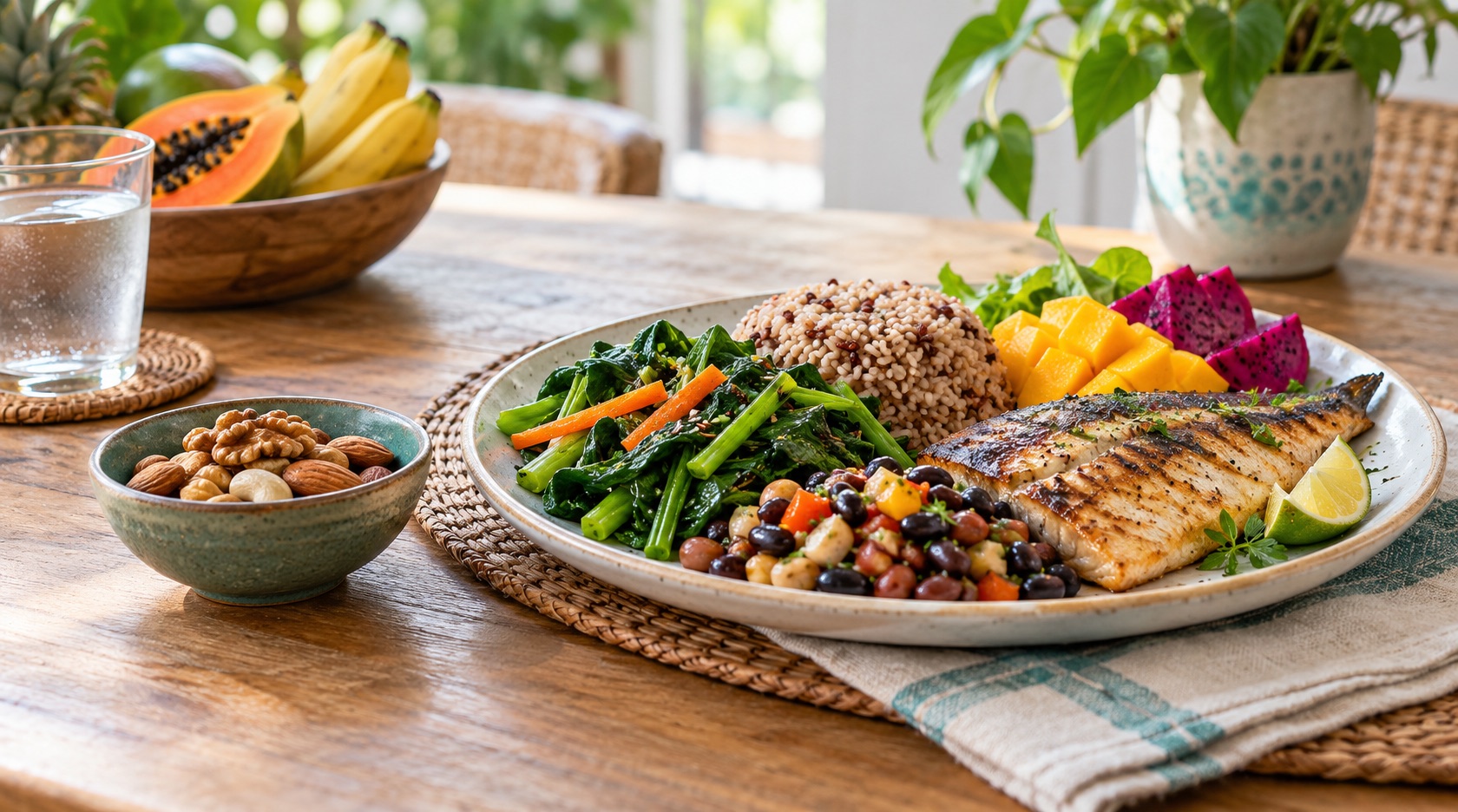
- Keep the pattern balanced: add vegetables, fruit, beans, fish, or other suitable protein before removing major food groups.
- Move within tolerance: start below the level that causes a sharp flare and progress gradually.
- Check the cause: swelling, fever, weakness, numbness, trauma, and rapid worsening change the urgency.
- Review supplements: ask about interactions before using turmeric, concentrated extracts, or multiple products.
What are the causes of chronic pain?
The causes of chronic pain are often mixed. Chronic pain means pain that persists or recurs beyond the expected period of tissue healing, commonly longer than three months (PMID: 30586068), but the time course alone does not identify the mechanism. A joint can be painful because of inflammation, altered load, tissue injury, nerve sensitivity, referred pain, or a nervous system that has become more protective after repeated pain.

In clinic, I ask what reliably reproduces the pain, whether there is visible swelling or warmth, how long morning stiffness lasts, whether symptoms travel along a limb, and what happens to strength, balance, sleep, and work. Patients may describe a dull ache, heavy limb, radiating pain, tingling, catching, or grinding. These details help separate a local joint problem from a nerve or spine problem and prevent a laboratory marker or scan from becoming the diagnosis without matching the examination.
The common assumption is that more pain means more inflammation. That is incomplete. Inflammation may be prominent in some autoimmune, infectious, or crystal conditions, while osteoarthritis, tendon overload, neuropathic pain, and persistent pain after an injury may need a different explanation. The clinical decision changes because anti-inflammatory pills, supplements, or strict diets may not address the main driver.
When should joint pain be checked urgently?
For joint or back pain, a hot, red, rapidly swollen joint, fever or severe illness, sudden loss of strength, new numbness, inability to bear weight after trauma, unexplained weight loss, or new bowel or bladder changes should prompt urgent medical assessment; emergency symptoms depend on the body region and the full clinical context. These patterns can signal infection, fracture, neurological compromise, or another problem where self-care alone is unsafe.
Do not wait for a diet change to “work” when a joint is acutely swollen or you feel systemically unwell. In a provincial setting, access may involve travel or cost, but a dangerous delay can be more costly. If symptoms are less urgent but persistent, arrange a structured assessment so the plan can be adapted rather than repeatedly trying unrelated remedies.
Which natural remedies for joint pain are reasonable to try?
Reasonable natural remedies for joint pain are usually habits that support capacity: regular low-impact movement, a balanced eating pattern, adequate sleep, pacing, and carefully chosen heat or cold. Their value is practical rather than magical. They may improve function or symptom tolerance while the underlying cause is assessed, but they do not replace treatment for infection, inflammatory arthritis, gout, fracture, or significant nerve compression.
Whole-food dietary interventions have shown a pooled pain benefit in a systematic review, but no single dietary pattern was clearly superior (PMID: 33202007). I therefore favor realistic substitutions: more vegetables, fruit, beans, fish, nuts, or seeds when suitable; fewer frequent sugar-sweetened drinks, heavily processed foods, and excess saturated fat. Rice does not need to be banned, and one meal does not define an inflammatory disease.
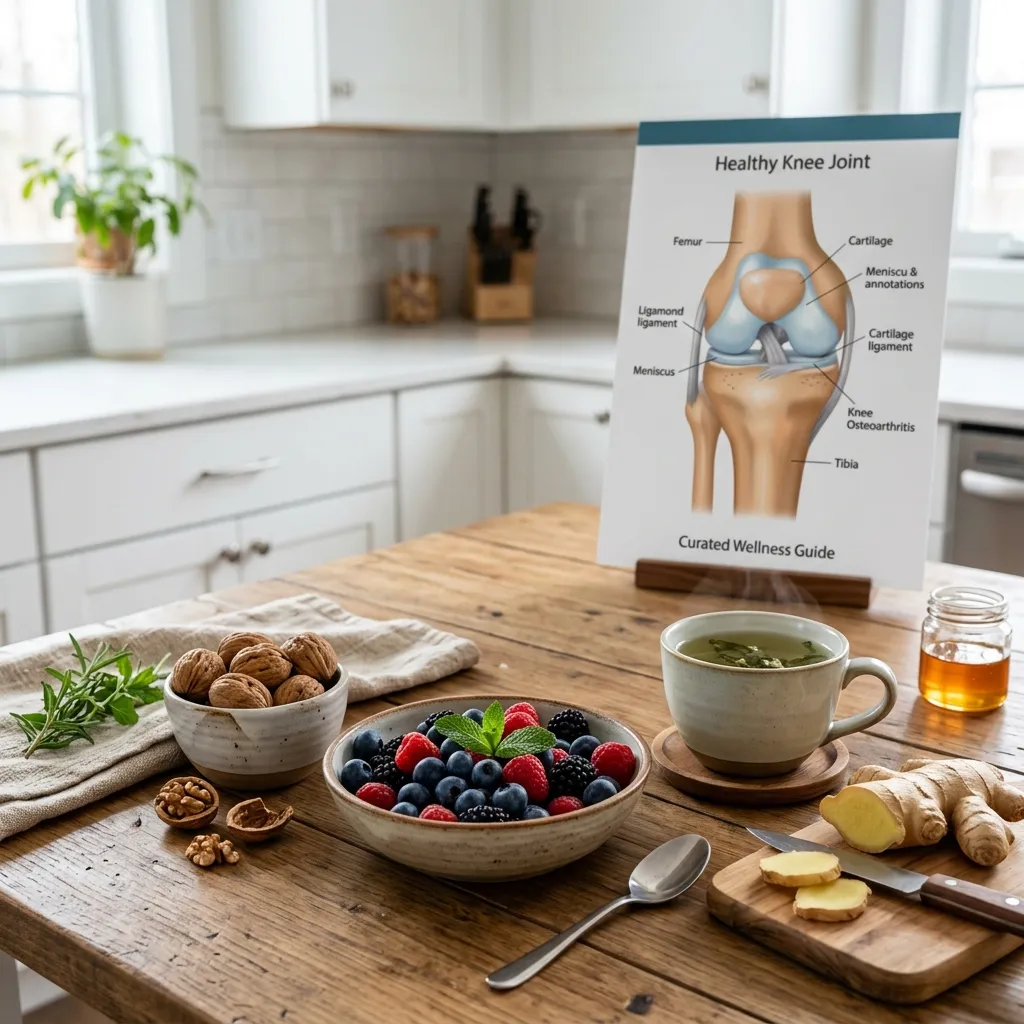
Curcumin or turmeric is a useful example of why “natural” needs careful wording. Reviews found possible symptom improvement in some knee osteoarthritis studies, but the optimal dose, frequency, and formulation remained unclear (PMID: 33500785). Concentrated supplements can interact with medicines or matter around surgery, and their safety depends on the product and the person’s health conditions (PMID: 26438626; PMID: 26949700). Food seasoning and a concentrated supplement are not the same exposure.
Can natural remedies interact with medicines?
Yes. Natural remedies can interact with medicines, change bleeding risk, affect the liver or kidneys, or create problems around surgery. I ask about every supplement, tea, powder, and online product rather than assuming that a label saying “herbal” means low risk. Bring the product name and dose to a physician or pharmacist, especially if you take anticoagulants, diabetes medicines, immunosuppressants, or several pain medicines.
The same caution applies to anti-inflammatory pain medicines. They can be useful for selected people, but the safest choice depends on ulcers, kidney function, blood pressure, heart disease, pregnancy, other medicines, and the actual pain mechanism. NSAID risks vary by drug, dose, duration, and individual risk factors, including kidney and cardiovascular concerns (PMID: 28764659; PMID: 21980265). Do not combine products or increase doses because a social-media post described them as natural or harmless.
What does chronic inflammation treatment involve?
Chronic inflammation treatment starts with identifying the source, severity, and functional effect of inflammation rather than treating a word on a test result. Depending on the pattern, care may include examination, blood tests, imaging, disease-specific medicine, rehabilitation, sleep treatment, nutrition support, or referral. The aim is to control the cause while restoring strength, movement, confidence, and participation in daily life.
A CRP or other inflammatory marker may help answer a specific clinical question, but it is not a standalone diagnosis of chronic inflammation and must be interpreted with the history and examination (PMID: 19400486).
A Mediterranean-style eating pattern may improve some inflammatory blood markers, although the size and consistency of the effect vary (PMID: 34607347). A blood marker is not the same as pain relief. The marker may be useful in context, but I still ask whether the patient can climb stairs, sleep, work, grip, walk, or care for family. Those functional details help decide whether the plan is working.
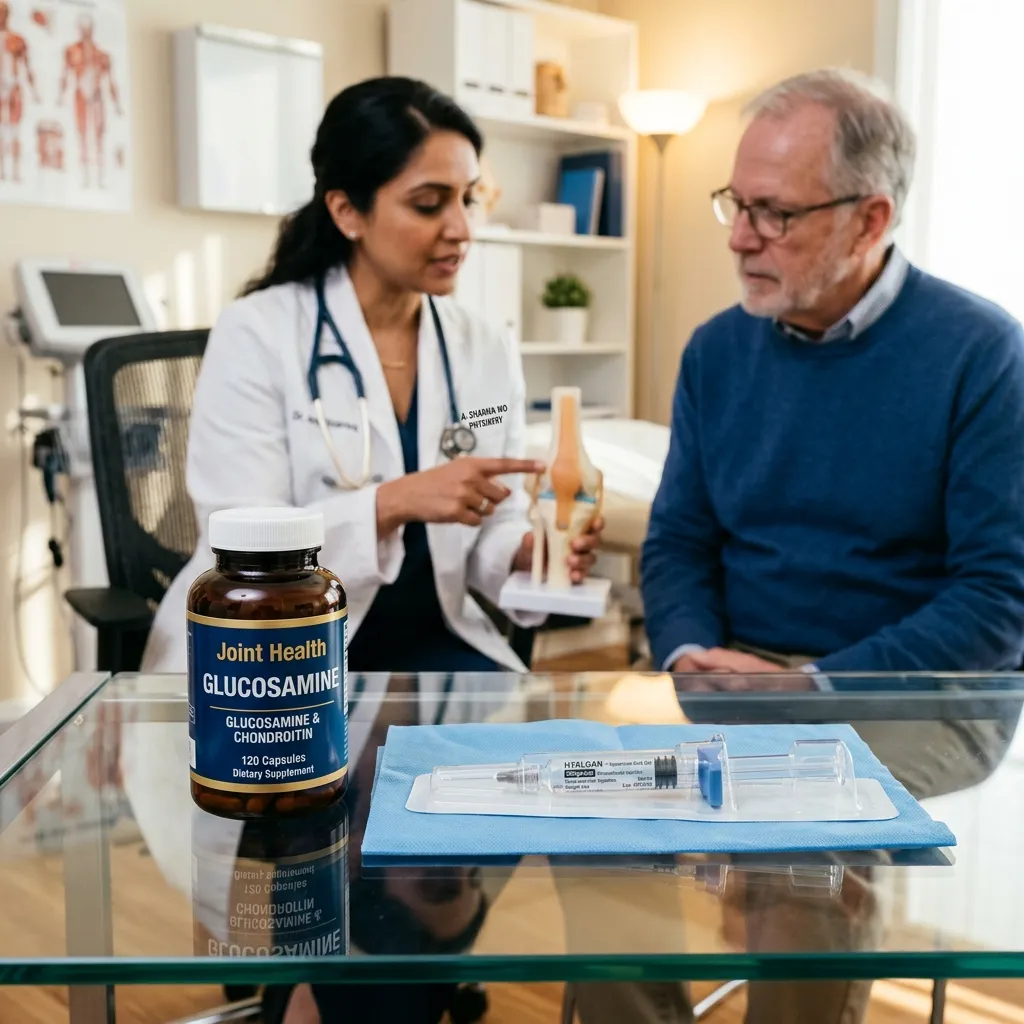
For osteoarthritis, a clinical guideline supports exercise, self-management, and shared decisions while keeping the advice condition-specific (PMID: 31908163). That does not mean the same plan is safe for a hot swollen joint, suspected infection, fracture, or inflammatory arthritis. Tissue irritability, strength, balance, comorbidities, and the patient’s goals determine how much loading is appropriate.
Applying evidence in daily care matters in Ilocos communities. A perfect plan that requires frequent travel, expensive foods, or equipment may fail even when the research is sound. I would rather choose walking near home, locally available balanced foods, and a staged home program with clear review points than prescribe an ideal routine a patient cannot sustain. Escalation is needed when swelling persists, function declines, neurological signs appear, or the working diagnosis no longer fits.
Can inflammation cause joint pain?
Yes, inflammation can cause joint pain because inflammatory chemicals and swelling make tissues more sensitive and restrict normal movement. The joint may feel warm, stiff, swollen, or painful at rest. But can inflammation cause joint pain is not the same as asking whether all joint pain is inflammation. A careful examination looks for the whole pattern rather than assuming the answer from location alone.
Inflammatory pain often has clues such as prolonged stiffness after rest, visible swelling, warmth, multiple affected joints, or symptoms that come with fever or general illness. Mechanical pain may be more predictable with load and improve with rest, although real patients can have both. Nerve-related pain may burn, tingle, or travel, and referred pain may be felt away from the actual source.
The contrarian point is that a normal-looking joint can still hurt, and a dramatic scan can be incidental. Function, examination, and symptom behavior tell me whether an image is relevant. That changes treatment: a person with nerve irritation may need a neurological screen and graded loading, while a person with a hot swollen joint may need urgent testing rather than a home stretching plan.
What is an anti inflammatory lifestyle for joint pain?
An anti inflammatory lifestyle for joint pain is a sustainable routine that supports health and load tolerance: balanced meals, regular tolerable movement, adequate sleep, stress support, medication safety, and follow-up when symptoms change. It is not a detox, a rigid food blacklist, or a promise that pain will disappear. The best plan fits the diagnosis, budget, family responsibilities, and available care.
Exercise can help some people with chronic pain and improve aerobic capacity, but research does not establish one universal dose (PMID: 34352728). Walking is a low-cost option; a review found small-to-moderate short- and medium-term pain improvements, while long-term effectiveness remained uncertain (PMID: 25529265). I use recovery, swelling, gait, strength, and function to decide whether to progress, hold, or reduce the load.

Sleep is part of pain care, not a moral test. A systematic review found a well-established relationship between sleep disturbance and pain, while also showing that the relationship can run in both directions (PMID: 30829737). If insomnia is persistent, sleep-apnea symptoms are present, or medicines are disrupting sleep, a targeted assessment is more useful than simply telling someone to “sleep better.”
The same principle applies to stress. Stress can affect fatigue, sleep, attention to pain, and coping, but that does not make pain imaginary or prove that stress caused an injury. I ask what support is available, what responsibilities cannot be paused, and which small change could make activity safer this week. Good care respects both the biology of pain and the person living with it.
The common assumption is that rest is always anti-inflammatory. Complete rest can reduce an irritated load briefly, but prolonged avoidance can reduce strength, confidence, and tolerance. The safer middle path is relative rest: reduce the aggravating load, keep safe movement, and rebuild capacity in small steps. This is where physical medicine and rehabilitation can turn broad lifestyle advice into a measurable plan.
How should movement be progressed?
Movement should be progressed when symptoms are stable, recovery between sessions is acceptable, swelling is not increasing, and the activity is improving function rather than causing a new neurological or systemic symptom. Start with a manageable amount, repeat it consistently, and change one variable at a time: duration, frequency, speed, resistance, or range. Sharp escalating pain is a reason to reassess, not a test of discipline.
I also consider footwear, walking surface, work demands, balance, sleep, and fear of movement. A person who can tolerate ten minutes of walking but cannot recover from thirty minutes has a different progression target from someone with no swelling but clear nerve symptoms. The plan should include what to do if symptoms flare and when to contact the clinic for review.
If pain has persisted, changed, or started limiting your sleep, work, walking, or household tasks, an assessment can clarify whether inflammation is present and which next step is safest. In my clinic in Vigan, I use the history, examination, function, and available tests to build a realistic plan rather than asking you to guess from a generic internet list.
For a focused nutrition guide, read Anti-Inflammatory Diet: Foods to Avoid for Arthritis and Joint Pain and discuss personal restrictions with a clinician or dietitian.
Clinical realities of inflammation and pain
A careful answer keeps the useful habits and removes the overpromises.
Pain is not a diagnosis
Inflammation is one possible contributor. The same painful area can also reflect tissue loading, nerve irritation, referred pain, or changes in how the nervous system processes signals.
Sustainable beats extreme
A meal pattern or walking plan that fits your budget, work, family, and medical conditions is more useful than a restrictive plan that creates fear or nutritional gaps.
Function is the outcome
I track sleep, walking tolerance, work, strength, swelling, and confidence with movement, not only a pain score or a laboratory marker.
References & Clinical Evidence
- [1] Field B, et al. Dietary Interventions Are Beneficial for Patients with Chronic Pain: A Systematic Review with Meta-Analysis. Pain Medicine. Abstract-only evidence review; PMID 33202007.
- [2] Koelman L, et al. Effects of Dietary Patterns on Biomarkers of Inflammation and Immune Responses. Advances in Nutrition. Abstract-only evidence review; PMID 34607347.
- [3] Kolasinski SL, et al. 2019 ACR/Arthritis Foundation Guideline for Osteoarthritis of the Hand, Hip, and Knee. Abstract-only guideline review; PMID 31908163.
- [4] García-Correa G, et al. Aerobic Physical Exercise for Pain Intensity, Aerobic Capacity, and Quality of Life in Chronic Pain. Abstract-only review; PMID 34352728.
- [5] McDonough SM, et al. Walking Exercise for Chronic Musculoskeletal Pain. Abstract-only review; PMID 25529265.
- [6] McBeth J, et al. Sleep and Pain: A Systematic Review of Studies of Mediation. Abstract-only review; PMID 30829737.
- [7] Selvanathan J, et al. Cognitive Behavioral Therapy for Insomnia in Patients with Chronic Pain. Abstract-only review; PMID 33610967.
- [8] Paultre P, et al. The Effectiveness of Turmeric in the Treatment of Knee Osteoarthritis. Abstract-only review; PMID 33500785.
- [9] The IASP classification of chronic pain for ICD-11: chronic primary pain. Abstract-only review; PMID 30586068.
- [10] Chronic Pain Management: An Overview of Taxonomy, Conditions Commonly Encountered, and Assessment. Abstract-only review; PMID 26614715.
- [11] Pharmacokinetic Interactions between Drugs and Botanical Dietary Supplements. Abstract-only review; PMID 26438626.
- [12] Commonly Used Dietary Supplements on Coagulation Function during Surgery. Abstract-only review; PMID 26949700.
- [13] Non-steroidal anti-inflammatory drug induced acute kidney injury in the community dwelling general population and people with chronic kidney disease. Abstract-only review; PMID 28764659.
- [14] Cardiovascular risk with non-steroidal anti-inflammatory drugs. Abstract-only review; PMID 21980265.
- [15] World Health Organization. Guidelines on the management of chronic pain in adults. Official guideline consulted for chronic-pain classification.
- [16] National Institute of Environmental Health Sciences. Inflammation. NIH government health information consulted for inflammation context.
- [17] National Institutes of Health Office of Dietary Supplements. Dietary supplement safety guidance.
- [18] NHS. Back pain. Government health guidance consulted for urgent and emergency symptom boundaries.
* Clinical references are provided to support the medical claims made in this article. TeraCare adheres to evidence-based practices in physical medicine and rehabilitation.

Dr. Ben Rabara
Dr. Ben Rabara is a Board-Certified Physiatrist specializing in Physical Medicine and Rehabilitation. He focuses on non-surgical, precision treatments for musculoskeletal conditions, utilizing advanced diagnostics like MSK Ultrasound.
Medical Disclaimer: The information provided in this article is for educational purposes only and does not substitute for professional medical advice, diagnosis, or treatment. Always consult a qualified physician for your specific health conditions.