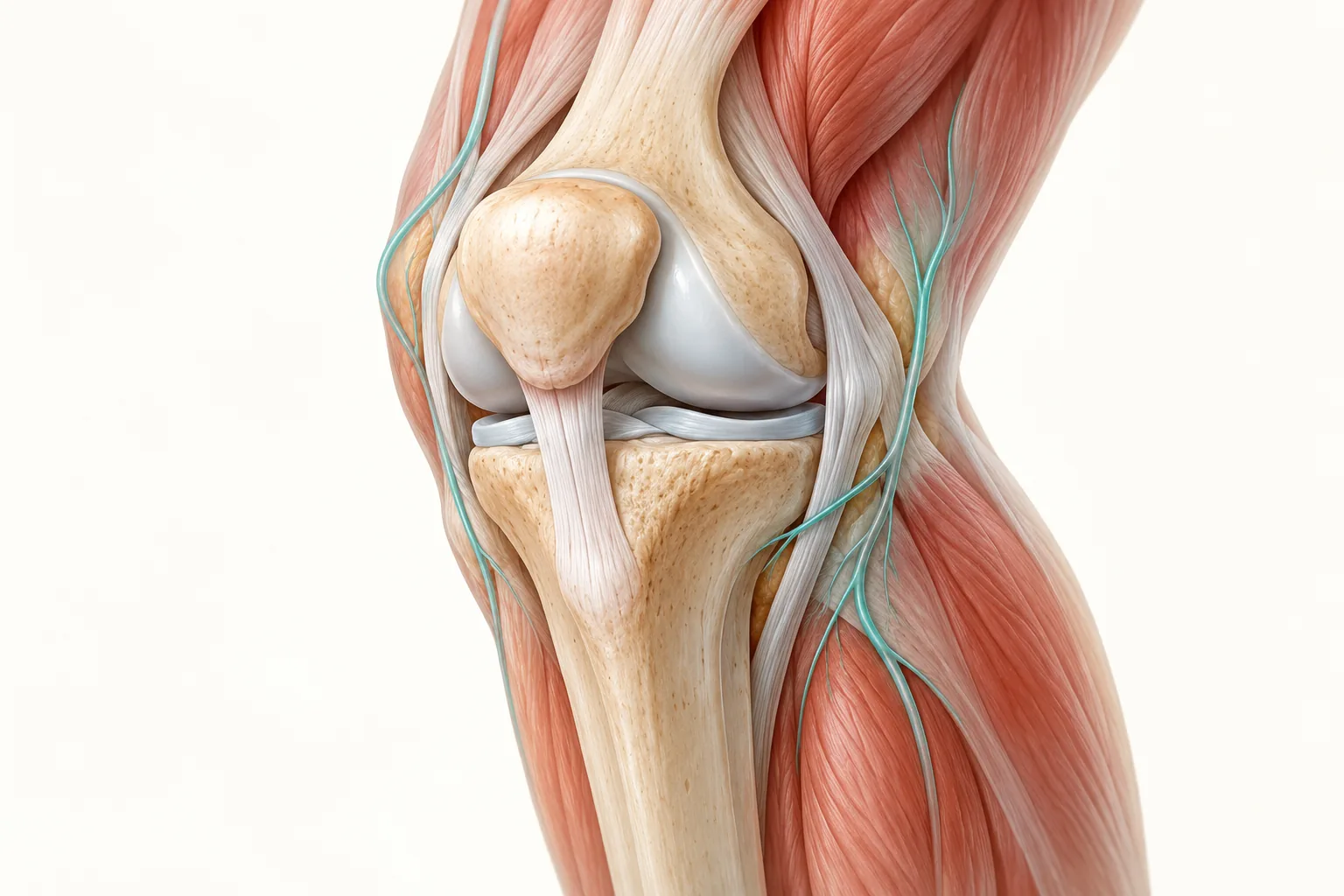
- — A genicular nerve block may be discussed for selected patients after an assessment; it is not a routine step for every painful knee.
- — Small, varied studies suggest possible short-term improvement, but they do not promise an individual result or establish a cure.
- — A nerve block, radiofrequency ablation, and an injection into the knee joint are different procedures with different evidence and risks.
- — Back-related nerve symptoms can overlap with knee pain and may need a different assessment.
A genicular nerve block is one option a clinician may discuss for selected people with knee osteoarthritis pain. It does not treat every cause of knee pain, repair cartilage, or guarantee relief. The decision depends on whether the symptoms fit a knee-joint problem, what the person hopes to learn or improve, other care already tried, and individual risks.
The evidence is limited and mixed. Small studies suggest that some people may have short-term improvement in pain or function, but techniques and follow-up vary. A temporary response should be discussed in context; it does not prove that osteoarthritis is the only pain source or that a longer-lasting nerve procedure will work.
What is a genicular nerve block for knee osteoarthritis?
A genicular nerve block is an injection near selected sensory nerve branches around the knee, intended to reduce pain signals for a limited time or help answer a focused clinical question. It targets nerves that carry pain information; it does not remove arthritis or rebuild joint cartilage. The exact target and purpose vary by patient and clinician.
“Genicular” refers to the knee. These nerves are among several pathways that can carry sensation from structures around the joint. A block may use a local anesthetic, and some treatment studies also used a corticosteroid. Those research protocols are not a universal recipe; the clinician should explain the proposed medication, target, expected duration, alternatives, and risks before consent.
A patient may hear “diagnostic block” or “therapeutic block.” A diagnostic block is intended to provide information about a suspected pain pathway. A therapeutic injection is intended to reduce symptoms. In practice, the label alone does not explain how a result will change the plan, so ask what decision the procedure is meant to support.
Who might discuss a genicular nerve block for knee arthritis?
A clinician may discuss a genicular block with an adult whose knee symptoms, examination, and prior evaluation are consistent with symptomatic osteoarthritis, especially when pain continues to limit function and a specific procedural goal has been identified. It is not a routine step for every painful knee, and a block should not replace diagnosis, rehabilitation planning, or discussion of other options.
The assessment should connect the pain pattern with activities such as walking, standing, or using stairs; relevant examination findings; and imaging when it is clinically useful. An X-ray showing osteoarthritis does not prove that every symptom comes from that joint. Hip or lower-back problems, tendon or meniscus conditions, inflammatory disease, prior surgery, and other causes can change what should happen next.
Before deciding, the clinician should also review health conditions, medicines, allergies, prior injections, infection or bleeding concerns, and what improvement would matter to the patient. A person may want to walk farther, sleep better, or understand whether a targeted procedure is worth considering. Those goals should be specific enough to review afterward. A block is harder to interpret if there is no clear baseline, no agreed activity to reassess, or several possible pain sources that have not been considered. That is a reason to clarify the assessment and purpose first, not to assume that an injection will settle the diagnosis.
How does a genicular nerve block for knee osteoarthritis work?
The injection places medication near selected sensory branches so it can temporarily alter pain signaling from that region. If local anesthetic is used, any change may be time-limited. Some studies used additional medication, but the evidence does not establish one best formula, target set, or schedule for everyone. A block cannot establish the full cause of pain on its own.
Clinicians may use imaging guidance, but the exact approach differs across settings and studies. The procedure should be explained in plain language before it is performed, including how the clinician plans to locate the target and what sensations or temporary changes may follow. This guide does not give needle placement or medication instructions because these are clinician-performed decisions.
If a diagnostic goal is being discussed, agree beforehand on what to observe and for how long. A change in the usual pain during a relevant activity may be useful information, but it is only one part of assessment. It does not show that the knee is the only source, that osteoarthritis has changed, or that radiofrequency ablation will provide lasting benefit.
What genicular nerve block side effects should I know about?
Reports mention temporary local pain or soreness, swelling, and altered sensation or numbness. The available reviews say adverse events were not recorded consistently, so they cannot provide a complete safety estimate. Ask your clinician about risks from the specific injection and medicine, and how your health history affects the decision.
Before an injection, tell the treating team about your current medicines, allergies, and any recent infection, and ask how they affect the plan.
Ask what temporary effects to expect, when to resume activities, and whom to contact if symptoms worsen. A consent discussion should include alternatives and the possibility that the block may not help.
What does the research say about benefit and duration?
Systematic reviews of randomized trials report possible short-term pain or function improvement, but the evidence base is small and varies in technique, medication, comparison group, and follow-up. One review included six trials with 420 participants (Li et al., 2025; PMID: 40546829); another judged the evidence for primary knee osteoarthritis to be fair and did not recommend routine use because of heterogeneity and limited follow-up (Vilchez-Cavazos et al., 2024; PMID: 39143682).
These findings describe groups, not a forecast for an individual. They do not show that every person will improve, how long a particular patient’s response will last, or that an injection slows osteoarthritis. One review also noted that inconsistent adverse-event reporting prevented a comprehensive safety assessment (Li et al., 2025; PMID: 40546829). The most accurate explanation is that a block may be considered selectively, with uncertain benefit and a need to review the result. The same review combined varied comparators and techniques and reported substantial heterogeneity in some pain outcomes. A pooled difference can help summarize research, but it does not tell a reader whether the procedure is appropriate for their knee, which medication should be used, or what improvement they will experience. Those decisions remain tied to a clinical assessment and an agreed goal.
Radiofrequency ablation is a different procedure. A review comparing blocks and ablation found that comparative superiority of ablation over therapeutic steroid block was not conclusive for pain reduction (Toubasi et al., 2025; PMID: 40104457). Results from an ablation study should not be used to promise the duration or outcome of a temporary block.
How is a nerve block different from ablation or a joint injection?
A genicular nerve block places medication near selected nerves; a knee-joint injection places medication inside the joint; radiofrequency ablation uses a different technique to affect nerve signaling for a longer period. These procedures have different goals, evidence, and risks. The names can sound similar, so ask which structure is targeted and what decision the proposed procedure is intended to inform.
A block and ablation are not interchangeable. A short-term response to a block may be one factor in considering a later procedure, but it does not guarantee that ablation will help. Likewise, evidence about corticosteroid, hyaluronic-acid, or platelet-rich-plasma joint injections should not be presented as evidence for a genicular nerve block.
Osteoarthritis care can also include education, exercise-based rehabilitation, activity planning, weight-management support when appropriate, medicines selected around a person’s health, and other clinician-guided options. A procedure is one possible part of a broader plan, not a substitute for discussing function, safety, and the person’s priorities. There is no rule that everyone must try the same treatment in the same order. If an injection is proposed, ask how it fits with the care already tried, whether the goal is diagnostic or symptom-focused, and what the next step would be if the response is small or short-lived.

What assessment can help identify the source of knee pain?
A careful assessment asks where the pain starts, what reliably brings it on, what relieves it, and whether the examination and imaging tell a consistent story. Lumbar spine problems can sometimes refer pain into the leg or near the knee, while local joint, hip, tendon, or other conditions may create overlapping symptoms (Lygrisse et al., 2025; PMID: 39836776). The pattern helps guide an evaluation; it does not diagnose the cause by itself.
Burning, tingling, or numbness traveling from the back or buttock into the leg may lead a clinician to consider a nerve-root source as well as a knee problem. A genicular nerve block is not a treatment for sciatica. If the symptoms do not fit the knee findings, the next step may be a different examination or referral rather than a knee injection.
Bring a short symptom timeline, a list of medicines and allergies, reports from earlier imaging or procedures, and examples of activities that have become difficult. The goal is to decide whether the proposed target matches the main problem and whether the expected information or symptom change would be useful.
Other guides in this hub discuss pudendal nerve blocks for pelvic pain and nerve blocks for facial or head pain. They address different nerve regions and conditions; their indications and evidence do not show whether a genicular block is suitable for knee osteoarthritis.
What should I track before and after the procedure?
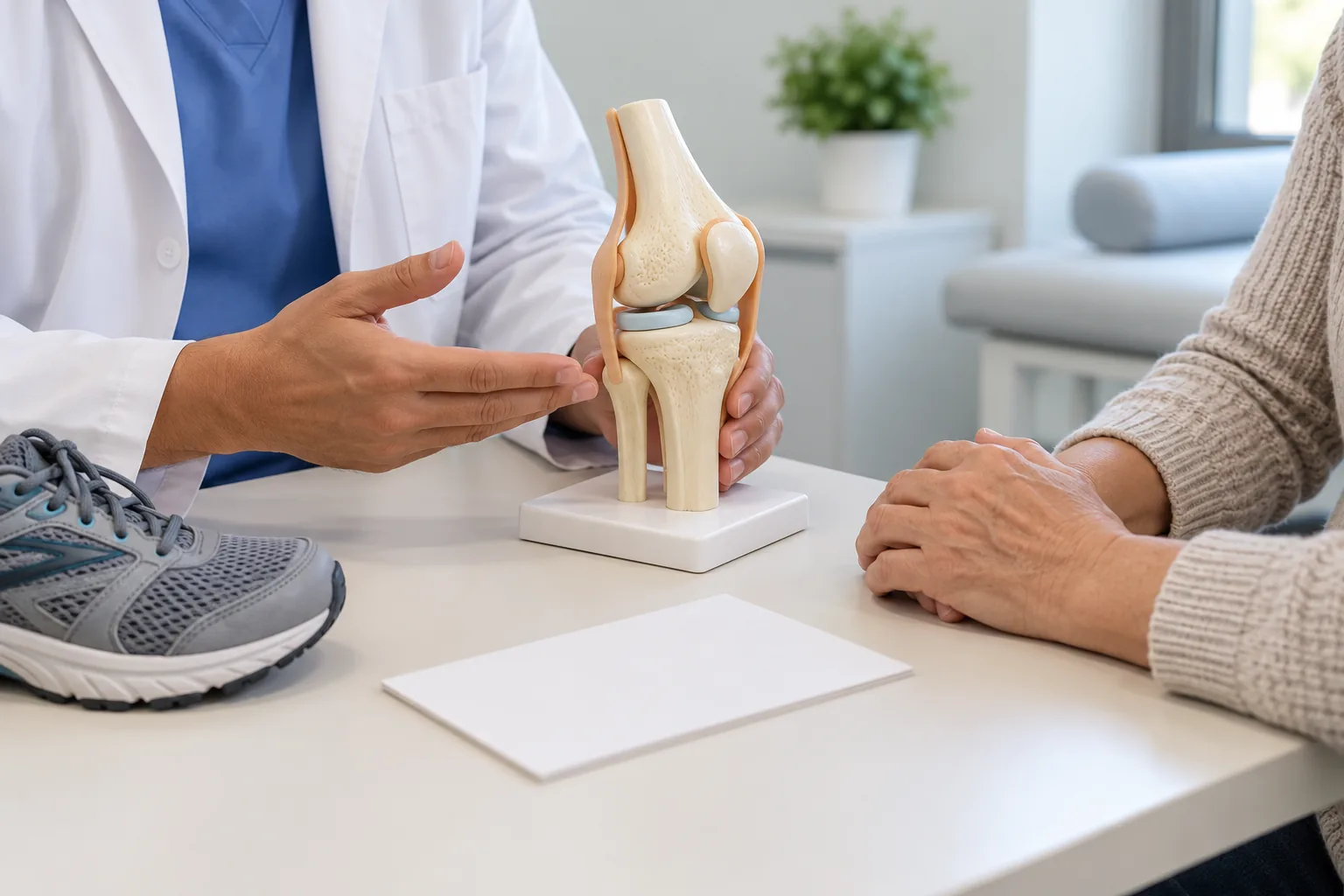
Before a planned block, record the usual pain and one or two activities it limits, such as a short walk or stairs. If a clinician recommends a procedure, ask when to compare symptoms, which changes matter, what temporary effects to expect, and when to call. Follow the treating team’s instructions because aftercare varies with the procedure and the patient.

A simple note can include pain location, pain level at rest and during the chosen activity, walking or standing tolerance, numbness, swelling, and how long any change lasts. This makes follow-up more useful than relying on a general impression such as “better” or “not better.” Do not repeat an injection or alter medicines based on a diary without clinician guidance.
If pain improves only briefly, worsens, or does not change, that information still matters. It may prompt a review of the diagnosis, goals, other pain sources, and alternatives. A short response is not proof of failure in every circumstance, and a strong response is not proof that the knee is the only source. Record the time the change begins and fades, but do not use a diary to decide on another injection yourself. The meaning of a response depends on the medication used, the activity tested, timing, and the broader examination. Ask the treating clinician how the result will affect the plan before the procedure takes place. It also helps to agree on the timing of follow-up, since a brief change soon after an injection and a lasting change in day-to-day function are not the same outcome. If the procedure is intended to answer a diagnostic question, ask what other findings would still be needed before changing treatment. Studies used different methods and follow-up periods, so there is no single response threshold that applies to everyone (Li et al., 2025; PMID: 40546829).
When do knee or leg symptoms need urgent assessment?
New or progressive leg weakness, numbness around the groin or saddle area, or new bladder or bowel problems can be warning symptoms when pain travels from the back into the leg. Seek urgent medical assessment rather than waiting for a routine knee procedure discussion. The NHS sciatica guidance advises urgent help for these symptoms.
If a symptom is serious or rapidly changing, do not wait for a scheduled injection appointment. If you are unsure whether a new symptom is urgent, contact local emergency or urgent-care services for guidance.
The practical next step is a clinical discussion about the pain source, the goal of any proposed block, realistic benefits, risks, alternatives, and follow-up. A genicular nerve block is not right for every person with knee osteoarthritis, and the available evidence does not justify a guaranteed result. If you are arranging an assessment in Vigan or elsewhere in Ilocos Sur, confirm directly which services are available and what the visit or procedure would involve; this educational guide does not establish local procedure availability or fees.
References & Clinical Evidence
- [1] Li Z, Bai Y, Liu C, Gu Y. Efficacy and Temporal Dynamics of Genicular Nerve Block in Primary and Secondary Knee Osteoarthritis for Pain and Function: A Systematic Review and Meta-Analysis of Randomized Controlled Trials. J Pain Res. 2025. PMID: 40546829. https://pubmed.ncbi.nlm.nih.gov/40546829/
- [2] Vilchez-Cavazos F, et al. Genicular Nerve Block for Knee Osteoarthritis: A Systematic Review and Meta-analysis of Randomized Clinical Trials. Clin J Pain. 2024. PMID: 39143682. https://pubmed.ncbi.nlm.nih.gov/39143682/
- [3] Toubasi AYM, et al. Genicular Nerve Block Versus Genicular Nerve Ablation for Knee Osteoarthritis: A Systematic Review. Cureus. 2025. PMID: 40104457. https://pubmed.ncbi.nlm.nih.gov/40104457/
- [4] Lygrisse KA, Mont MA, Scuderi GR. Knee Pain Is Not Always the Knee. JBJS Rev. 2025. PMID: 39836776. https://pubmed.ncbi.nlm.nih.gov/39836776/
- [5] NHS. Sciatica. https://www.nhs.uk/conditions/sciatica/
* Clinical references are provided to support the medical claims made in this article. TeraCare adheres to evidence-based practices in physical medicine and rehabilitation.

Dr. Ben Rabara
Dr. Ben Rabara is a Board-Certified Physiatrist specializing in Physical Medicine and Rehabilitation. He focuses on non-surgical, precision treatments for musculoskeletal conditions, utilizing advanced diagnostics like MSK Ultrasound.
Medical Disclaimer: The information provided in this article is for educational purposes only and does not substitute for professional medical advice, diagnosis, or treatment. Always consult a qualified physician for your specific health conditions.