- — Chronic joint stiffness is a symptom, not a diagnosis. The safest plan starts by identifying the pattern, affected joint and functional limitation.
- — Active rehabilitation, education and gradual loading remain the foundation of osteoarthritis care; TECAR should be considered only as a possible adjunct.
- — A warm sensation or easier movement during a session does not prove cartilage repair, disease reversal or a durable result.
- — Radiofrequency heat is not the same as genicular-nerve radiofrequency ablation, an invasive procedure studied separately.
- — After surgery, the operating team’s restrictions, wound status and progression criteria take priority over any generic heat-treatment plan.
Chronic stiffness changes ordinary decisions. The first steps in the morning may feel slow, a knee may not bend far enough for the stairs, or a shoulder may stop you from reaching a shelf. People often search for chronic joint stiffness relief because they want one practical answer: whether warmth, exercise, hands-on treatment or another option can restore movement without making the problem worse. The answer depends on what is producing the stiffness and what the joint can safely tolerate.
I do not treat the word stiffness as a diagnosis. It can describe limited motion after inactivity, pain-related guarding, swelling, muscle weakness, a postoperative restriction, arthritis, a tendon problem or a nerve-related change. The right plan therefore begins with a pattern: which joint is affected, when the stiffness is worst, what movement is limited, what makes it ease, and whether there are warning signs.
This page explains where TECAR radiofrequency heat may fit, but it does not present it as a cure or as a substitute for assessment. The retrieved literature supports a rehabilitation-centered approach and provides useful osteoarthritis context. It does not establish a TECAR-specific dose, success rate or guaranteed duration of benefit for chronic joint stiffness.
How can chronic joint stiffness relief improve mobility?
Chronic joint stiffness relief begins with identifying why a joint is stiff, then matching treatment to irritability, tissue and function. I use heat, including TECAR, only as a possible adjunct when it makes movement practice more comfortable or feasible. The meaningful endpoint is better use of the joint, not simply a warm feeling during a session.
Mobility is not a single measurement. It includes how far a joint moves, how much force the surrounding muscles can produce, how confidently a person bears weight, and whether the movement transfers to walking, dressing, work or sleep. A joint can feel looser for ten minutes yet remain unable to tolerate the task that matters. That is why a treatment plan should name the task before it names the modality.
A common assumption is that a stiff joint needs to be forced until it gives way. That is incomplete. If the tissue is highly irritable, force can increase guarding and make the next movement less reliable. The better clinical question is whether the chosen input leaves the person able to practise a controlled movement afterward and recover without a meaningful flare.
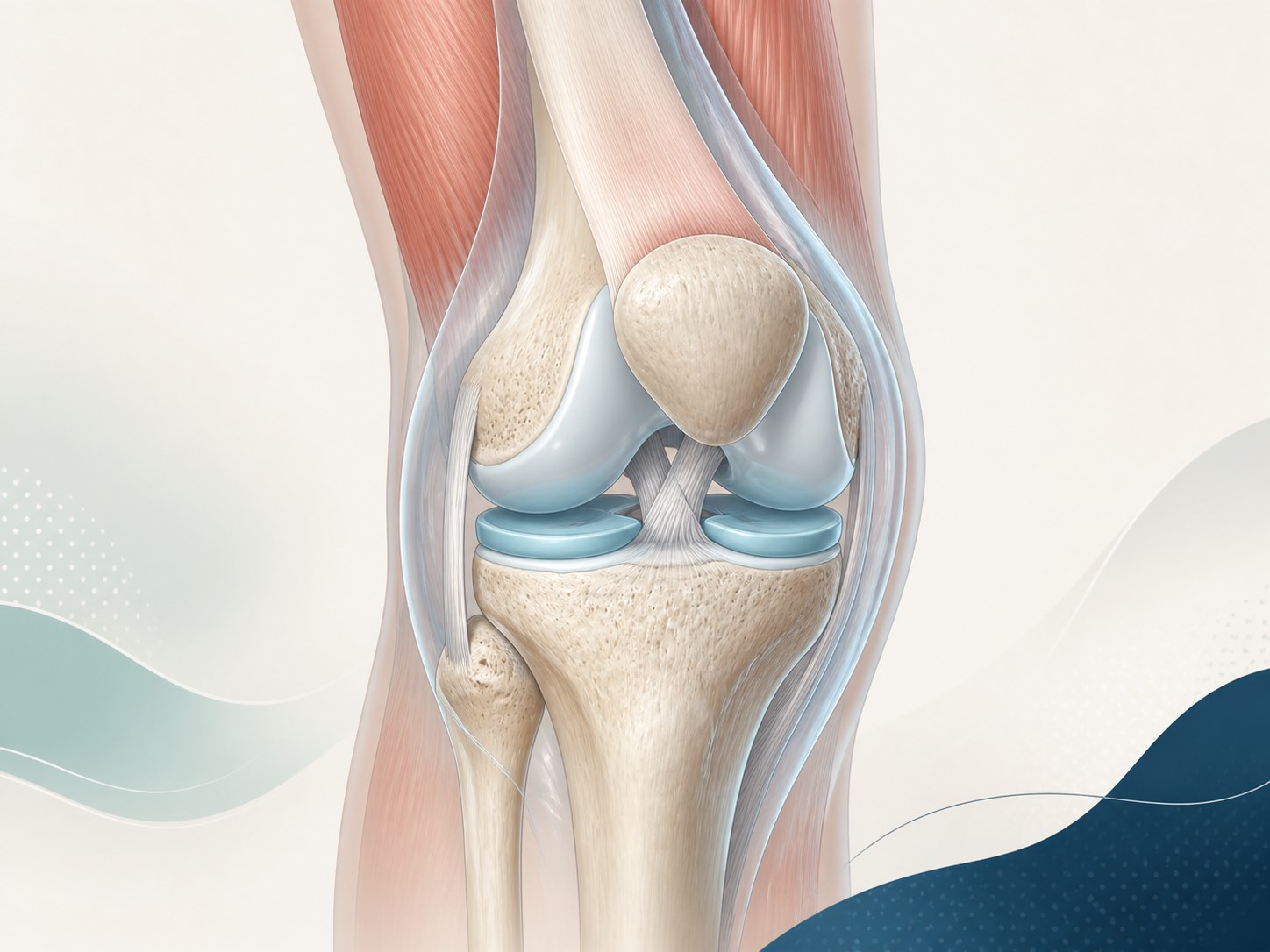
For knee osteoarthritis, a PubMed-indexed review describes mechanical, inflammatory and metabolic disturbances that can impair joint function (PMID: 38963824). That does not mean every stiff joint has those drivers, and it does not show that TECAR changes them. It does explain why a generic promise of “deep heat for all stiffness” is too simple.
What does joint stiffness treatment look like when the cause is still unclear?
Joint stiffness treatment should first clarify the pattern rather than assume arthritis or prescribe a device. For knee osteoarthritis, diagnosis predominantly relies on clinical assessment, with radiographs used conditionally (PMID: 38963824). A clinician should connect the examination to the person’s symptoms and function, then decide whether imaging, laboratory work or another referral is needed.
In an assessment, I want to know whether the limitation is painful, mechanically blocked, weak, swollen, unstable or associated with altered sensation. I also ask about injury, surgery, work demands, exercise, sleep, medications and what the person has already tried. A hip problem can be felt near the knee, a tendon can be mistaken for a joint problem, and a nerve issue can change movement without producing obvious swelling.
- When the joint is painful but mobile: reduce the aggravating load, maintain tolerable movement and build capacity gradually.
- When swelling dominates: identify why the joint is inflamed or filling, rather than masking the change with repeated heat.
- When weakness limits the movement: include strengthening and task practice, because warmth alone cannot restore force control.
- When locking, instability or neurologic symptoms appear: reassess the diagnosis and escalation pathway before adding a modality.
The evidence-based osteoarthritis reviews in this run prioritize education, exercise and weight management, with medication described as an adjunct rather than the entire plan (PMID: 38963824). Rehabilitation reviews similarly describe comprehensive assessment and shared decision-making as the starting point (PMID: 37414718). These findings support a sequence: understand the problem, set a function-based goal, select an intervention, then check whether the result justifies continuing.
This is also where local feasibility matters. A plan that requires repeated long-distance travel, expensive add-ons or equipment that cannot be continued at home may be less defensible than a simpler plan the person can follow consistently. Evidence describes what can work under study conditions; clinical reasoning must also account for access, cost, transport, caregiving and the person’s actual ability to practise between visits.
What is the safest morning joint stiffness treatment when stiffness keeps returning?
The safest morning joint stiffness treatment depends on why stiffness returns after sleep or sitting. I first separate a brief start-up limitation that eases with gentle movement from stiffness accompanied by swelling, warmth, multiple painful joints, fever or progressive loss of function. A repeated morning pattern is useful information for assessment, not proof that a heating treatment is the correct answer.
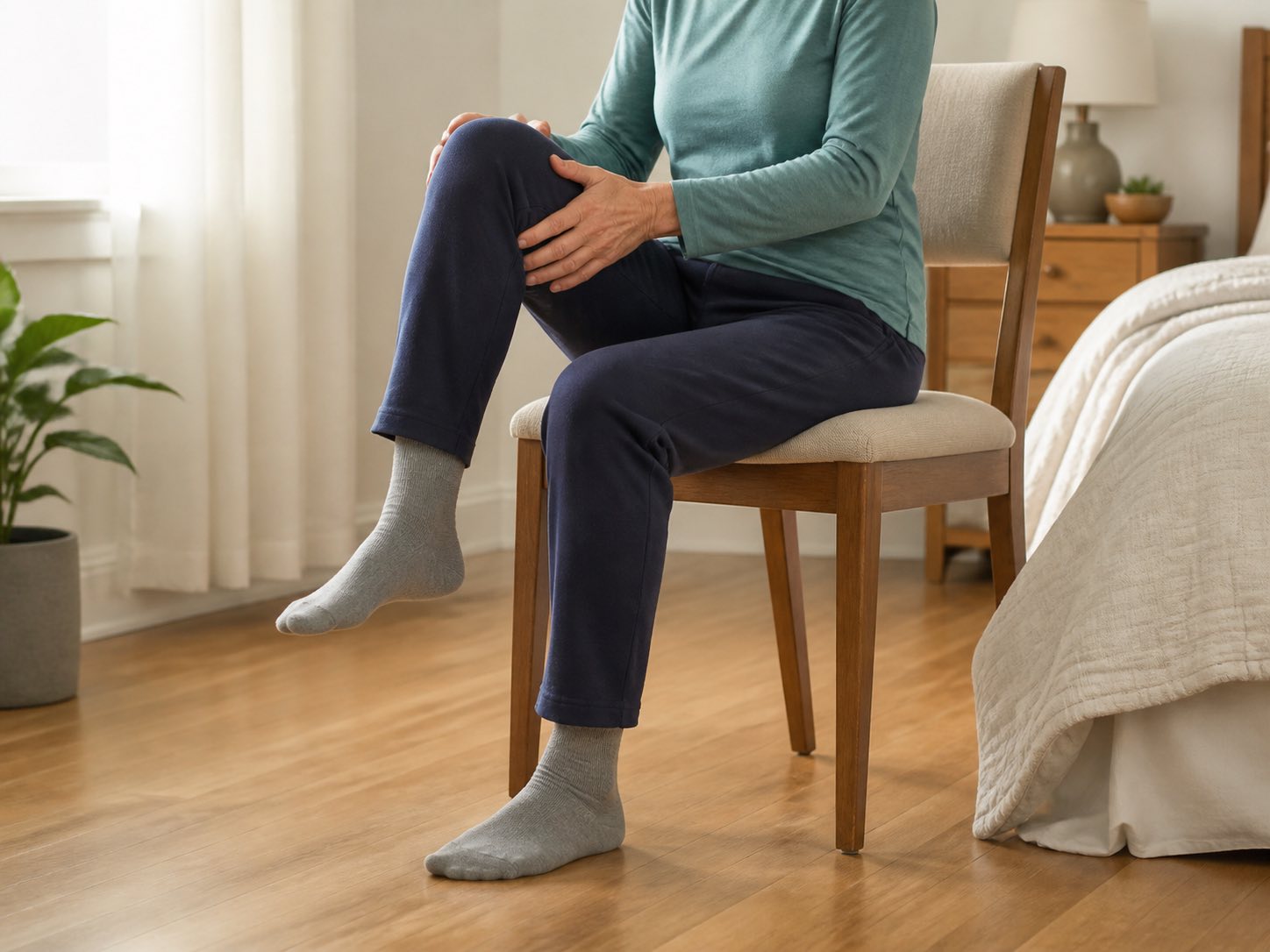
Before getting out of bed, many people can begin with small, pain-limited movements rather than a forceful stretch: ankle pumps, comfortable knee bends, hand opening and closing, or slow shoulder movements if those actions are appropriate for the joint. The aim is to learn how the joint responds, not to chase a dramatic sensation. New or worsening pain, swelling or weakness changes the plan.
Morning stiffness can also reflect the previous day’s load. A long walk, prolonged kneeling, an unfamiliar workout or too little recovery may make the first movement worse the next day. I would therefore record the prior activity, first-step difficulty, swelling, pain at rest and the time needed to move more normally. That simple pattern often provides more useful information than asking whether the joint merely feels “tight.”
The myth is that a longer morning stiffness period automatically means more aggressive treatment is needed. It does not. A recurring pattern may signal that the working diagnosis is incomplete, the load is progressing too quickly, the person is protecting a painful joint, or a systemic condition deserves attention. Heat can change comfort, but it should not delay a reassessment when the pattern is changing.
How can you improve joint mobility when a joint feels stiff?
To improve joint mobility, pair gentle range-of-motion work with the strength and task practice that the joint needs. Knee osteoarthritis rehabilitation literature focuses on range of motion, quadriceps strength and function (PMID: 38654798). Recent reviews still describe exercise as a first-line strategy while acknowledging uncertainty about who responds best and how to improve adherence (PMID: 39116992).
A practical progression has four parts. First, move through a comfortable range without forcing the end position. Second, add an isometric or low-load strengthening task suited to the joint. Third, practise a meaningful activity such as sit-to-stand, a short walk, reaching or stair control. Fourth, review the response later that day and the following morning. The next step is earned by stable function, not by tolerating the most discomfort.
- Choose one measurable task: for example, the first ten minutes of walking or standing from a chair.
- Use a tolerable starting dose: the movement should not create sharp escalating pain or a new symptom.
- Progress one variable at a time: range, repetitions, resistance, speed or distance, not all at once.
- Pause and reassess: worsening swelling, loss of strength, giving way, locking or new numbness needs clinical review.
A rehabilitation review highlights education alongside exercise and a stepped approach to exercise, while also noting that some trials are small or carry risk of bias (PMID: 36244626). That combination matters. Education helps a person understand why a gradual plan is being used; a stepwise dose makes it possible to see whether the joint is adapting. It is not a reason to prescribe the same exercise sequence to everyone.
Heat may be considered before movement if it makes the starting task more tolerable, but the progression criterion remains function. If the person repeatedly feels better during treatment but cannot walk, climb, reach or load the joint more effectively afterward, the plan needs review. Temporary symptom change is not the same as restored capacity.
What is TECAR therapy for joint stiffness, and what can it realistically do?
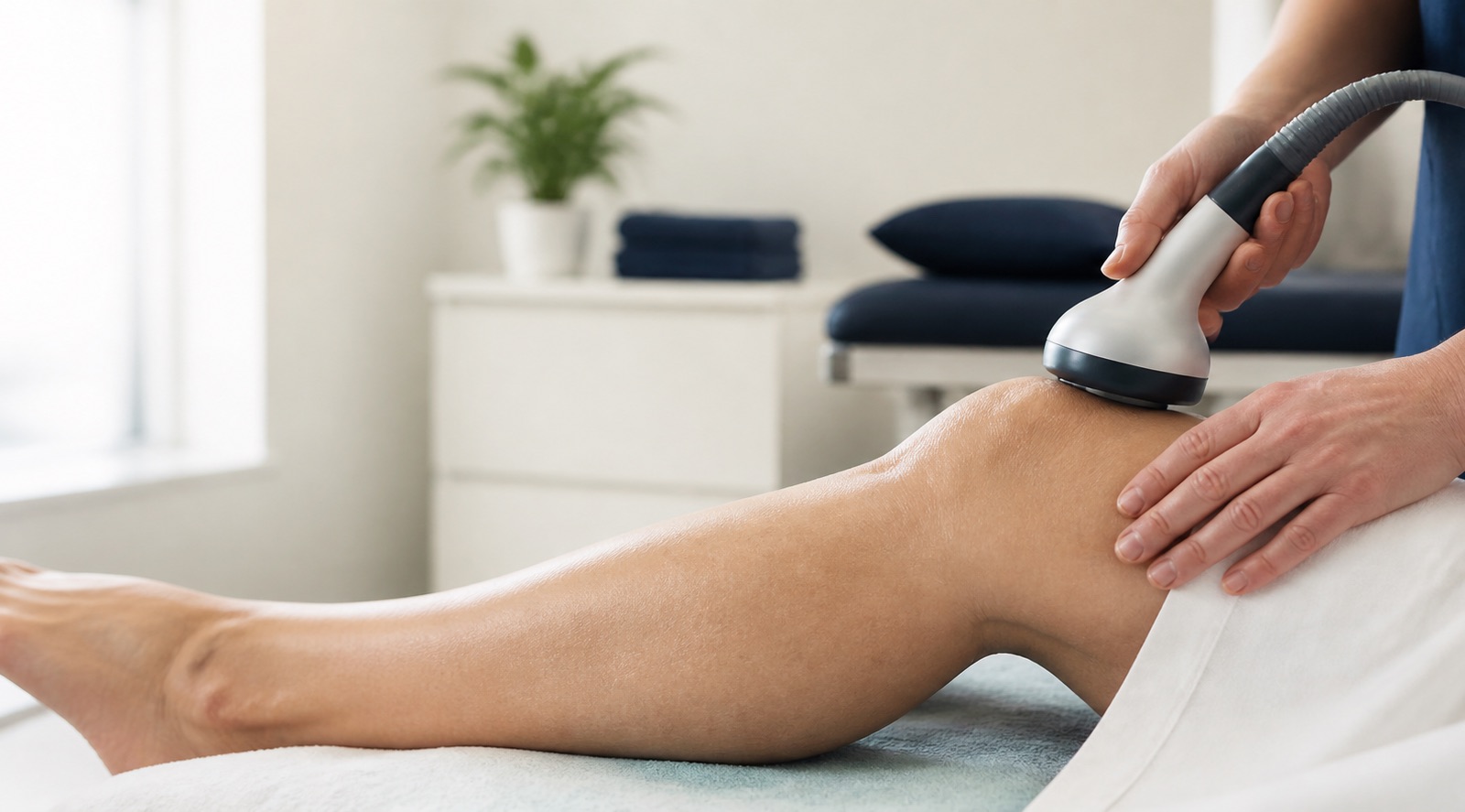
TECAR therapy for joint stiffness is a clinic-delivered radiofrequency heat modality used with an applicator to create a controlled warming sensation in a selected treatment area. Its realistic role is narrower than many advertisements suggest: it may be considered to support comfort or movement practice, but the evidence retrieved for this page does not establish a TECAR-specific dose, success rate, tissue-repair effect or durable outcome for chronic stiffness.
In a sensible protocol, the tissue state and the treatment goal come first. If a painful joint is guarding before a mobility exercise, warmth may be proposed as a short adjunct to make that exercise more tolerable. If the main problem is weakness, poor balance, a mechanical block or an unassessed swelling, heat does not address the central problem. The progression criterion is improved task performance without an unacceptable next-day response.
The physiological rationale should be stated honestly. The intended benefit is a change in comfort or movement tolerance that may allow better participation in rehabilitation. That is a clinical hypothesis for an individual, not evidence that the modality repairs cartilage, removes arthritis or reverses a postoperative problem. A warm sensation is a treatment experience, not an outcome measure.
Do not confuse TECAR with radiofrequency ablation. A systematic review of knee radiofrequency ablation included 13 randomized trials and 865 patients, with substantial heterogeneity in pain outcomes (PMID: 39079243). Another review addressed cooled and pulsed radiofrequency ablation targeting genicular nerves (PMID: 39353105). Those are different procedures with different targets and risk profiles; their results cannot be transferred to non-invasive TECAR heat.
A surface hot pack, a warm shower, manual treatment and TECAR also answer different practical questions. A home method may be enough for short-term comfort and may be easier to repeat. A clinic modality may be considered when a therapist needs to pair a controlled sensation with movement or hands-on work. The more expensive or technically complex option is not automatically the more appropriate option.
Is TECAR therapy safe for every stiff joint?
TECAR therapy is not automatically safe for every person, diagnosis or body region. Before treatment, I screen the reason for stiffness, skin and wound status, sensation, circulation concerns, implants or medical conditions, treatment location, current medications and any recent procedure. If those details are uncertain, the safer decision is to clarify them before choosing an energy-based modality.
Reduced sensation deserves particular care because a person may not detect excessive heat normally. An open wound, active skin problem, unexplained rapidly increasing swelling or an acutely hot joint also changes the decision. Disclose pregnancy, active cancer treatment, electronic implants, recent surgery and significant vascular or neurologic conditions so the treatment area and protocol can be reviewed rather than assumed.
During treatment, the patient should be able to describe the sensation clearly. Burning, sharp pain, escalating discomfort, dizziness or a new unusual symptom is a reason to stop and reassess. The contraindication logic is not “heat is always dangerous”; it is that energy, sensation, tissue status and diagnosis must match. The same device setting is not appropriate for every joint or every stage of healing.
The myth is that non-invasive means risk-free. Non-invasive describes how the treatment enters the body; it does not remove the need for history, examination, temperature awareness or a clear endpoint. A safer trial has a defined reason, a tolerable sensation, a functional measure and a decision rule for stopping when the response is absent or worse.
How should stiff joints after surgery rehabilitation be planned?
Stiff joints after surgery rehabilitation should follow the operating team’s restrictions, tissue-healing timeline and current examination. Persistent pain or mobility limitation can occur for an extended period after total joint arthroplasty, but that does not make every postoperative symptom normal (PMID: 36188773). A modality should never replace checking the wound, hardware-related concerns, infection signs, clot risk or the prescribed progression.
Early rehabilitation often prioritizes protection, swelling control, safe range, muscle activation and the functional tasks approved for that procedure. Later stages may emphasize strength, balance, gait, endurance or return to work. The tissue state changes over time, so an intervention that might be considered later can be inappropriate immediately after surgery. The surgeon’s restrictions take precedence over a generic TECAR pathway.
If heat is considered after clearance, it should have a specific purpose and a small testable dose. The patient should know what to report and what improvement would justify repeating it. If the joint becomes more swollen, the wound changes, pain escalates, fever appears or function declines, treatment stops while the cause is assessed. “Work through it” is not a postoperative safety principle.
A rehabilitation plan is more defensible when it links each intervention to a progression criterion: safer transfers, a specified range, improved walking quality, better stair control or greater tolerance for daily activity. The endpoint is not the number of sessions completed. It is whether the joint is moving toward the surgeon’s and rehabilitation team’s functional goals without signs that require escalation.
What should you track before deciding whether treatment is helping?
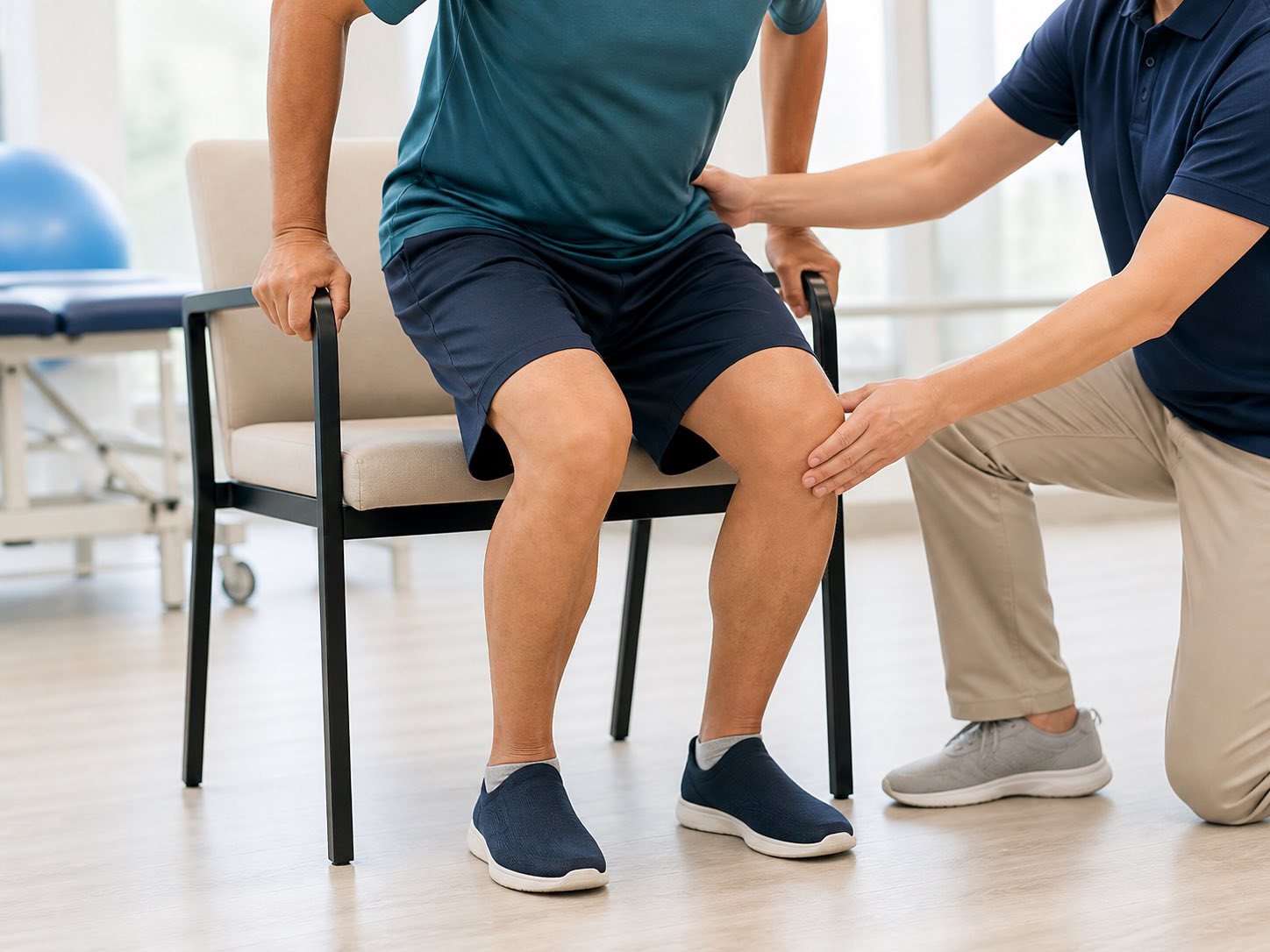
Track the function that matters to you before deciding whether treatment is helping. Record the joint, the task, the starting difficulty, the response immediately afterward and the response the next morning. Add swelling, sleep, walking distance or work tolerance when relevant. This gives a clinician something more reliable than a general impression that the area felt warm or loose.
Useful measures can be simple: how long the first walk takes, how many chair rises are comfortable, whether a hand reaches a shelf, how far the knee bends for dressing, or how long a person can stand before changing position. Keep the measurement consistent. A good day followed by a flare is different from a modest but repeatable improvement across several days.
I would reconsider the plan when there is no meaningful functional change after the agreed review period, when pain or swelling trends upward, or when the symptom pattern changes. That may mean revisiting the diagnosis, adjusting load, selecting a different rehabilitation exercise, involving another specialist or deciding that the modality is not worth continuing. Repeating an intervention without learning from the response is not a treatment strategy.
Rehabilitation literature describes non-pharmacological care as a foundation while acknowledging uncertainty, adherence problems and variable evidence quality (PMIDs: 37414718, 40887656 and 39116992). That is not discouraging. It is a reason to use shared decisions, honest goals and regular reassessment. A treatment is useful when it improves the person’s plan, not when it simply sounds advanced.
When should joint stiffness be assessed urgently?
Seek prompt medical assessment for stiffness with a hot or rapidly swollen joint, fever, a major injury or deformity, a new inability to bear weight, rapidly worsening weakness or numbness, or severe pain that is not behaving like the person’s usual symptoms. After surgery, chest pain, breathlessness, fainting or a newly swollen and painful calf requires urgent care rather than a heat session.
Urgency also rises when a joint repeatedly locks, gives way, loses motion quickly or becomes progressively harder to use. These patterns can indicate a problem that needs examination or time-sensitive management. Do not use a temporary reduction in discomfort after heat as reassurance that an urgent cause has been ruled out.
For non-urgent but persistent stiffness, arrange an assessment that connects symptoms with movement, strength, sensation, swelling and daily function. Bring a list of recent procedures, medications, relevant imaging and the activity pattern around symptom flares. A clear history helps the clinician decide whether active rehabilitation, a home comfort measure, TECAR or another pathway is reasonable.
Chronic joint stiffness relief is therefore a process of finding the driver, protecting safety and building usable capacity. Radiofrequency heat may have a place for selected patients, but it should remain subordinate to diagnosis, measurable function and rehabilitation. The most honest next step is an individualized plan with a defined goal, a reassessment point and permission to change course.
Chronic Stiffness Treatment Realities
What to monitor when warmth is used alongside rehabilitation.
Comfort Is a Safety Signal
Warmth should remain tolerable. Burning, escalating pain or an unusual sensation should be reported during treatment rather than tolerated.
Function Beats a Temporary Feeling
The useful follow-up question is whether walking, stairs, dressing, work or another chosen task improves without a next-day flare.
Reassessment Protects the Plan
If stiffness persists, spreads or changes character, the working diagnosis and treatment sequence need review instead of automatic repetition.
References & Clinical Evidence
- [1] PubMed-indexed review: Evaluation and management of knee osteoarthritis. PMID: 38963824.
- [2] PubMed-indexed clinical review: Rehabilitation interventions in osteoarthritis. PMID: 37414718.
- [3] PubMed-indexed systematic review: Physiotherapeutic Intervention Techniques for Knee Osteoarthritis. PMID: 38654798.
- [4] PubMed-indexed narrative review: Knee osteoarthritis rehabilitation: an integrated framework of exercise, nutrition, biomechanics, and physical therapist guidance. PMID: 40887656.
- [5] PubMed-indexed rehabilitation year in review: Osteoarthritis Year In Review 2024: Rehabilitation and outcomes. PMID: 39116992.
- [6] PubMed-indexed rehabilitation year in review: Osteoarthritis year in review 2022: rehabilitation. PMID: 36244626.
- [7] PubMed-indexed review: Osteoarthritis Progression: Mitigation and Rehabilitation Strategies. PMID: 36188773.
- [8] PubMed-indexed systematic review and meta-analysis: Radiofrequency ablation therapy for knee osteoarthritis. PMID: 39079243.
- [9] PubMed-indexed systematic review and meta-analysis: The Analgesic Effectiveness of Genicular Nerve-targeted Cooled and Pulsed Radiofrequency Ablation for Osteoarthritis Knee Pain. PMID: 39353105.
* Clinical references are provided to support the medical claims made in this article. TeraCare adheres to evidence-based practices in physical medicine and rehabilitation.

Dr. Ben Rabara
Dr. Ben Rabara is a Board-Certified Physiatrist specializing in Physical Medicine and Rehabilitation. He focuses on non-surgical, precision treatments for musculoskeletal conditions, utilizing advanced diagnostics like MSK Ultrasound.
Medical Disclaimer: The information provided in this article is for educational purposes only and does not substitute for professional medical advice, diagnosis, or treatment. Always consult a qualified physician for your specific health conditions.