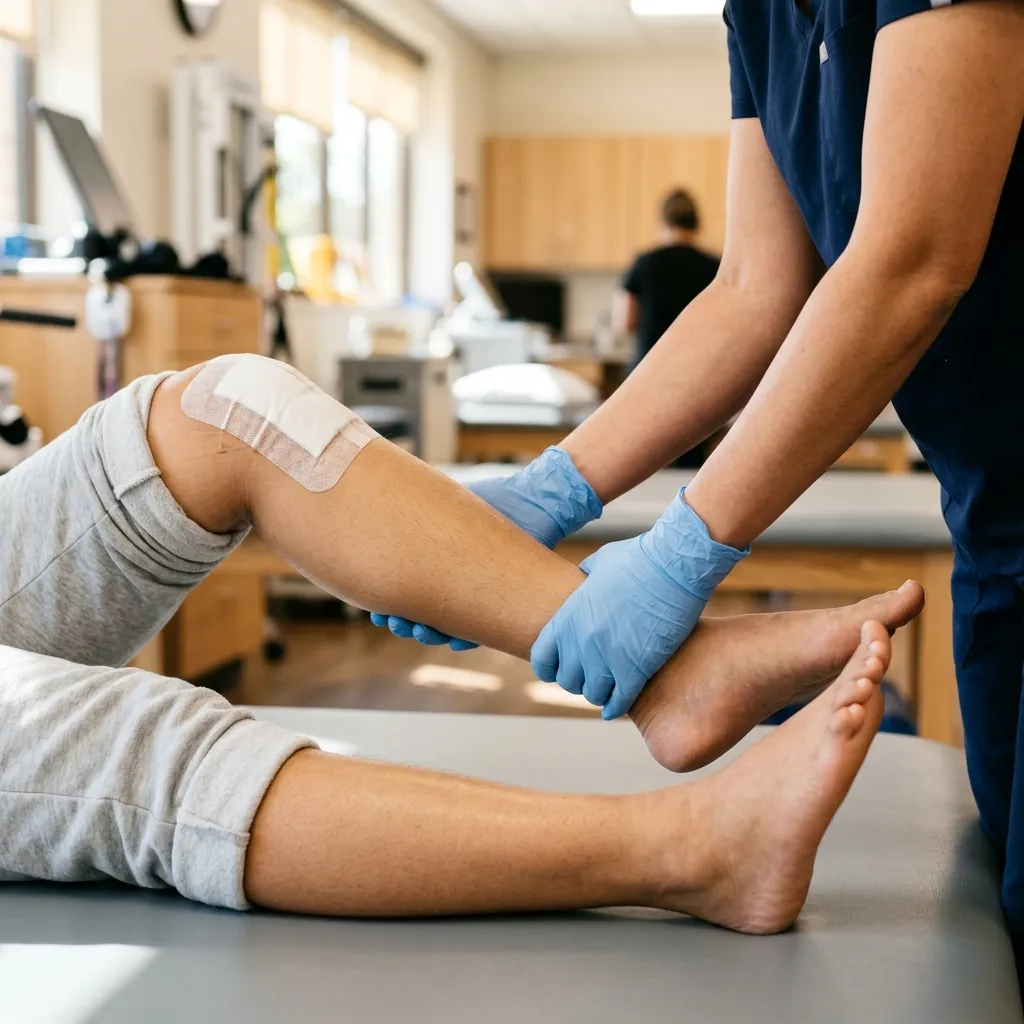
Briding the Gap Between 'Surgery' and 'Real Life'
You have successfully undergone a major orthopedic surgery—an investment in your future mobility. Right now, your joint is swollen, painful, and the thought of moving it feels dangerous. You may be worried that a simple stretch could 'break' the surgeon's hardware or tear your stitches. This fear is a biological survival instinct, but left unmanaged, it is your greatest obstacle to recovery.
When a joint remains immobilized after surgery, the body floods the area with collagen to heal. Without controlled movement, this collagen turns into thick, restrictive scar tissue—the 'Cement' analogy. At TeraCare, Dr. Rabara acts as the medical bridge between your surgeon and your recovery. By analyzing your specific operative report, we introduce 'Accelerated Loading'—applying the exact amount of mechanical stress needed to stimulate healing without ever jeopardizing the integrity of the repair.
Surgeries We Actively Rehabilitate
Is Accelerated Post-Op Rehab Right for You?
Ideal indications
Your surgeon has provided a clearance or protocol for physical therapy.
You are experiencing severe stiffness or swelling that prevents sleep.
You are terrified of moving the joint and need clinical supervision.
You want to return to work or high-level sports safely and quickly.
Clinical precautions
Active surgical site infection (Erythema, purulent drainage).
Suspected Deep Vein Thrombosis (DVT) needs urgent vascular clearance.
Unstable fractures or failed hardware that needs revision surgery.
Post-Operative Rehab Realities & Considerations
Understanding the challenges and expectations during surgical recovery.
Early Mobilization Discomfort
Beginning movement soon after surgery will involve manageable discomfort, which is necessary to prevent scar tissue formation.
Non-Linear Recovery
Healing is rarely a straight line. Patients may experience 'good' and 'bad' days as the body adapts to increasing loads.
Strict Compliance Required
Adherence to home exercise programs and movement precautions is critical to protecting the surgical repair.
Home Rest vs. Clinical Acceleration
Traditional Static Home Rest
Lying in bed until the pain stops before attempting to move the limb.
Accelerated Physiatric Rehab
Phased, objective-driven protocols that protect the graft while restoring gait and ROM.
The 3 Phases of Accelerated Healing
Inflammation & ROM Focus
Weeks 1-4. Reducing swelling and preventing the joint from 'freezing.' Focus is on passive range of motion and wound safety.
Strength & Gait Restoration
Weeks 4-12. Waking up dormant muscles around the new joint or repair. Weaning off walkers, canes, and slings.
Return to High-Activity
Month 4+. Transitioning to power, balance, and impact training to prepare you for heavy work or sports.
Clinical Science & Technical Details
For our medical colleagues and highly analytical patients, we provide these transparent technical details on the pathophysiology and interventional protocols.
Explore the Clinical Science: Mechanotransduction & Tissue Remodeling
Surgical recovery depends on mechanotransduction—the process by which cells sense and respond to mechanical weight. Through phased loading, we signal the body to replace weak Type III collagen with strong, tensile Type I collagen.
By applying controlled therapeutic stress according to Wolff's Law, we ensure that new tissues (like an ACL graft or a rotator cuff anchor) remodel with the structural integrity needed for life and sport.
Detailed Diagnostic Pathways: DVT & Post-Op Infection Screening
Post-op patients are in a hyper-coagulable state. We rigorously screen for Deep Vein Thrombosis (DVT) using the Wells Score and clinical markers like Homan's sign to prevent pulmonary complications.
We also act as secondary monitors for the surgical site, identifying early signs of dehiscence or infection (erythema, warmth, fluctuance) to ensure clinical stability throughout the rehabilitation program.
The Passive to Active Framework: Protecting the Surgical Repair
In the early phases, we utilize Passive Range of Motion (PROM) to lubricate the joint and prevent adhesions without stressing the repaired tendons or hardware.
As biological healing progresses (monitored by Dr. Rabara), we bridge to Active-Assist and eventually full Resistance Training, ensuring the 'Rehabilitation Window' is never missed for peak functional outcomes.
Objective Progress Metrics: FIM, ROM & Joint Kinematics
Success is measured in degrees and strength ratios. We use goniometry to track joint flexibility and the Functional Independence Measure (FIM) to document your progression in daily tasks.
By analyzing joint kinematics and compensatory gait patterns (like an antalgic limp), we identify muscles that have gone 'dormant' after surgery and target them for reactivation via Neuromuscular Electrical Stimulation (NMES) when needed.
Our Scientific Recovery Pathway
Operative Report Sync
Dr. Rabara reviews the surgeon's exact hardware placements and repair tension to establish biological safety limits.
Phased Protocol Ignition
Our therapists move you from Passive Motion (protecting stitches) to Active Strengthening (rebuilding support).
Functional Graduation
We bridge the gap from clinical rehab to life, ensuring you can climb stairs, drive, and work without a limp.
Clinical decision support
Faster progression still has to respect tissue healing
Post-operative rehabilitation should be timely and progressive, but “accelerated” does not mean ignoring surgical precautions or pain and swelling that signal overload. The procedure performed, tissue quality, fixation, surgeon instructions, wound status, comorbidities, pre-operative function, and rehabilitation response all influence when weight-bearing, range of motion, strengthening, and return to work or sport can advance.
Rehabilitation watches for complications as well as progress. Fever, wound drainage, increasing redness, new calf swelling, chest pain, breathing difficulty, sudden loss of function, or pain that is rapidly worsening needs prompt medical or surgical review. Timelines are guides; advancement is based on healing and criteria, not the calendar alone.
How this evidence is applied at TeraCare
TeraCare reconciles the operative plan with the examination, documents phase-specific goals and precautions, communicates with the surgeon when findings are unclear, and progresses loading only when the patient meets relevant clinical criteria.
Medical review: Dr. Ben Rabara, Physiatrist · Evidence reviewed August 22, 2026. This information supports shared decision-making and does not replace an individual examination or emergency care.
Clinical sources: APTA Clinical Practice Guideline: Physical Therapist Management of Total Knee Arthroplasty (2026).
How this treatment fits your care plan
MSK, Joint & Tendon Care
Diagnosis, symptom control, tissue repair, and return to movement for joint, muscle, and tendon problems.
Your exact sequence depends on the diagnosis, safety screening, and response to treatment. A physiatrist will recommend only the steps that fit your case.
Common Questions
I had my surgery in Manila. Can I do my rehab with you in Vigan?
How soon should I start after a knee replacement?
Is it covered by PhilHealth?
Will the therapy tear my stitches?
What is Arthrofibrosis?
References & Clinical Evidence
- [1] Clinical guidelines and evidence-based research supporting Accelerated Post-Operative Rehab in Vigan City.
- [2] Relevant peer-reviewed literature on efficacy and safety outcomes in rehabilitation.
* Clinical references are provided to support the medical claims made in this article. TeraCare adheres to evidence-based practices in physical medicine and rehabilitation.
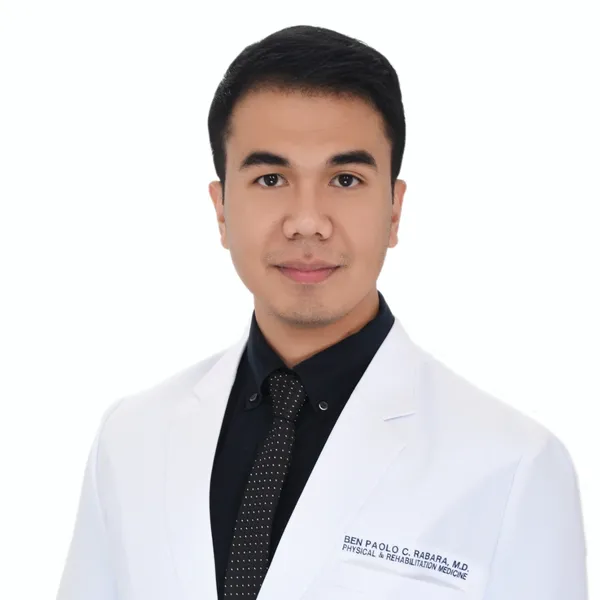
Dr. Ben Rabara
Dr. Ben Rabara is a Physiatrist in Vigan City specializing in Physical Medicine and Rehabilitation. He focuses on non-surgical, precision treatments for musculoskeletal conditions, utilizing advanced diagnostics like MSK Ultrasound.
Medical Disclaimer: The information provided in this article is for educational purposes only and does not substitute for professional medical advice, diagnosis, or treatment. Always consult a qualified physician for your specific health conditions.
Post-Operative Rehabilitation Guides
Expert resources for joint replacement recovery, spinal surgery safety, and ACL return-to-sport timelines.