
- — A red, swollen leg describes an appearance, not its cause; cellulitis, deep vein thrombosis (DVT), lymphedema, and other causes can overlap (PMID: 23509908; PMID: 34902109; PMID: 32631171).
- — New acute swelling, especially on one side, warrants prompt clinical assessment; sudden breathing difficulty, chest pain, coughing blood, or fainting could signal a pulmonary embolism, when a clot reaches the lungs, and needs emergency help (PMID: 36379502; PMID: 22383978).
- — A clinician uses the timeline, history, examination, and selected tests to assess possible causes; no photograph or symptom checklist settles the diagnosis (PMID: 32631171; PMID: 30844076).
- — Repeated cellulitis episodes may affect lymphatic tissue, but one episode does not establish that a person has lymphedema (PMID: 27789926).
A leg that is swollen and red can reflect cellulitis, DVT, lymphedema, or another cause of edema, but appearance alone cannot distinguish them. Because acute swelling needs clinical evaluation and cellulitis can resemble other conditions, new or worsening swelling, especially on one side, deserves prompt assessment. Sudden trouble breathing, chest pain, coughing blood, or fainting calls for immediate emergency help. (PMID: 23509908; PMID: 34902109; PMID: 32631171; PMID: 36379502; PMID: 22383978)
Why is my leg swollen and red?
The words “swollen” and “red” describe what has changed; they do not name the condition causing it. Edema is swelling from fluid in the tissues. Cellulitis is one possible explanation for a red, warm, tender area, while deep vein thrombosis (DVT) and lymphatic or venous causes may also enter a clinician’s assessment. Several conditions can produce overlapping signs. Redness or discoloration can be harder to see on darker skin tones, so a change in warmth, pain, swelling, or how you feel also deserves attention. A photograph cannot tell which explanation applies to you. (PMID: 32631171; PMID: 23509908; PMID: 34902109; PMID: 33494874; NHS cellulitis guidance)
A common assumption is that the redness itself points to infection or that a particular pattern of warmth identifies a clot. That shortcut is incomplete. Cellulitis has mimics, DVT and cellulitis can share clinical features, and reviews have found limited high-quality evidence for validated lower-limb cellulitis diagnostic tools. The practical consequence is that an appearance-based checklist should not delay assessment or be used to choose treatment. The cause remains uncertain until the clinical context is evaluated. (PMID: 23509908; PMID: 34902109; PMID: 30844076)
When should I seek care for a red swollen leg?
Treat a new or changing red swollen leg as a reason to arrange clinical assessment, particularly when the swelling is acute and affects one side. Use emergency care immediately for possible pulmonary embolism symptoms such as sudden trouble breathing, chest pain, coughing blood, or fainting. A lack of those emergency symptoms does not identify a harmless cause or replace prompt assessment of acute swelling. (PMID: 36379502; PMID: 22383978)
Which symptoms need immediate emergency help?
Seek immediate emergency help if sudden breathlessness, chest pain, fainting, or coughing blood occurs with a swollen leg. These symptoms can occur with pulmonary embolism (PE), a condition that needs urgent clinical consideration. This short list is not a self-test: symptoms vary, and recognizing one symptom cannot confirm a clot or determine its location. Use your local emergency service or nearest emergency department rather than waiting for a routine appointment or a lymphedema visit. (PMID: 22383978; CDC blood-clot guidance)
Another unsafe assumption is that emergency care is needed only when every listed symptom is present. The evidence describes common presentations in diagnosed pulmonary embolism cases; it does not make the list exhaustive or allow symptoms that are absent to rule PE out. The action changes when a concerning symptom appears: seek emergency evaluation instead of trying to compare photographs, test a home treatment, or wait for all symptoms to collect. Clinical uncertainty is part of the reason for urgent assessment. (PMID: 22383978)
Rapidly worsening redness or swelling or blistering or skin breakdown warrants same-day urgent medical evaluation. Use emergency care now for confusion, severe pain out of proportion to what is visible, or feeling seriously unwell. NICE advises escalation when suspected cellulitis is severe, spreading, or accompanied by signs of serious illness such as sepsis; no single visible sign safely rules a serious infection in or out. (NICE cellulitis recommendations; PMID: 25975653)
Which new leg changes need prompt medical assessment?
Acute lower-extremity edema requires urgent evaluation. In practical terms, arrange prompt medical assessment when one leg becomes newly swollen, or when a familiar swelling pattern changes and becomes more extensive or painful. Do not wait for the leg to become a particular shade of red or for fever to appear before reporting a new change. A clinician can determine whether the timing and examination call for urgent testing or another next step. (PMID: 36379502)
If you cannot reach a specialist quickly, start with the nearest appropriate clinical service and describe the change clearly: when it began, whether one or both legs are affected, and whether symptoms are worsening. A prompt assessment is useful even if the eventual explanation is not a clot or infection, because edema has several possible causes. This page cannot assign urgency precisely for an individual or promise that a particular symptom is safe to watch at home. (PMID: 36379502; PMID: 34902109; PMID: 32631171)
How do clinicians assess a new red or swollen leg?
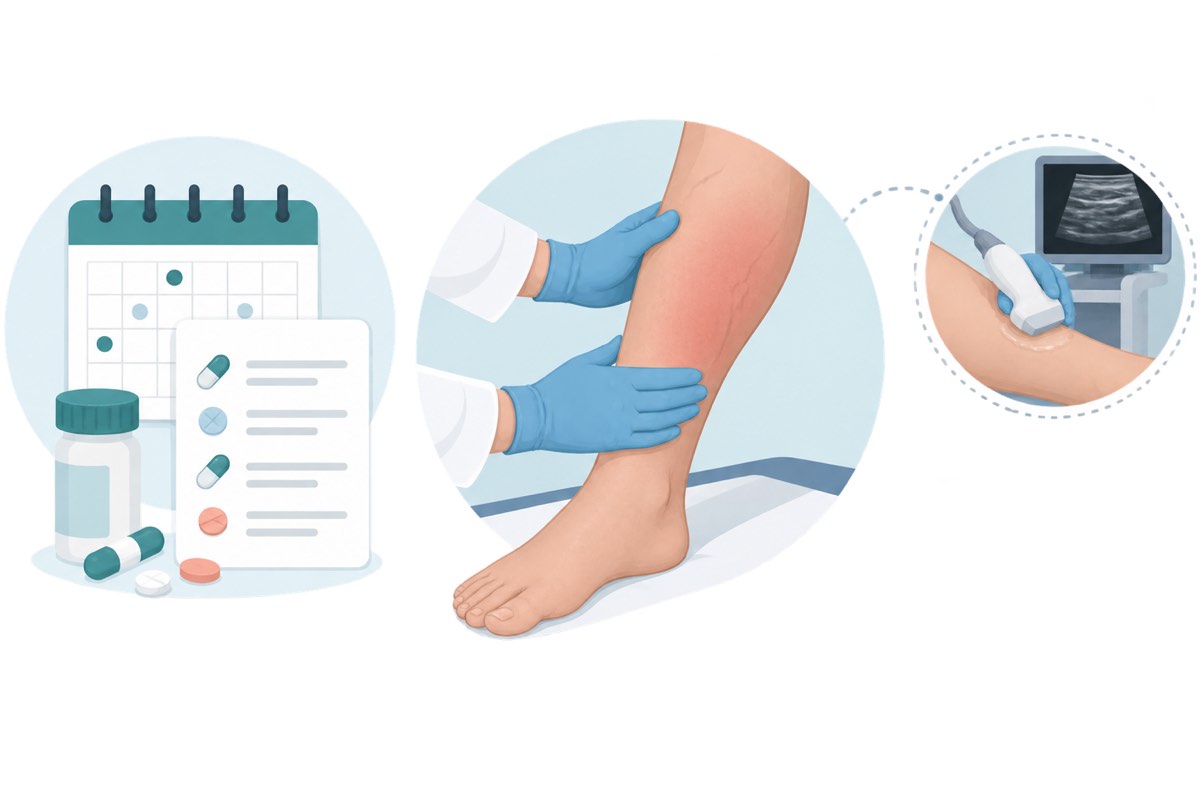
Assessment starts with the history and physical examination, not a single symptom score or photograph. The clinician considers the timeline, the pattern of swelling, the skin findings, and relevant health information, then decides whether selected laboratory or imaging tests are useful. The reason to keep the process clinician-led is straightforward: cellulitis is a clinical diagnosis with mimics, and no well-established symptom checklist replaces an individualized evaluation. (PMID: 34902109; PMID: 30844076; PMID: 32631171)
The decision is not simply “which label fits best?” It is also whether an urgent cause needs to be evaluated now, what information is missing, and whether a test would change the next step. Acute edema can require urgent evaluation, while longer-standing swelling may need a broader review of venous, lymphatic, medication-related, or other contributors. The timing and the person’s full context shape that plan; a web article cannot choose tests for an individual. (PMID: 36379502; PMID: 32631171)
What details change the evaluation?

Before an assessment, it can help to note when the change started, whether it came on suddenly or gradually, whether one or both legs are affected, and what has changed since the first day. Bring an updated medication list and mention relevant medical history, prior episodes of swelling or skin infection, and any recent changes in health or mobility. These details give the clinician a clearer history to consider alongside examination; they do not function as a home scoring rule. (PMID: 32631171)
Describe where the redness is, whether the area feels warm or tender, and whether its extent is changing. Cellulitis can present with localized redness, swelling, warmth, and tenderness, but the cluster needs clinical interpretation because other conditions can look similar. Do not delay urgent care to make a comparison chart or wait until you can take a photograph in good lighting. (PMID: 33494874; PMID: 34902109; PMID: 32631171)
Fever is one detail to report, not a switch that turns the cellulitis question on or off. One review describes a specific limited-cellulitis category that may begin without fever or chills, while another review describes cellulitis as a clinical diagnosis based on history and examination. Those sources do not support reassuring yourself from the absence of fever or diagnosing infection from fever alone. (PMID: 26018361; PMID: 34902109)
How can I tell DVT or cellulitis in a swollen red leg?
DVT and cellulitis can share clinical features, so redness, warmth, pain, or swelling cannot reliably separate them at home. Cellulitis may cause a localized tender, red, swollen area, but those findings do not establish infection; a clot may also be considered when a leg becomes acutely swollen. The safe interpretation is that the symptoms overlap and the cause needs clinician-led assessment. (PMID: 23509908; PMID: 33494874; PMID: 34902109)
This is why a side-by-side symptom chart can be misleading. The reviewed evidence includes a prospective cohort showing shared features between lower-limb cellulitis and DVT, while a systematic review found that high-quality diagnostic criteria and tools for lower-limb cellulitis are lacking. Those findings explain a limitation in symptom-based comparison; they do not give an individual probability of a clot or prove that every swollen leg needs the same test. (PMID: 23509908; PMID: 30844076)
For a new acute change, the useful next step is an assessment that can connect the symptom timeline and examination to any selected testing. Do not use this comparison to decide that a leg is “only cellulitis” or “only a clot,” and do not wait for an online checklist to match perfectly. Where travel or appointment access is difficult, explain that the swelling is new and whether emergency symptoms are present when you contact a local service. (PMID: 36379502; PMID: 32631171)
Edema vs lymphedema: what is the difference?
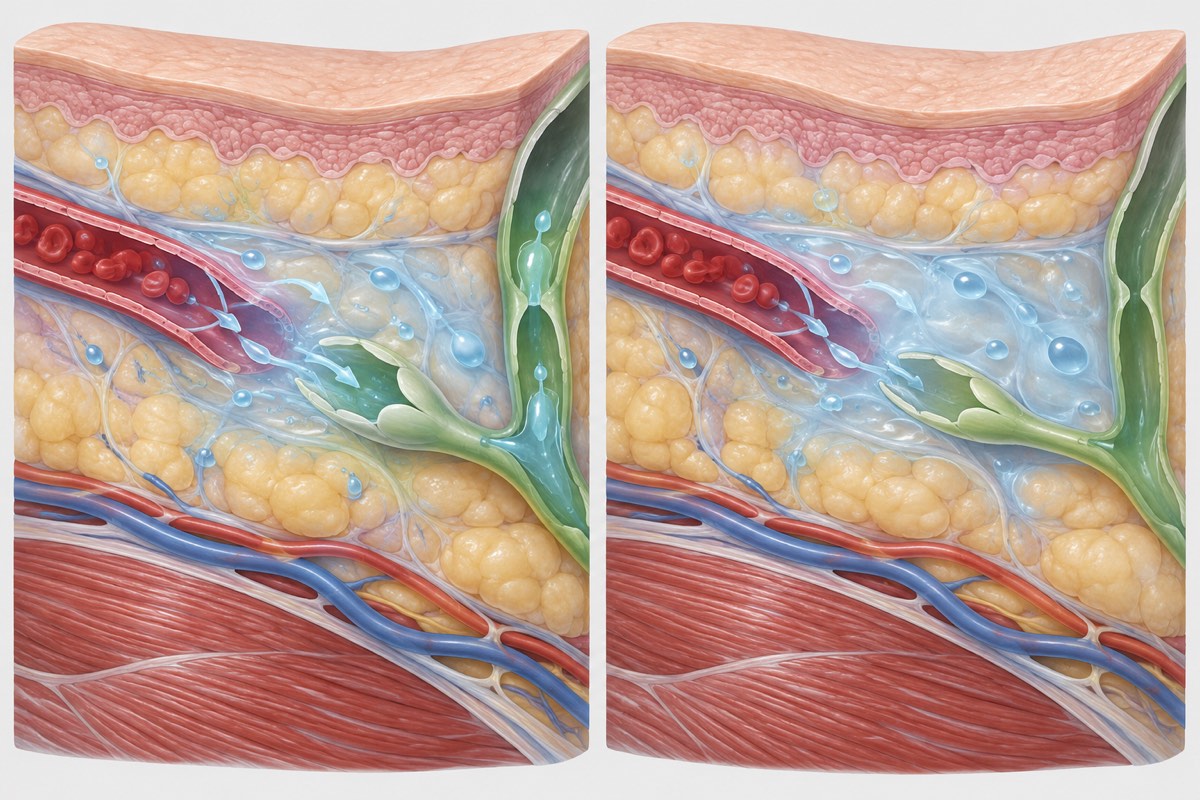
Edema is a description of swelling from extra fluid between the tissues; it does not specify why the fluid has accumulated. Lymphedema is a clinical diagnosis involving impaired movement of lymph fluid. The two terms are related because lymph drainage is part of fluid balance, but they are not interchangeable labels for every swollen limb. A red or swollen leg still needs its immediate cause considered before a chronic lymphatic explanation is assumed. (PMID: 32631171)
A common myth is that the word “edema” already tells you which treatment to use. It does not. The term names a finding, and lymphedema itself is usually assessed clinically; selected imaging may support confirmation or planning in particular situations. The decision changes from trying a remedy based on the word “swelling” to asking what cause the clinician is evaluating. Uncertainty remains until the assessment is complete, and a single home sign should not confirm or exclude lymphedema. (PMID: 32631171)
What does edema describe, and what does lymphedema mean?
Edema describes swelling caused by fluid between the tissues increasing beyond the capacity of normal lymph drainage. That definition explains why the lymphatic system matters to fluid balance, but it does not say that the lymphatic system is the only possible cause of swelling in an individual. Lymphedema names a condition in which lymph fluid transport is impaired. A clinician usually makes that diagnosis from the clinical picture and may consider imaging when confirmation or planning requires it. (PMID: 32631171)
Long-standing swelling deserves attention in its own right, especially if it persists or returns after an acute change has been assessed. A clinician may review the history and examination and select tests to distinguish possible causes. The goal is to understand the pattern and its likely source, not to assign a lymphatic label based on a single measurement, a pitting check, or a photograph. Treatment choices depend on that clinical assessment. (PMID: 32631171)
Can cellulitis cause lymphedema?
Repeated cellulitis episodes can inflame and disrupt lymphatic tissue and may contribute to later lymphedema. This is a possible relationship described in a clinical review, not a prediction that everyone with cellulitis will develop chronic swelling. One red leg or a single infection episode does not establish that a person has lymphedema or prove what caused persistent swelling. (PMID: 27789926)
The opposite oversimplification is to assume that chronic swelling after any one episode must have been caused by that infection. The evidence statement concerns repeated episodes and a possible effect on lymphatics. It does not settle an individual’s cause, timing, or diagnosis. When swelling continues after an infection has been assessed, the next question is whether another evaluation is needed for persistent edema, not whether the earlier episode explains everything. (PMID: 27789926; PMID: 32631171)
A known history of lymphedema also should not be used to explain every new red or swollen episode automatically. A new change can still require consideration of infection, DVT, or another cause. The history is important information for the clinician, but it is not a reason to skip assessment of a different or worsening pattern. (PMID: 23509908; PMID: 34902109; PMID: 32631171)
What should I do for a red swollen leg while the cause is unclear?
Do not take leftover antibiotics or someone else’s prescription for a new red leg unless a clinician directs you to. A red area does not prove that antibiotics are needed, and using leftover prescribed antibiotics without clinical advice raises questions about safety, effectiveness, and appropriate antibiotic use. A clinician can assess whether infection is likely and whether treatment is appropriate; this guide does not select an antibiotic. (PMID: 38975752; PMID: 34902109)
Do not self-prescribe compression, complete decongestive therapy (CDT), massage, or a diuretic as a test of what is causing the swelling. These actions cannot establish whether the cause is infection, DVT, lymphedema, or another form of edema. The reviewed evidence supports evaluating acute swelling and using the history, examination, and selected tests to distinguish causes; it does not support a home treatment trial as a diagnostic method. (PMID: 36379502; PMID: 32631171)
If you already use compression or receive CDT under a clinician’s plan, do not intensify, restart, or stop that plan solely because of a web page. Contact the clinician who manages it and tell them about the new redness or swelling so they can advise how to handle the plan while the change is assessed. Likewise, do not start or change a prescribed diuretic on your own. Keep the new symptom and the longer-term treatment plan as two decisions for the treating team. (PMID: 36379502; PMID: 32631171)
When should chronic or returning swelling be reviewed?
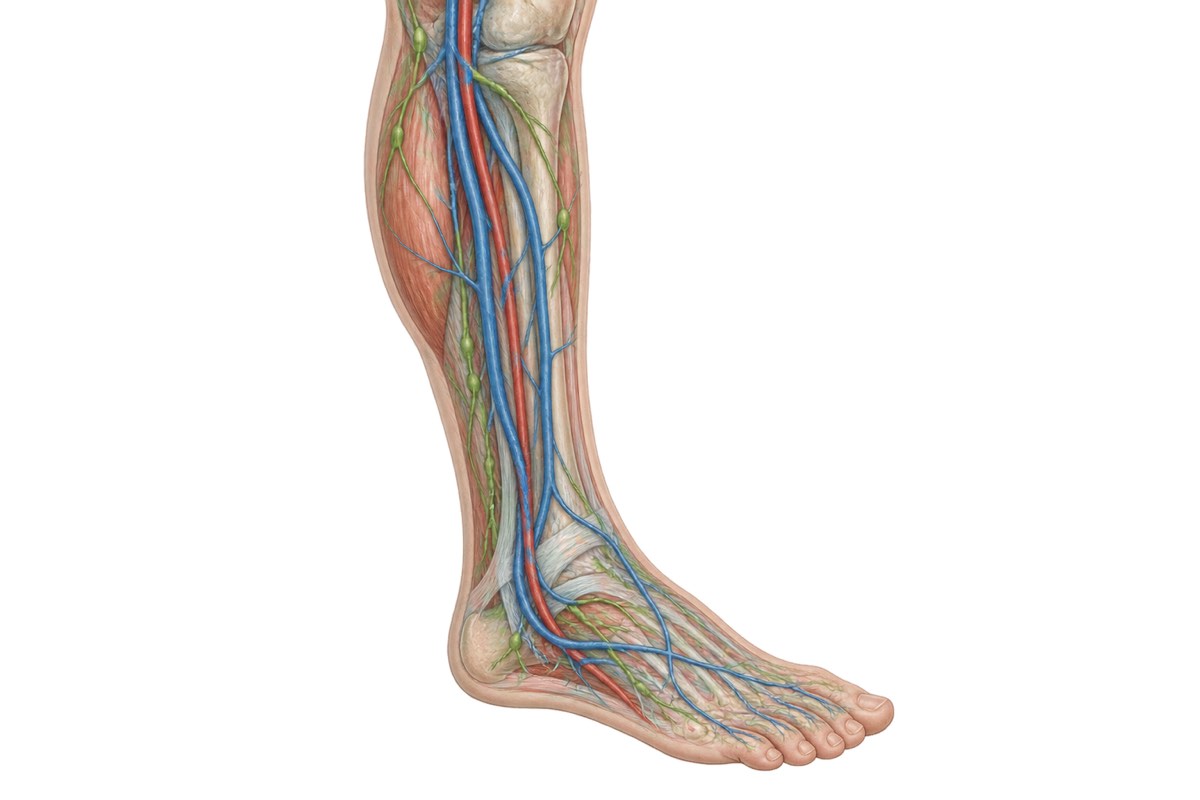
Once a new urgent change has been assessed, persistent or returning swelling can be reviewed as a separate clinical question. Edema may have venous, lymphatic, medication-related, or other contributors, and the history and physical examination help guide which possibilities to consider. Lymphedema is usually a clinical diagnosis; imaging is reserved for selected confirmation or planning needs rather than being automatic for every swollen leg. (PMID: 32631171)
If the assessment supports a chronic lymphatic condition, a clinician can discuss whether rehabilitation or a lymphedema-management plan fits the diagnosis, general health, goals, and practical circumstances. That discussion belongs after the acute red-leg question has been addressed. A service description or therapy session cannot substitute for deciding what caused a new change, and no particular treatment result can be promised from the appearance alone. (PMID: 32631171)
For a new red and swollen leg, the next step is a prompt clinical assessment; for sudden breathing difficulty, chest pain, coughing blood, or fainting, use emergency care now. Take a short written timeline and your medication list if you can do so without delaying care. After the urgent question is resolved, persistent swelling can be discussed with a clinician familiar with edema and rehabilitation. (PMID: 36379502; PMID: 22383978; PMID: 32631171)
This page is for general education and does not diagnose a specific person or replace an individualized clinical assessment. Seek emergency help for the symptoms described above.
Persistent swelling after urgent causes are assessed?
Request an individualized rehabilitation assessment to discuss chronic swelling and appropriate next steps.
References & Clinical Evidence
- [1] Gasparis AP, Kim PS, Dean SM, Khilnani NM, Labropoulos N. Diagnostic approach to lower limb edema. Phlebology. 2020;35(9):650–655. PMID: 32631171.
- [2] Patel H, Skok CJ, DeMarco A. Peripheral Edema: Evaluation and Management in Primary Care. American Family Physician. 2022;106(5):557–564. PMID: 36379502.
- [3] Maze MJ, Skea S, Pithie A, Metcalf S, Pearson JF, Chambers ST. Prevalence of concurrent deep vein thrombosis in patients with lower limb cellulitis: a prospective cohort study. BMC Infectious Diseases. 2013;13:141. PMID: 23509908.
- [4] Boettler MA, Kaffenberger BH, Chung CG. Cellulitis: A Review of Current Practice Guidelines and Differentiation from Pseudocellulitis. American Journal of Clinical Dermatology. 2022;23(2):153–165. PMID: 34902109.
- [5] Patel M, Lee SI, Akyea RK, et al. A systematic review showing the lack of diagnostic criteria and tools developed for lower-limb cellulitis. British Journal of Dermatology. 2019;181(6):1156–1165. PMID: 30844076.
- [6] Sunderkötter C, Becker K. Frequent bacterial skin and soft tissue infections: diagnostic signs and treatment. Journal der Deutschen Dermatologischen Gesellschaft. 2015. PMID: 26018361.
- [7] Sukumaran V, Senanayake S. Bacterial skin and soft tissue infections. Australian Prescriber. 2016. PMID: 27789926.
- [8] Miniati M, Cenci C, Monti S, Poli D. Clinical presentation of acute pulmonary embolism: survey of 800 cases. PLoS One. 2012;7(2):e30891. PMID: 22383978.
- [9] Al Alayed K, Tan C, Daneman N. Red Flags for Necrotizing Fasciitis: A Case Control Study. International Journal of Infectious Diseases. 2015. PMID: 25975653.
- [10] Shah J, Trautner BW, Olmeda K, et al. A survey of patient practices regarding leftover antibiotics reveals a potential source of antibiotic overuse. Antimicrobial Agents and Chemotherapy. 2024. PMID: 38975752.
- [11] Bystritsky RJ. Cellulitis. Infectious Disease Clinics of North America. 2021;35(1):49–60. PMID: 33494874.
* Clinical references are provided to support the medical claims made in this article. TeraCare adheres to evidence-based practices in physical medicine and rehabilitation.

Dr. Ben Rabara
Dr. Ben Rabara is a Board-Certified Physiatrist specializing in Physical Medicine and Rehabilitation. He focuses on non-surgical, precision treatments for musculoskeletal conditions, utilizing advanced diagnostics like MSK Ultrasound.
Medical Disclaimer: The information provided in this article is for educational purposes only and does not substitute for professional medical advice, diagnosis, or treatment. Always consult a qualified physician for your specific health conditions.