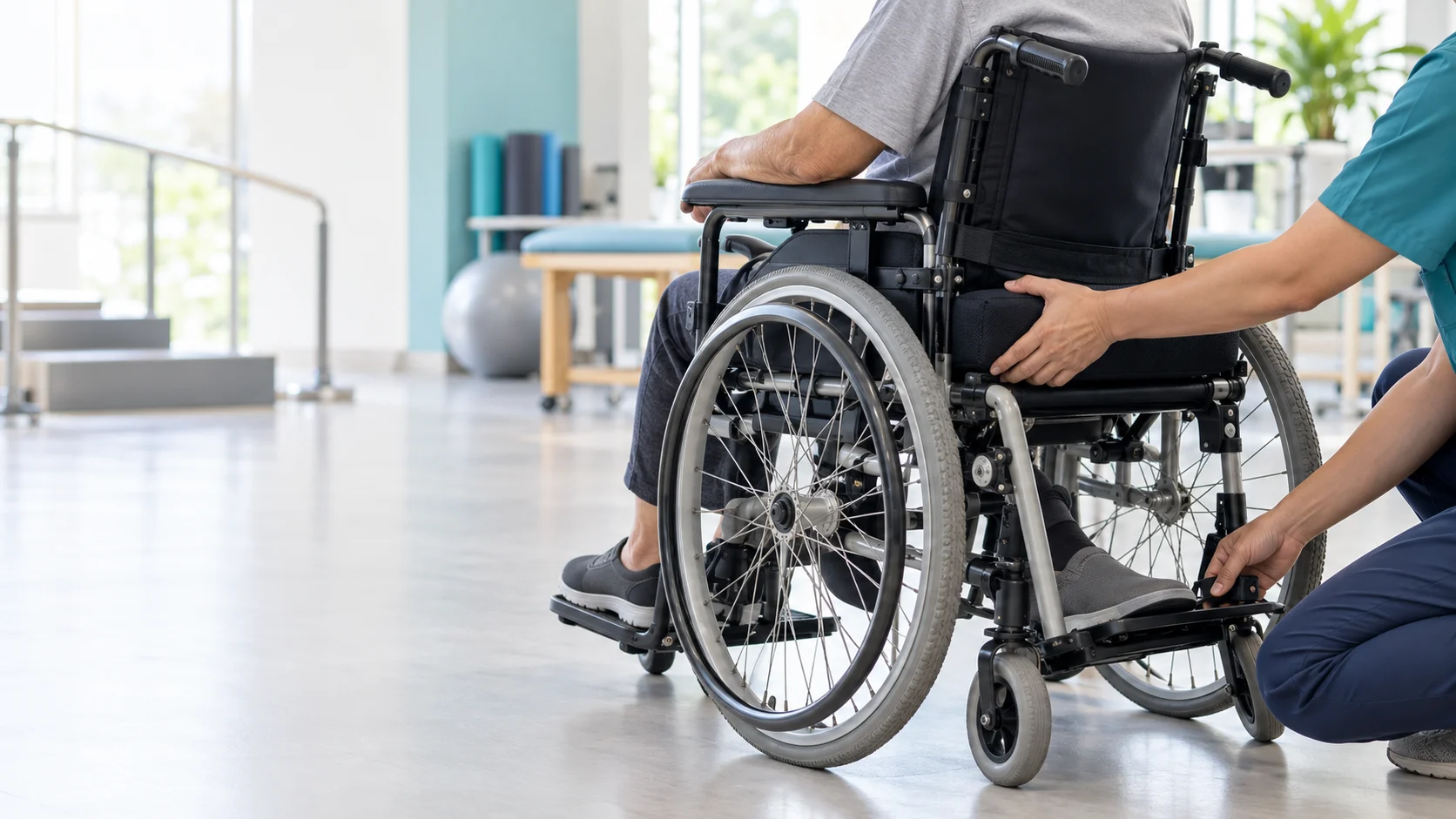
- — The safest answer to “what is the best wheelchair?” is an assessment-first seating system fitted to the person, environment, goals and caregiver support—not a universal brand or chair type.
- — After stroke, check sitting balance, strength, tone, sensation, attention, vision, skin risk, transfers, pain, body measurements and the route where the chair will be used.
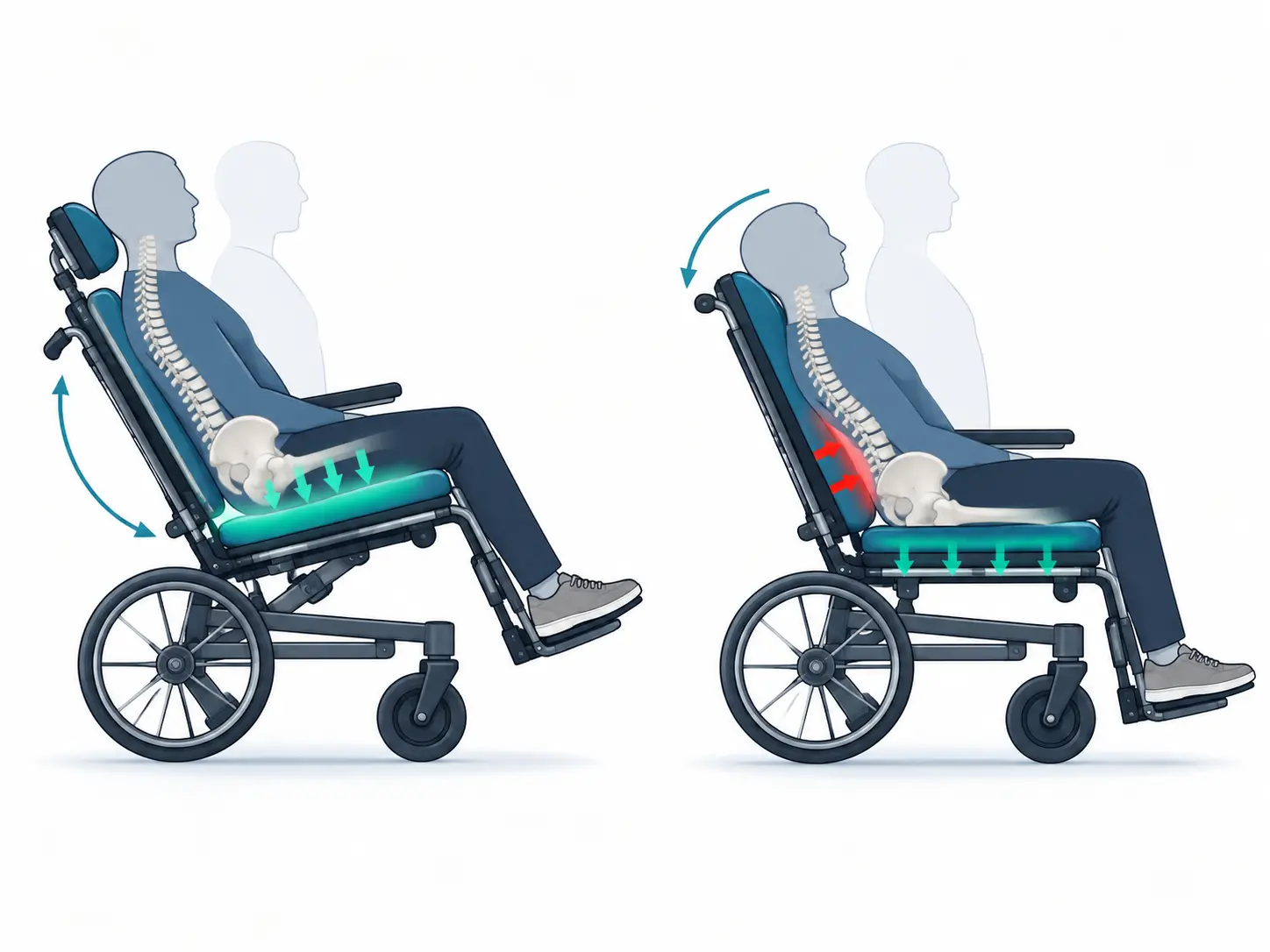
- — Tilt and recline are different functions. Recline can increase sliding and shear when pelvic stability and leg support are not managed.
- — A seating specialist should review repeated sliding, new pain, skin changes, unsafe transfers, breathing or swallowing difficulty, or a change in the person’s abilities.
If you are looking for the best wheelchair for an elderly stroke patient, start with the person’s needs rather than a product name. Stroke can affect strength, sensation, attention, vision, muscle tone, balance and the ability to follow transfer instructions. A safe wheelchair decision also has to account for the home, transport, community surfaces and the caregiver who will push, operate, charge, clean or maintain the chair.
How do families choose a wheelchair for an elderly stroke patient?
A manual, reclining, tilt-in-space or powered chair may be appropriate for different problems. The same feature can help one person and create a risk for another. The practical starting point is an individualized wheelchair seating assessment with a rehabilitation professional who can observe sitting, movement, transfers and the person’s usual environment.
Bring the questions that a product page cannot answer: Can the person keep the pelvis and trunk supported? Can they see, breathe, communicate and reach safely? Who will push the chair on slopes? Can the chair fit through the home and into the vehicle? What happens if the person’s strength, tone, skin, pain or caregiver support changes?
Which wheelchair features should families compare after stroke?
Compare features by the problem they are meant to solve. A cushion and back support may help a person maintain alignment, but they can also change pressure and transfer space. Footrests and arm supports may protect positioning and reduce fatigue, but they must not become obstacles during a trained transfer. Brakes, wheel locks and controls must be reachable and understandable for the person or caregiver who will use them every day.
- Manual propulsion: ask whether the person can propel without unsafe shoulder strain, whether an attendant will push, and whether the route includes slopes, uneven ground or long distances.
- Recline: ask what specific problem it addresses and how the team will monitor sliding, pelvic position, shear, head support and skin.
- Tilt-in-space: ask how it changes pressure relief, visual field, reach, communication and the person’s ability to return upright.
- Powered seating: ask who will charge, transport, repair and operate the system, and what happens if the battery or controller fails.
- Cushion and supports: ask how the complete system was trialled, how skin will be checked, and when it should be reassessed.
When is a wheelchair seating assessment after stroke needed?
Assessment is especially important when the person slides forward, leans to one side, cannot keep the head or trunk aligned, needs frequent repositioning, has new pain, develops redness, cannot reach the wheels or controls, or has a change in strength, tone, sensation, attention or vision. Difficulty following instructions or a new near-fall also changes the safety picture.
A useful assessment reviews body measurements, sitting balance, movement, tone, sensation, skin and pressure risk, cushion and back support, foot and arm support, brakes, transfer surfaces, route conditions, transport and caregiver capacity. The goal is not merely to find a chair that fits in a catalogue; it is to build a seating system the person can use safely and the caregiver can manage.
In my clinic, I look for the problem the chair is meant to solve before discussing a feature. I also record comparison measurements such as seat width in 40–50 cm, seat depth in 40–50 cm, doorway clearance around 80 cm, turning width around 90 cm, transfer height around 45 cm, chair weight around 15–30 kg, battery capacity around 20–40 Ah and a route slope of 5–10% only as examples of fields to verify on the actual product and home assessment. These figures are not universal fit rules or prescriptions.
How does postural support after stroke help an older adult?
Postural support can help address a defined problem such as pelvic instability, asymmetry, trunk weakness, sliding, pain or repeated repositioning. It should be trialled as part of the complete chair-and-cushion system. Check the person in upright sitting, during movement, at the table, during pressure relief and during the trained transfer.
A support is not automatically safe because it feels firm or looks comfortable. It can change pressure, breathing, reach, head position, arm protection, transfer space and the person’s ability to move. Follow-up matters because stroke recovery, fatigue, tone and caregiver routines can change.

When might a reclining wheelchair for a stroke patient help?
Recline may be considered when a clinician identifies a need related to comfort, posture, fatigue or pressure management. It changes the relationship between the back, pelvis, legs and feet. In a person with hemiplegia, reclining can also contribute to forward sliding or altered pressure if pelvic stability and leg support are not managed.
Before using the feature, a trained person should check the cushion, pelvic position, foot support, head and neck alignment, skin, breathing, communication, controls and transfer setup. Use the manufacturer’s sequence and the rehabilitation team’s instructions. Do not treat a recline mechanism as a substitute for assessment or as permission to leave someone unattended in a position they cannot correct.
What is the difference between wheelchair tilt and recline?
Tilt changes the seat and back angle together, so the person’s relative hip angle changes less while the body is moved through space. Recline opens the angle between the back and seat. Because the pelvis, trunk, legs and head can move differently, the two functions are not interchangeable.
Research on interface pressure and blood-flow measures can help clinicians think through positioning, but study angles are not a home prescription. A useful position depends on posture, skin, pain, breathing, cognition, fatigue, transfers and the person’s goals. Ask the seating team to demonstrate which function to use, for how long, and how to return the person safely to upright.
| Feature or measurement | Question for the assessment | Why it matters |
|---|---|---|
| Seat width and depth | Does the person stay supported without pressure or sliding? | Fit affects posture, reach, comfort and skin risk. |
| Cushion and back support | Can the person maintain pelvic and trunk alignment? | Support must be trialled with the person’s tone, sensation and goals. |
| Tilt or recline | Can the person and caregiver operate it without creating sliding or transfer problems? | Different mechanisms change pressure, reach, head position and transfer setup. |
| Chair weight and route | Who will push, lift, charge or transport it over the usual surfaces? | A chair that cannot be managed in the real environment is not a practical choice. |
How can families improve wheelchair safety after stroke?
Lock the brakes and prepare the footrests, arm supports and transfer surface according to the person’s trained plan. Never pull the affected arm or lift under the armpits. A caregiver should not attempt a transfer alone if the person cannot reliably follow instructions, bear weight as directed, maintain sitting balance, or if the caregiver cannot control the movement.
What skin and pressure changes should caregivers watch for?
Check the skin over bony areas routinely, especially when sensation, cognition, communication or attention is impaired. Look for persistent redness or discoloration, blistering, broken skin, warmth, drainage, numbness or worsening pain. Do not massage suspected pressure injury or continue prolonged sitting on broken skin without clinical advice.
How should caregivers prepare for wheelchair transfers?
Use the transfer method taught by the rehabilitation team. Ask whether the person needs one or two helpers, a transfer board, a hoist or another aid. A wheelchair that is easy to push but difficult to position for transfers is not a safe solution. Reassessment is needed after a fall, near-fall, change in weight-bearing, new weakness or caregiver injury.
What should families do when the wheelchair no longer works well?
Do not solve a new problem by adding a random cushion, tightening a strap or changing the recline position without checking the cause. Ask what changed: the person’s weight, strength, tone, sensation, pain, attention, vision, medication, sitting time, home route or caregiver availability. A new pattern of sliding may reflect fit, pelvic control, foot support, fatigue or a medical change rather than a need for more restraint.
Keep a short record for the assessment: when the problem happens, how long the person has been sitting, where pain or redness appears, whether the person can correct the position, what the caregiver tried, and whether the issue affects breathing, eating, communication or transfers. This gives the rehabilitation team useful information without asking the family to diagnose the cause.
Get the seating question clarified
A Vigan rehabilitation assessment can review posture, transfers, skin risk and caregiver needs before a wheelchair or support is changed.
When should an older adult see a seating specialist?
Describe symptoms clearly at the review: pain may feel sharp, dull, radiating, stiff, heavy, tingling, burning, catching or grinding. Arrange prompt rehabilitation review for repeated sliding, new or worsening shoulder, hip or back pain, persistent skin changes, inability to maintain posture, repeated near-falls, unsafe transfers, new breathing or swallowing difficulty in the chair, unexplained swelling, or a chair that no longer fits the person’s routine. The team may include a physiatrist, occupational therapist or physiotherapist with wheelchair and seating experience.
Seek emergency help for new stroke warning signs such as facial droop, sudden one-sided weakness or numbness, new speech or vision difficulty, severe sudden headache, collapse or sudden confusion. Do not wait for a wheelchair adjustment or online message when emergency symptoms are present.
What are common wheelchair questions after stroke?
Families often want a single answer, but the safest answer depends on the person and the setting. Use the questions below to prepare for a seating assessment and caregiver training visit.
A safe wheelchair decision is more than a product label
The useful questions are about fit, function, safety and support.
Person and posture
Sitting balance, tone, strength, sensation, pain and attention can change which seating features are safe and useful.
Environment and caregiver
Doorways, ramps, vehicle loading, floor surfaces, storage, pushing strength and caregiver training are part of the choice.
Follow-up
Stroke recovery and caregiver capacity change. A chair or cushion that worked earlier may need reassessment after a new problem or routine.
References & Clinical Evidence
- [1] Giesbrecht EM, Mortenson WB, Miller WC. Prevalence and facility level correlates of need for wheelchair seating assessment among long-term care residents. Gerontology. 2012;58(4):378-384. PMID: 22222920. https://pubmed.ncbi.nlm.nih.gov/22222920/
- [2] Veneman JF, et al. Clinical validation of a novel postural support device for hospitalized sub-acute post-stroke wheelchair users. Disabil Rehabil Assist Technol. 2017;12(5):526-534. PMID: 27052929. https://pubmed.ncbi.nlm.nih.gov/27052929/
- [3] Huang HC, Lin YS, Yeh CH, Chung KC. The impact of abnormal muscle tone from hemiplegia on reclining wheelchair positioning. Eur J Phys Rehabil Med. 2013;49(5):619-628. PMID: 24104696. https://pubmed.ncbi.nlm.nih.gov/24104696/
- [4] Huang HC, et al. Sliding and pressure evaluation on conventional and V-shaped seats of reclining wheelchairs for stroke patients with flaccid hemiplegia. J Neuroeng Rehabil. 2011. PMID: 21762529. https://pubmed.ncbi.nlm.nih.gov/21762529/
- [5] Sonenblum SE, et al. Wheelchair tilt-in-space and recline functions: influence on sitting interface pressure and ischial blood flow in an elderly population. Assist Technol. 2019. PMID: 30956981. https://pubmed.ncbi.nlm.nih.gov/30956981/
- [6] Dicianno BE, et al. RESNA position on the application of tilt, recline, and elevating legrests for wheelchairs. Assist Technol. 2009;21(1):13-22. PMID: 19719059. https://pubmed.ncbi.nlm.nih.gov/19719059/
- [7] Wheelchair seated posture and health outcomes of older Veterans in community living centers. PMID: 32657850. https://pubmed.ncbi.nlm.nih.gov/32657850/
- [8] World Health Organization. Wheelchair provision guidelines. 2023. WHO publication page.
- [9] NICE. Stroke rehabilitation in adults (NG236). NICE recommendations.
- [10] Canadian Stroke Best Practices. Rehabilitation and Recovery following Stroke. Canadian Stroke Best Practices.
* Clinical references are provided to support the medical claims made in this article. TeraCare adheres to evidence-based practices in physical medicine and rehabilitation.

Dr. Ben Rabara
Dr. Ben Rabara is a Board-Certified Physiatrist specializing in Physical Medicine and Rehabilitation. He focuses on non-surgical, precision treatments for musculoskeletal conditions, utilizing advanced diagnostics like MSK Ultrasound.
Medical Disclaimer: The information provided in this article is for educational purposes only and does not substitute for professional medical advice, diagnosis, or treatment. Always consult a qualified physician for your specific health conditions.