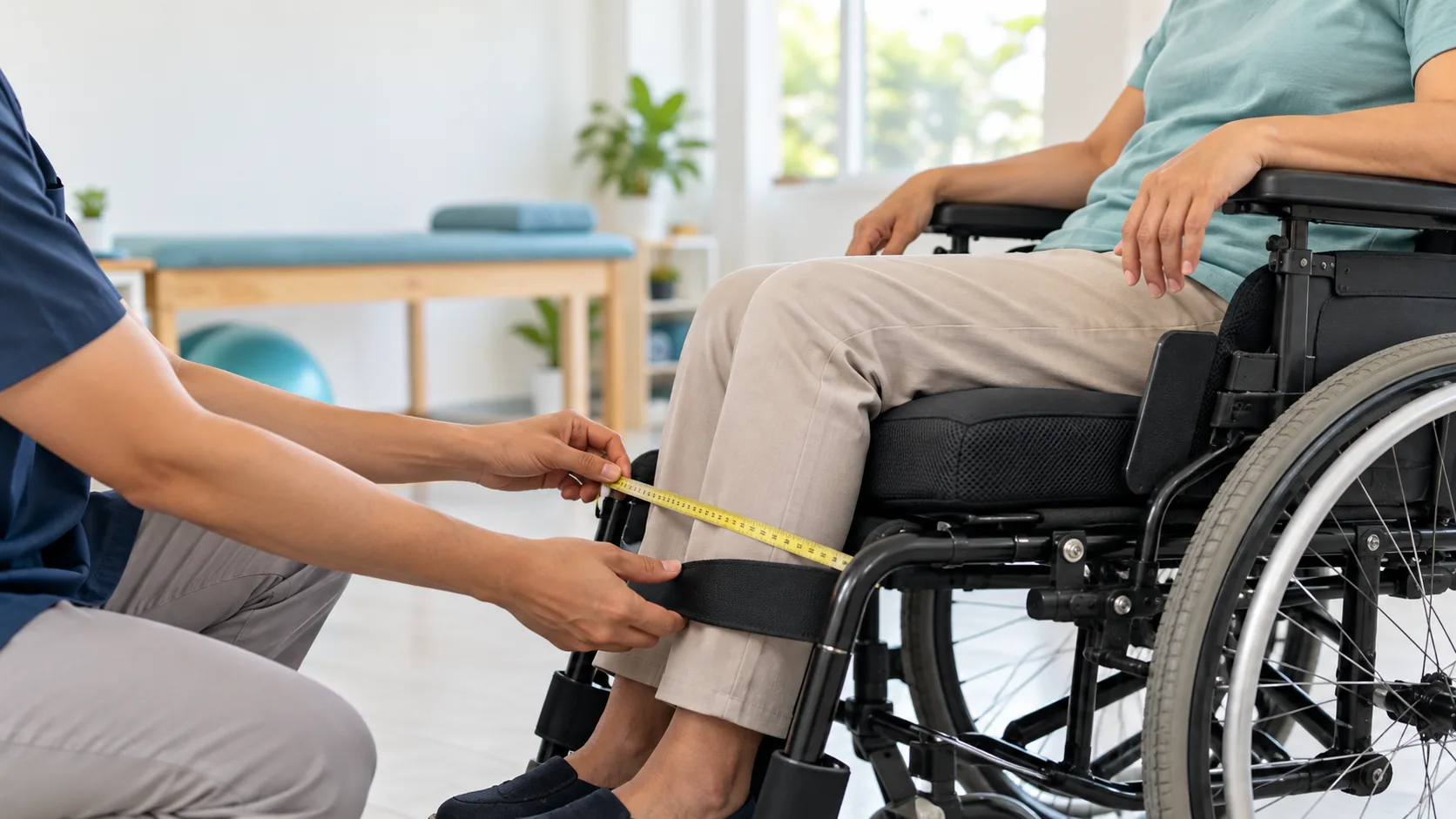
- — A wheelchair seating assessment looks at the person, the complete chair-and-cushion system, the usual environment, and the caregiver plan together.
- — Fit is more than seat width. Posture, pelvic stability, propulsion, skin risk, sensation, transfers, reach, transport and daily goals can change the safest plan.
- — Cushion studies do not identify one universally best product. Pressure, heat, moisture, body position and individual risk all matter.
- — Bring the current chair, cushion information, medication and diagnosis list, photographs of difficult spaces, and the questions that matter at home.
Many families first notice that a person keeps sliding forward, leans to one side, feels a painful hotspot, or cannot manage the chair the way they used to. A wheelchair seating assessment is a clinical review of how that person sits, moves, reaches, transfers and uses a wheelchair in daily life. It matches posture, function, skin and pressure risks, environment and caregiver support with a workable seating system.
What happens during a wheelchair seating assessment?
In my clinic, I look for the problem the wheelchair is meant to solve before I discuss equipment. That may be repeated sliding, leaning, pain, fatigue, difficulty propelling, pressure or skin changes, unsafe transfers, a new diagnosis, or a chair that no longer fits after a change in body size or function. I ask what the person needs to do at home, at work, in school, in the community and during transport. A chair can fit the body in a clinic and still fail if it cannot pass through the doorway or be managed by the caregiver.
The review usually combines an interview, physical and postural examination, functional observation, equipment inspection and discussion of the real environment. I look at sitting balance, pelvic position, spinal and trunk alignment, range of motion, muscle tone, strength, sensation, pain, fatigue, skin history, transfers, propulsion or control access, and the person’s communication and decision-making needs. The assessment may also include a trial of a cushion, back support, foot support or pressure-relief position. The final plan should explain what is being changed and what will be monitored.
Myth: “A wider seat is automatically safer because it feels less tight.” A seat that is too wide can reduce lateral support, increase leaning and make propulsion or transfers harder. A seat that is too narrow can create pressure and restrict movement. The useful measurement is the one that supports the person’s actual posture and task, not the largest number that fits.
How does wheelchair assessment and fitting work?
Wheelchair assessment and fitting works best as a sequence: define the person’s goals, examine the body and sitting posture, inspect the current equipment, trial relevant components, measure the person and chair together, then reassess function. I want to see what happens when the person reaches, propels, turns, communicates, eats, rests, performs pressure relief and transfers. These observations often reveal problems that are not visible when the person is sitting still.
Fit includes the relationship between the pelvis, trunk, head, feet, cushion, back support, arm supports and controls. It also includes the person’s ability to use the chair without excessive shoulder strain or unsafe compensations. If the chair is powered, the assessment must include control access, charging, transport, maintenance and what happens if the battery or controller is unavailable. If a caregiver will push or perform transfers, their strength, training, confidence and home route matter too.
A Philippines-and-Kenya survey found that having wheelchair fit assessed while the user propelled the chair was associated with greater odds of high activities-of-daily-living performance in the Philippines, but the cross-sectional design does not prove that the fitting check alone caused the outcome (Bazant et al., 2017; PMID: 29134178). A second analysis found provider training and checking fit while the user propelled the chair among the individual services most related to a composite positive outcome score, while not every service was related to every outcome (Kirby et al., 2019; PMID: 30851236). I use those findings to support an assessment-and-training approach, not to promise a result for one patient.
What does a wheelchair fitting assessment check?
A wheelchair fitting assessment checks whether the complete system supports a stable, comfortable and functional posture without creating avoidable pressure or transfer problems. I check the pelvis first because pelvic position influences the trunk, head, reach and the way pressure is distributed. I then consider the back support, seat depth, foot support, arm support, lateral supports, head support, cushion and any tilt or recline function. The person’s skin, sensation, pain, breathing, vision, attention and fatigue can change the decision.
Measurements are not the endpoint. A person may have a measured seat width that looks correct but still slide because of pelvic instability, poor foot support, fatigue, tone or an unsuitable cushion. Someone with reduced sensation may not report pressure that is already damaging skin. Someone with painful shoulders may need a different propulsion or control strategy. Someone who needs help with transfers may require the chair to be positioned and operated differently from someone who transfers independently.
Comfort, joystick access, pain prevention, stability, pressure management and power-seat functions appeared as recurring topics in a Delphi study of wheelchair users and health professionals, but that study focused on adults with specific neuromuscular diseases and should not be treated as a universal prescription list (Dupitier et al., 2023; PMID: 37682819). I translate those topics into the person’s goals, diagnosis, examination findings and daily routine.
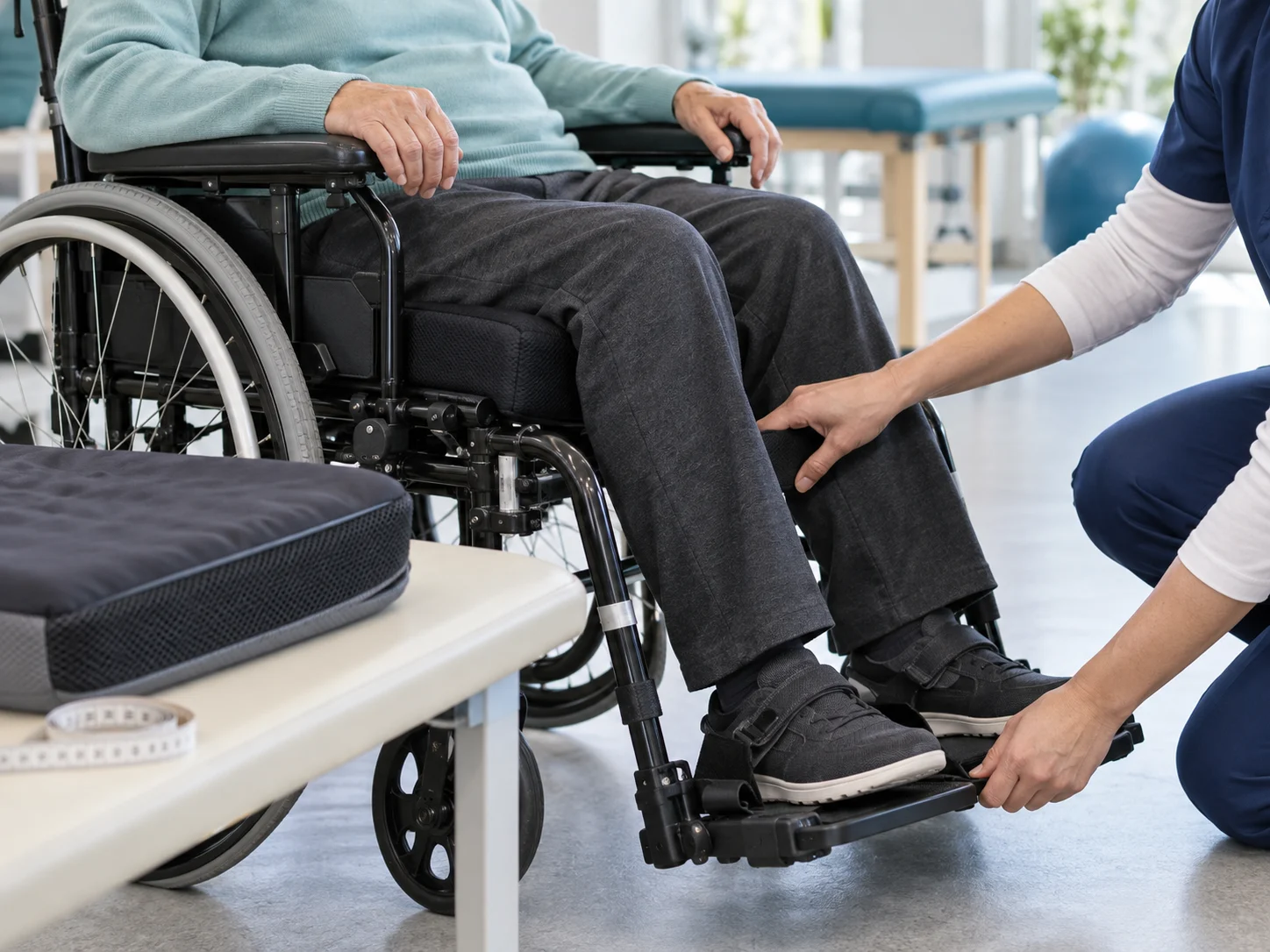
Myth: “If the person says the chair is comfortable for ten minutes, the fit is finished.” Short comfort does not test a full day of sitting, propulsion, eating, transfers, skin response or fatigue. A safe plan includes follow-up instructions and a reason to return if the person begins sliding, leaning, developing pain or showing a skin change.
What does a wheelchair measurement assessment include?
A wheelchair measurement assessment includes the person’s relevant body dimensions, the seating surface, the posture the person can maintain, and the space needed for function. I may measure seat width and depth, lower-leg length, hip and trunk position, shoulder and elbow relationships, foot support and the space needed for transfers. I compare these with the existing chair and the home environment rather than copying a catalogue size.
Bring the current wheelchair and cushion information if possible. Bring the person’s diagnosis list, recent changes in strength or sensation, skin concerns, pain locations, transfer method, usual sitting time, and a list of who helps at home. Photographs or measurements of narrow doorways, ramps, vehicle storage and the main route can be useful, provided privacy is protected. Tell the clinician what the person needs to do, not only what equipment they already own.
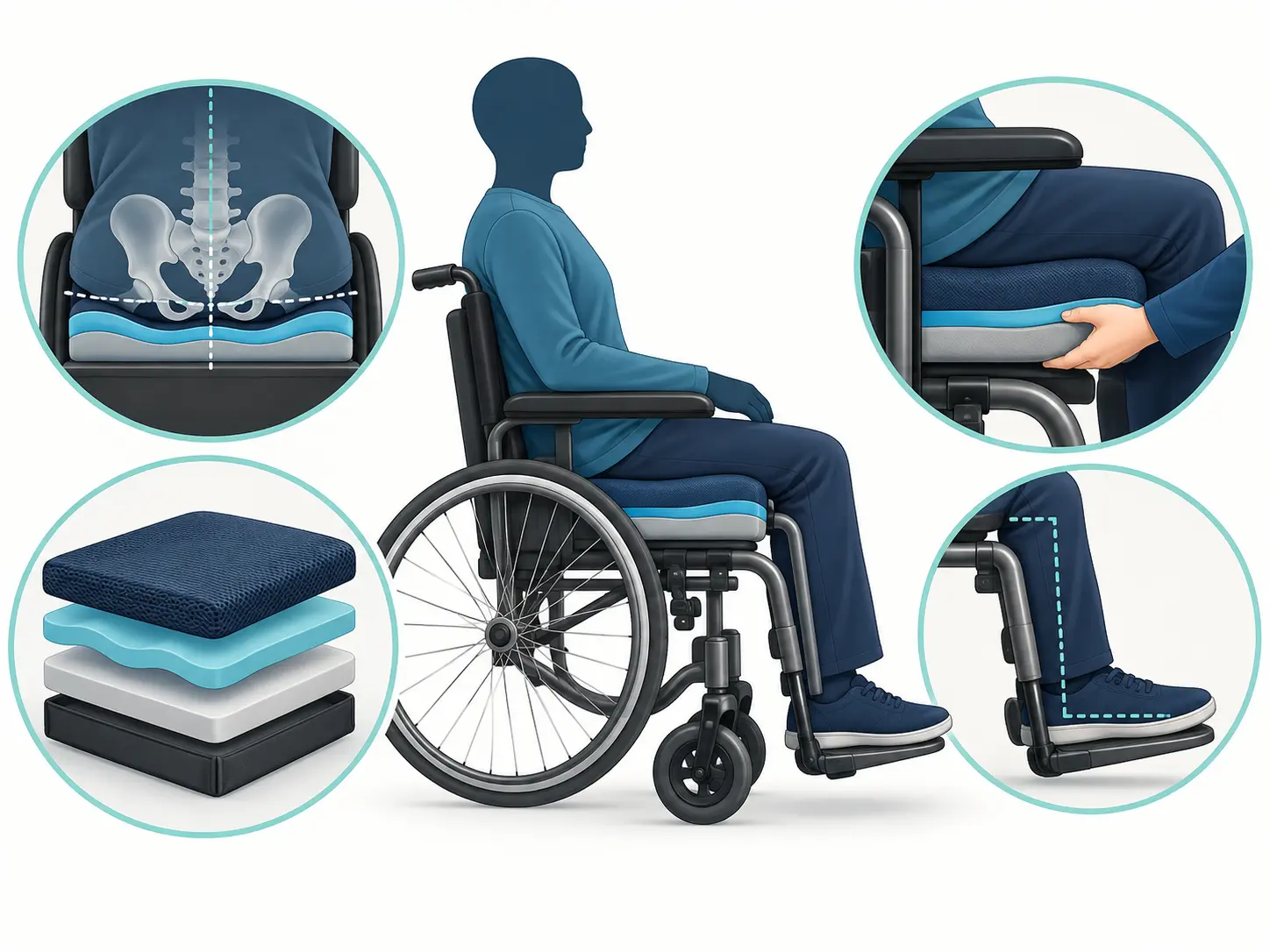
The assessment should also consider what is fixed and what is flexible. A fixed contracture or skeletal deformity may need to be accommodated; a flexible posture may respond to positioning, support or training. The plan should not force a person into a correction that increases pain, breathing difficulty, skin risk or transfer danger. Readiness for a change is based on examination and function, not on a single measurement.
| Area | Question to answer | Why it matters |
|---|---|---|
| Seat and cushion | Does the person stay supported without pressure or sliding? | Fit affects posture, comfort, skin and propulsion. |
| Foot and back support | Can the person keep a stable position during movement and transfers? | Support can change pelvic position, reach and transfer safety. |
| Home route | Can the person and caregiver manage the chair through the usual doorway, ramp and vehicle? | A chair that cannot be used in the real environment will not solve the daily problem. |
Myth: “Online measurements are enough to order a medical wheelchair.” Measurements taken without observing posture, propulsion, transfers and the home route can miss the reason the person is struggling. Remote support may improve access for some people, but evidence for telehealth wheelchair and seating assessment remains weak and equivocal, so it may not replace an in-person review for every equipment decision (Graham et al., 2020; PMID: 31014120).
How does a wheelchair pressure relief cushion assessment help?
A wheelchair pressure relief cushion assessment helps by matching pressure management to the person’s posture, sensation, skin history, movement, body shape, climate, sitting time and ability to perform or receive weight shifts. I assess the cushion as part of the chair, not as a separate product. A cushion can alter pelvic position, seat height, stability, reach, transfers, temperature and moisture. It should be trialled and reviewed rather than selected only because it is labelled “pressure relief.”
Evidence does not support one cushion for every person. A rapid review found air cushions more consistently effective for interface-pressure reduction than gel and foam cushions, but it also noted that measurement methods, body position, body mass and other variables affect comparisons; the review recommended individualized evaluation (He et al., 2022; PMID: 32573289). Another systematic review reported pressure-relief and shear findings for air-cell cushions but noted that some off-loading findings came from small studies requiring more research before broad generalization (Damiao et al., 2024; PMID: 34813723).
Heat and moisture can matter in warm environments. A systematic review found that different cushion materials performed differently for temperature and moisture, and concluded that no single cushion was ideal for every microclimate outcome (Couzens et al., 2024; PMID: 38296464). I therefore ask about sweating, dampness, skin sensation, clothing, room temperature, sitting duration and cleaning. A cushion that reduces one problem can create another if the full system is not checked.
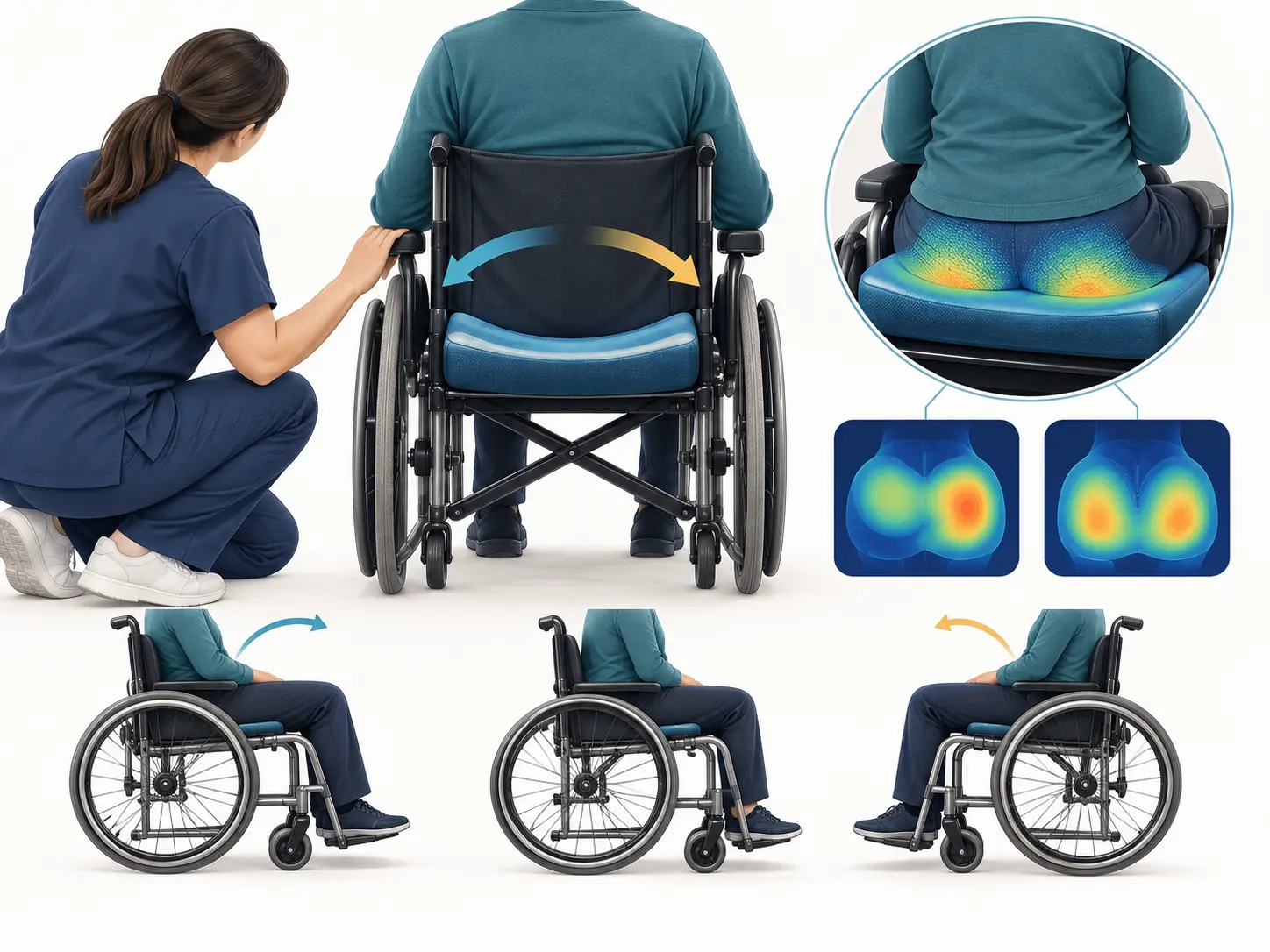
Pressure risk is also personal. In my clinic, I ask whether discomfort feels sharp, dull, radiating, stiff, heavy, tingling, burning, catching or grinding, and whether the person can feel or correct the position. An umbrella review identified factors such as age, obesity, spinal cord injury, diabetes, immobility, sensory-perception problems and low physical activity among frequently encountered risks in wheelchair users (Paquin et al., 2025; PMID: 39772943). That list is not an individual diagnosis or a risk score. Persistent redness or discoloration, blistering, broken skin, warmth, drainage, numbness or worsening pain needs prompt clinical review. Do not keep testing a new cushion on broken skin while waiting to see whether it improves.
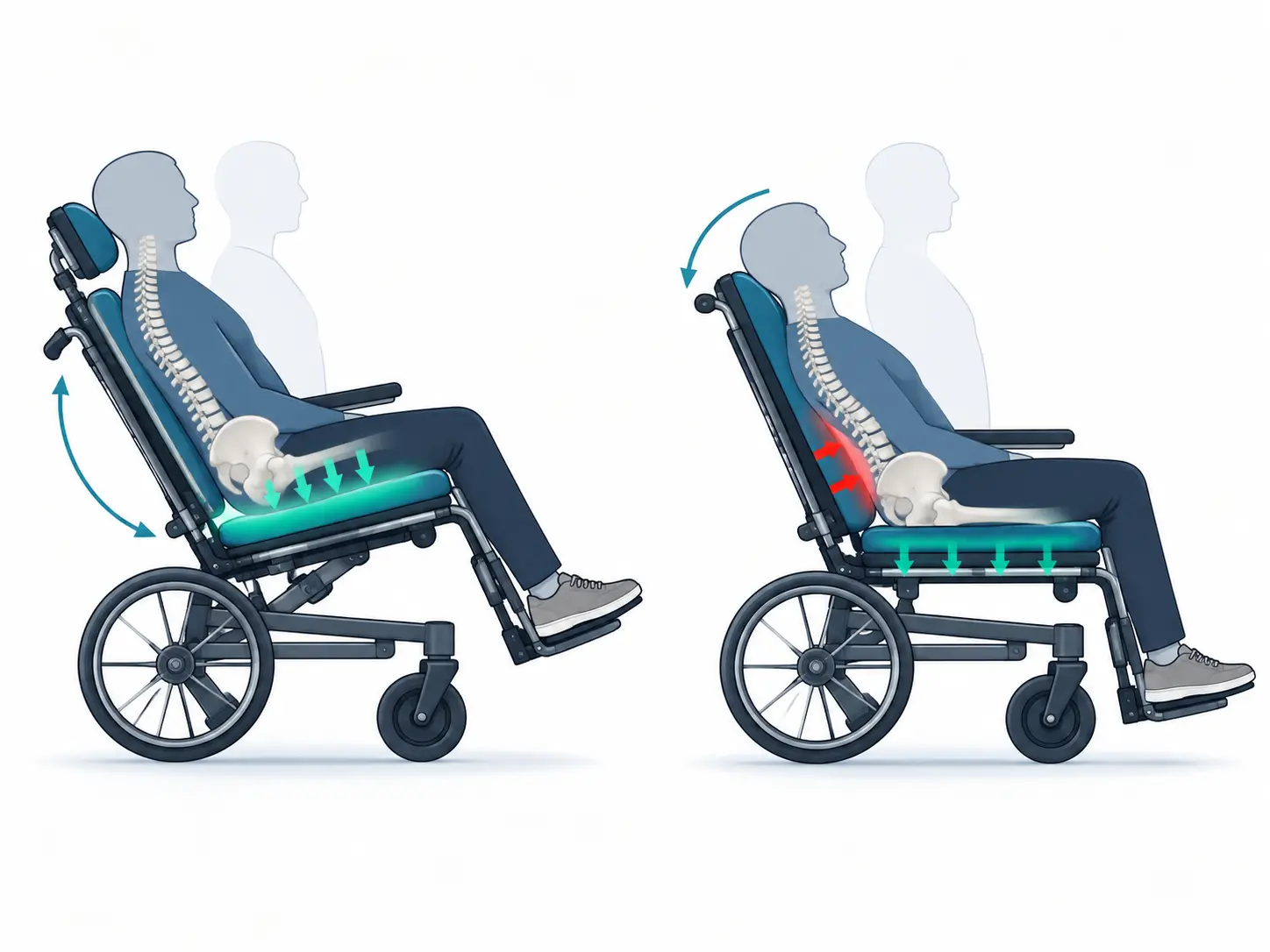
Myth: “A softer cushion is always better for pressure.” Softness can feel pleasant while allowing the pelvis to sink, slide or become unstable. Pressure relief, posture, temperature, moisture, transfers and propulsion must be considered together. If a person cannot perform a pressure shift or cannot feel a problem developing, the seating plan must include caregiver monitoring and clear follow-up instructions.
Where can I find a wheelchair clinic in Vigan City?
TeraCare’s wheelchair seating and mobility assessment pathway in Vigan is intended for people and families who need help understanding fit, posture, pressure, propulsion, transfers or equipment choices before buying or changing a wheelchair. The useful first step is to request an assessment and describe the person’s main difficulty, diagnosis, current chair, usual environment and caregiver support. This helps determine what should be reviewed and what to bring.
I do not treat the local appointment as a promise that one chair, cushion or feature will solve every problem. A prescription may need trials, measurements, supplier coordination, caregiver training or follow-up. Equipment availability, pricing and coverage must be confirmed for the individual case. PhilHealth or HMO support is not automatic, and the exact documents and benefit rules should be checked before a purchase.
Families travelling from Ilocos Sur or nearby Northern Luzon communities can reduce repeat trips by bringing the current chair information, a medication and diagnosis list, photos of difficult home spaces, and a short record of when sliding, pain or redness occurs. If travel is difficult, ask whether part of the history can be collected before the visit, but do not assume a phone discussion can replace the physical and equipment checks needed for a complex fitting. Clear English or Filipino explanations are both reasonable to request when a technical term does not match the way the family describes the problem.
Seek earlier review for new skin breakdown, repeated falls or near-falls, new severe pain, sudden loss of sitting balance, or a wheelchair that has become unsafe after a health change. Our guide to bed sore treatment and pressure relief explains why broken skin should not be managed by simply adding a cushion. If back or posture pain is the main concern, read the ergonomic wheelchair seating guide as a related resource. Seek emergency care for sudden facial droop, new one-sided weakness or numbness, new speech or vision difficulty, collapse, severe sudden headache or sudden confusion. A seating appointment is not a substitute for emergency assessment.
Plan the seating question before buying equipment
A Vigan assessment can review posture, measurements, pressure risk, transfers and caregiver needs before a wheelchair or cushion is changed.
A good seating decision has to work outside the clinic
The best plan is the one that remains safe and usable in the person’s real routine.
Person and posture
Strength, tone, sensation, pain, fatigue, attention and skin risk can change which features are safe.
Home and transport
Doorways, ramps, vehicle loading, floor surfaces and storage are part of the assessment.
Caregiver capacity
Pushing, transfers, charging, cleaning and monitoring need to be realistic for the people providing daily help.
References & Clinical Evidence
- [1] Bazant ES, Himelfarb Hurwitz EJ, Onguti BN, Williams EK, et al. Wheelchair services and use outcomes: A cross-sectional survey in Kenya and the Philippines. Afr J Disabil. 2017. PMID: 29134178. https://pubmed.ncbi.nlm.nih.gov/29134178/
- [2] Kirby RL, Doucette SP. Relationships Between Wheelchair Services Received and Wheelchair User Outcomes in Less-Resourced Settings. Arch Phys Med Rehabil. 2019. PMID: 30851236. https://pubmed.ncbi.nlm.nih.gov/30851236/
- [3] He C, Shi P. Interface pressure reduction effects of wheelchair cushions in individuals with spinal cord injury: a rapid review. Disabil Rehabil. 2022. PMID: 32573289. https://pubmed.ncbi.nlm.nih.gov/32573289/
- [4] Damiao J, Gentry T. A systematic review of the effectiveness of pressure relieving cushions in reducing pressure injury. Assist Technol. 2024. PMID: 34813723. https://pubmed.ncbi.nlm.nih.gov/34813723/
- [5] Couzens L, Peterson B, Innes E, Stevens CJ. The effect of wheelchair cushion properties on the microclimate at the cushion-user interface. Aust Occup Ther J. 2024. PMID: 38296464. https://pubmed.ncbi.nlm.nih.gov/38296464/
- [6] Paquin C, Nindorera F, Gagnon M, Lamontagne MÈ, et al. Personal risk factors for pressure injuries among wheelchair users. Disabil Rehabil Assist Technol. 2025. PMID: 39772943. https://pubmed.ncbi.nlm.nih.gov/39772943/
- [7] Dupitier E, Voisin M, Stalens C, Laforêt P, et al. Identification of wheelchair seating criteria in adults with neuromuscular diseases. PLoS One. 2023. PMID: 37682819. https://pubmed.ncbi.nlm.nih.gov/37682819/
- [8] Graham F, Boland P, Grainger R, Wallace S. Telehealth delivery of remote assessment of wheelchair and seating needs. Disabil Rehabil. 2020. PMID: 31014120. https://pubmed.ncbi.nlm.nih.gov/31014120/
* Clinical references are provided to support the medical claims made in this article. TeraCare adheres to evidence-based practices in physical medicine and rehabilitation.

Dr. Ben Rabara
Dr. Ben Rabara is a Board-Certified Physiatrist specializing in Physical Medicine and Rehabilitation. He focuses on non-surgical, precision treatments for musculoskeletal conditions, utilizing advanced diagnostics like MSK Ultrasound.
Medical Disclaimer: The information provided in this article is for educational purposes only and does not substitute for professional medical advice, diagnosis, or treatment. Always consult a qualified physician for your specific health conditions.