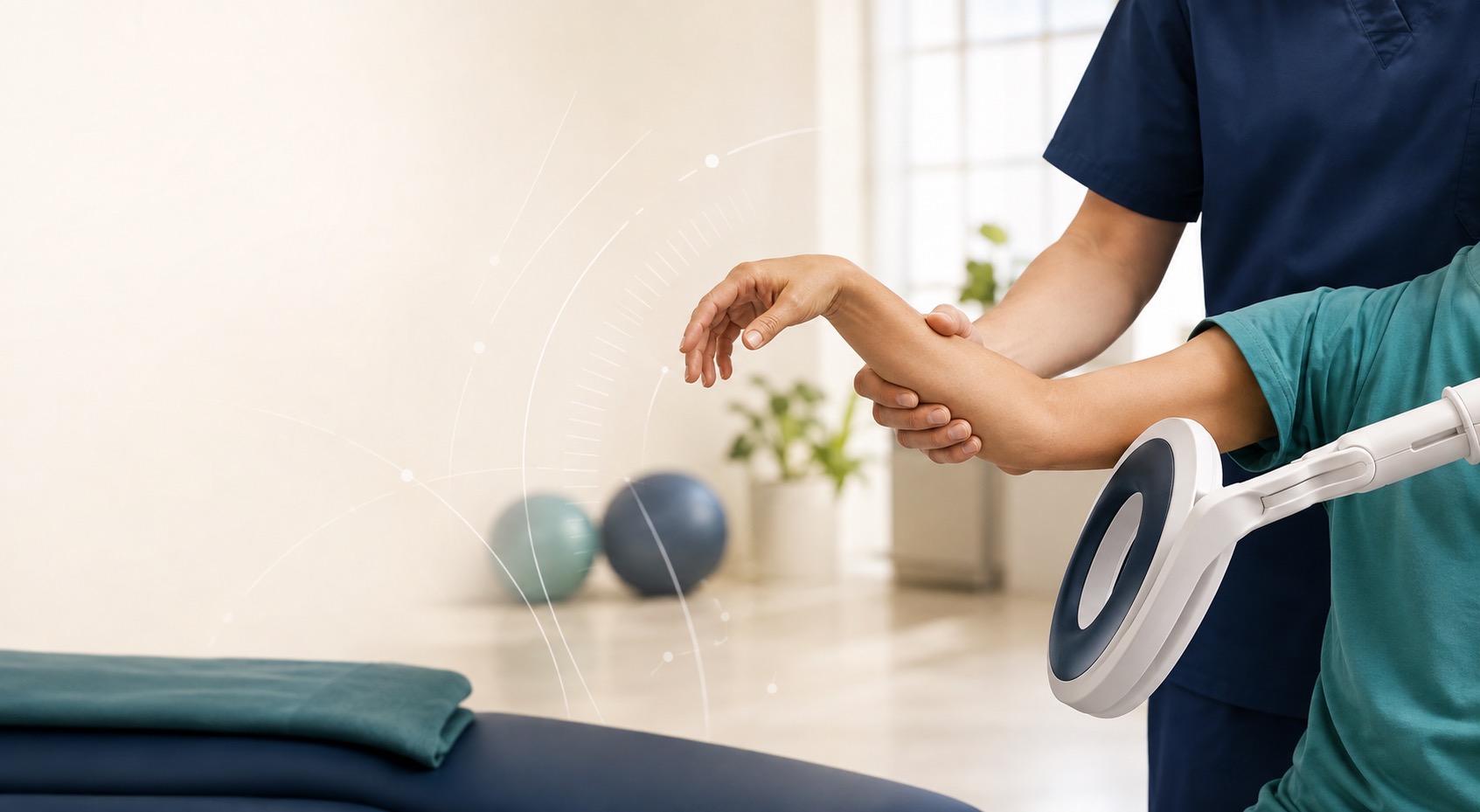
- — Post-stroke spasticity treatment starts with an assessment of movement, tone, pain, range of motion and functional goals—not with a device or a generic exercise list.
- — SIS is a peripheral high-intensity electromagnetic modality. It is not the same as rTMS, PEMF, TENS, NMES or shock-wave therapy, and evidence from one modality cannot automatically be transferred to another.
- — Related peripheral magnetic-stimulation studies show mixed results. The available evidence does not establish routine use, a universal dose or a guaranteed response for every person after stroke.
- — Implants, metal, pregnancy, medical conditions and current symptoms must be discussed with the treating clinician and checked against the actual device instructions before treatment.
- — The safest goal is measurable function—such as opening the hand for hygiene or moving the foot during gait practice—not a promise to “reset” the nervous system.
If a hand stays closed, an arm feels heavy, a foot points down or a limb seems difficult to move after a stroke, it is reasonable to ask about spasticity treatment after stroke. The careful first step is not choosing a machine. It is working out what is making movement difficult, how the problem affects daily life and what outcome matters to you. Clinical guidance emphasizes that the presence of spasticity alone is not enough reason to begin treatment; assessment and goal setting come first (Suputtitada et al., 2024; PMID: 38393176).
This article explains where Super Inductive System (SIS) may fit, what the available evidence can and cannot show, and which questions should be answered before a session. It does not diagnose spasticity, prescribe a session schedule or promise nerve regeneration. Any plan should keep indicated stroke rehabilitation in place.
What Does Spasticity Treatment After Stroke Usually Involve?
Treatment is usually built around a functional problem rather than a tone score alone. The goal might be opening the hand enough for hygiene, placing the foot more safely during gait practice, reducing painful pulling, improving sleep position or making active therapy more manageable. The clinician may consider positioning, range-of-motion work, strengthening, task practice, gait training, medication, injections, orthoses or another intervention depending on the assessment.
A treatment plan should say what will be measured and when it will be reviewed. A device session can be one part of that plan, but it is not the same thing as recovery. If the goal is easier hand opening, for example, the team can track passive range, active movement, hygiene, pain and participation in therapy rather than relying on a broad promise that the nervous system will “reset.”
How Can an Assessment Separate Spasticity From Other Causes of Stiffness?
Spasticity is muscle overactivity associated with the upper motor neuron syndrome, but it is only one component of that syndrome (Suputtitada et al., 2024; PMID: 38393176). A limb can also feel tight or difficult to move because of weakness, pain, a fixed contracture, joint restriction, dystonia, swelling, fear of movement or a problem elsewhere in the nervous or musculoskeletal system.
During an assessment, the clinician may compare movement at different speeds, look at active and passive range, observe posture and triggers, assess strength and sensation, and ask what the person can or cannot do. The examination should connect the finding to a goal. A stiff hand that can no longer be opened passively raises different questions from a hand that opens with help but closes during a task.
This is also why the phrase “relieving tight muscles naturally” is not a complete treatment plan. Gentle movement or stretching may be appropriate for one person and unhelpful or unsafe for another. Ask the rehabilitation clinician what to do, what to avoid and what change should prompt reassessment.
What Is Electromagnetic Therapy for Stroke Recovery?
“Electromagnetic therapy” is an umbrella phrase, not one standardized treatment. SIS is a peripheral high-intensity electromagnetic modality delivered with a dedicated applicator. Related research may instead study repetitive peripheral magnetic stimulation (rPMS), repetitive transcranial magnetic stimulation (rTMS), pulsed electromagnetic fields (PEMF), neuromuscular electrical stimulation (NMES), transcutaneous electrical nerve stimulation (TENS) or extracorporeal shock-wave therapy.
These approaches differ in where energy is delivered, how it is generated, the target tissue, the dose, the schedule and the outcome being measured. The clinical review specifically warns that PEMF results cannot be assumed to apply to a high-intensity, motor-threshold, tissue-induced SIS protocol (Vinolo-Gil et al., 2022; PMID: 35807019). Similar words should not be used to make different devices sound equivalent.
How Is Electromagnetic Therapy for Spasticity Used?
When a clinician discusses electromagnetic therapy for spasticity, ask which modality, device and target are meant. The objective might be to influence a specific movement or to make a rehabilitation task more achievable; it should not be framed as an automatic cure for a damaged brain or a promise that every tight muscle will relax.
A 2022 systematic review of peripheral electromagnetic-field interventions found a possible signal of benefit, but described the evidence as heterogeneous and said that no standardized protocol could be recommended (Vinolo-Gil et al., 2022; PMID: 35807019). That is a reason for careful shared decision-making, not a reason to dismiss the question or promise a result.
Related rPMS research also shows why muscle, outcome and study design matter. In one 2026 upper-extremity randomized trial, mean wrist-flexor Modified Ashworth Scale changes did not differ significantly between groups at any time point (Yılmaz et al., 2026; PMID: 42291380). A result in one muscle or measure cannot be expanded into a guarantee for the whole limb.
Where Does SIS Therapy for Stroke Recovery Fit?
SIS therapy for stroke recovery may be considered when a rehabilitation clinician believes a peripheral treatment could support a defined goal. It should sit beside—not replace—assessment, positioning, active movement, task practice, strength work, gait training, occupational therapy or other indicated care.
The SIS study described in the clinical evidence review compared two active SIS protocols, with both groups also receiving standard kinesitherapy. It did not compare SIS with a sham device, no treatment, usual care alone or a nonmagnetic active modality (Vinolo-Gil et al., 2022; PMID: 35807019). Therefore, its between-protocol findings cannot prove that SIS is superior to rehabilitation, placebo or no treatment.
A reasonable discussion includes the expected target, the functional outcome, the other treatment that will continue, the review point and the stopping plan. If the proposed benefit is described as “nerve regeneration,” “brain bypass” or a guaranteed permanent reset, ask for the exact evidence and a more measurable goal.
Start With a Spasticity Assessment
Bring your movement goals, medication list and implant or metal history so the team can discuss whether SIS is appropriate.
Is Electromagnetic Therapy for Stroke Recovery Safe?
Safety is device- and patient-specific. In the reviewed evidence set, safety was not established for people with implanted electronic or metallic devices, pregnancy, cancer, fever, cardiac or respiratory disease, coagulation disorders or anticoagulant treatment (Vinolo-Gil et al., 2022; PMID: 35807019). Tell the clinician about these factors, metal hardware, recent procedures, medication changes and any new or unexplained symptom before treatment.
Some individual trials reported reassuring observations within their own samples. For example, the 2026 ankle rPMS trial reported no stimulation-related adverse events, and the 2026 upper-extremity trial reported no serious side effects (Aslantaş et al., 2026; PMID: 42499448; Yılmaz et al., 2026; PMID: 42291380). Those reports do not establish universal safety or override exclusions, current manufacturer instructions or a clinical screen.
Stop and tell the treating team if a session causes unexpected pain, new weakness, marked worsening of symptoms or another concerning change. For a sudden new neurologic change or another acute emergency, seek urgent medical help rather than waiting for an SIS appointment.
What Do Muscle Spasticity Treatment Exercises Do?
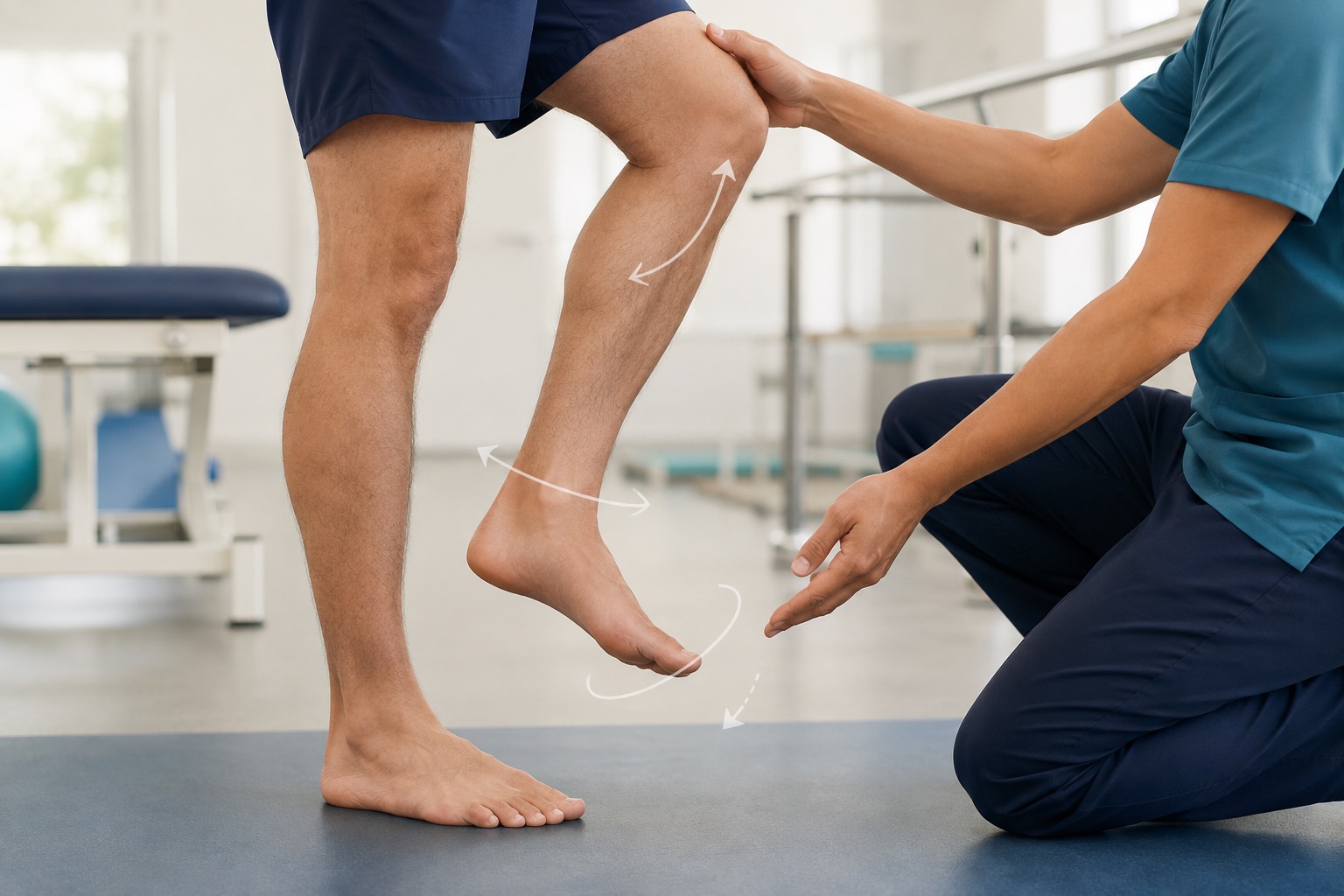
Muscle spasticity treatment exercises are usually selected to support a particular movement or daily task. Depending on the assessment, that may include active practice, slow controlled movement, positioning, stretching, strengthening, balance work, gait practice or hand function. Exercises should match the person’s available control and should not force a painful or unstable joint.
The useful question is not “Which exercise cures spasticity?” but “Which movement can I practice safely, how often, and what should improve if it is helping?” A therapist can adapt the task as tone, strength, pain and function change. Do not use a generic online routine to test whether a new symptom is safe to exercise through.

When Is Post Stroke Muscle Stiffness Treatment Needed?
Post stroke muscle stiffness treatment becomes worth discussing when the problem limits a meaningful activity, causes pain, interferes with hygiene or dressing, makes positioning difficult, disrupts sleep, increases care needs or prevents participation in rehabilitation. A measurable impact helps the team decide whether treatment is needed and whether it is helping.
A treatment decision may also change over time. A limb that is dynamically tight during movement is not the same as a joint with a fixed contracture. New swelling, a new injury, a medication change, infection symptoms or a sudden change in neurologic function may require a different assessment rather than another adjunctive session.
What Does the Evidence Say About SIS and Related Magnetic Stimulation?
The evidence is mixed, and the modality labels matter. The peripheral electromagnetic-field systematic review described a possible benefit signal but also substantial heterogeneity, small studies and mixed stroke and multiple-sclerosis populations (Vinolo-Gil et al., 2022; PMID: 35807019). Its findings do not identify a best frequency, universal dose or universal safety profile for SIS.
A 2023 meta-analysis of upper-limb rPMS trials found no difference in improvement of muscle spasticity and noted that the limited number of studies warranted further trials (Chen et al., 2023; PMID: 37180919). A Cochrane review likewise concluded that there was insufficient evidence to draw conclusions about routine rPMS use after stroke (Kamo et al., 2022; PMID: 36169558).
Some newer trials are encouraging in selected outcomes. One 2026 sham-controlled ankle rPMS trial used conventional rehabilitation for both groups and 10 active sessions over two weeks; its results were specific to that population, modality and protocol (Aslantaş et al., 2026; PMID: 42499448). This is useful context, but it is not a prescription for SIS and not proof of a guaranteed individual response.
The most accurate summary is therefore: related peripheral magnetic stimulation is an area of ongoing research; SIS may be considered as a carefully screened adjunct for a defined rehabilitation goal; and the current evidence does not justify routine-use, nerve-regeneration or permanent-reset claims.
What Might a Clinician-Led SIS Session Involve?
Before treatment, the clinician should review the diagnosis, medical history, implants or metal, medications, recent procedures, the target area and the functional goal. The plan should explain what the person may feel, how comfort and response will be monitored, which rehabilitation activity follows, and when progress will be reviewed.
Do not assume that a protocol from a paper or a different clinic is the right protocol for you. Research schedules vary. In the 2026 ankle rPMS study, for example, 10 sessions over two weeks were used alongside conventional rehabilitation (Aslantaş et al., 2026; PMID: 42499448), while that schedule does not establish what an SIS patient should receive.
Track an outcome that matters: opening the hand for care, placing the foot during a step, tolerating a position, completing a task or participating in therapy. If the planned outcome is not improving, the team should reconsider the assessment and plan rather than simply adding sessions.

When Should You Seek Urgent Help?
An online guide cannot safely sort every new neurologic symptom. Seek urgent medical help for a sudden new change in strength, speech, alertness, balance or sensation, severe rapidly worsening pain, serious breathing or chest symptoms, a new injury or another acute emergency. Do not wait for an elective SIS appointment to evaluate a potentially urgent change.
For a gradual tightness problem, contact the rehabilitation team if function, pain, sleep, skin care, walking or hand use is worsening. Bring the timing, triggers, medication list and the activities that have become difficult so the clinician can reassess the cause and goal.
What Questions Should You Ask a Rehabilitation Clinician?
- Is this definitely spasticity, or could weakness, pain, contracture or another problem be contributing?
- What daily activity or rehabilitation goal are we trying to improve?
- Which modality and device are you recommending, and how is it different from rTMS, PEMF, TENS or NMES?
- What evidence applies to this exact device, target and outcome?
- What medical history, implant, metal, medication or pregnancy information changes safety screening?
- What care should continue alongside SIS?
- How will we measure benefit, when will we review it and when would we stop?
If you are considering an assessment at TeraCare, bring your medication list, relevant reports, details of implants or metal hardware and a short description of the movement or care task that is hardest. The consultation is for deciding what is appropriate; it is not a promise that SIS will be recommended or that a particular result will occur.
Post-Stroke Spasticity Realities
The clinical questions matter more than the promise of a single device.
Assess Before Treating
Spasticity is one component of a broader movement problem. Tone, weakness, pain, contracture and function need to be considered together.
Keep Modalities Separate
SIS, rPMS, rTMS, PEMF and electrical stimulation are not interchangeable labels or evidence bases.
Measure the Goal
Track an agreed movement or daily-activity goal rather than assuming that a session count equals recovery.
References & Clinical Evidence
- [1] Suputtitada A, Chatromyen S, Chen CPC, Simpson DM. Best Practice Guidelines for the Management of Patients with Post-Stroke Spasticity: A Modified Scoping Review. Toxins. 2024;16(2):98. PMID: 38393176.
- [2] Vinolo-Gil MJ, Rodríguez-Huguet M, García-Muñoz C, Gonzalez-Medina G, et al. Effects of Peripheral Electromagnetic Fields on Spasticity: A Systematic Review. J Clin Med. 2022;11(13):3739. PMID: 35807019.
- [3] Kamo T, Wada Y, Okamura M, Sakai K, et al. Repetitive peripheral magnetic stimulation for impairment and disability in people after stroke. Cochrane Database Syst Rev. 2022. PMID: 36169558.
- [4] Chen ZJ, Li YA, Xia N, Gu MH, et al. Effects of repetitive peripheral magnetic stimulation for the upper limb after stroke: Meta-analysis of randomized controlled trials. Heliyon. 2023. PMID: 37180919.
- [5] Aslantaş HO, Kutlay Ş, Gök H, Özkan S, et al. Effects of repetitive peripheral magnetic stimulation on poststroke ankle spasticity: a double-blind randomized controlled trial. Turk J Med Sci. 2026. PMID: 42499448.
- [6] Yılmaz S, Gök H, Kutlay Ş, Aslantaş H, et al. Effects of repetitive peripheral magnetic stimulation on post-stroke upper extremity spasticity using ultrasound elastography: A randomized controlled study. Turk J Phys Med Rehabil. 2026. PMID: 42291380.
* Clinical references are provided to support the medical claims made in this article. TeraCare adheres to evidence-based practices in physical medicine and rehabilitation.

Dr. Ben Rabara
Dr. Ben Rabara is a Board-Certified Physiatrist specializing in Physical Medicine and Rehabilitation. He focuses on non-surgical, precision treatments for musculoskeletal conditions, utilizing advanced diagnostics like MSK Ultrasound.
Medical Disclaimer: The information provided in this article is for educational purposes only and does not substitute for professional medical advice, diagnosis, or treatment. Always consult a qualified physician for your specific health conditions.