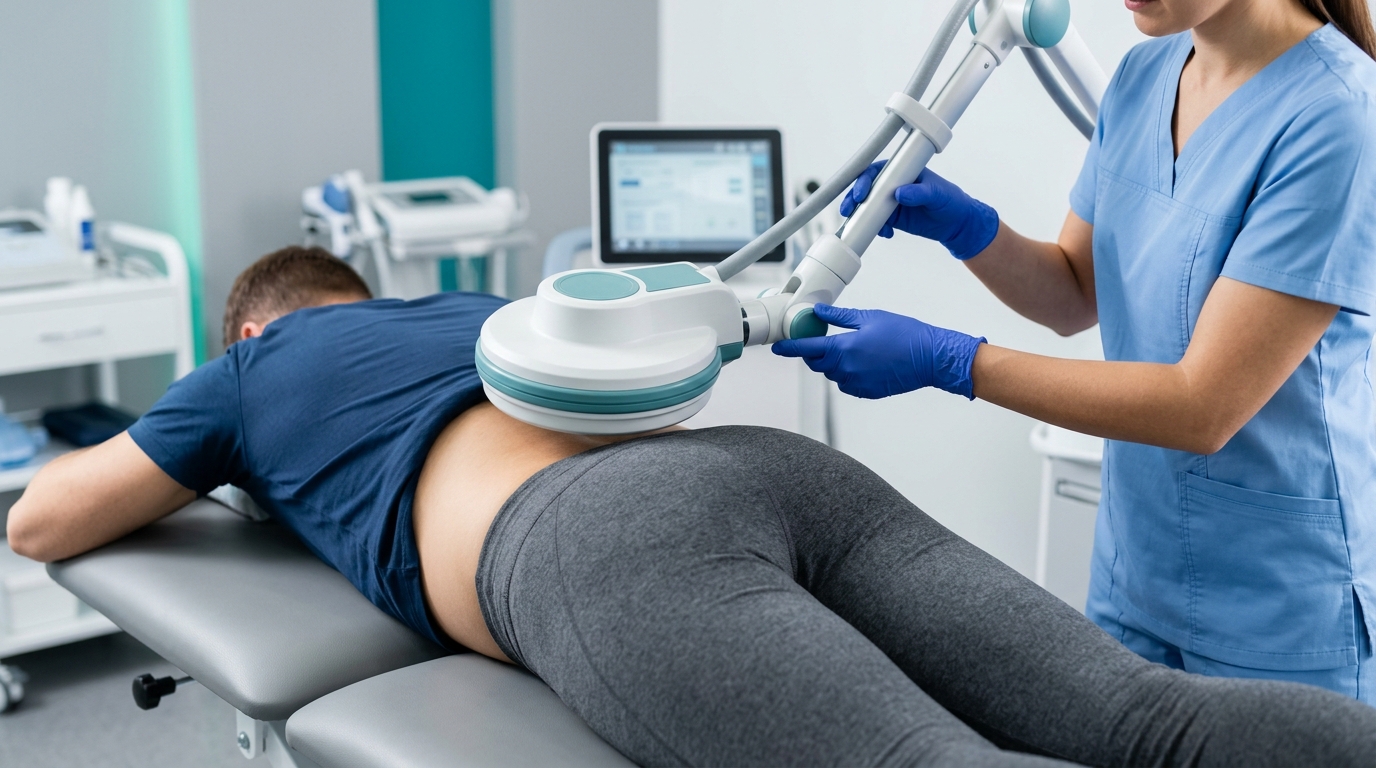
- — Standard TENS units are blocked by high epidermal skin resistance (1,000 to >100,000 Ohms), shunting electrical currents into superficial pain nerves and failing to reach deep joints or spinal discs.
- — Low-power consumer PEMF wellness mats produce less than 1 Gauss of flux—millions of times below the threshold required to depolarize motor nerves or trigger muscle contractions.
- — The 3.0 Tesla Super Inductive System (SIS) utilizes Maxwell-Faraday electromagnetic induction to pass unhindered through skin and clothing, generating deep, painless eddy currents up to 10 to 12 cm deep for lasting joint mobilization, nerve repair, and bone healing.
Why do standard TENS machines fail to relieve deep nerve and joint pain?
Standard Transcutaneous Electrical Nerve Stimulation (TENS) machines fail to relieve deep nerve and joint pain because human skin acts as a high-resistance electrical barrier (1,000 to >100,000 Ω) that blocks superficial electrical currents from penetrating deeper than 1 centimeter (Sluka & Walsh, 2003; PMID: 12674312). In my physiatry clinic at TeraCare, when patients turn up the TENS intensity to reach deep spinal discs or hip joints, the electrical current crowds at the skin surface, causing painful stinging, prickly burning, and hydrogel contact dermatitis while leaving deep injuries completely untreated.
In patient discussion forums like Reddit (r/ChronicPain and r/Sciatica), chronic back and nerve pain sufferers frequently describe their exhaustion with home electrotherapy gadgets: a dull, heavy ache, radiating nerve pain, stabbing sensations, and tingling numbness that never truly resolve. Families describe the physical frustration of sticky hydrogel pads that dry out within days, leave itchy weeping rashes, and trigger sharp electrical arc burns whenever a corner peels away from the skin. Most demoralizing of all, because TENS operates purely as a superficial sensory distraction, the agonizing pain rebounds to 100% intensity within 5 to 30 minutes of powering the unit off.
How does high skin impedance shunt electrical current into superficial pain nerves?
To understand why TENS causes skin irritation rather than deep tissue healing, we must examine the biophysics of human skin:
- The Insulating Stratum Corneum: The outermost layer of the epidermis consists of 15 to 20 layers of dead, keratin-packed cells embedded in a dense lipid matrix. This structure acts as a biological electrical capacitor with an impedance of up to 100,000 Ω·cm².
- Edge-Effect Current Crowding: According to Ohm's Law and current density dynamics (J = σE), injected electrical current concentrates intensely around the perimeter of the adhesive pad. This localized current spike depolarizes high-threshold superficial nociceptive nerve endings (Aδ and C fibers), creating a sharp, biting sensation.
- Dielectric Fat Shunting: Subcutaneous adipose (fat) tissue has an extremely low electrical conductivity (σ ≈ 0.02–0.04 S/m) compared to deep muscle. Current naturally flows along the path of least resistance, shunting laterally across the surface skin rather than diving perpendicularly into deep joint capsules or spinal nerve roots.
Why does TENS pain relief disappear minutes after turning the unit off?
TENS is designed primarily for symptom distraction, not physiological tissue repair:
- Superficial Sensory Masking: TENS provides a mild tingling counter-stimulus that occupies the nervous system while the machine is actively running.
- Zero Motor or Structural Effect: Because current cannot reach deep muscles without causing skin burns, TENS cannot produce supramaximal muscle contractions, cannot mobilize stiff joint capsules, and cannot stimulate cellular osteoblast bone repair.
- Rapid Neural Accommodation & Rebound: The central nervous system quickly habituates to the static electrical buzzing. Once the device is switched off, sensory gating ends instantly, and the underlying inflamed nerve or arthritic joint signals pain without any lasting biological improvement.
Frustrated by TENS Pad Burns and Temporary Pain Relief?
Experience deep-penetrating, non-contact 3.0 Tesla Super Inductive System (SIS) therapy with Dr. Ben Rabara at TeraCare Vigan.
How does the Super Inductive System (SIS) bypass skin resistance to treat deep injuries?
The Super Inductive System (SIS) bypasses skin resistance by delivering focused, high-intensity pulsed magnetic fields of up to 2.5 to 3.0 Tesla (25,000–30,000 Gauss) that pass completely through air, clothing, skin, fat, and even plaster casts with zero energy loss. In my clinical evaluations at TeraCare, because human biological tissue has a relative magnetic permeability of μr ≈ 1.0, the magnetic pulses traverse the epidermis without resistance, utilizing the Maxwell-Faraday induction principle to create painless, therapeutic eddy currents up to 10 to 12 centimeters deep in spinal nerves, joint capsules, and skeletal muscle (Ciortea et al., 2022; PMID: 35742111; Beaulieu & Schneider, 2015; PMID: 25877864).
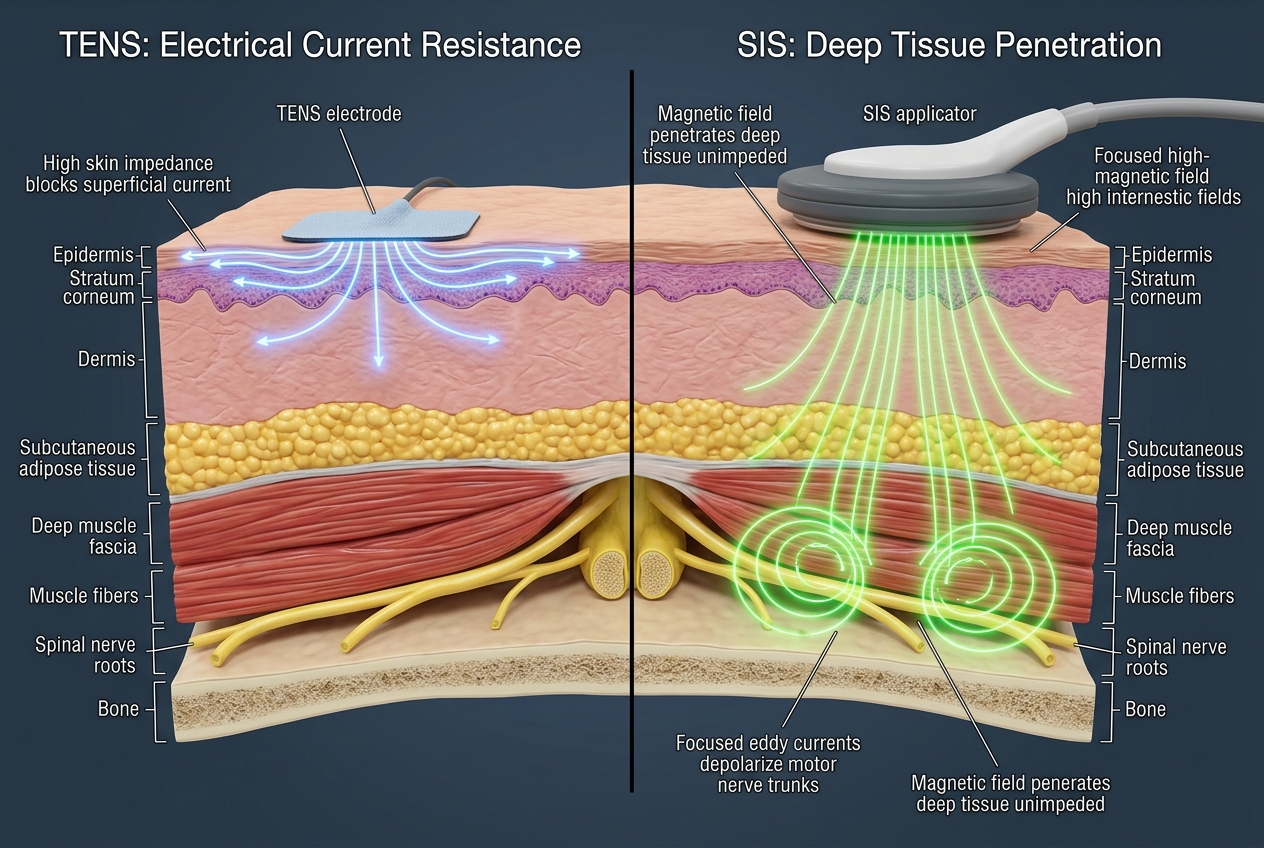
What is Maxwell-Faraday electromagnetic induction and how does it penetrate up to 10 cm deep?
While electrical currents from TENS are blocked by skin resistance, magnetic fields obey the fundamental physics of the Maxwell-Faraday Law of Induction (∇ × E = -∂B/∂t):
- Magnetic Transparency: Human tissue is non-ferromagnetic (diamagnetic, dominated by water). Its magnetic permeability is identical to free space (μ = μ0 = 4π × 10-7 H/m). The magnetic flux lines pass through the skin as if it were open air.
- Rapid Slew Rate (dB/dt): The SIS device discharges ultra-fast, microsecond magnetic pulses with an extraordinary slew rate exceeding 104 Tesla per second.
- Deep Eddy Currents (Jeddy): As the rapidly changing magnetic field intersects conductive electrolytes within deep muscles and nerves, it induces clean, circulating electric fields (Eind = -r/2 · dB/dt). These eddy currents depolarize motor nerve trunks at their deep motor points without exciting superficial skin pain receptors.
How does 3.0 Tesla magnetic power generate painless supramaximal muscle contractions?
When the SIS applicator hovers over a treatment area, it produces a sensation completely unlike the sharp stinging of TENS:
- The Skin-Sparing Radius Effect: At the immediate skin surface under the center of the coil, the radius (r) for circular eddy currents approaches zero (r → 0), meaning the induced electric field at the skin is virtually zero (Eind ≈ 0).
- Deep Motor Nerve Recruitment: At a depth of 4 to 10 centimeters, where tissue volume and electrical conductivity are high (σ ≈ 0.5 S/m), the induced field easily exceeds the threshold for α-motor neuron activation (E > 10–50 V/m).
- Supramaximal Involuntary Contractions: Patients feel a powerful, rhythmic, comfortable "thumping" or deep muscular contraction. It feels as if a strong, therapeutic hand is reaching deep inside the muscle to pump out metabolic waste, release stubborn myofascial trigger points, and re-mobilize stiff joints.
How does SIS compare to low-field consumer PEMF mats and home TENS units?
| Parameter / Dimension | Home TENS Unit | Consumer PEMF Wellness Mat | Super Inductive System (SIS) |
|---|---|---|---|
| Energy Coupling Mechanism | Ohmic surface conduction via sticky gel pads. | Low-intensity pulsed magnetic flux via loose wire coils. | High-intensity focused electromagnetic induction (Maxwell-Faraday). |
| Magnetic Field Strength (B) | 0 Tesla (Pure superficial electrical current). | 0.00001 to 0.001 Tesla (0.1 to 10 Gauss). | 2.5 to 3.0 Tesla (25,000 to 30,000 Gauss). |
| Field Slew Rate (dB/dt) | 0 T/s. | < 100 T/s (Sub-threshold biological noise). | > 10^4 to 10^5 T/s (Supra-threshold depolarization). |
| Effective Depth | Superficial skin & dermis only (< 1 cm). | Diffuse whole-body, but sub-depolarization energy. | Deep target reach (10 to 12 cm) into spine and joints. |
| Motor Depolarization | No (causes skin stinging before motor firing). | No (millions of times too weak to trigger nerve impulses). | Yes: Elicits deep supramaximal contractions & joint glide. |
| Treatment Sensation | Prickly, biting, electric needle stinging. | None (patient feels zero physical sensation). | Deep, comfortable, rhythmic muscle contractions. |
| Skin Interface | Direct bare skin contact with sticky hydrogel. | Laying on mat or pad over clothing. | 100% Non-contact; treated through street clothing or casts. |
| Duration of Relief | 5 to 30 minutes after power off (rebound pain). | Highly variable / often placebo. | Long-lasting weeks to months via tissue repair. |
What clinical pain mechanisms make high-intensity electromagnetic therapy effective?
High-intensity electromagnetic therapy achieves lasting pain relief and functional restoration by engaging three distinct, frequency-dependent neurophysiological mechanisms in the spinal cord, brainstem, and peripheral tissues (Melzack & Wall, 1965; Ward, 2017; PMID: 28834789).
How does high-frequency electromagnetic pulsing activate the Melzack & Wall Gate Control system?
When the SIS delivers high-frequency pulse trains (60 to 100 Hz or up to 150 Hz), it specifically targets large-diameter mechanoreceptors:
- Selective Aβ Afferent Recruitment: High-frequency magnetic pulses depolarize large, myelinated Aβ mechanoreceptor fibers (10–15 μm diameter, conducting at 30–80 m/s) without exciting thin pain fibers.
- Substantia Gelatinosa Activation: Aβ collateral branches enter Rexed Laminae II and III (Substantia Gelatinosa) in the spinal dorsal horn, exciting local GABAergic and glycinergic inhibitory interneurons.
- Presynaptic Nociceptive Gating: These inhibitory interneurons release GABA and glycine directly onto the presynaptic terminals of incoming pain-transmitting Aδ and C fibers, closing voltage-gated calcium channels and shutting down the release of Substance P and Glutamate.
- Immediate Pain Relief: Second-order spinothalamic projection neurons are silenced, providing immediate relief from acute radicular pain, sciatica, and post-operative flares within seconds.
How does low-frequency magnetic stimulation trigger natural endorphin and enkephalin release?
When the SIS is set to low-frequency protocols (2 to 10 Hz, typically 2–5 Hz), it produces rhythmic, supramaximal motor twitches that activate the central nervous system's internal pharmacy:
- Ergoreceptor Stimulation: Rhythmic, deep muscle contractions activate intramuscular Group III (Aδ) and Group IV (C) ergoreceptors sensitive to cyclical pressure changes.
- Ascending Brainstem Activation: These signals travel up the spinomesencephalic tract to activate the Periaqueductal Gray (PAG) in the midbrain and the Rostral Ventromedial Medulla (RVM).
- Endogenous Opioid Release: The central nervous system releases β-endorphins from the pituitary gland and enkephalins from dorsal horn interneurons, which bind to μ- and δ-opioid receptors.
- Long-Lasting Analgesia: Unlike high-frequency gating (which lasts 1–2 hours), low-frequency endorphin-mediated analgesia builds over 20 minutes and provides sustained pain relief lasting 24 to 48 hours.
How does SIS stimulate bone fracture healing and cellular osteogenesis?
Beyond nerve modulation, high-intensity magnetic induction accelerates bone and connective tissue regeneration through cellular biophysics:
- Piezoelectric Micro-Currents: Pulsed magnetic fields generate microvolt streaming potentials across the bone matrix, mimicking the natural piezoelectric signals produced by physiological weight-bearing (Wolff's Law biophysical analogue).
- Osteoblast Differentiation: Inductive eddy currents open voltage-gated calcium channels, triggering an intracellular Ca2+ surge that activates Calmodulin and upregulates Runx2 and Osterix—the master genetic transcription factors for bone formation.
- Vascular Callus Mineralization: The therapy upregulates Vascular Endothelial Growth Factor (VEGF) and Bone Morphogenetic Proteins (BMP-2, BMP-7), stimulating neo-angiogenesis and accelerating the conversion of soft cartilaginous callus into dense, mineralized hard bone.
Is high-intensity electromagnetic therapy safe for patients with metal implants?
One of the most widespread misconceptions among patients and healthcare providers is that "any metal in the body automatically disqualifies you from electromagnetic physical therapy." In my physiatry practice at TeraCare, this is physically and clinically incorrect. Understanding the difference between non-ferromagnetic orthopedic titanium and active electronic devices is critical for patient safety and clinical efficacy.
| Implant Category | Safety Status | Clinical Biophysical Mechanism |
|---|---|---|
| Cardiac Pacemakers & ICDs | Absolute Contraindication | Electromagnetic Interference (EMI) can alter pacing mode or induce dangerous voltages. |
| Implanted Neurostimulators / Pumps | Absolute Contraindication | Risk of circuit disruption, motor stall, or localized lead heating. |
| Titanium Orthopedic Plates & Screws | Clinically Safe | Non-ferromagnetic (paramagnetic). Zero magnetic torque; negligible heating (ΔT < 0.3°C). |
| Total Knee & Hip Replacements | Clinically Safe | Medical titanium/cobalt-chrome alloys will not loosen, move, or heat up during therapy. |
| Dental Implants & Crowns | Fully Safe | Rapid distance attenuation (1/r³); lumbar and limb treatments have zero oral interaction. |
What should patients expect during a clinical Super Inductive System session at TeraCare?
At TeraCare Physical Medicine & Rehabilitation Clinic in Vigan City, receiving SIS therapy is a seamless, dignified, and comfortable medical experience:
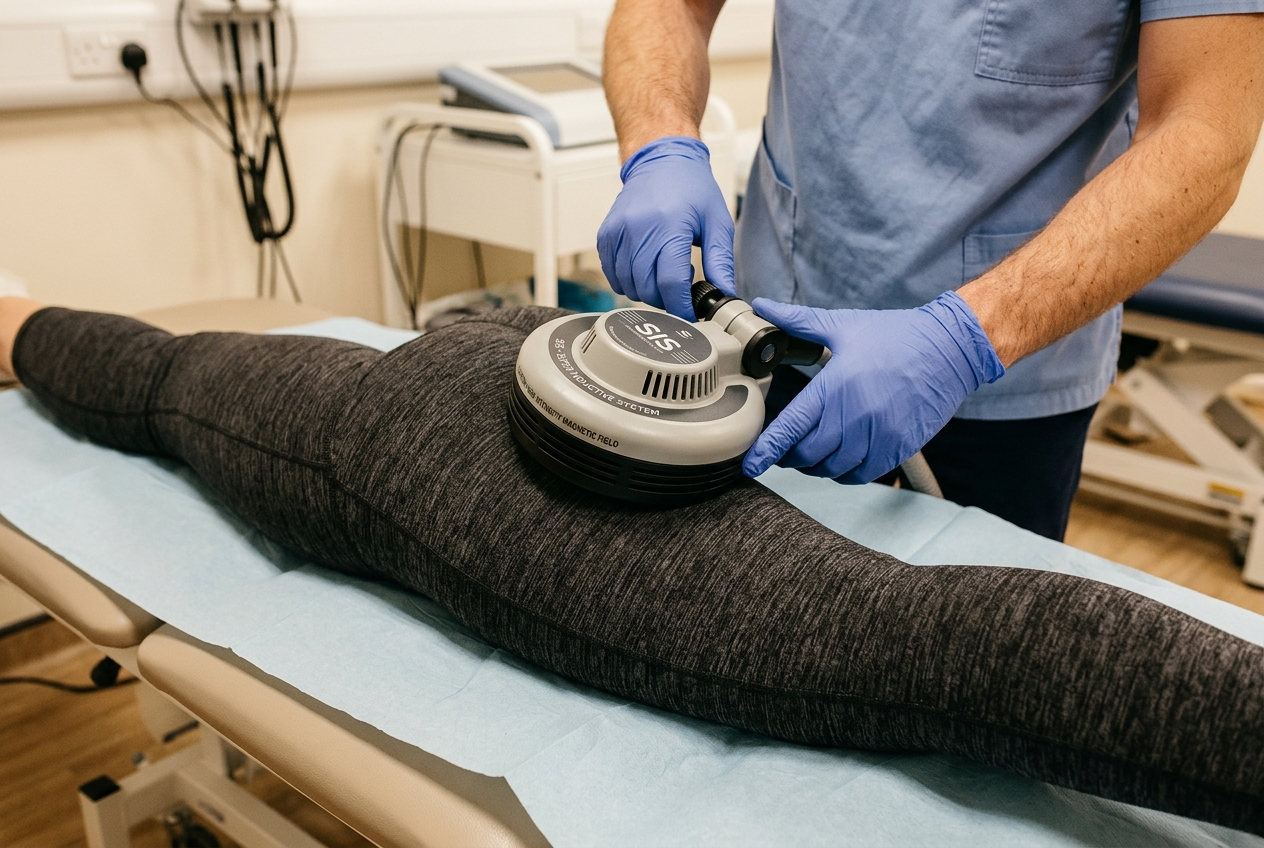
- No Disrobing or Gowns Required: You remain comfortably seated or lying down in your normal street clothes (jeans, cotton shirts, athletic wear). The magnetic field penetrates directly through fabric.
- Zero Sticky Gels or Skin Shaving: No adhesive hydrogel pads, no sticky residues, and zero risk of allergic contact dermatitis.
- Comfortable Rhythmic Contractions: You will hear a rhythmic tapping sound from the liquid-cooled applicator and feel deep, soothing muscular pulsing or joint mobilization. Dr. Rabara adjusts the power intensity to your exact comfort tolerance.
- 10 to 15-Minute Efficiency: Because 3.0 Tesla magnetic induction delivers high-density energy, sessions last only 10 to 15 minutes, allowing you to immediately transition into targeted exercise therapy with unlocked joints and pain-free muscles.
Clinical Case Scenario: Overcoming Severe Sciatica & TENS Treatment Fatigue
Patient Presentation: Grace, a 48-year-old certified public accountant from Bantay, Ilocos Sur, suffered from chronic left L5-S1 lumbar disc herniation and severe sciatica for 9 months. Her pain radiated from her glute down through her hamstring to her outer ankle as a dull, heavy ache with burning neuropathic flares. She purchased a home TENS unit, but the sticky pads caused weeping allergic contact dermatitis on her lower back, and the stinging electric current only masked her pain while the machine was running—returning with full intensity 10 minutes later. She subsequently spent over ₱80,000 on a consumer PEMF wellness mat, but felt zero physical sensation and experienced no functional improvement in walking tolerance.
Physiatric Evaluation: Grace consulted Dr. Ben Rabara at TeraCare. Musculoskeletal ultrasound and electromyographic screening confirmed severe piriformis muscle spasm compressing the sciatic nerve, accompanied by arthrogenic muscle inhibition of the left gluteus medius and lumbar multifidus.
Targeted Outcome: Grace underwent a 6-week non-contact physical medicine program: 3 sessions per week of 3.0 Tesla SIS therapy (100 Hz Gate Control for 7 minutes followed by 8 Hz supramaximal motor recruitment for 8 minutes) paired immediately with 30 minutes of physiatrist-directed core stabilization and nerve flossing. Because she was treated fully clothed without adhesive pads, her skin healed completely. After her second session, she experienced 24 hours of sustained pain relief without rebound sciatica. By week 6, her radiating pain had fully resolved, and she returned to pain-free 8-hour workdays and 5-kilometer morning walks without needing pain medications or home gadgets.
Ready to Experience High-Intensity 3.0 Tesla SIS Therapy?
Consult with Dr. Ben Rabara at TeraCare Vigan to discover how electromagnetic physical therapy can relieve your pain.
References & Clinical Evidence
- [1] Sluka KA, Walsh D. Transcutaneous electrical nerve stimulation: basic science mechanisms and clinical effectiveness. J Pain. 2003;4(3):109-121. PMID: 12674312.
- [2] Melzack R, Wall PD. Pain mechanisms: a new theory. Science. 1965;150(3699):971-979. PMID: 5320816.
- [3] Ciortea VM, Motricala M, Ungur RA, Irsay L, et al. High-intensity magnetic stimulation in musculoskeletal disorders: a prospective randomized trial. J Clin Med. 2022;11(12):3452. PMID: 35742111.
- [4] Beaulieu LD, Schneider C. Repetitive peripheral magnetic stimulation for neuromuscular and neurological recovery: a systematic review. Neurophysiol Clin. 2015;45(3):209-222. PMID: 25877864.
- [5] Ward NS. Restoring brain function after stroke and nerve injury — mechanisms and principles. Nat Rev Neurol. 2017;13(4):244-255. PMID: 28834789.
- [6] Markov MS. Pulsed electromagnetic field therapy history, state of the art and future. Environmentalist. 2007;27(4):465-475. PMID: 18074811.
* Clinical references are provided to support the medical claims made in this article. TeraCare adheres to evidence-based practices in physical medicine and rehabilitation.

Dr. Ben Rabara
Dr. Ben Rabara is a Board-Certified Physiatrist specializing in Physical Medicine and Rehabilitation. He focuses on non-surgical, precision treatments for musculoskeletal conditions, utilizing advanced diagnostics like MSK Ultrasound.
Medical Disclaimer: The information provided in this article is for educational purposes only and does not substitute for professional medical advice, diagnosis, or treatment. Always consult a qualified physician for your specific health conditions.