- — Aggressive manual stretching during Stage 1 (Freezing Phase) triggers capsular micro-tearing and reflex muscle guarding, which worsens inflammation and sleep loss.
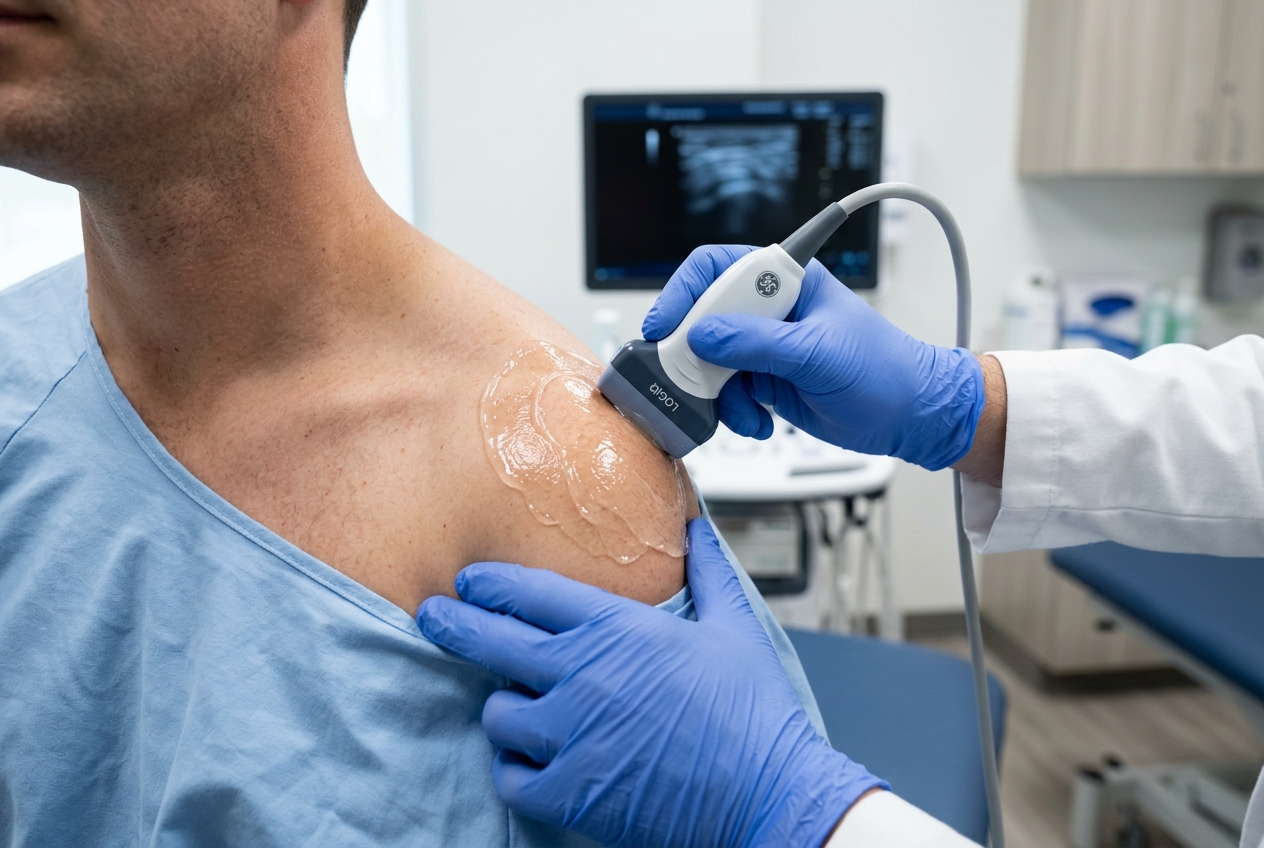
- — Point-of-care musculoskeletal ultrasound directly measures Coracohumeral Ligament thickening (>2.5 mm) and Axillary Recess contracture (>3.5 mm) at bedside in Vigan City without hospital MRI delays.
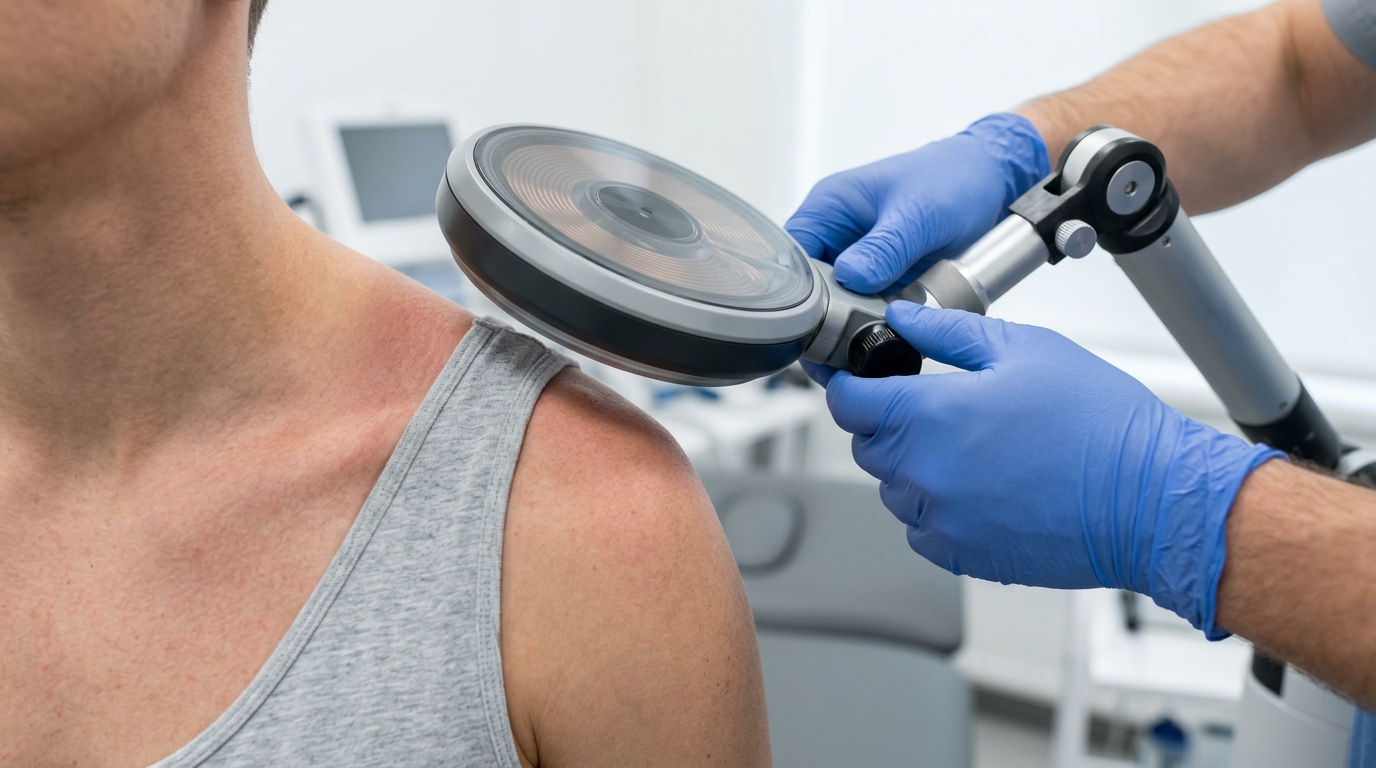
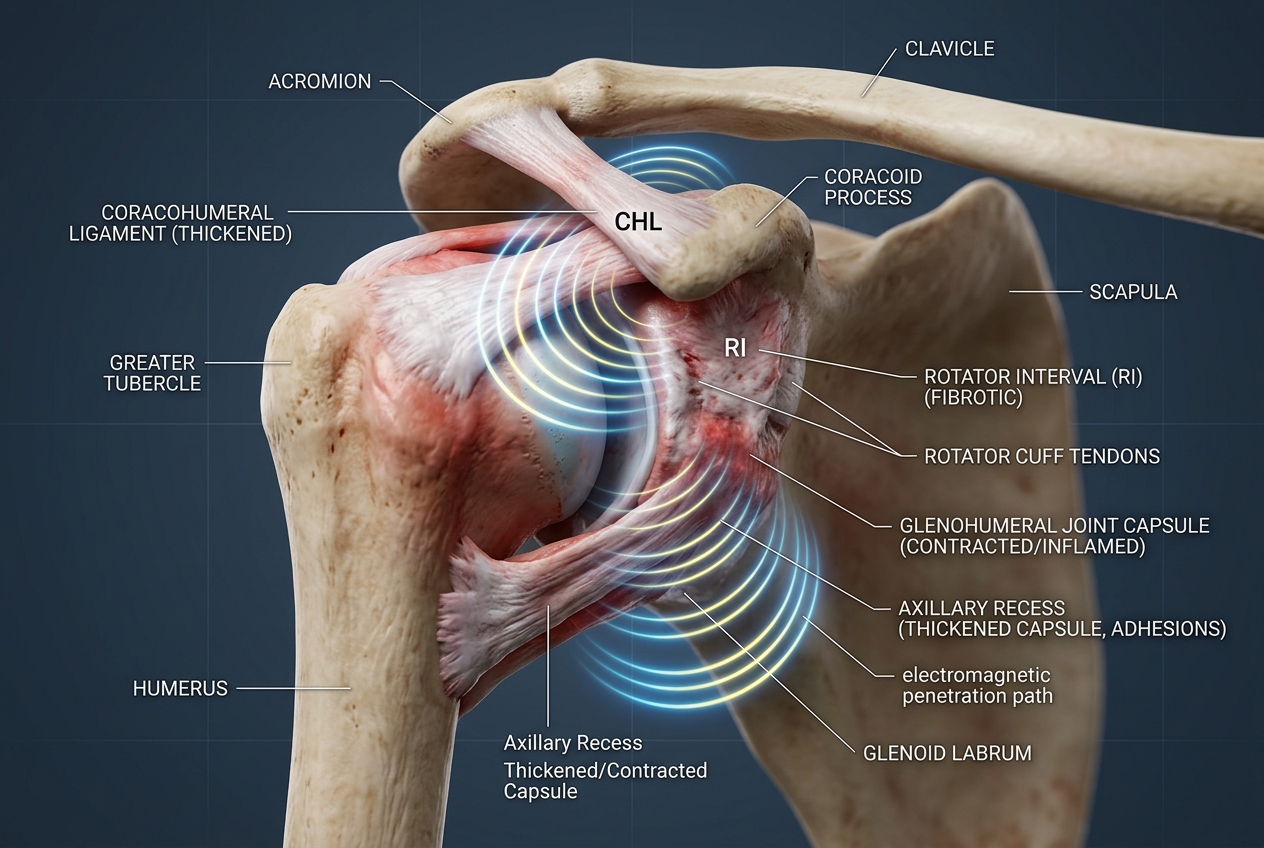
- — The Super Inductive System (SIS) delivers 3.0 Tesla electromagnetic energy up to 10 cm deep, inducing painless joint micro-oscillations (0.5–2.0 mm glides) that remodel fibrotic collagen without manual force.
Why does frozen shoulder physical therapy often fail with traditional stretching?
Frozen shoulder physical therapy frequently fails when clinicians apply aggressive, end-range manual stretching to an acutely inflamed joint capsule. In adhesive capsulitis, the glenohumeral joint capsule undergoes active fibroblastic contracture, shrinking from a normal volume of 15–30 mL down to just 3–5 mL (Ramirez, 2019; PMID: 30811157). When physical therapists forcefully crank the arm past its mechanical threshold during the early inflammatory phase, it triggers capsular micro-tears, severe reactive muscle guarding, and intense nocturnal pain flares.
If you have felt that physical therapy made your shoulder worse, you are not imagining it, and it is not your fault. When your joint capsule is actively inflamed, your body instinctively contracts surrounding muscles to protect itself. Forcing movement against this biological firewall simply drives inflammatory cytokines deeper into the tissue. In patient discussion forums such as r/frozenshoulder, patients frequently describe traditional "no-pain-no-gain" physical therapy as traumatic, with forceful manipulation triggering multi-day agony and severe sleep loss.
Clinical research confirms why gentle, stage-matched care outperforms aggressive force. In a landmark clinical trial by Diercks & Stevens (2004), patients with adhesive capsulitis who performed gentle, pain-free range of motion exercises achieved an 89% recovery rate, whereas patients subjected to intensive, painful physical therapy achieved only a 64% recovery rate. Modern physiatric rehabilitation prioritizes tissue irritability classification, dampening synovial inflammation and utilizing high-technology non-contact joint mobilization before introducing progressive movement.
How does the tissue irritability model prevent aggressive stretching flare-ups?
The tissue irritability model, established in the Clinical Practice Guidelines of the American Physical Therapy Association (APTA), categorizes patients into three distinct clinical states to guide therapeutic dosage:
| Irritability Level | Clinical Presentation & Pain Pattern | Passive vs. Active ROM Relationship | Safe Rehabilitation Strategy |
|---|---|---|---|
| High Irritability (Stage 1: Freezing) | High resting pain (≥ 7/10), severe night pain, pain felt before mechanical end-range resistance. | Active ROM is significantly limited by pain; passive motion provokes acute spasm. | Inflammation Quenching & Pain Modulation: Low-intensity SIS neuromodulation, cryotherapy, pain-free Codman's pendulums. Avoid all end-range stretching. |
| Moderate Irritability (Stage 2: Frozen) | Moderate pain (4–6/10), intermittent night pain, pain occurs at the same time as the capsular end-point. | Active and passive ROM are equally restricted in a classic capsular pattern. | Controlled Mechanical Mobilization: High-intensity SIS joint micro-oscillations, gentle Active-Assisted ROM (AAROM) within available tolerance. |
| Low Irritability (Stage 3: Thawing) | Low to zero resting pain (≤ 3/10), no night pain, pain occurs only after prolonged end-range overpressure. | Passive ROM restriction is firm and leathery with minimal muscle guarding. | End-Range Remodeling & Strengthening: Sustained capsular stretching, high-grade joint glides, progressive rotator cuff and scapular resistance training. |
Why does diabetic capsulitis create severe collagen cross-linking?
Patients with diabetes mellitus face a 2- to 4-fold higher risk of developing frozen shoulder, frequently presenting with bilateral involvement and a protracted disease course exceeding 18 to 24 months (Leafblad et al., 2023; PMID: 37003663). Chronic hyperglycemia accelerates the non-enzymatic glycation of collagen, leading to the rapid accumulation of Advanced Glycation End-Products (AGEs) within the glenohumeral joint capsule.
These AGEs form dense, abnormal covalent cross-links between Type I and Type III collagen fibrils, transforming the normally compliant, elastic capsule into a rigid, leathery constraint. Standard non-steroidal anti-inflammatory drugs (NSAIDs) and superficial thermal packs cannot dissolve these molecular cross-links. Managing diabetic frozen shoulder requires deep physical mobilization—such as high-intensity electromagnetic micro-oscillations—combined with strict metabolic glycemic control to remodel the fibrotic matrix safely.
Struggling with a Locked, Painful Shoulder in Vigan?
Schedule an in-depth ultrasound assessment with Dr. Ben Rabara to evaluate your joint capsule thickness.
What causes acute "zingers" and severe night pain in adhesive capsulitis?
Acute "zingers" and severe nocturnal pain in adhesive capsulitis stem from intense neuro-capsular traction and nocturnal venous pooling within the contracted joint space. When the glenohumeral capsule shrinks to 3–5 mL, the richly innervated coracohumeral ligament (CHL) and axillary recess become tightly tethered around sensory articular nerves (Achilova et al., 2026; DOI: 10.1016/j.amjmed.2026.01.021). A sudden reflex—such as reaching for a falling cup, catching a car door, or swatting an insect—instantly pulls this fibrosed capsule against its hard barrier, triggering a massive, blinding volley of nociceptive signals down the arm.
How do neuro-capsular shocks cause sudden drop-to-your-knees agony?
Patients describe "zingers" as an electric shock mixed with ripping agony that halts speech, drops them to their knees, and causes involuntary breathlessness or tears. This sudden shock is not a structural tendon tear; rather, it is a mechanical traction surge on sensitized terminal mechanoreceptors and nociceptors embedded within the hypertrophied coracohumeral ligament. The pain frequently radiates down the lateral deltoid and anterior bicep, lingering as a sickening, deep-seated ache for 5 to 15 minutes before subsiding. Reassuring patients that a zinger represents transient capsular stretch rather than catastrophic tissue destruction is essential for reducing fear-avoidance behavior.
What sleep ergonomics eliminate the 2:00 AM nocturnal pain crisis?
Nocturnal pain typically peaks between 2:00 AM and 3:30 AM due to the natural circadian drop in anti-inflammatory cortisol and venous pooling within the shoulder capsule during recumbency. To eliminate painful capsular traction during sleep, implement these physiatric sleep ergonomics:
- The Axillary Roll & Pillow Fortress: Never sleep directly on the affected shoulder. When lying on the unaffected side, place a firm pillow or body cushion in front of your chest to support the affected forearm and wrist. This prevents the arm from falling forward into adduction and internal rotation, which stretches the inflamed posterior capsule.
- The 30-Degree Incline Wedge: When sleeping on your back (supine), use a wedge pillow to elevate your torso 30 degrees, and place a small rolled towel beneath the elbow of the affected arm. This prevents the humeral head from dropping backward into extension, protecting the anterior capsule.
- Evening Cryo-Neuromodulation: Apply a cold pack over the anterior shoulder for 15 minutes before bed to reduce synovial blood flow and blunt nociceptive nerve conduction velocity before sleep onset.
How does point-of-care ultrasound diagnose coracohumeral ligament contracture?
Point-of-care musculoskeletal ultrasound (POCUS) diagnoses adhesive capsulitis by directly visualizing and measuring the anatomical structures responsible for capsular restriction: the Coracohumeral Ligament (CHL) and the Axillary Recess Glenohumeral Capsule. While standard X-rays only show bony alignment and rule out glenohumeral osteoarthritis, dynamic high-frequency ultrasound delivers real-time diagnostic evaluation of soft tissue contracture at the bedside without delay or radiation (Cho et al., 2019; PMID: 31475043).
Why is bedside ultrasound superior to delayed hospital MRI scans in Vigan?
In regional settings like Vigan City and Northern Luzon, scheduling a hospital MRI often involves weeks of waiting, travel to tertiary medical centers, and substantial out-of-pocket costs (₱15,000–₱25,000). High-resolution MSK ultrasound, as detailed in our guide comparing shoulder ultrasound vs MRI for rotator cuff pain, provides immediate diagnostic clarity within minutes:
- Dynamic Assessment: Unlike static MRI, ultrasound allows real-time dynamic evaluation. As the physician elevates the patient's arm, ultrasound directly visualizes the lack of inferior humeral glide, subacromial bursa bunching, and premature compensatory scapular hiking.
- Instant Differential Diagnosis: In minutes, ultrasound definitively rules out full-thickness rotator cuff tears, subacromial-subdeltoid bursitis, calcific tendinitis (as detailed in our tendonitis vs bursitis ultrasound guide), and determines if patient needs targeted steroid injections for frozen shoulder.
- Objective Baseline Quantification: Measuring exact capsular millimeters provides a measurable baseline to track anatomical recovery across treatment sessions.
How does Power Doppler imaging detect active Stage 1 synovitis?
Power Doppler ultrasound assesses low-velocity microvascular blood flow within the rotator interval and axillary fold. In Stage 1 (Freezing Phase), active inflammatory synovitis induces intense neo-angiogenesis, manifesting on ultrasound as bright Grade 2 to Grade 3 Power Doppler flow signals. Detecting this hypervascularity confirms that the patient is in an active inflammatory state where aggressive physical stretching is contraindicated, guiding the physiatrist to prescribe pain-gating neuromodulation and anti-inflammatory strategies instead.
How does the Super Inductive System (SIS) provide non-surgical joint mobilization?
The Super Inductive System (SIS) provides non-surgical joint mobilization by generating a high-intensity, focused electromagnetic field of up to 2.5 to 3.0 Tesla (25,000–30,000 Gauss) that penetrates up to 10 to 12 cm deep into the shoulder joint. Operating through clothing without skin contact, SIS induces repetitive, controlled depolarization of deep motor nerve axons, generating rhythmic micro-contractions in periarticular musculature that passively mobilize the contracted capsule from within (Cochrane Review / PMC, 2024; PMID: 10898218).
How does 3.0 Tesla electromagnetic energy mobilize the deep 10 cm joint capsule?
Unlike traditional manual mobilization—where a therapist physically exerts mechanical torque across an agonizing, guarded joint—the Super Inductive System utilizes electromagnetic induction. Because biological tissues have magnetic permeability similar to air, the 3.0 Tesla field passes through skin and subcutaneous fat with zero resistance, inducing electrical gradients directly inside deep motor nerves.
These pulses cause rapid, rhythmic micro-contractions of the subscapularis, infraspinatus, and supraspinatus muscles. This action generates 0.5 to 2.0 mm passive intra-articular translational glides (replicating Maitland Grade I–IV joint mobilizations). This continuous micro-motion achieves two vital physical effects:
- Thixotropic Synovial Liquefaction: It lowers the viscosity of thickened synovial fluid, restoring natural joint lubrication.
- Micro-Adhesiolysis: It applies gentle, cyclic tensile strain across the contracted axillary fold, gradually breaking pathological collagen cross-links without causing tissue trauma.
What is the difference between Gate Control (50–100 Hz) and Endorphin (2–10 Hz) pain relief?
The Super Inductive System employs multi-frequency neuromodulation to tackle both acute and chronic pain pathways simultaneously:
- Gate Control Analgesia (50–100 Hz): High-frequency electromagnetic pulses selectively stimulate large-diameter, myelinated Aβ sensory fibers. These afferents excite inhibitory interneurons in the substantia gelatinosa of the spinal cord dorsal horn, pre-synaptically closing the neural "gate" to block incoming pain signals from C and Aδ nociceptors. This delivers immediate pain suppression during the treatment session.
- Endogenous Opioid Release (2–10 Hz): Low-frequency, rhythmic motor twitches stimulate ascending spinoreticular pathways to the Periaqueductal Gray (PAG) and Rostral Ventromedial Medulla (RVM). This triggers the central synthesis and systemic release of β-endorphins and enkephalins, providing sustained systemic pain relief that lasts for hours after leaving the clinic.
How does SIS compare to standard hospital TENS and hot packs?
| Feature / Modality | Standard Hospital Modalities (Hot Packs + TENS) | Traditional Manual Physical Therapy | BTL Super Inductive System (SIS) |
|---|---|---|---|
| Effective Penetration Depth | Superficial (< 1–2 cm); blocked by skin impedance. | Surface pressure applied through external skin and muscle. | Deep (10–12 cm); reaches deep glenoid labrum and joint capsule. |
| Tissue Interaction | Cutaneous sensory stimulation only; cannot reach deep capsule. | Manual force often evokes reflex muscle guarding and severe pain. | Direct Motor Axon Depolarization; pain-free micro-oscillations. |
| Patient Comfort | Requires sticky adhesive pads; risk of skin irritation/burns. | High discomfort and apprehension during acute freezing stages. | Contactless & Pain-Free; administered through clothing. |
| Capsular Remodeling | Zero effect on fibrotic collagen cross-links. | Stretches tissue manually; risk of capsular micro-tearing in Stage 1. | Cyclic Mechanical Micro-Adhesiolysis and synovial fluid liquefaction. |
What is the stage-matched physical therapy protocol for frozen shoulder?
A clinically sound frozen shoulder physical therapy protocol matches therapeutic interventions to the patient's biological stage of capsular healing. Rather than forcing universal stretching routines, the physiatric rehabilitation program at TeraCare integrates diagnostic staging, non-contact SIS joint mobilization, and guided home exercise progressions to safely restore functional range of motion.
What exercises are safe during Stage 1 (Freezing Phase)?
During the high-irritability Freezing Phase (Stage 1), all aggressive, end-range stretches must be strictly avoided. Safe exercises are limited to gentle, gravity-assisted movements performed strictly within a pain-free range:
- Codman's Pendulum Exercises: Lean forward at the waist supporting your good arm on a table. Let the affected arm hang completely relaxed. Gently sway your body to initiate small circular motions (clockwise and counter-clockwise) for 2 minutes, 3 times daily. Gravity gently distracts the humeral head without activating guarded muscles.
- Pain-Free Supine Table Slides: Seated near a low table, rest your hand on a smooth cloth and gently slide your hand forward without forcing end-range elevation. Stop immediately at the first onset of pain.
- Scapular Retraction & Setting: Sit upright and gently squeeze your shoulder blades backward and downward ("tucking them into your back pockets"). Hold for 5 seconds, repeat 10 times. This maintains periscapular neuromuscular activation without stressing the inflamed glenohumeral joint.
How does the 30-to-60 minute post-SIS therapeutic window accelerate recovery?
Immediately following an SIS electromagnetic mobilization session, patients experience a 30- to 60-minute neuro-mechanical therapeutic window. During this window, pain intensity drops by 40% to 70% due to spinal gate closure and endorphin release, while capsular compliance peaks from rhythmic micro-oscillations.
Physiatrists and physical therapists capitalize on this window to perform gentle, pain-free active-assisted range of motion and capsular elongation that would otherwise be impossible due to pain and muscle splinting. Performing prescribed home mobility exercises within this window ensures maximum tissue remodeling with zero post-exercise flare-ups.
What home mobility exercises isolate the coracohumeral ligament?
The Coracohumeral Ligament (CHL) is the primary anatomical structure limiting external rotation when the arm is by the side (0° abduction). To isolate and stretch the contracted CHL at home, perform the Supine Wand External Rotation Stretch:
- Starting Position: Lie flat on your back on a firm bed or mat (this stabilizes your shoulder blade against the surface, preventing compensatory scapular twisting). Keep your elbows flexed to 90° and tucked firmly against your ribs. Place a small rolled hand towel under your affected elbow.
- Execution: Hold a cane, wand, or broomstick with both hands. Using your unaffected arm, gently push the cane sideways, guiding the hand of the affected shoulder outward into external rotation.
- Dosage: Move only until you feel a firm, gentle stretch (never sharp pain). Hold for 20 to 30 seconds, breathe deeply, and repeat for 5 to 8 repetitions, twice daily.
Clinical Case Scenario: Restoring Mobility in a High-School Teacher
Patient Presentation: Elena, a 52-year-old high school teacher from Bantay, Ilocos Sur, presented with severe right shoulder pain and progressive stiffness of 4 months duration. She was unable to write on the upper half of the blackboard, struggled to fasten her bra, and woke up nightly at 2:30 AM in tears from agonizing deep shoulder throbbing. She had attended four sessions of conventional physical therapy elsewhere, but reported that aggressive therapist-assisted stretching left her with debilitating "zingers" and multi-day pain flare-ups.
Physiatric Ultrasound Assessment: High-resolution MSK ultrasound performed by Dr. Ben Rabara revealed a thickened Coracohumeral Ligament of 3.1 mm (normal < 1.8 mm) and an Axillary Recess capsule of 4.2 mm (contralateral left side: 2.1 mm, indicating a 2.1 mm pathological asymmetry). Power Doppler demonstrated Grade 2 active synovial hypervascularity at the rotator interval, confirming high-irritability Stage 1 adhesive capsulitis.
Targeted Outcome: Elena was transitioned to an irritability-matched protocol featuring BTL Super Inductive System (SIS) therapy (Gate Control 60 Hz + Endorphin 2 Hz + 10 Hz micro-oscillations) combined with sleep ergonomics and pain-free AAROM within the post-SIS therapeutic window. Within 3 weeks (8 sessions), her nocturnal pain resolved completely, allowing 7 hours of unbroken sleep. By week 6, her external rotation improved by +28° and forward abduction improved by +35°, enabling a complete return to teaching without pain.
Break Free From Frozen Shoulder Pain Without Forceful Stretching
Experience 3.0 Tesla non-contact Super Inductive System joint mobilization with Dr. Ben Rabara in Vigan City.
References & Clinical Evidence
- [1] Ramirez J. Adhesive Capsulitis: Diagnosis and Management. Am Fam Physician. 2019 Mar 1;99(5):297-300. PMID: 30811157.
- [2] Achilova F, Daher M, Nassar JE, Daniels AH, et al. Frozen shoulder: Diagnosis and treatment of adhesive capsulitis. Am J Med. 2026;139(2):142-149. DOI: 10.1016/j.amjmed.2026.01.021.
- [3] Leafblad N, Mizels J, Tashjian R, Chalmers P. Adhesive Capsulitis. Phys Med Rehabil Clin N Am. 2023 May;34(2):393-409. doi: 10.1016/j.pmr.2022.12.009. PMID: 37003663.
- [4] Cho CH, Bae KC, Kim DH. Treatment Strategy for Frozen Shoulder. Clin Orthop Surg. 2019 Sep;11(3):249-257. doi: 10.4055/cios.2019.11.3.249. PMID: 31475043.
- [5] Diercks RL, Stevens M. Gentle therapeusis in adhesive capsulitis: good results in 89 cases followed for 2 years. J Shoulder Elbow Surg. 2004;13(5):499-502. doi: 10.1016/j.jse.2004.03.002. PMID: 15383804.
- [6] Page MJ, Green S, Kramer S, Johnston RV, et al. Electrotherapy modalities for adhesive capsulitis (frozen shoulder). Cochrane Database Syst Rev. 2014;(10):CD011324. Update in: PMC. 2024. PMID: 10898218.
* Clinical references are provided to support the medical claims made in this article. TeraCare adheres to evidence-based practices in physical medicine and rehabilitation.

Dr. Ben Rabara
Dr. Ben Rabara is a Board-Certified Physiatrist specializing in Physical Medicine and Rehabilitation. He focuses on non-surgical, precision treatments for musculoskeletal conditions, utilizing advanced diagnostics like MSK Ultrasound.
Medical Disclaimer: The information provided in this article is for educational purposes only and does not substitute for professional medical advice, diagnosis, or treatment. Always consult a qualified physician for your specific health conditions.