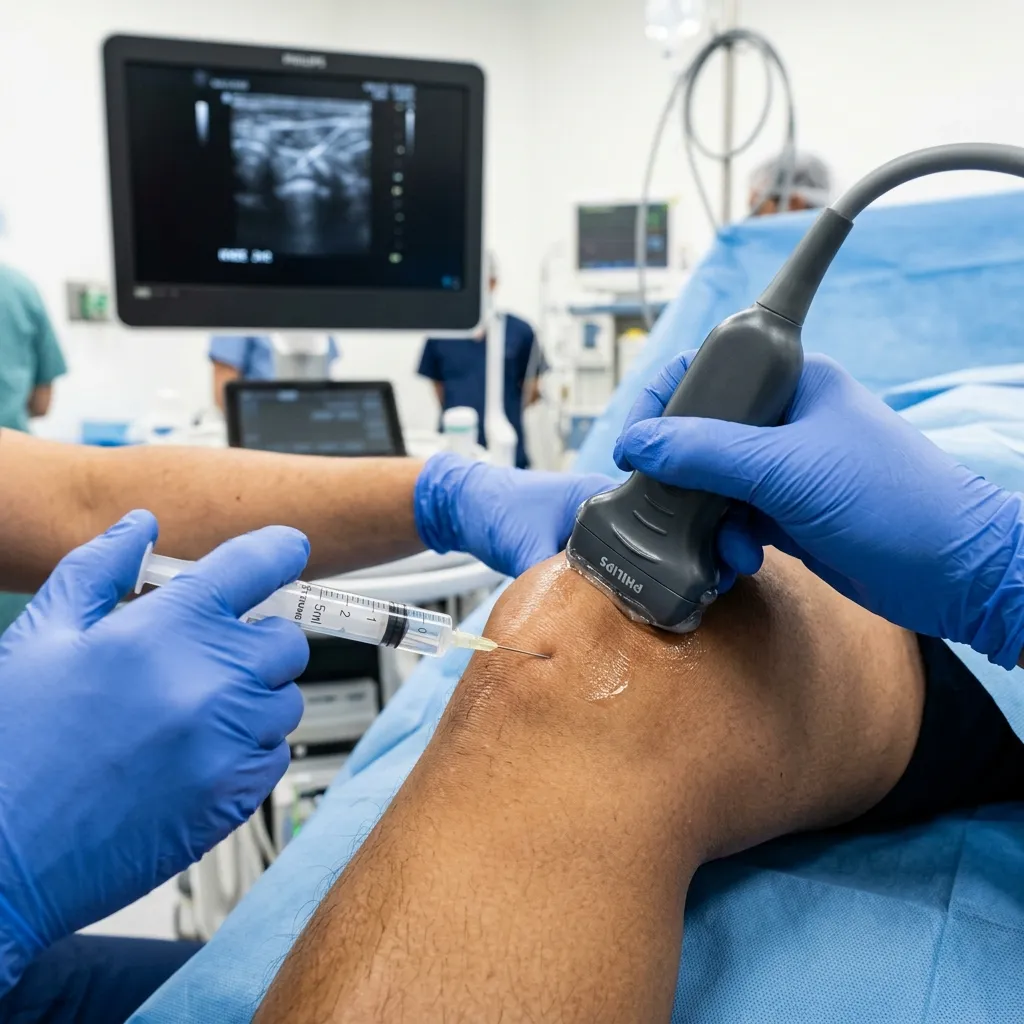
- — Frozen shoulder progress depends on reducing capsule inflammation before forcing range of motion.
- — Steroid injections act as the 'key' to open the therapeutic window for pain-free stretching.
- — Ultrasound guidance ensures the medication safely bathes the tight subacromial space.
The Agony of the "Locked" Shoulder
Losing the basic ability to reach behind your back, comb your hair, lift a cup of coffee, or put on a jacket is an incredibly isolating experience. For patients suffering from adhesive capsulitis (commonly known as Frozen Shoulder) and chronic shoulder bursitis treatment, the physical restriction is only half the battle. The other half is the relentless, deep ache that completely destroys your ability to sleep comfortably at night.
At TeraCare, we understand how patients fall into a frustrating physiological trap. They recognize their shoulder is stiff, so they attempt to stretch it aggressively. However, stretching a highly inflamed joint capsule only creates micro-tears, worsening the internal inflammation and causing the shoulder to seize up even harder.
Deconstructing the 3 Frozen Shoulder Stages
Adhesive capsulitis operates on a strict, long-term biological timeline. Understanding exactly which phase you are currently experiencing dictates the medical management required:
1. The Freezing Phase (2 to 9 Months): This stage is dominated by severe, progressive pain. While you still retain some mobility initially, the pain continues to climb, especially during nighttime movement.
2. The Frozen Phase (4 to 12 Months): During this plateau, the acute pain may dull into a constant baseline ache, but the physical range of motion reaches its absolute minimum. The joint capsule has fully thickened and contracted.
3. The Thawing Phase (5 to 24 Months): Pain decreases substantially, and the shoulder slowly, naturally regains its elasticity and functional mobility.
Left entirely untreated, the full cycle can steal up to three years of your life. Our primary clinical goal is to dramatically compress this timeline using targeted interventions.
Why "No Pain, No Gain" Fails for Stiff Joints
The classic error patients make when searching for tendinitis shoulder remedies is attempting to "push through the pain."
You cannot effectively stretch a tissue that is actively swollen and structurally bound by scar tissue. Attempting heavy physical therapy while the shoulder is actively "freezing" acts like pouring fuel on a fire. The body views aggressive stretching as a hostile attack, responding by generating even more restrictive scar tissue to immobilize the joint. Healing requires chemical stabilization first, mechanical movement second.
The Steroid Key: Unlocking the Window
A targeted corticosteroid injection for bursitis or adhesive capsulitis serves as the ultimate clinical circuit breaker. By utilizing high-dose, localized medication, we rapidly chemically deflate the swollen joint capsule and adjacent bursal sacs.
Within 72 hours, the aggressive pain cycle is interrupted. This "therapeutic window" is critical. While the scar tissue hasn't vanished, the patient can now tolerate targeted physical therapy and gentle capsular stretching required to regain movement without triggering a defensive muscular lockdown.
Break Your Shoulder's Lockdown
Don't spend years waiting for a locked joint to 'thaw' naturally. Book an image-guided assessment with Dr. Rabara today.
Differentiating Shoulder Pain Sources
Because the shoulder is a highly complex ball-and-socket joint supported by multiple tendons (the rotator cuff) and fluid pads (bursae), achieving a bit-perfect diagnosis is vital. Not all shoulder pain is adhesive capsulitis.
If you experience sharp pain only when reaching overhead, you may be dealing with subacromial impingement, tendonitis vs bursitis, or a rotator cuff tear evaluated on diagnostic shoulder ultrasound. If the shoulder feels locked in *all* planes of motion (internal rotation, abduction, reaching behind the back), it points strongly toward true frozen shoulder. Dr. Rabara evaluates these structural differences meticulously before deploying medication.
Achieving Clinical Results Safely
The shoulder contains delicate pathways, including the axillary nerve and the biceps tendon. Attempting to place a needle blindly based purely on "feel" creates immense procedural risk.
At TeraCare, Dr. Ben Rabara utilizes real-time musculoskeletal ultrasound tracking. We visualize the exact depth of the glenohumeral space, safely guiding the needle to bathe the contracted tissue while bypassing healthy structures entirely. This gold-standard precision maximizes comfort and ensures rapid functional restoration.

Dr. Ben Rabara
Dr. Ben Rabara is a Board-Certified Physiatrist specializing in Physical Medicine and Rehabilitation. He focuses on non-surgical, precision treatments for musculoskeletal conditions, utilizing advanced diagnostics like MSK Ultrasound.
Medical Disclaimer: The information provided in this article is for educational purposes only and does not substitute for professional medical advice, diagnosis, or treatment. Always consult a qualified physician for your specific health conditions.