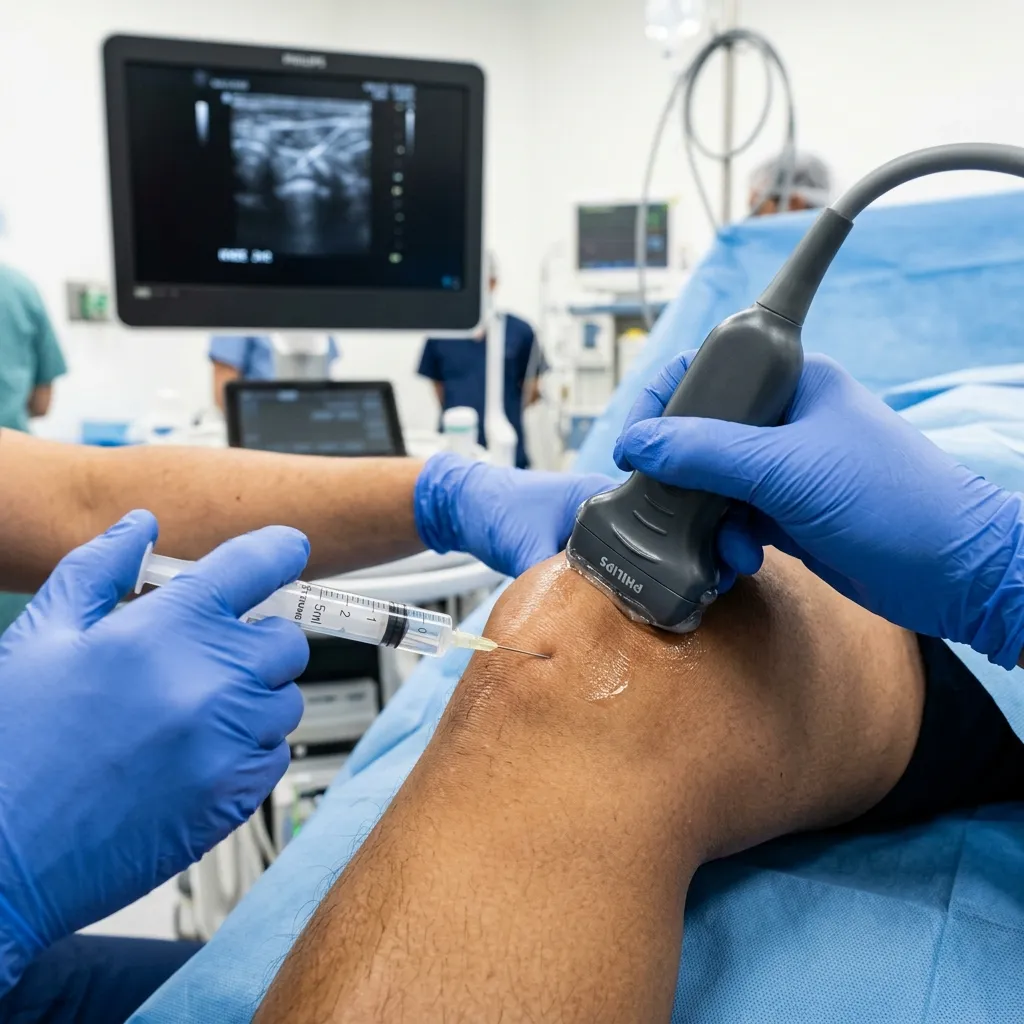
- — Acute knee pain flare-ups create high-pressure inflammation that oral meds can't reach.
- — Precision cortisone shots act as an 'extinguisher' directly inside the joint capsule.
- — Ultrasound guidance is non-negotiable for safety and 100% medication accuracy.
The Reality of an Acute Knee Flare-Up
Waking up to find your knee red, hot, swollen, and excruciatingly painful is an incredibly alarming experience. Whether triggered by an aggressive osteoarthritis flare-up, sudden crystal accumulation (like gout or pseudogout), or acute bursitis, severe joint inflammation can completely strip away your mobility in a single day.
When you are in this level of agonizing pain, standard home advice like "rest and elevation" feels wholly inadequate. You don't need a minor reduction in discomfort over the coming weeks—you need the debilitating pain to stop immediately so you can safely bear weight again.
Your Joint is Biologically "On Fire"
To grasp why acute knee pain feels so intense, it helps to analyze the internal mechanics of the joint. Imagine your knee capsule as a sealed, tight room. When exploring the primary joint swelling causes, the root culprit is your immune system flooding that tight anatomical space with localized inflammatory markers (cytokines and prostaglandins) alongside excess synovial fluid.
This fluid accumulation builds rapid, high-pressure tension within the joint lining (the synovium). When severe fluid swelling restricts joint bend, we often perform therapeutic joint aspiration (arthrocentesis) to drain excess fluid and immediately relieve the crushing hydraulic pressure on delicate sensory nerve endings.
When searching for a functional medicine for swollen joints, patients inevitably turn to oral pills like Naproxen, Ibuprofen, or Mefenamic Acid. Unfortunately, systemic oral medications are highly inefficient. They travel through your digestive tract, get processed by your liver, and are distributed across your entire body. Only a tiny fraction of the active medication ever reaches the knee, which is simply not enough to quell the biological wildfire inside.
The Cortisone Sniper: Extinguishing the Fire
A targeted corticosteroid injection acts as an emergency medical circuit breaker. Instead of taking an inefficient oral path, a localized dose of potent anti-inflammatory medication is introduced directly into the hostile environment of the swollen joint capsule.
Once deposited, the steroid binds with immune cell receptors to immediately shut down the ongoing chemical attack. Capillary leakage slows, internal fluid pressure naturally drains, and the excruciating tension on local pain receptors dissipates.
Within 48 to 72 hours, the vast majority of patients experience a profound "window of relief." Walking and navigating stairs comfortably becomes feasible again.
Clinical Perspective: It is vital to view localized injections as therapeutic bridges rather than final solutions. We leverage this pain-free window to initiate structured physical therapy and joint stabilization exercises, and transition to long-term lubricating hyaluronic acid gel injections once the acute flare resolves.
The Threat to Your Kinetic Chain
Leaving a severely painful knee untreated is more than an endurance test—it introduces widespread mechanical compensation. To avoid placing weight on an injured knee, your body naturally alters its gait. You begin to limp, leaning heavily toward your healthy side.
Over weeks of improper weight-bearing, this creates extreme mechanical overload in the hip, lower back, and opposite knee. Patients frequently come to our clinic initially complaining of unilateral knee pain, only to develop secondary severe sciatica or hip bursitis because they delayed quelling the primary joint fire.
Don't Guess with Your Joints
Let Dr. Rabara accurately map the joint space utilizing real-time Musculoskeletal Ultrasound for rapid, targeted relief.
Post-Injection Guidance: Maximizing the Benefit
Following an image-guided joint procedure, patience is a clinical requirement. While the pain can drop drastically overnight, the tissue requires 24 to 48 hours of "relative rest."
We strongly advise patients to avoid high-impact activities, heavy lifting, or prolonged walking during this immediate post-injection phase. Applying localized ice packs effectively controls any temporary medication-related soreness.
Why "Blind" Injections are a Risky Gamble
Many clinics still execute standard joint procedures using "anatomical landmarking"—essentially guessing the path of the needle based on external touch. Peer-reviewed research demonstrates that these blind injections miss the intended target space up to 40% of the time, accidentally depositing powerful medicine into healthy fat pads or nearby tendons.
At TeraCare, Dr. Ben Rabara utilizes advanced Diagnostic Musculoskeletal Ultrasound and knee crepitus imaging for every single clinical procedure. We track the trajectory of the needle in real-time, ensuring optimal delivery precisely where the pathology exists. This maximizes relief while preserving healthy borders.
Don't Guess with Your Joints
Schedule an Ultrasound-Guided Evaluation with Dr. Rabara to verify your pain source and plan your rapid relief strike.

Dr. Ben Rabara
Dr. Ben Rabara is a Board-Certified Physiatrist specializing in Physical Medicine and Rehabilitation. He focuses on non-surgical, precision treatments for musculoskeletal conditions, utilizing advanced diagnostics like MSK Ultrasound.
Medical Disclaimer: The information provided in this article is for educational purposes only and does not substitute for professional medical advice, diagnosis, or treatment. Always consult a qualified physician for your specific health conditions.