- — Cortisone is a localized 'biological reset' that mimics your body's natural anti-inflammatory hormone to break pain cycles.
- — Safety depends more on appropriateness—matching the right diagnosis, dose, and frequency to the right patient—than on the drug itself.
- — Relief typically lasts 6 weeks to 6 months, creating a vital 'rehab window' to address the mechanical cause of pain.
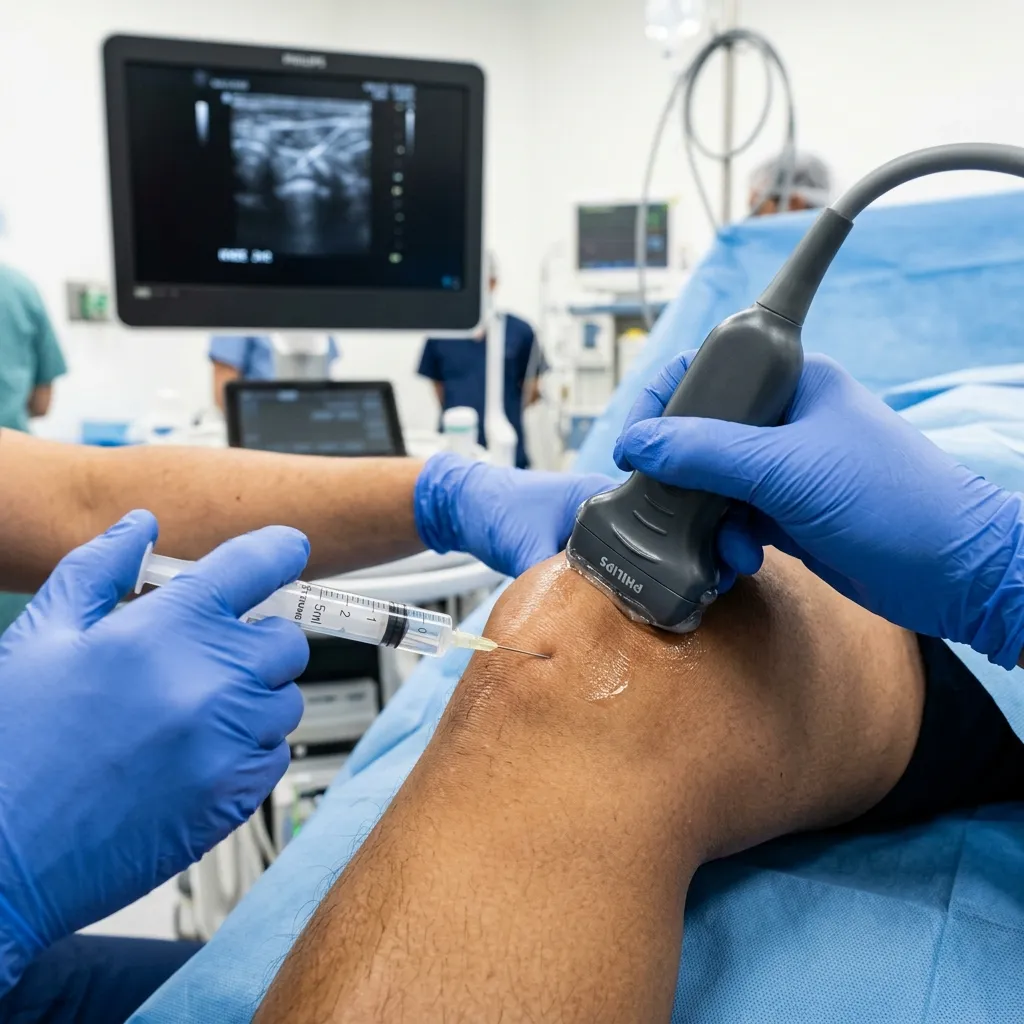
- — Precision matters: Ultrasound-guided injections ensure medication reaches the target while avoiding sensitive surrounding tissues.
If you are hesitant about getting a "steroid shot," you are not alone. Many of my patients come to clinic worried that cortisone will "destroy" their joints, cause massive weight gain, or weaken their bones. These fears often come from a misunderstanding of how localized medical injections differ from the high-dose oral steroids used for chronic systemic illnesses.
In this guide, I want to explain the reality of what is cortisone, how it works as a "sniper" rather than a "shotgun," and how we use it safely at TeraCare to help you reclaim your mobility.
Are cortisone shots safe?
Cortisone shots are generally considered safe for selected musculoskeletal problems when the diagnosis, injection target, dose, frequency, and medical risks are carefully considered. The safety discussion changes when injections are repeated often, placed near tendons, given before surgery, or used in patients with diabetes, infection risk, or unclear pain sources.
In my clinical experience, the better question is not "Is it safe?" but "Is it appropriate?" A steroid injection is a medical tool—like a scalpel or a prescription pill. When used for the right reason (such as an inflammatory flare) and at the right frequency, it is one of the most effective ways to break a cycle of debilitating pain. Steroids for inflammation are highly successful when they target a specific "fire" in a joint or bursa.
What is a cortisone shot supposed to do?
Corticosteroid injections function as a localized anti-inflammatory reset by mimicking the hormone cortisol to suppress the immune system's overactive inflammatory response. This treatment targets the chemical drivers of pain and swelling rather than the mechanical structure of the joint. By reducing local inflammation, it allows for improved movement and participation in necessary rehabilitation.
When a joint or tendon sheath is inflamed, it is flooded with "cytokines"—microscopic chemicals that cause pain and tissue irritation. Cortisone acts like a biological fire extinguisher. It enters the space, stabilizes the cell membranes, and stops the production of these chemicals. It doesn't "mask" the pain like an opioid; it addresses the chemical environment that is making the nerves scream.
What I explain to patients before recommending steroid injection
In clinic, I often find that patients are caught between two extremes: hoping for a miracle "one-shot cure" or fearing permanent joint damage. Ang ipinapaliwanag ko muna bago mag-steroid injection is that the injection is a window of opportunity, not a permanent fix for a mechanical problem.
I tell my patients:
- "This will not rebuild your cartilage." If you have severe arthritis, the injection helps with the inflammation from the arthritis, but the bone-on-bone friction remains.
- "The goal is the rehab window." If we can get your pain from an 8/10 to a 2/10, that is when we do the real work in physical therapy to strengthen the muscles that support the joint.
- "We are using the 'Sniper' approach." Unlike pills that go everywhere in your body, this stays 95% within the joint, which is why you won't get the "steroid face" or weight gain typically feared.
When cortisone shots may be reasonable
Steroid injections are most appropriate when pain is clearly driven by an inflammatory process that has not responded to rest, activity modification, or oral anti-inflammatories. Common reasonable scenarios include acute bursitis, an osteoarthritis flare-up that prevents sleep or walking, trigger finger, and certain types of shoulder impingement.
I often recommend them when a patient is in too much pain to even start their exercises. If you cannot lift your arm or put weight on your knee, you cannot do the therapy needed to get better. In these cases, the injection "lowers the volume" so the recovery can begin.
When I become more cautious
Clinical caution increases when a patient has multiple poorly controlled medical conditions, such as brittle diabetes, or when the pain source is not clearly identified. I also hesitate if a patient has already had several injections in the same area recently or if the injection site is very close to a high-load tendon like the Achilles.
Specifically, I become cautious if:
- The diagnosis is unclear. We shouldn't inject "maybe" pain.
- There is a suspected infection nearby.
- The patient is planning surgery on that same joint within the next 3 months (due to increased infection risk post-op).
- The pain is purely mechanical (like a loose piece of cartilage) where steroids won't help the underlying issue.
Common side effects of cortisone shots
Common side effects are typically mild and localized, including temporary soreness at the injection site, a "steroid flare" of increased irritation for 24-48 hours, or minor bruising. In some patients, a temporary facial flush or a brief rise in blood sugar may occur as a small amount of medication enters the systemic circulation.
| Common Side Effects | Rare but Serious Risks |
|---|---|
| Post-Injection Flare: Temporary pain increase (1-2 days). | Infection (Septic Joint): Extremely rare but needs urgent care. |
| Skin Changes: Lightening of skin or fat thinning (atrophy). | Tendon Rupture: Risk if injected directly into a weakened tendon. |
| Blood Sugar Rise: Temporary elevation for 3-5 days. | Nerve Injury: Minimized by using ultrasound guidance. |
Less common but more serious risks
Serious risks such as joint infection, severe allergic reactions, or significant tissue damage are rare but require immediate medical attention if suspected. These risks are significantly mitigated by using sterile "aseptic" techniques, ultrasound guidance to avoid nerves and blood vessels, and strict adherence to frequency guidelines to protect cartilage health.
Are repeated cortisone shots dangerous?
Repeated cortisone injections carry a cumulative risk of weakening localized tissues, such as cartilage softening or tendon degradation, if administered too frequently. Most international guidelines recommend a limit of 3 to 4 injections per year in a single joint to balance the benefits of pain relief against the long-term health of the joint structure.
The "danger" isn't from the first shot; it's from using the shot as a "crutch" to avoid doing the hard work of physical therapy. If we keep "putting out the fire" without fixing why the fire keeps starting, the joint eventually suffers.
Who should be more careful with steroid injections?
Patients with poorly controlled diabetes, active infections, or those taking blood thinners should undergo a more rigorous risk assessment before proceeding with a steroid injection. Additionally, individuals scheduled for joint replacement surgery in the near future must coordinate the timing of their injection to avoid increasing their post-operative infection risk.
What cortisone shots can and cannot do
Cortisone shots are highly effective at reducing inflammation-driven pain and swelling, but they cannot repair torn ligaments, rebuild worn-out cartilage, or correct poor movement patterns. They serve as a powerful tool to manage symptoms and create a therapeutic window for active recovery rather than providing a structural cure for mechanical joint issues.
| What it CAN do | What it CANNOT do |
|---|---|
| Extinguish acute inflammation & swelling. | Repair a structural tear in a tendon or labrum. |
| Reduce pain to allow for physical therapy. | Regrow "bone-on-bone" cartilage. |
| Break the cycle of chronic "night pain." | Replace the need for strengthening and loading exercises. |
Steroid injection vs rehabilitation: why they are not substitutes
Steroid injections and physical rehabilitation solve two different parts of the pain problem: the injection addresses the chemical inflammation, while rehabilitation addresses the mechanical capacity and movement quality. Using an injection without following up with rehabilitation often leads to the return of pain once the medication wears off, as the underlying functional cause remains unaddressed.
Steroid injection vs PRP, viscosupplementation, or other options
Choosing between cortisone, Platelet-Rich Plasma (PRP), or viscosupplementation depends on whether the goal is rapid anti-inflammation, long-term tissue modulation, or mechanical lubrication. While cortisone works fastest for acute pain, options like PRP may be considered for chronic tendon issues where steroids might actually be less helpful in the long run.
What to expect before, during, and after the injection
The procedure is typically quick and performed in-office, starting with a skin cleaning and often a local numbing agent followed by the ultrasound-guided steroid delivery. Patients should expect the area to feel slightly numb immediately after due to the anesthetic, followed by a potential return of some soreness for a day or two before the steroid begins to take full effect.
Does a cortisone shot hurt? Most of my patients describe it as a "quick pinch and some pressure." If we are using ultrasound, the procedure is often much smoother because we aren't "fishing" for the right spot.
What to avoid after a cortisone shot
After a cortisone shot, patients should avoid heavy lifting, high-impact activities, or overusing the injected joint for at least 48 to 72 hours to allow the medication to settle and prevent a flare. It is also critical not to mistake immediate pain relief for a "full cure" and return to intense sports too early, as this can lead to injury.
Red flags after injection: when to contact a doctor
Red flags that require immediate contact with your physician include rapidly worsening pain after the first 48 hours, fever, chills, significant redness, or warmth spreading from the injection site. While extremely rare, these can be signs of an infection (septic joint) which is a medical emergency that must be treated immediately.
How I decide if a steroid injection fits the patient
The decision to recommend a steroid injection is based on a "shared decision-making" process that weighs the patient's diagnosis, medical history, pain severity, and functional goals. I look for signs of true inflammation—such as morning stiffness, swelling, or night pain—and ensure the patient understands both the temporary benefits and the long-term plan for rehabilitation.
Philippine/local practical considerations
In the Philippines, especially in regional areas like Vigan and Ilocos Sur, patients often wait until pain is severe before seeking help. This often means they have developed significant muscle weakness alongside their inflammation. I emphasize to my local patients that while the injection is available, our clinic's focus is on the rehabilitation that follows, ensuring that the relief they get is not just temporary but leads to lasting function.
Is a Cortisone Shot Right for You?
Schedule a comprehensive musculoskeletal assessment to determine if steroid injection fits your diagnosis and safety profile.
References & Clinical Evidence
- [1] McAlindon, T. E., et al. (2017). Effect of intra-articular triamcinolone vs saline on knee cartilage volume and pain in patients with knee osteoarthritis: A randomized clinical trial. JAMA, 317(19), 1967–1975.
- [2] Coombes, B. K., et al. (2013). Efficacy and safety of corticosteroid injections and other injections for management of tendinopathy. The Lancet, 381(9874), 1275-1286.
- [3] American College of Rheumatology (ACR). (2020). Guidelines for the Management of Osteoarthritis of the Hand, Hip, and Knee. Arthritis & Rheumatology.
- [4] Choudhry, M. N., et al. (2016). Blood glucose levels following intra-articular steroid injections in patients with diabetes: A systematic review. The Journal of Bone and Joint Surgery.
- [5] Stephens, M. B., et al. (2008). Musculoskeletal injections: A review of the evidence. American Family Physician, 78(8), 971-976.
* Clinical references are provided to support the medical claims made in this article. TeraCare adheres to evidence-based practices in physical medicine and rehabilitation.

Dr. Ben Rabara
Dr. Ben Rabara is a Board-Certified Physiatrist specializing in Physical Medicine and Rehabilitation. He focuses on non-surgical, precision treatments for musculoskeletal conditions, utilizing advanced diagnostics like MSK Ultrasound.
Medical Disclaimer: The information provided in this article is for educational purposes only and does not substitute for professional medical advice, diagnosis, or treatment. Always consult a qualified physician for your specific health conditions.