- — There is no universal SIS therapy price: the quote depends on the assessment, treatment area, device protocol and the clinic’s current fees.
- — A consultation should come before a treatment plan, especially if you have an implant, an implanted electronic device, pregnancy, recent surgery or an uncertain diagnosis.
- — Ask what the quoted fee includes, whether rehabilitation exercises are part of the visit, and how follow-up decisions will be made.
- — For Vigan patients, contact the clinic to confirm current SIS availability, appointment times, location, payment options and any records to bring.
If you are comparing SIS therapy options in the Philippines, the most useful first question is not simply “What is the price?” It is “What will the appointment include, and is this modality appropriate for my problem?” This guide explains how to ask that question in a Vigan consultation without treating a search result, package or device description as a diagnosis.
How does a SIS therapy appointment in the Philippines work?
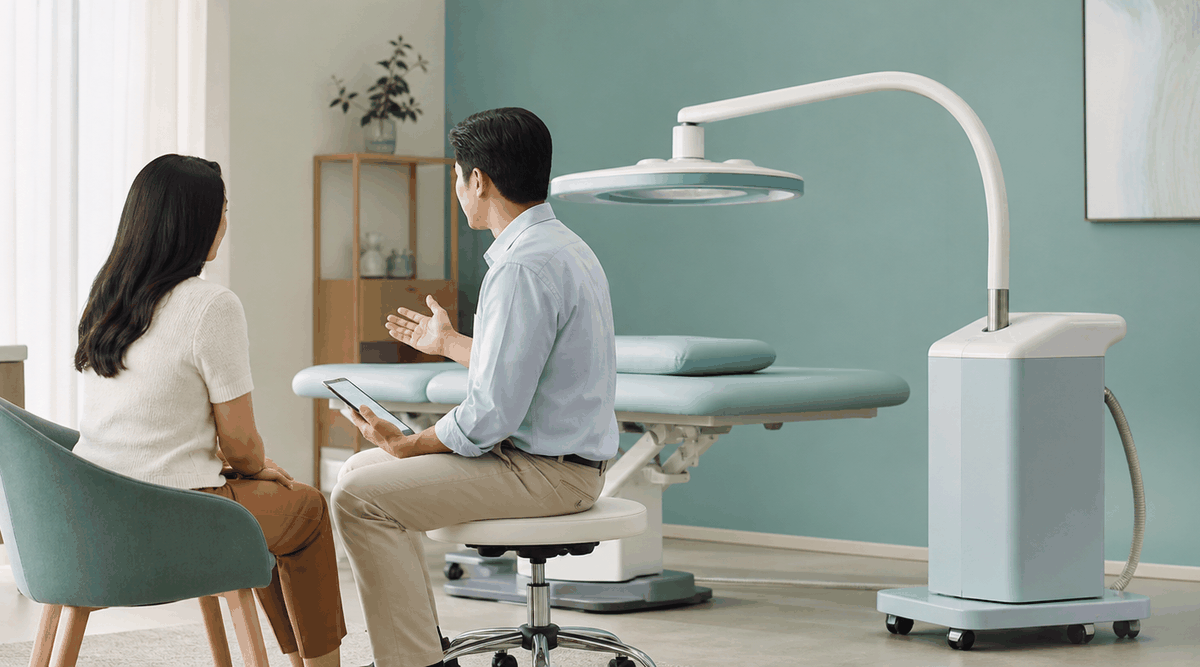
An appointment usually starts with a history and physical assessment. The clinician may ask what changed, how symptoms affect your movement, what treatment you have already tried and what you want to do more comfortably. They can then explain whether SIS belongs in a wider rehabilitation plan, what the session is intended to test or support, and when progress will be reviewed.
Bring your questions before the session starts. Ask who will assess you, what the clinician is monitoring, how the treatment area is selected, and what would make the team stop or change the plan. Published electromagnetic-field reviews describe a range of devices and indications, so evidence from one modality should not be presented as proof of a particular SIS result (PMID: 39476109; PMID: 29775839).
Where can you find SIS therapy in Vigan?
The TeraCare SIS hub is the relevant starting point for Vigan patients. Contact the clinic before travelling to confirm that the device and a suitable clinician are available on the day you want, and ask for the current address, appointment time and instructions. Availability, staffing and fees can change; a web page is not a live appointment calendar.
If you are travelling from outside Vigan, ask whether the first visit can include assessment and treatment planning, what records should be sent ahead, and whether a family member should attend. Keep local access as a practical question rather than assuming that a nearby machine is automatically the right treatment.
How can you find SIS therapy near me?
Search results can help you identify names, but they cannot verify clinical fit. When you call a provider, ask whether they offer SIS specifically, who performs the assessment, which conditions they routinely manage, how implants and electronic devices are screened, and how the fee is calculated. Be cautious with “best,” “instant,” or guaranteed-recovery language.
- Confirm the clinic’s full name, location and appointment channel.
- Ask whether the consultation is separate from a treatment session.
- Ask what records, medication details or referral information are useful.
- Request a written explanation of what the quoted fee includes.
What is super inductive system therapy in the Philippines?
Super Inductive System therapy is a non-contact electromagnetic modality used in some rehabilitation settings. The patient and clinician still need a goal, an assessment and a plan for integrating any session with appropriate movement or functional work. General electromagnetic-field literature describes possible biological and clinical effects across different technologies, while also emphasizing variation in mechanisms, populations and evidence quality (PMID: 39476109; PMID: 39387850).
That distinction matters for consent. A device description can explain what energy it delivers; it cannot predict your pain, strength or recovery. Ask what outcome the clinician is measuring and what other care remains important.
What should you ask about SIS therapy cost before booking?
There is no single Philippine SIS price that applies to every patient. A quote may depend on whether the first visit includes a physiatry consultation, the body region, the session protocol, the clinician’s time and any exercise or follow-up services. Public fees listed by other hospitals or wellness providers are reference examples only; they are not TeraCare rates.
Ask for a current, itemized explanation: consultation fee, SIS session fee, rehabilitation services, number of visits covered, cancellation policy and payment or HMO documentation. If the clinic cannot yet quote a treatment plan, that uncertainty is safer than an invented number.
What should you bring to your first SIS therapy consultation?
Bring a medication list, details of pacemakers or other electronic implants, metal hardware and recent operations, relevant imaging or reports, and a short description of when your symptoms began. Tell the clinician about pregnancy or possible pregnancy and any new or unexplained symptoms. Comfortable clothing is usually practical; follow the clinic’s instructions about metal items and accessories.
Write down what you hope to do after rehabilitation, such as walking farther, returning to work or sleeping more comfortably. A functional goal gives the team something safer to monitor than a promise of “pain-free” treatment.
When should you postpone or discuss SIS therapy with a clinician?
Pause the booking conversation and ask for clinical guidance if you have an implanted electronic device, metal or hardware near the proposed treatment area, a recent operation, pregnancy, an uncertain diagnosis, an acute change in symptoms or a medical emergency. Do not remove or alter a device, stop medication or test a home substitute to make yourself eligible.
Electromagnetic safety is device- and patient-specific. Reviews of electromagnetic therapies do not replace the manufacturer’s instructions or a patient-specific screen. For severe chest pain, difficulty breathing, sudden weakness, loss of speech, a major injury or another emergency, seek emergency care rather than waiting for a booking reply.
What are the next steps after you request an appointment?
- Send the clinic your preferred dates, location and the main reason for seeking care.
- Share implant, medication, operation and imaging details before the appointment.
- Ask what the first visit includes and request a current written fee explanation.
- At the consultation, agree on a measurable functional goal and a review point.
- Decide together whether SIS, another modality, exercise or a different evaluation is appropriate.
To ask about a Vigan appointment, use the clinic’s current booking channel and mention this guide so the team can clarify availability and cost before you travel. An appointment request is an invitation to assess your needs; it is not a promise that SIS will be recommended or that a specific result will occur.
SIS appointment realities
Questions to settle before you commit to a session.
The device is only one part of care
A clinician still needs to assess the condition, set a goal and decide whether movement training, exercise or another intervention belongs in the plan.
Sensations can be unfamiliar
You may notice tapping, sound or muscle activity. Tell the clinician if the sensation is uncomfortable so the session can be paused or adjusted.
A quote is not a promise
A price or package describes a service, not a guaranteed outcome. Ask how the plan will be reviewed if your symptoms or function do not change as expected.
References & Clinical Evidence
- [1] Mayer Y, Shibli JA, Saada HA, et al. Pulsed Electromagnetic Therapy: Literature Review and Current Update. Braz Dent J. 2024. PMID: 39476109. DOI: 10.1590/0103-6440202406109.
- [2] Nelson I. Exploring the influence of Schumann resonance and electromagnetic fields on bioelectricity and human health. Electromagn Biol Med. 2025. PMID: 40394813. DOI: 10.1080/15368378.2025.2508466.
- [3] Gaynor JS, Hagberg S, Gurfein BT. Veterinary applications of pulsed electromagnetic field therapy. Res Vet Sci. 2018. PMID: 29775839. DOI: 10.1016/j.rvsc.2018.05.005.
- [4] Picelli A, Di Censo R, Tomasello S, et al. Effects of pulsed electromagnetic fields on bone fractures: a systematic review update. Eur J Phys Rehabil Med. 2024. PMID: 39387850. DOI: 10.23736/S1973-9087.24.08226-1.
- [5] Immunity and electromagnetic fields. 2021. PMID: 34126050.
* Clinical references are provided to support the medical claims made in this article. TeraCare adheres to evidence-based practices in physical medicine and rehabilitation.

Dr. Ben Rabara
Dr. Ben Rabara is a Board-Certified Physiatrist specializing in Physical Medicine and Rehabilitation. He focuses on non-surgical, precision treatments for musculoskeletal conditions, utilizing advanced diagnostics like MSK Ultrasound.
Medical Disclaimer: The information provided in this article is for educational purposes only and does not substitute for professional medical advice, diagnosis, or treatment. Always consult a qualified physician for your specific health conditions.