Briding the Gap Between 'Surviving' and 'Living'
When a loved one suffers a stroke or severe brain injury, the initial focus is purely on survival. Once they are stabilized, the harsh reality of neurological damage sets in. They may no longer be able to button a shirt, hold a spoon, find the words to say 'I love you,' or even swallow water without coughing. The frustration of having a sharp mind trapped inside a body and voice that refuses to cooperate is overwhelming.
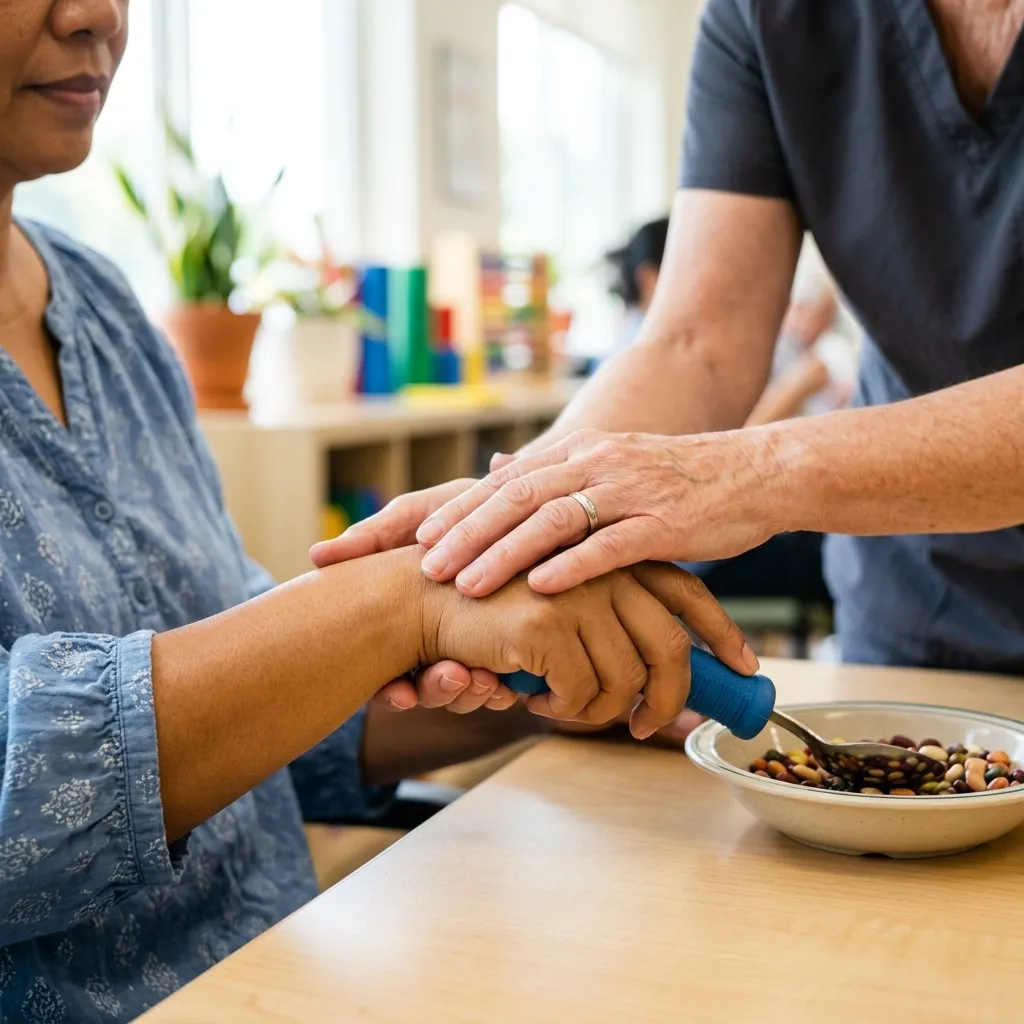
While Physical Therapy focuses on gross motor skills like standing and walking, Occupational Therapy (OT) and Speech-Language Pathology (SLP) focus entirely on your humanity and daily independence. At TeraCare, Dr. Rabara coordinates a multidisciplinary team. Our Occupational Therapists rewire the brain to command the hands, while our Speech Therapists rebuild communication and ensure swallowing safety. We don't just help you survive; we help you reclaim the 'occupation' of living.
Neurological Challenges We Actively Manage
Is Multi-Disciplinary Rehab Right for You?
Ideal indications
Your loved one is coughing or choking regularly during meals (Dysphagia).
A parent is frustrated because they cannot find the words to speak (Aphasia).
Daily tasks like grooming and feeding require constant caregiver assistance.
Fine motor skills in the hand are weak, making writing or grasping impossible.
Clinical precautions
The patient is currently medically unstable or non-responsive.
Advanced-stage dementia where motor learning is no longer possible.
The patient is unwilling to participate in repetitive neurological drills.
Occupational & Speech Therapy Realities
Understanding the demands of functional neurological recovery.
High Frustration Levels
Relearning basic activities of daily living (ADLs) or speech patterns is emotionally exhausting and inherently frustrating.
Intensive Repetition
Neuroplasticity requires massive repetition. Therapy extends far beyond the clinic into mandatory daily homework exercises.
Variable Recovery Ceilings
Neurological recovery is unpredictable; while improvements are expected, a return to 100% pre-injury baseline cannot be guaranteed.
Fragmented Care vs. Integrated Rehab
Fragmented Independent Clinics
Seeing PT, OT, and Speech therapists at different locations with no communication between providers.
Integrated Physiatric Rehab
Dr. Rabara acts as the 'medical quarterback,' ensuring all three disciplines work toward a unified functional goal.
The Phases of Cognitive & Functional Restoration
Safety & Basic Needs
Weeks 1-4. Focus on swallowing safety to prevent pneumonia and establishing a basic yes/no communication system.
The Fine Motor Breakthrough
Months 2-4. The initial fog lifts. Patients begin to hold utensils and form short sentences as neural pathways solidify.
Daily Life Mastery
Months 4-12. Refining speech for community interaction and mastering complex hand tasks like buttoning and writing.
Clinical Science & Technical Details
For our medical colleagues and highly analytical patients, we provide these transparent technical details on the pathophysiology and interventional protocols.
Explore the Clinical Science: Cortical Reorganization & CIMT
Neuroplasticity is the cornerstone of neuro-rehab. We utilize Constraint-Induced Movement Therapy (CIMT) to force the paretic limb to work, preventing 'learned non-use' and encouraging healthy neurons to take over damaged functions.
Through repetitive, task-specific training, we stimulate dendritic sprouting and axonal remodeling, effectively re-mapping the motor and sensory homunculus in the brain's cortex.
Detailed Diagnostic Pathways: Aphasia vs. Dysarthria Classifications
We meticulously differentiate between Expressive Aphasia (Broca's) and Receptive Aphasia (Wernicke's). We also screen for Apraxia of Speech, where the mechanical coordination of speech sounds is lost.
In Occupational Therapy, we utilize the Functional Independence Measure (FIM) to numerically track progress in Activities of Daily Living (ADLs), ensuring every gain is documented and clinical.
Dysphagia Management: Preventing Aspiration Pneumonia
Swallowing is a complex coordination of 50 pairs of muscles and five cranial nerves. Post-stroke dysphagia often involves a delayed swallow reflex, leading to food entering the airway.
Our swallowing therapy involves specific maneuvers (like the Mendelsohn maneuver) and dietary modifications to ensure that patients can meet their nutritional needs without the risk of pulmonary complications.
Cognitive Rehabilitation: Restoring Executive Function
Beyond motor skills, we treat the 'hidden' deficits of stroke. Cognitive rehab targets attention, problem-solving, and executive function. We use structured hierarchy training to move patients from simple recall to complex daily planning.
By addressing unilateral neglect (forgetting one side of the body) and processing speed, we bridge the gap between physical recovery and true functional independence.
Our Blueprint for Functional Independence
Functional & Cognitive Baseline
We use standardized metrics (like the MoCA and FIM scores) to measure exactly where the neurological blockage exists.
Strategic Skill Rebuilding
Occupational therapists focus on hand dexterity; Speech therapists tackle swallowing safety and language production in parallel.
Caregiver Empowerment
We train the family to act as 'co-therapists' at home, ensuring the patient is safe during mealtime and active throughout the day.
Clinical decision support
Recovery goals extend beyond walking
Occupational and speech-language therapy address different but connected problems after neurologic injury. Occupational therapy can target dressing, bathing, hand use, cognition, vision, home tasks, work, and equipment. Speech-language therapy may address communication, cognition, voice, and swallowing. The program is selected from the person’s deficits, daily roles, communication needs, safety, fatigue, and capacity for practice—not from diagnosis alone.
Care should be coordinated because a communication problem can affect consent and learning, swallowing risk can affect nutrition and medication, and cognition or vision can affect home safety. New neurologic symptoms or a sudden decline require medical reassessment. Improvement is monitored through real activities and participation rather than exercises alone.
How this evidence is applied at TeraCare
TeraCare identifies which discipline and setting match the current barrier, sets shared functional goals with the patient and caregiver, and coordinates referrals so communication, swallowing, cognition, and daily activity are not treated as isolated problems.
Medical review: Dr. Ben Rabara, Physiatrist · Evidence reviewed August 22, 2026. This information supports shared decision-making and does not replace an individual examination or emergency care.
Clinical sources: AHA/ASA Guideline for Adult Stroke Rehabilitation and Recovery.
How this treatment fits your care plan
Neurological Rehabilitation
Coordinated recovery of movement, communication, swallowing, positioning, and daily function.
Your exact sequence depends on the diagnosis, safety screening, and response to treatment. A physiatrist will recommend only the steps that fit your case.
Common Questions
Why do we need a Speech Therapist if my parent can already talk?
What is the difference between PT and OT?
Is modern neuro-rehab covered by PhilHealth?
Will my loved one's personality return to normal?
How many sessions a week are needed for a stroke patient?
References & Clinical Evidence
- [1] Clinical guidelines and evidence-based research supporting Occupational & Speech Therapy in Vigan City.
- [2] Relevant peer-reviewed literature on efficacy and safety outcomes in rehabilitation.
* Clinical references are provided to support the medical claims made in this article. TeraCare adheres to evidence-based practices in physical medicine and rehabilitation.
Dr. Ben Rabara
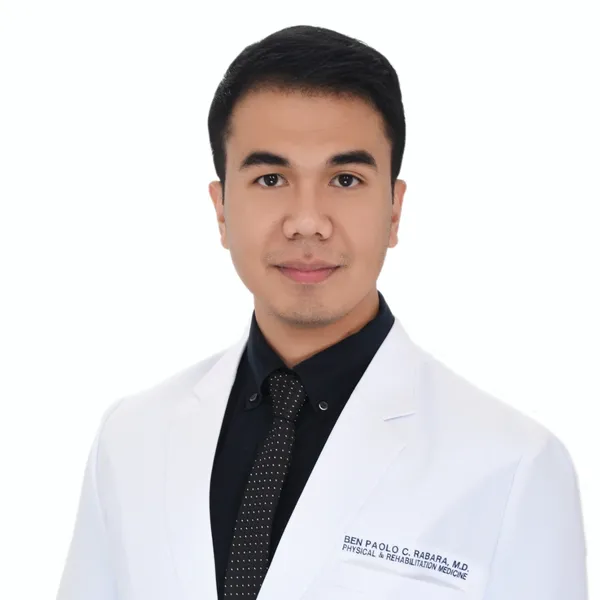
Dr. Ben Rabara is a Physiatrist in Vigan City specializing in Physical Medicine and Rehabilitation. He focuses on non-surgical, precision treatments for musculoskeletal conditions, utilizing advanced diagnostics like MSK Ultrasound.
Medical Disclaimer: The information provided in this article is for educational purposes only and does not substitute for professional medical advice, diagnosis, or treatment. Always consult a qualified physician for your specific health conditions.