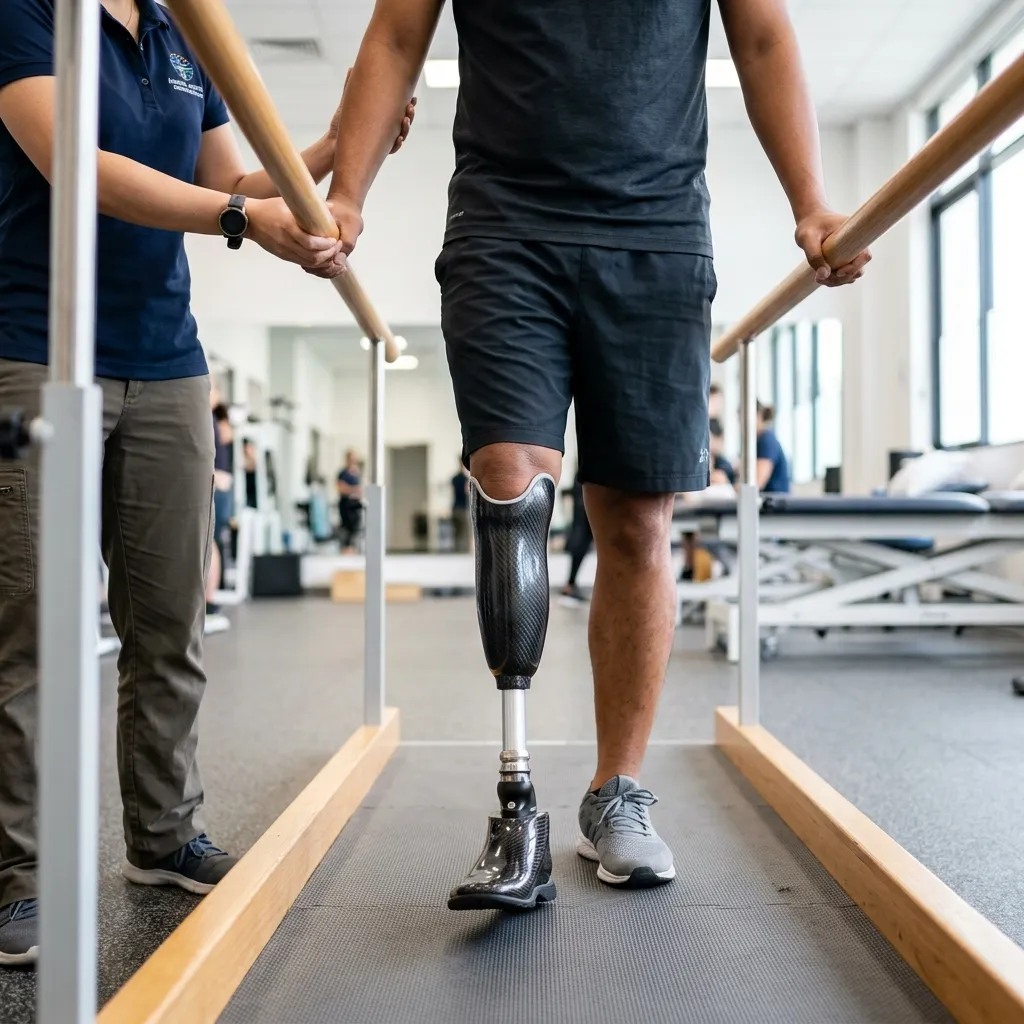
More Than a Leg: The 'Vehicle and Driver' Framework
Losing a limb is one of the most profound transitions a human being can undergo. Whether it occurs suddenly due to trauma or progressively due to diabetic complications, the aftermath is filled with physical pain and a paralyzing fear of the unknown. Many patients believe that buying a prosthetic leg is like buying a pair of shoes—you just put it on and walk. This is a dangerous misconception that leads to falls, skin ulcers, and hardware abandoned in the closet.
At TeraCare, we believe in the 'Vehicle and Driver' framework. Buying a high-end prosthetic leg is just buying the car; you still need driving school. Dr. Rabara leads a unified team that manages everything from residual limb shaping and phantom pain control to the custom fabrication of your socket. We don't just give you a leg; we provide the intensive physiatric rehabilitation needed to remap your brain's sense of balance, ensuring you walk with structural dignity and true independence.
Amputee Challenges We Actively Manage
Is Amputee Rehabilitation Right for You?
Ideal indications
You have recently undergone an amputation and need residual limb shaping.
Your surgical wound is healed and you are ready for a prosthetic fitting.
You are an established amputee suffering from gait pain or falling.
You are experiencing debilitating phantom limb 'ghost' pain.
Clinical precautions
You have unhealed active infections or gangrene in the residual limb.
Severe cognitive decline that prevents safe use of mechanical hardware.
Unstable cardiovascular health that makes walking dangerous.
Amputee Prosthetic Rehab Realities
Understanding the physical challenges of prosthetic gait training.
Socket Volume Fluctuations
The residual limb constantly changes volume (swelling and shrinking), requiring frequent adjustments to socket fit and sock ply.
Skin Breakdown Risks
Friction from the socket can cause severe skin breakdown or blisters, requiring immediate cessation of wear until healed.
High Energy Expenditure
Walking with a prosthesis requires significantly more metabolic energy than normal gait, leading to rapid cardiovascular fatigue.
Generic Fabrication vs. Clinical Rehab
Generic Prosthetic Fitting
A workshop fits you with a limb and sends you home. No focus on gait analysis, phantom pain, or balance re-training.
Unified Physiatric Rehab
Dr. Rabara manages the medical, neurological, and physical aspects of your recovery alongside the hardware fitting.
The Amputee Recovery Timeline
Wound Care & Shrinking
Weeks 1-8. Focus on limb healing, volume reduction, and maintaining hip/knee range of motion to prevent stiffness.
The First Socket
Weeks 8-16. Fitting the 'Preparatory' prosthesis. You take your first steps in the clinic with heavy supervision.
Gait Refinement
Months 4-12. Transitioning to your permanent prosthesis. Advanced gait training for stairs, hills, and community mobility.
Clinical Science & Technical Details
For our medical colleagues and highly analytical patients, we provide these transparent technical details on the pathophysiology and interventional protocols.
Explore the Clinical Science: Residual Limb Biomechanics & Proprioception
The interface between the residual limb and the prosthetic socket is governed by fluid dynamics and pressure distribution (Pascal's Law). A total-surface-bearing socket ensures that forces are distributed across the entire limb surface.
To restore mobility, we must bypass the loss of ankle proprioception by training the patient to utilize proximal feedback from the hip and knee, re-weighting the nervous system's reliance on visual and vestibular inputs.
Detailed Diagnostic Pathways: K-Levels & Functional Mobility State
Prosthetic prescriptions are dictated by 'K-Levels' (Functional Classification Levels). A K2 level indicates a limited community ambulator, while K3 indicates the ability to traverse most environmental barriers.
Dr. Rabara assesses your K-potential to ensure you receive the appropriate hardware—matching a hydraulic or carbon-fiber foot to your specific biological energy expenditure and balance capability.
Advanced Phantom Limb Management & Cortical Remapping
Phantom limb pain (PLP) is a manifestation of maladaptive neuroplasticity. We utilize Mirror Therapy to provide visual feedback to the brain, convincing the motor cortex that the 'missing' limb is moving without pain.
By providing a visual proxy for the missing limb, we can down-regulate the 'pain-matrix' in the brain, reducing the requirements for narcotics and improving the comfort of the prosthetic socket interface.
Clinical Socket Rectification & Volume Management Biology
Tissue volume in a residual limb is not static. Post-traumatic edema and muscle atrophy create a dynamic volume environment. We utilize specialized 'ply socks' to manage daily fluctuations.
Clinical socket rectification involves 'unloading' pressure-sensitive areas (like the fibular head and distal bone) and 'loading' pressure-tolerant areas (like the patellar tendon). This is the key to preventing the skin ulcers that often lead to hardware abandonment.
Our Unified Pathway to Independence
Post-Op Physical Optimization
We use compression shrinkers and shaping techniques to prepare your residual limb for its first socket while managing phantom pain.
Vip Custom Fabrication
We coordinate with certified prosthetists for advanced digital mapping of your limb. The socket is crafted specifically to your pressure tolerances.
Neuro-Gait Training
The most intensive phase. We teach you how to 'drive' your new limb, correcting hip imbalances and building your internal balance map.
Clinical decision support
Prosthetic rehabilitation is a team process
Successful prosthetic use depends on wound healing, residual-limb shape and skin, strength, balance, sensation, pain, cardiovascular capacity, cognition, home environment, personal goals, and the device itself. Rehabilitation may include limb care, contracture prevention, transfers, balance, gait, fall recovery, energy conservation, and return to work or community tasks. Not every patient needs the same component or timeline.
Skin breakdown, socket pain, swelling, falls, phantom or residual-limb pain, and changes in fit should be assessed early. A prosthesis should not be worn through persistent skin injury. Device selection and adjustment require collaboration with a qualified prosthetist, while medical causes of pain or poor healing may need surgical, vascular, pain, or wound-care input.
How this evidence is applied at TeraCare
TeraCare evaluates function and medical barriers, trains real-life tasks, communicates fit observations to the prosthetist, and updates the rehabilitation plan as the residual limb, device, and patient’s goals change.
Medical review: Dr. Ben Rabara, Physiatrist · Evidence reviewed August 22, 2026. This information supports shared decision-making and does not replace an individual examination or emergency care.
Clinical sources: WHO Standards for Prosthetics and Orthotics.
How this treatment fits your care plan
Mobility, Aging & Structural Support
Long-term mobility, fall prevention, structural protection, and assistive support.
Your exact sequence depends on the diagnosis, safety screening, and response to treatment. A physiatrist will recommend only the steps that fit your case.
Common Questions
Why does my missing leg hurt or itch (Phantom Pain)?
Is it normal for my prosthetic leg to feel heavy?
Can I shower with my prosthetic leg?
How long will a prosthetic leg last?
Does PhilHealth help with the cost?
References & Clinical Evidence
- [1] Clinical guidelines and evidence-based research supporting Prosthetic Leg Fitting & Amputee Rehab in Vigan City.
- [2] Relevant peer-reviewed literature on efficacy and safety outcomes in rehabilitation.
* Clinical references are provided to support the medical claims made in this article. TeraCare adheres to evidence-based practices in physical medicine and rehabilitation.
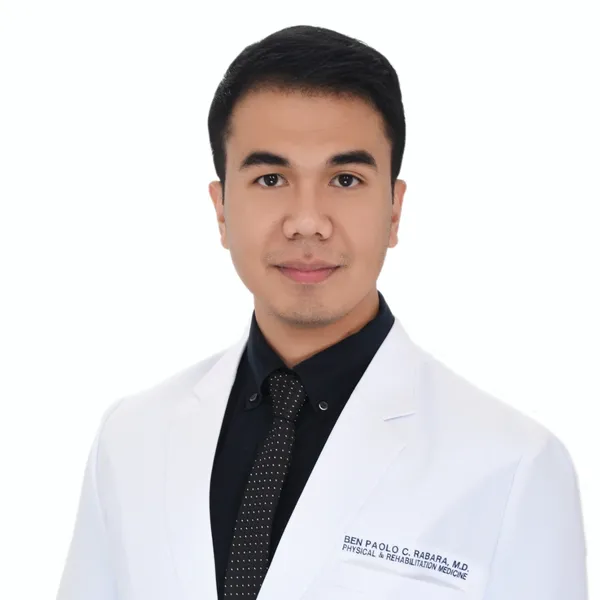
Dr. Ben Rabara
Dr. Ben Rabara is a Physiatrist in Vigan City specializing in Physical Medicine and Rehabilitation. He focuses on non-surgical, precision treatments for musculoskeletal conditions, utilizing advanced diagnostics like MSK Ultrasound.
Medical Disclaimer: The information provided in this article is for educational purposes only and does not substitute for professional medical advice, diagnosis, or treatment. Always consult a qualified physician for your specific health conditions.