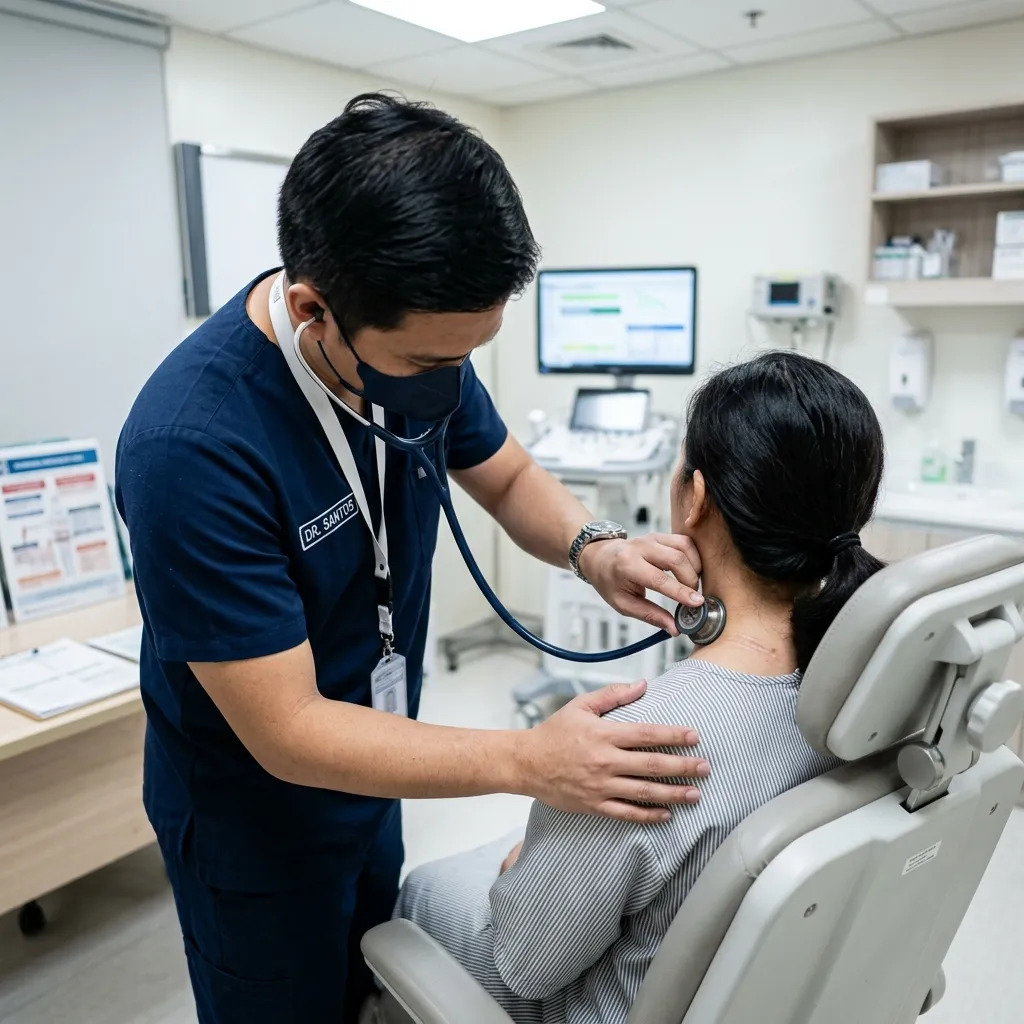
What is a Clinical Swallowing Assessment?
After a stroke, traumatic brain injury, or prolonged ICU intubation, the complex muscles required for swallowing often become weak or uncoordinated. This condition, called Dysphagia, carries a severe risk of aspiration—where food or liquid enters the lungs instead of the stomach, potentially causing life-threatening pneumonia.
To ensure patient safety, Dr. Rabara performs a functional clinical swallowing evaluation, utilizing protocols like the Gugging Swallowing Screen (GUSS). By carefully observing the patient's ability to process different textures—from pureed foods to thick liquids and regular water—we can objectively determine their exact swallowing capability without immediately requiring invasive equipment.
Who Requires a Swallowing Assessment?
Signs of
Swallowing Impairment
Often, swallowing difficulties are not obvious. 'Silent aspiration' can occur without outward choking, making a professional clinical evaluation critical for your loved one's safety.
Ideal indications
Frequent coughing or 'gurgly' voice during or after meals.
Current NGT or PEG tube dependence wishing to transition to oral eating.
Tracheostomy tube in place requiring clearance for decannulation.
Unexplained weight loss or recurrent respiratory infections.
Clinical precautions
Patient is medically unstable or unable to remain alert for evaluation.
Suspected structural esophageal blockage (requires GI referral).
Acute respiratory distress requiring immediate emergency intervention.
Dysphagia Management Realities
Understanding the clinical risks and recovery process for swallowing disorders.
Fatigue During Testing
Patients recovering from severe strokes may experience vocal or swallowing fatigue during prolonged assessment sessions.
Inherent Aspiration Risk
While carefully monitored, attempting to swallow new textures during rehabilitation carries a mild, inherent risk of aspiration.
Progressive Dietary Adjustments
Diet upgrades are strictly phased. Rushing to solid foods before passing clinical benchmarks is highly dangerous.
In-Depth Clinical Science
Technical documentation for medical colleagues and analytical patients regarding swallowing pathophysiology.
Explore the Clinical Science: The Pathophysiology of Post-Stroke Dysphagia
The neuroanatomical coordination required for a safe swallow involves over 30 pairs of muscles and multiple cranial nerves. Stroke or TBI disrupts cortical control over these voluntary movements.
The scientific concern is 'silent aspiration', where food enters the lungs without a cough reflex, leading to aspiration pneumonia—a leading cause of post-stroke mortality.
Advanced Indications: GUSS-ICU & Post-Extubation Protocols
Following mechanical ventilation, patients often suffer from 'post-extubation dysphagia'. The physical presence of a tube desensitizes the laryngeal mucosa while muscle disuse leads to atrophy.
We monitor for clinical red flags such as 'wet voice' quality and reduced hyolaryngeal excursion to prevent recurrent ICU readmission.
Detailed Anatomical Review: The 4 Stages of a Safe Swallow
We evaluate the Oral Preparatory, Oral Transport, Pharyngeal, and Esophageal phases. The Pharyngeal phase is the 'point of no return' where vocal cords close—this must happen in less than one second.
The 3-Step Process
Clinical Bedside Evaluation
We conduct a thorough, step-by-step assessment of the patient's oral motor control and swallowing reflexes.
Diagnostic Coordination
If necessary, we seamlessly coordinate advanced endoscopic testing (FEES) with PhilHealth-accredited ENT specialists.
Targeted Action Plan
We issue a formal medical directive for either progressive therapy or safe apparatus removal.
Clinical decision support
Swallowing safety requires more than a symptom checklist
A clinical swallowing assessment reviews alertness, breathing, voice, oral movement, secretion management, food and fluid trials when safe, nutrition and hydration concerns, and the patient’s goals. Coughing is important, but its absence does not rule out aspiration. Bedside assessment also cannot show every phase of swallowing, so suspected silent aspiration, unexplained chest infections, or an unclear mechanism may require an instrumental study such as FEES or a videofluoroscopic swallowing study through an appropriate facility.
Recommendations should balance airway protection, hydration, nutrition, medication delivery, independence, and quality of life. Texture changes are not automatically permanent and should not be prescribed from a single sign alone. New inability to swallow, breathing difficulty, blue discoloration, severe drowsiness, or choking that does not clear needs urgent medical care.
How this evidence is applied at TeraCare
TeraCare coordinates the medical and rehabilitation questions: why swallowing changed, what can be tried safely now, whether a speech-language pathologist or instrumental test is needed, and what warning signs the family should monitor. The plan is reassessed as the patient’s neurologic status and function change.
Medical review: Dr. Ben Rabara, Physiatrist · Evidence reviewed August 22, 2026. This information supports shared decision-making and does not replace an individual examination or emergency care.
Clinical sources: ASHA Practice Portal: Adult Dysphagia.
How this treatment fits your care plan
Neurological Rehabilitation
Coordinated recovery of movement, communication, swallowing, positioning, and daily function.
Your exact sequence depends on the diagnosis, safety screening, and response to treatment. A physiatrist will recommend only the steps that fit your case.
Common Questions
Does the clinical swallowing assessment hurt?
Will Dr. Rabara remove the NGT or Tracheostomy during this visit?
What is a FEES test, and why might we need it?
Is the FEES test covered by PhilHealth?
References & Clinical Evidence
- [1] Clinical guidelines and evidence-based research supporting Clinical Dysphagia Swallowing Assessments.
- [2] Relevant peer-reviewed literature on efficacy and safety outcomes in rehabilitation.
* Clinical references are provided to support the medical claims made in this article. TeraCare adheres to evidence-based practices in physical medicine and rehabilitation.

Dr. Ben Rabara
Dr. Ben Rabara is a Physiatrist in Vigan City specializing in Physical Medicine and Rehabilitation. He focuses on non-surgical, precision treatments for musculoskeletal conditions, utilizing advanced diagnostics like MSK Ultrasound.
Medical Disclaimer: The information provided in this article is for educational purposes only and does not substitute for professional medical advice, diagnosis, or treatment. Always consult a qualified physician for your specific health conditions.
Clinical Swallowing & Recovery Guides
Expert resources on recovering from dysphagia, managing feeding tubes, and preventing aspiration pneumonia.