- — Coughing during meals is a protective reflex, but the absence of coughing (Silent Aspiration) is often more dangerous.
- — Dysphagia is a medical term for swallowing difficulty, and in the elderly, it is a primary cause of recurrent pneumonia.
- — Aspiration pneumonia occurs when food, liquid, or saliva enters the lungs instead of the stomach, leading to severe infection.
- — A clinical swallowing assessment (like FEES) is the gold standard for identifying hidden aspiration risks.
- — Modification of food texture and liquid thickness, guided by a physician, is critical to preventing hospital admissions.
For many caregivers, mealtime with an elderly loved one is a source of hidden anxiety. You might notice a frequent cough after a sip of water, a "wet" sound in their voice after a bite of rice, or the occasional terrifying moment where they seem to stop breathing for a second while trying to clear their throat.
In clinical practice, we often hear families say, "He's just getting older, he's just a messy eater now." But as a Rehabilitation Medicine physician specializing in Dysphagia, I must tell you: there is no such thing as "normal" choking due to age. Swallowing is one of the most complex neurological and mechanical acts the human body performs. When it begins to fail, it isn't just a nuisance—it is a medical emergency that often hides in plain sight.
What is Dysphagia? Understanding the Mechanics of the Swallow
Dysphagia is the medical term for difficulty swallowing. To understand why it happens in the elderly, we have to look at the "traffic control" system of your throat.
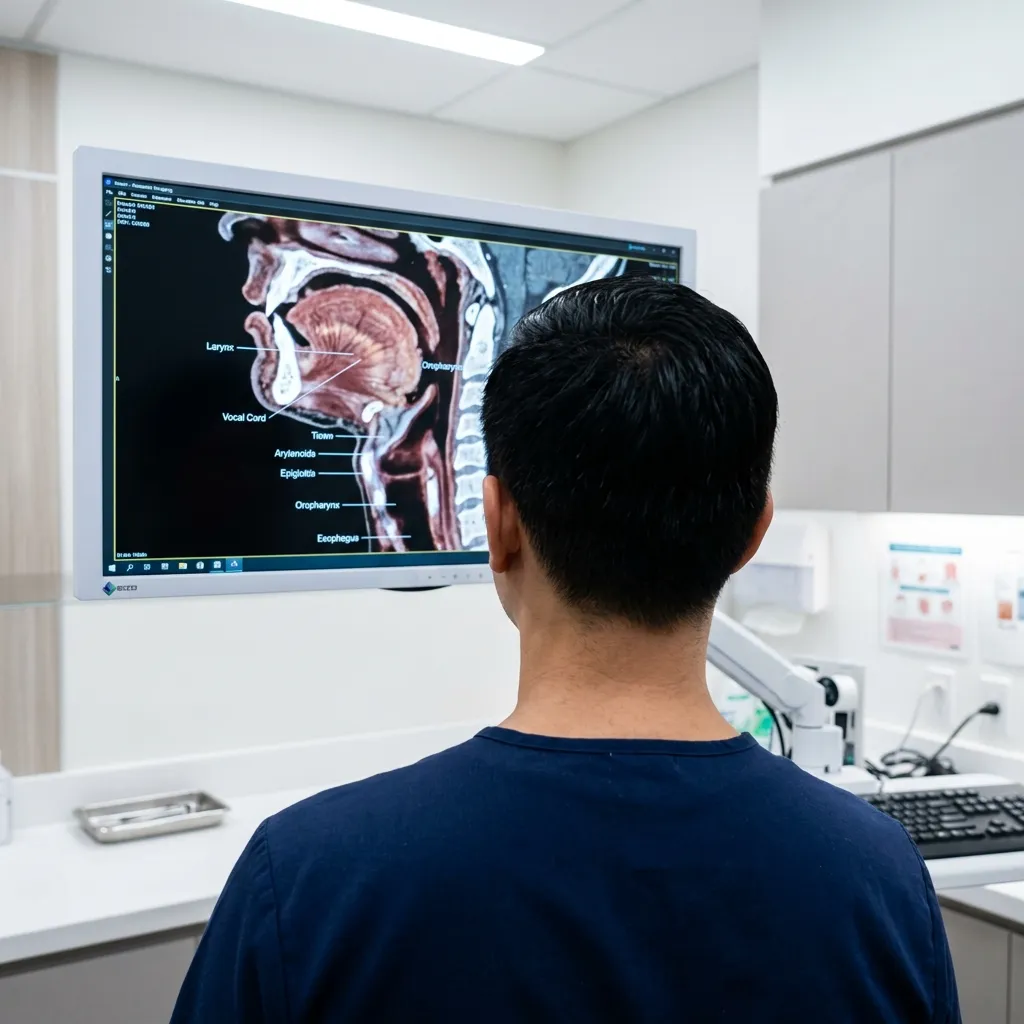
In a healthy person, when you swallow, several things happen in less than a second: your tongue pushes the food back, your soft palate rises to block your nose, and most importantly, your epiglottis (a small flap of cartilage) flips down like a trapdoor to seal off your airway (the trachea) while your esophagus opens to receive the food.
In the elderly—especially those with a history of stroke, Parkinson's, or dementia—this timing gets delayed. The "trapdoor" closes a fraction of a second too late. In that tiny window of time, food or liquid can slip into the airway. This is what we call aspiration.
The Silent Threat: Why No Coughing is More Dangerous
Most people think that if a patient isn't coughing, they aren't choking. This is perhaps the most dangerous misconception in geriatric care.
Coughing is actually a good sign—it means the patient's sensory nerves are still working and are trying to expel the foreign material from the airway. The real danger is Silent Aspiration.
In silent aspiration, the patient's nerves have become so desensitized (often due to age or neurological damage) that food or liquid slips past the vocal cords and deep into the lungs without triggering any cough or distress. The patient looks perfectly fine. The caregiver thinks the meal was successful. But hours or days later, the patient develops a high fever and difficulty breathing. This is the primary pathway to Aspiration Pneumonia.
"Silent aspiration is the 'silent killer' of the elderly. Without a clinical swallow test, you are essentially feeding your loved one in the dark."
From the Throat to the Lungs: How Aspiration Pneumonia Develops
The lungs are designed for one thing only: air. They are a sterile environment. When food particles, sugary liquids, or—worst of all—bacteria-laden saliva enter the lungs, they create a perfect breeding ground for infection.
Aspiration Pneumonia is not like a standard flu-based pneumonia. It is an aggressive bacterial infection caused by foreign matter. In elderly patients, whose immune systems are already fragile, aspiration pneumonia is a leading cause of hospitalization and, unfortunately, mortality.
If your loved one has been hospitalized multiple times for "chest infections" or "recurrent pneumonia," it is highly likely that the root cause is not a virus, but an undiagnosed swallowing disorder. Treating the pneumonia with antibiotics is only a temporary fix; until you fix the swallowing mechanism, the cycle will continue.
Identifying the Red Flags: Symptoms Caregivers Miss
Since silent aspiration doesn't cause coughing, how can a caregiver know there is a problem? You must look for the "Clinical Whispers" of dysphagia:
- The Wet Voice: After eating or drinking, does the patient's voice sound "gurgly" or wet? This is the sound of liquid sitting on top of the vocal cords.
- Multiple Swallows: Does it take them 3 or 4 swallows just to clear one small bite of food?
- Pocketing Food: Do you find food "stored" in their cheeks long after the meal is over?
- Eye Tearing: Do their eyes water or turn red while eating, even without a cough?
- Shortness of Breath: Do they seem unusually tired or breathless during or immediately after a meal?
If any of these signs are present, the swallowing mechanism is failing, and the risk of aspiration is high.
The Role of Clinical Assessment: Seeing the Unseen
You cannot diagnose a swallowing problem by looking at the outside of the throat. At TeraCare Vigan, we use specialized diagnostic tools to see exactly what is happening inside during a swallow.
One of the most effective tools is FEES (Fiberoptic Endoscopic Evaluation of Swallowing). We use a tiny, flexible camera to view the throat from the inside while the patient eats and drinks. This allows us to:
- See exactly where the food is going.
- Identify if silent aspiration is occurring.
- Determine which specific food textures (pureed, soft, or solid) are safe.
- Test whether "thickened liquids" actually protect the airway for that specific patient.
This assessment provides us with a "Safety Map." Instead of guessing and hoping for the best, we can give the caregiver a precise diet plan that minimizes the risk of pneumonia.
Rehabilitation: Can We Fix the Swallow?
Many families believe that once swallowing fails, the only option is a feeding tube (NGT). This is not true. In my clinical experience as a Physiatrist, many patients can regain their swallowing function through Targeted Rehabilitation.
We work with Speech-Language Pathologists (SLPs) to perform swallowing exercises that strengthen the muscles of the tongue and throat. We may also use VitalStim Therapy, which uses mild electrical stimulation to "re-awaken" the swallowing nerves and muscles.
The goal is functional recovery. We want to move the patient from a feeding tube to safe oral intake, improving their quality of life and dignity.
| Symptom | What It Means Clinically | Urgency Level |
|---|---|---|
| Frequent Coughing | Protective reflex is working, but airway is being threatened. | Moderate - Needs Assessment |
| Wet/Gurgly Voice | Material is sitting on the vocal cords; high risk of slipping into lungs. | High - Potential Aspiration |
| Recurrent Chest Infections | Possible chronic silent aspiration leading to early pneumonia. | Critical - Immediate Diagnostic |
Conclusion: Don't Wait for the Hospital Admission
The cost of a clinical swallowing assessment is a fraction of the cost of a single week in the ICU for aspiration pneumonia. More importantly, the toll on the patient's health and the family's peace of mind is immeasurable.
If you are noticing the red flags of dysphagia in your elderly parent or a post-stroke relative, the time to act is now. A professional assessment at TeraCare Vigan can determine the safe path forward, whether that means diet modification, specialized therapy, or a clear roadmap toward removing a feeding tube.
Prevent Aspiration Pneumonia Today
Don't ignore the silent signs of choking. Book a Clinical Swallowing Assessment with Dr. Ben Rabara in Vigan City.
Physician's Note: Dysphagia management is about more than safety—it's about the quality of life. The ability to eat and drink safely is fundamental to human dignity and health. Our goal is to protect the lungs while maximizing the patient's functional independence.
References & Clinical Evidence
- [1] Rofes, L., et al. (2011). The natural history of oropharyngeal dysphagia in the elderly. Clinical Interventions in Aging.
- [2] Pikus, L., et al. (2003). Frequency of aspiration and its clinical conditions in the elderly. American Journal of Roentgenology.
- [3] Marik, P. E., & Kaplan, D. (2003). Aspiration pneumonia and dysphagia in the elderly. Chest Journal.
- [4] Logemann, J. A. (1998). Evaluation and Treatment of Swallowing Disorders. Pro-Ed.
* Clinical references are provided to support the medical claims made in this article. TeraCare adheres to evidence-based practices in physical medicine and rehabilitation.

Dr. Ben Rabara
Dr. Ben Rabara is a Board-Certified Physiatrist specializing in Physical Medicine and Rehabilitation. He focuses on non-surgical, precision treatments for musculoskeletal conditions, utilizing advanced diagnostics like MSK Ultrasound.
Medical Disclaimer: The information provided in this article is for educational purposes only and does not substitute for professional medical advice, diagnosis, or treatment. Always consult a qualified physician for your specific health conditions.