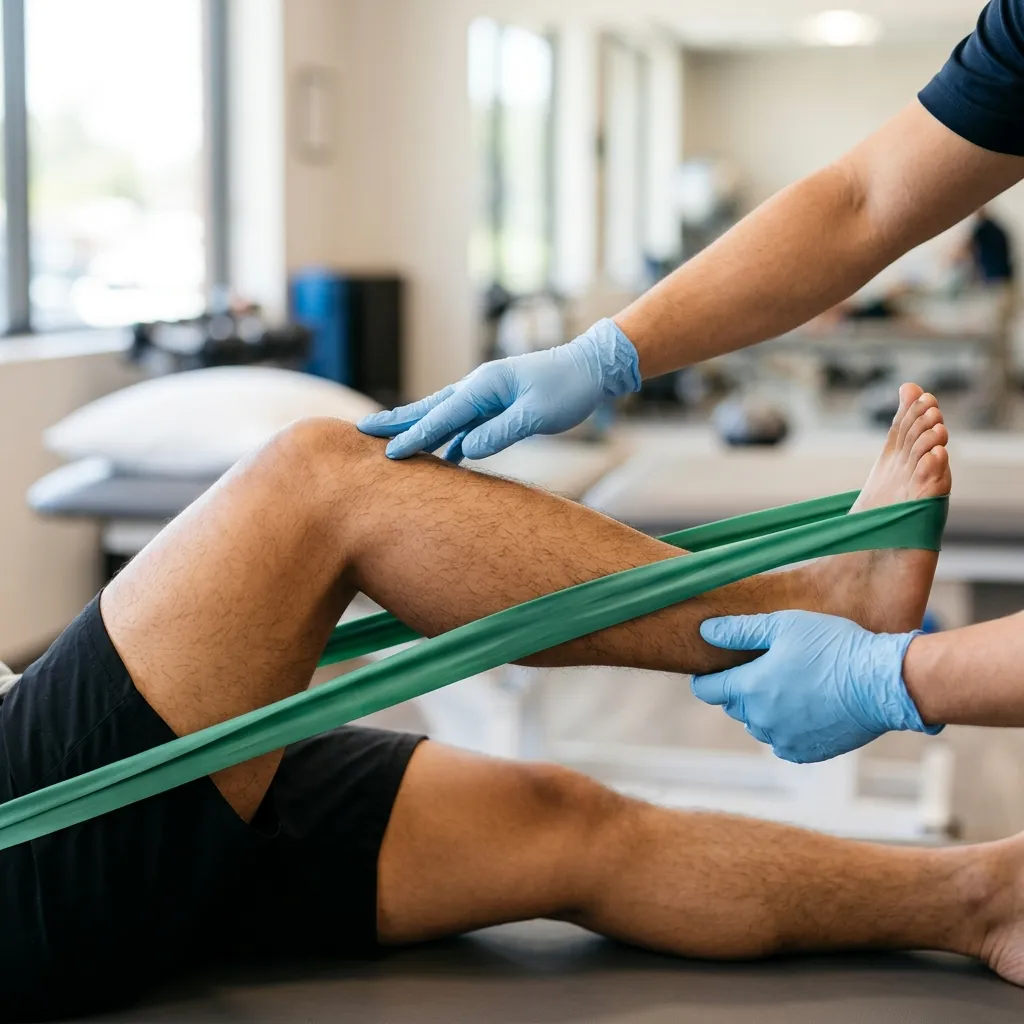
- — Physical therapy in the Philippines typically ranges from ₱500 to ₱2,500 per session depending on the clinic's specialization.
- — Higher-cost, specialized clinics offer physician-led, targeted rehabilitation that treats the root cause, rather than temporary, passive massage.
- — Delaying rehabilitation often leads to permanent joint contractures (e.g., loss of 10 cm of joint mobility) or muscle atrophy, which require expensive surgeries later.
- — You no longer need to pay for expensive travel to Manila. Advanced stroke and sports neuro-rehab is available right here in Vigan City.
When a patient or a family member first walks into my clinic in Vigan, Ilocos Sur, they are often carrying a heavy burden—not just physical pain or disability, but immense financial anxiety. Whether they are looking for a sports physical therapist to heal a torn ligament, or seeking a stroke rehab clinic in Northern Luzon to help a parent walk again, the first question is almost always: "Doc, how much is this going to cost?"
I understand this worry deeply. In the provincial setting, healthcare costs are a serious barrier. Families worry about the physical therapy session cost in the Philippines, the cost of traveling to major hospitals in Manila or Baguio, and the fear of paying for a treatment package that might not even work. I write this guide to offer complete transparency. As a physical medicine and rehabilitation (PM&R) specialist—a physiatrist—I want you to understand exactly what you are paying for, how much it typically costs, and why investing in proper, physician-led clinical diagnosis initially is the most cost-effective way to prevent the massive downstream costs of long-term disability.
How Much Is a Physical Therapy Session in the Philippines?
In the Philippines, physical therapy costs between ₱500 and ₱2,500 per session depending on the clinic's specialization, location, and the equipment used. In my Vigan clinic, I prioritize cost-transparency so you understand exactly what you're paying for. A proper neuro-rehab or musculoskeletal session involves targeted clinical reasoning, not just generic massage.
While many online directories simply list prices, they often fail to explain what those prices actually cover. A basic hospital outpatient session might cost ₱500 to ₱800, but often involves multiple patients being treated simultaneously by a single therapist performing generic modalities (like applying heat packs or ultrasound wands). Conversely, specialized private clinics charge ₱1,500 to ₱2,500 per session.
### Comparison of Therapy Costs and Value
| Clinic Type | Estimated Cost Per Session | Typical Duration | Focus / Intervention Style |
|---|---|---|---|
| Basic / Generic Clinic | ₱500 – ₱800 | 30–45 mins | Passive modalities (Heat, TENS, Massage), shared therapist time. |
| Specialized PM&R Clinic | ₱1,500 – ₱2,500 | 45–60 mins | Physician-led diagnosis, targeted tissue loading, 1-on-1 neuro-rehab. |
| Manila Premium Hospital | ₱2,500 – ₱4,000 | 60 mins | Advanced robotics, highly specialized care, high facility overhead fees. |
In my practice, the cost difference represents the shift from passive, "mill-style" therapy to physician-directed, individualized rehabilitation. We are not just paying for time on a bed; we are paying for a highly calibrated biomechanical intervention designed to change tissue state, modulate pain neurologically, and restore specific movement patterns safely.
Physician Myth-Busting: It is a common misconception that cheaper therapy sessions save money in the long run. While a ₱500 session seems cost-effective, if it consists only of passive heat and electrical stimulation without addressing the underlying mechanical or neurological deficit, the patient may require 30 sessions with no functional improvement. Proper rehabilitation relies on progressively loading the tissue and retraining motor control, which requires specialized one-on-one attention. Paying for 8 highly targeted, physician-supervised sessions often yields better, more sustainable results—and costs less overall—than 30 generic, passive sessions.
Why Does Specialized Rehabilitation Cost More Than Generic Therapy?
Specialized rehabilitation under a physiatrist costs more upfront because it requires precise diagnostic assessment and individualized programming. However, treating the root cause with targeted loading and neurologic retraining prevents the long-term, compounding costs of chronic disability, repeat imaging, or unnecessary surgeries.
Many patients have previously spent thousands of pesos on "massage clinics" or generic therapy centers, complaining that they received a pre-printed sheet of exercises and were left alone with a hot pack. In a specialized physical therapy clinic in Vigan City, my role as a physiatrist is to establish the specific tissue irritability and load tolerance before any exercise is prescribed.
For example, when treating a tendon injury, the treatment cannot just be "stretching." Tendons require specific mechanotransduction—the process by which mechanical force stimulates cellular signaling to synthesize and align collagen fibers. If the load is too low, the tendon does not adapt; if the load is too high (e.g., exceeding 20 kg of unexpected dynamic load), it suffers micro-tears and reactive inflammation resulting in swelling up to 15 mm thicker than baseline. The increased cost of specialized care accounts for the expertise required to find that exact therapeutic window, monitor progression criteria, and adjust the load safely based on physiological feedback, rather than guessing.
The Financial Truth: The Hidden Cost of "Wait and See"
When patients ask about the physical therapy session cost in the Philippines, I often ask them to consider the cost of not doing specialized rehabilitation.
When an injury or neurological event occurs, the body immediately begins to adapt. If a patient with acute knee pain avoids walking (a compensation strategy), the surrounding musculature rapidly atrophies. Joint capsules thicken and become fibrotic, leading to severe stiffness. What began as a highly treatable localized inflammation becomes a chronic, multi-joint mechanical failure.
In the case of stroke survivors, the stakes are even higher. According to a 2024 systemic analysis by the Global Burden of Disease Study, stroke is the third most common cause of death globally and a massive driver of disability-adjusted life-years (DALYs). The evidence clearly indicates that effective, accessible rehabilitation must be urgently implemented to reduce this burden (GBD 2021 Stroke Risk Factor Collaborators, ; PMID: 39304265). When families delay neuro-rehabilitation due to initial session costs, the patient's brain loses the critical window of early neuroplasticity. Spasticity (severe muscle tightness) sets in, leading to permanent joint contractures. At that point, the patient may require lifelong caregiver support, expensive botulinum toxin injections, or orthopedic surgeries—costs that dwarf the initial price of a 10-session physical therapy package.
Applying Medical Evidence Locally: Let us look at how evidence applies in our local setting. Systematic reviews consistently show that early, high-intensity mobility training reduces long-term surgical and caregiving costs (Unknown, ; PMID: web_1781877901_1). In an ideal research setting, a stroke patient might receive intensive therapy twice daily. However, in rural Ilocos Sur, daily travel to a clinic may be financially and physically impossible for a disabled patient. As a physiatrist, my practical translation of this evidence is to structure clinic visits less frequently—perhaps once or twice a week—but use those sessions to aggressively train the family members as "rehab extenders." We teach the family the exact biomechanical handling techniques, contraindications, and safety monitoring required to perform the daily high-volume repetitions at home. This provides the evidence-backed neuroplastic dose required for recovery while respecting the family's financial and logistical constraints.
Is Travel to Manila Necessary for Stroke Rehab? (Vigan Clinic Options)
You do not need to endure the physical and financial toll of traveling to Manila for advanced stroke rehabilitation. By bringing specialized, physician-led neuro-rehabilitation to Vigan City, we can manage spasticity, gait retraining, and motor recovery locally, saving your family significant transport and lodging costs.
Historically, families in Northern Luzon believed that to get "good doctors" or advanced care, they had to hire private vans and rent apartments in Metro Manila. The hidden costs of these medical migrations are staggering. Beyond the medical bills, the family loses income from missed work, pays exorbitant travel fees, and suffers extreme emotional fatigue.
As a physiatrist operating a stroke rehab clinic in Northern Luzon, my clinical goal is to eliminate this geographic barrier. The principles of motor learning, gait training, and neuromuscular electrical stimulation do not change based on the city you are in; they depend entirely on the clinical reasoning of the physician and therapists directing the care. By keeping care local, we preserve the family's financial resources, which can then be directly invested in the patient's actual rehabilitation sessions rather than toll gates and gasoline.
Physician Myth-Busting: Patients frequently believe that the larger the hospital and the more expensive the robotic equipment, the better the stroke recovery. This is a myth. While advanced robotics can assist in high-volume repetition, motor recovery is fundamentally driven by the patient's active cortical engagement—the brain trying to solve a movement problem. A highly skilled therapist working with a patient on a simple mat in Vigan can facilitate better neuroplasticity than a distracted patient strapped into an expensive machine in Manila. The active physiological effort of the patient, guided by precise manual cues, is what wires new neural pathways.
Can I Use PhilHealth or HMO for Physical Therapy?
PhilHealth coverage for physical therapy is historically limited, often requiring patients to pay out-of-pocket, particularly in private clinics. While some HMOs cover basic sessions, I always advise patients to verify their specific outpatient rehab benefits, as specialized neuro-rehab may require separate pre-approvals or co-pays.
In the Philippines, navigating insurance is a frustrating reality for many patients. PhilHealth packages are largely geared toward inpatient hospitalizations rather than outpatient preventive or restorative rehabilitation. If you have a private Health Maintenance Organization (HMO) card, you may be entitled to 6 to 12 sessions per year. However, HMOs typically cover standard therapy rates. If you require highly specialized interventions—such as ultrasound-guided assessments, spasticity management, or specialized sports physical therapy in Ilocos Sur—there may be out-of-pocket co-pays.
In my clinic, we assess your condition and provide a transparent, realistic prognosis and treatment plan upfront. If your HMO covers part of the cost, we will help you navigate it. If you are paying entirely out-of-pocket, we do not waste your money on passive, feel-good modalities; we focus purely on high-yield, functional interventions that drive objective recovery.
Tactical Home Care: Pain-Free Loading vs. "Rest and Ice"
If you are experiencing acute pain, the standard advice you will find online is to apply the R.I.C.E. method (Rest, Ice, Compression, Elevation). From a physiological standpoint, this is often the exact opposite of what your tissues need.
- The Biomechanical Fail: Complete rest induces rapid muscle atrophy and causes tendon collagen to heal in a disorganized, weakened state. Furthermore, applying ice causes vasoconstriction—it clamps down the blood vessels. This restricts the delivery of oxygen, glucose, and macrophages (the cells that clean up damaged tissue), essentially stalling the cellular healing process.
- The Tactical Pivot: Instead of absolute rest, perform pain-free isometric holds. For example, if you have knee pain, hold your leg straight and contract the thigh muscle (quadriceps) firmly without moving the joint. Hold this for 30 to 45 seconds, repeat 4 to 5 times, and do this 3 times a day.
- Clinical Reasoning: Isometric muscle contractions trigger mechanotransduction, stimulating cellular pathways to align collagen fibers strongly without risking joint shear. Simultaneously, the sustained contraction triggers a neurological response called cortical inhibition, which acts as a powerful, natural analgesic to reduce local pain. You are actively healing, not just waiting.
The Danger of Treating Only the "Mimics"
Patients often come to me describing colloquial symptoms like "clicking," "sharp pain," or "numbness" (often referred to locally as pamamanhid or ngawit). A generic clinic might simply apply a hot pack to the area that hurts. As a physiatrist, I must identify the anatomical mimic—the underlying structure actually causing the problem.
For example, a patient complaining of "clicking" in the knee might be experiencing a meniscal cartilage tear, or they might simply have a tendon subluxating (slipping) over a bony prominence due to a muscle imbalance. If a therapist simply rubs the knee without diagnosing the mechanical driver, the patient wastes money. In clinic, we use specific differentiation tests—like McMurray's test for the meniscus, combined with dynamic ultrasound scanning—to confirm the exact anatomical culprit.
Similarly, "numbness" or burning in the foot might not be a foot problem at all; it could be a nerve entrapment (neuropathy) higher up in the spine or leg. Treating the foot with massage will fail. We must perform sensory testing and assess the nerve pathway to determine where the compression is occurring. Proper diagnosis prevents the financial drain of treating the wrong anatomical structure.
Physician Myth-Busting: It is widely assumed that an MRI is always required before starting physical therapy to ensure safety and accurately diagnose the problem. In reality, treating the MRI findings rather than the patient often leads to unnecessary fear and skyrocketing costs. MRI scans frequently reveal "bulging discs" or "meniscal tears" in completely asymptomatic, healthy individuals. If the structural finding on the MRI does not perfectly match your clinical neurological exam and your functional limitations, it is likely an incidental finding of normal aging, not the source of your pain. A thorough clinical exam by a physiatrist is far more cost-effective and accurate for guiding rehabilitation than immediately ordering a ₱15,000 scan.
How We Structure Cost-Effective Care at Our Vigan Clinic
My clinical goal is not to keep you in therapy forever. My goal is to discharge you as an independent, capable individual who understands their own body.
We structure care to maximize your financial investment:
- Accurate Diagnosis First: We do not guess. A thorough medical and biomechanical assessment ensures we target the correct tissue from day one.
- Active Loading Over Passive Modalities: We focus on exercise therapy, motor control retraining, and heavy resistance loading—interventions that create permanent physiological changes—rather than passive machines that only offer temporary relief.
- The "Architect and Builder" Model: As the physiatrist (the architect), I design the medical blueprint, screen for red flags, and establish the safety parameters. The physical therapists (the builders) execute the daily plan. Together, we ensure every session has a specific, measurable goal.
- Education as the Ultimate Tool: We teach you how to manage flare-ups independently so you do not have to pay for a clinic visit every time you experience minor stiffness.
By focusing on these principles, we provide the highest standard of physical medicine right here in Ilocos Sur.
If you are tired of the cycle of chronic pain and are ready to invest in a structured, physician-led path to recovery, do not let geography or fear of the unknown hold you back. Let's find out exactly what is causing your limitation and build a realistic plan to fix it. Contact our clinic in Vigan City to schedule your comprehensive assessment.
Neurological Physical Therapy Realities
Understanding the intense physical and mental demands of neuro-rehab.
Physical Exhaustion
Forcing damaged neural pathways to fire requires immense metabolic energy, leading to profound physical and mental fatigue after sessions.
Micro-Progressions
Improvements in spasticity, gait, and motor control are measured in micro-progressions over months, requiring immense patience.
Risk of Falls During Training
Challenging balance and gait inevitably involves a controlled risk of stumbling, which is why close therapist guarding is essential.
References & Clinical Evidence
- [1] GBD 2021 Stroke Risk Factor Collaborators. (2024). Global, regional, and national burden of stroke and its risk factors, 1990-2021: a systematic analysis for the Global Burden of Disease Study 2021. Lancet Neurol. PMID: 39304265.
- [2] Unknown. (2022). Physical Therapy Cost Philippines 2026: ₱500–₱2,500/Session. PubMed Central / Web Search. PMID: web_1781877901_1.
* Clinical references are provided to support the medical claims made in this article. TeraCare adheres to evidence-based practices in physical medicine and rehabilitation.

Dr. Ben Rabara
Dr. Ben Rabara is a Board-Certified Physiatrist specializing in Physical Medicine and Rehabilitation. He focuses on non-surgical, precision treatments for musculoskeletal conditions, utilizing advanced diagnostics like MSK Ultrasound.
Medical Disclaimer: The information provided in this article is for educational purposes only and does not substitute for professional medical advice, diagnosis, or treatment. Always consult a qualified physician for your specific health conditions.