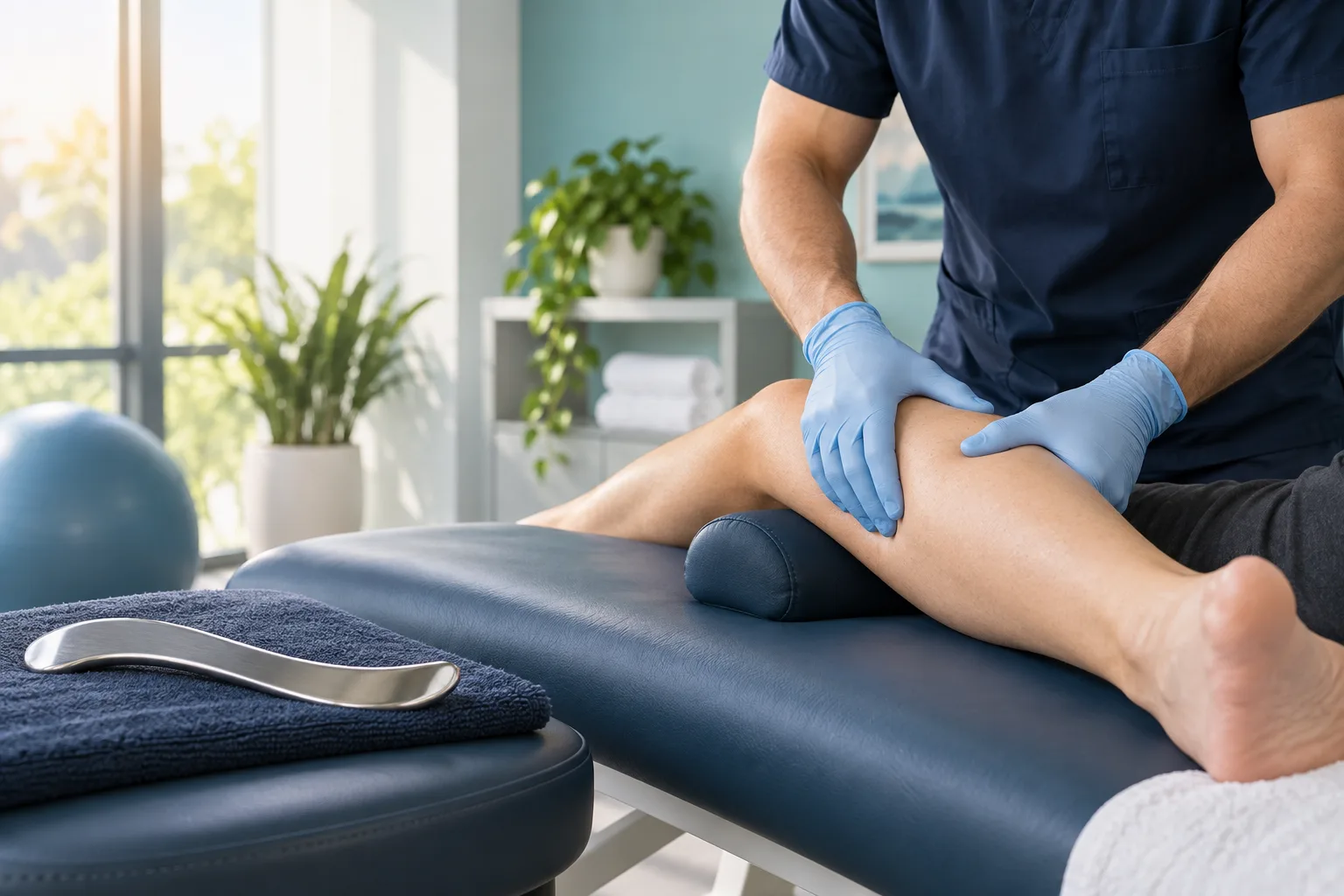
- — There is no verified universal IASTM or Graston price for the Philippines. A transparent quote should tell you what the assessment, treatment, exercise plan, reassessment, and follow-up include.
- — A local clinic should assess your goal and relevant safety factors before deciding whether instrument-assisted soft-tissue mobilization fits your plan.
- — IASTM, branded Graston, muscle scraping, and traditional gua sha overlap in everyday language but are not interchangeable in every study or treatment setting.
- — A visible mark or strong sensation is not proof that treatment worked. Severe or worsening pain, new altered sensation, spreading swelling, or an unexpected response needs reassessment.
- — The best comparison is not the tool name alone. Ask how the technique connects to active rehabilitation and how progress will be measured.
If you are searching for “Graston technique near me,” the useful next question is not only “What is the price?” but “What does the quote include?” Instrument-assisted soft-tissue mobilization (IASTM) is a clinician-applied technique that uses a handheld instrument as one possible part of a rehabilitation assessment and treatment plan. The amount can change with the assessment, treatment area, clinician time, exercise plan, reassessment, and follow-up. This page gives you a way to compare a Vigan or Philippine clinic quote without relying on an invented universal price.
The words “IASTM,” “Graston,” “muscle scraping,” and “gua sha” are often used together online. They are related ideas, but the tools, training, goals, and evidence are not identical in every context. Patients may describe the problem as sharp, dull, radiating, stiff, heavy, weak, burning, catching, or grinding; the tool itself may feel like pressure, warmth, gliding, or tenderness. In a rehabilitation assessment, I look for the functional goal and the safety context before deciding whether instrument work adds anything to the plan.
What does Graston technique near me cost?
There is no verified national or Vigan price that can be presented as a universal IASTM or Graston fee. Published clinical studies evaluate selected interventions and outcomes; they do not set local clinic prices. The safest cost answer is therefore a quote-comparison framework, not a made-up price range.
Before you book, ask whether the amount covers an initial physical assessment, discussion of your rehabilitation goal, instrument-assisted treatment if appropriate, exercise or movement instruction, reassessment, and follow-up. Ask whether the visit is priced by time, treatment area, or service type. If a package is offered, ask what problem it is intended to solve, how progress will be measured, and whether buying several visits is optional.
What changes an IASTM or Graston quote?
Clinics may structure fees differently depending on whether you need a first assessment or a follow-up, how many regions are being assessed, how much clinician time is needed, and whether the visit includes a broader exercise or rehabilitation plan. These are service-structure questions, not evidence that one instrument or brand is inherently better.
A clear quote should also explain what happens if instrument work is not the right fit. IASTM should not replace examination, education, movement practice, or load planning. One IASTM trial used eight sessions over four weeks in a specific group with chronic mechanical neck pain; its schedule is not a prescription for every patient (PMID: 37270471).
What should a clinic quote include?
- Who will perform the assessment and what qualifications or scope of practice apply.
- Whether the quote includes screening, instrument work, exercise instruction, and reassessment.
- Which body region or functional problem the plan addresses.
- What symptoms should make you stop, contact the clinic, or return for review.
- Whether any package is optional and what outcome would justify continuing.
| Ask the clinic | Why it matters | A clear answer should explain |
|---|---|---|
| Does the fee include assessment? | Technique should follow a clinical decision. | Who assesses you and what goal is being measured. |
| What happens after instrument work? | IASTM is an adjunct, not the whole rehabilitation plan. | Exercise, movement, education, or follow-up steps. |
| Is a package required? | A fixed bundle should not replace reassessment. | When progress is reviewed and whether visits are optional. |
| When should I stop? | Patients need a clear safety boundary. | How to report severe pain, altered sensation, or unexpected swelling. |
Where can I find a muscle scraping clinic Vigan City?
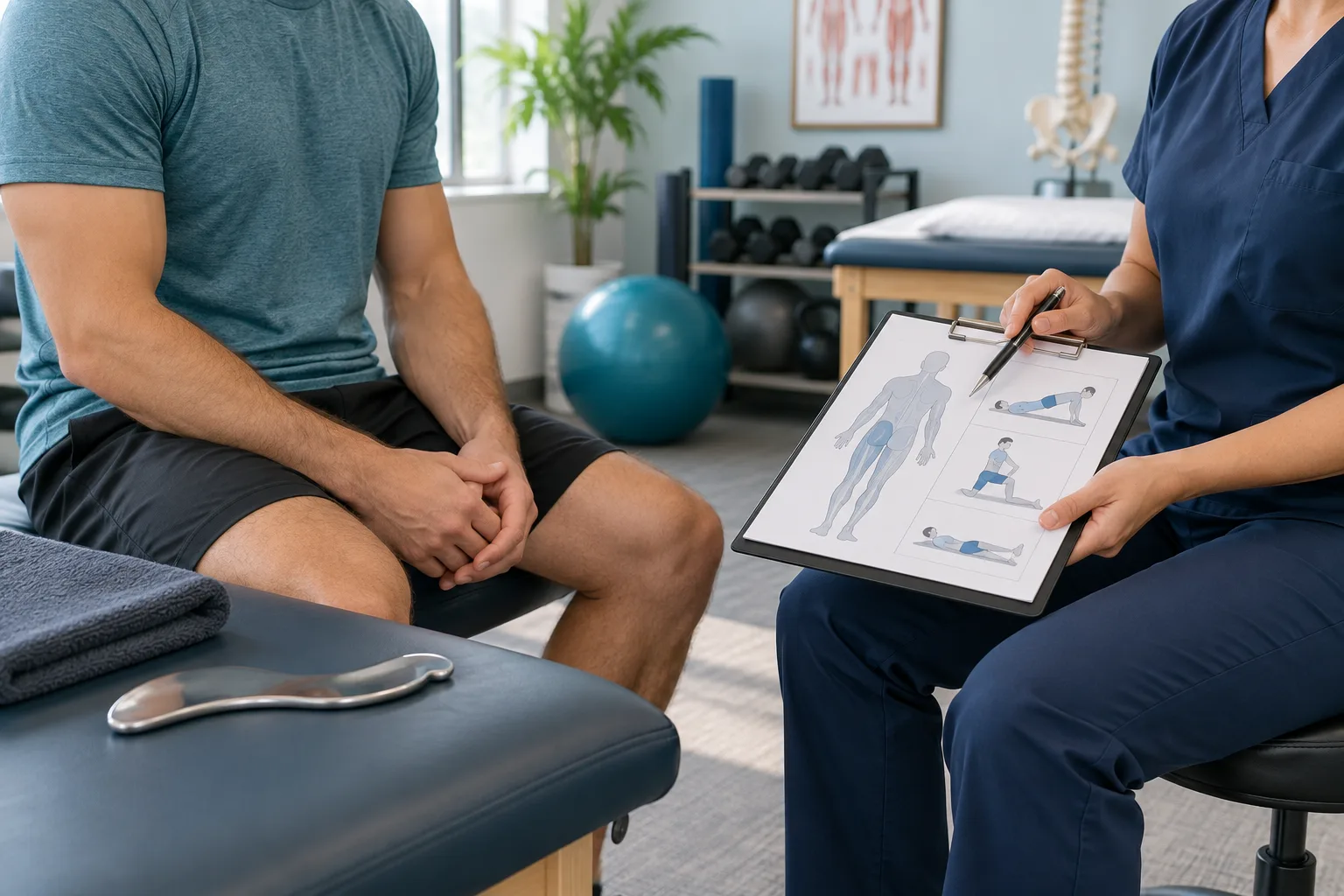
If you are comparing a muscle scraping clinic in Vigan City, look for a service that treats IASTM as a clinical decision rather than a standalone promise. The clinician should ask about the problem you want to solve, observe relevant movement or function, and explain alternatives. “More pressure,” a darker mark, or a branded tool is not the same thing as better care.
The evidence base is mixed and condition-specific. A systematic review of IASTM trials concluded that more high-quality research involving a wider variety of patients and products was needed before generalizing findings (PMID: 31322903). That is why a local consultation should start with your goal and a way to measure progress—not a promise that scraping will “break up” a particular structure.
What should I ask before booking a Vigan IASTM visit?
Ask: “Will I be assessed first?” “What does the fee cover?” “What will we do if the technique is not appropriate?” “What exercise or self-management will follow?” and “When will we reassess whether it is helping?” If you take blood-thinning medicine, have a bleeding disorder, vascular concern, skin problem, recent operation or fracture, cancer history, pregnancy, or altered sensation, mention it before any instrument technique.
A clinic should be comfortable explaining a stop signal. The international IASTM Delphi consensus describes its list as an early step toward best-practice recommendations, which supports screening and individualized clinical judgment rather than a one-size-fits-all checklist (PMID: 40150492).
Can I find IASTM physical therapy Philippines near me?
You may see IASTM listed by physical therapy and rehabilitation clinics in the Philippines, but availability and service structure vary. Search results alone cannot verify who is appropriate for your condition. Confirm the clinic location, who will assess you, what the visit includes, and whether the plan connects the technique to active rehabilitation.
“Near me” is useful for access, but proximity should not be the only filter. Choose a service that can explain its assessment process, relevant precautions, expected sensations, follow-up plan, and alternatives. If the page or advertisement focuses only on a tool, a dramatic before-and-after promise, or a package deadline, ask for the clinical reasoning behind the recommendation.
Where is an IASTM physical therapy Philippines clinic Ilocos Sur?
For patients in Ilocos Sur, including Vigan City, the same comparison questions apply: who assesses you, what problem is being treated, what is included in the fee, and how will progress be measured? A local clinic may combine manual techniques with exercise, education, gait or movement work, and follow-up. The quote should make that scope clear.
Is a package necessary for IASTM?
Not automatically. A package can be reasonable only when the visits have a defined functional goal, a reassessment point, and an explanation of what will change if the response is limited. The study schedule, the number of sessions a friend purchased, or the color of a treatment mark should not decide your plan.
What are IASTM side effects?
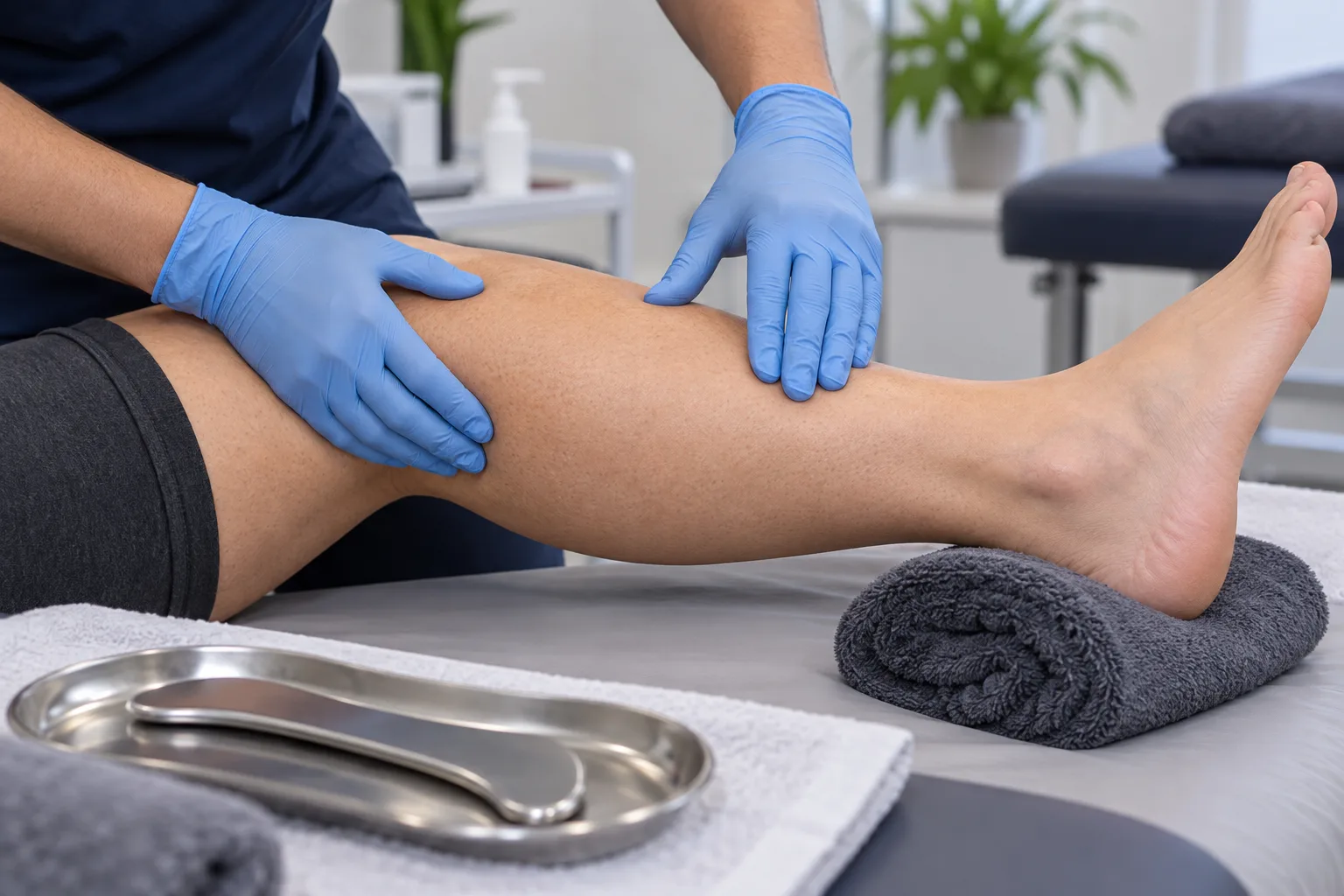
The response can vary with the person, skin, area, pressure, instrument, and condition. Patients may describe pressure, scraping or gliding, warmth, tenderness, redness, or temporary soreness. A visible mark is not required for a treatment to be considered, and a mark is not proof that treatment worked.
Traditional gua sha is described as intentionally creating petechiae and ecchymosis, but that related practice does not establish how often a clinical IASTM or Graston session should leave a mark (PMID: 22863649). In a small study of healthy men, no petechiae were detected after high-pressure IASTM, which is another reason not to use a photograph as a treatment score (PMID: 33884110).
Adverse-event reporting is also limited. A scraping-therapy review reported that only one included study reported adverse effects and that none were serious; sparse reporting cannot guarantee a harmless response for every person, medicine, body region, or diagnosis (PMID: 33436299).
When should I stop and ask for reassessment?
Tell the clinician immediately if pain is severe, escalating, or disproportionate, or if new numbness, tingling, spreading swelling, skin breakdown, or another concerning change appears. A small study in healthy men found increased pain and reduced perceived function in the treated leg after IASTM; it does not define a recovery curve for an injured patient, but it supports speaking up rather than pushing through (PMID: 25347141).
Do not change prescribed medicine or try to diagnose a bruise online. Ask the treating clinician to examine an unexpected or worsening response and to explain whether the plan should be paused, modified, or replaced.
How does IASTM work?
IASTM uses a handheld instrument to provide controlled contact with the body surface while the clinician considers the patient’s movement, symptoms, and rehabilitation goal. It is best understood as a possible adjunct—not a stand-alone test of tissue quality or a guarantee that a tool will repair a specific structure.
The mechanism is not settled in the simple way online advertisements sometimes imply. A review of gua sha notes that the mechanisms underlying the practice have not been empirically established, so a scraping sensation or visible mark should not be translated into a literal claim that scar tissue has been broken apart or repaired (PMID: 34660401). The evidence should be interpreted for the exact condition and protocol studied; it should not be used to promise a result for every patient.
What should happen after the instrument technique?
Ask what you should do next. Depending on the goal, the plan may include movement practice, strengthening, education, activity modification, or another form of rehabilitation. The important follow-up question is whether the treatment is helping a measurable function—such as walking, lifting, reaching, or returning to a chosen activity—not whether the skin looks dramatic afterward.
Want a clear IASTM quote and plan?
A rehabilitation assessment can connect your symptoms, goals, safety factors, and treatment options before any instrument technique is chosen.
References & Clinical Evidence
- [1] Seffrin CB, Cattano NM, Reed MA, Gardiner-Shires AM (2019). Instrument-Assisted Soft Tissue Mobilization: A Systematic Review and Effect-Size Analysis. Journal of Athletic Training. PMID: 31322903.
- [2] Shewail F, Abdelmajeed S, Farouk M, Abdelmegeed M (2023). Instrument-assisted soft tissue mobilization versus myofascial release therapy in chronic neck pain. BMC Musculoskeletal Disorders. PMID: 37270471.
- [3] Cheatham SW, Baker RT, Loghmani MT, Schleip R (2025). International Expert Consensus on Instrument-Assisted Soft-Tissue Mobilization Precautions and Contraindications. Healthcare. PMID: 40150492.
- [4] Nielsen A, Kligler B, Koll BS (2012). Safety protocols for gua sha (press-stroking) and baguan (cupping). Complementary Therapies in Medicine. PMID: 22863649.
- [5] Chu ECP, Wong AYL, Sim P, Krüger F (2021). Exploring scraping therapy: Contemporary views on an ancient healing. Journal of Family Medicine and Primary Care. PMID: 34660401.
- [6] Wang XQ, Duan PB, Zheng M, Yang LH, et al (2021). Effect of Scraping Therapy on Chronic Low Back Pain: A Systematic Review and Meta-analysis. Journal of Manipulative & Physiological Therapeutics. PMID: 33436299.
- [7] Myburgh C, Hammern A, Mannfjord P, Boyle E (2018). Effects of Instrument-Assisted Soft-Tissue Mobilization on Ankle Range of Motion and Triceps Surae Pressure Pain Sensitivity. PMID: 33884110.
- [8] Vardiman JP, Siedlik J, Herda T, Hawkins W, et al (2015). Instrument-assisted soft tissue mobilization and subjective pain after treatment. PMID: 25347141.
* Clinical references are provided to support the medical claims made in this article. TeraCare adheres to evidence-based practices in physical medicine and rehabilitation.

Dr. Ben Rabara
Dr. Ben Rabara is a Board-Certified Physiatrist specializing in Physical Medicine and Rehabilitation. He focuses on non-surgical, precision treatments for musculoskeletal conditions, utilizing advanced diagnostics like MSK Ultrasound.
Medical Disclaimer: The information provided in this article is for educational purposes only and does not substitute for professional medical advice, diagnosis, or treatment. Always consult a qualified physician for your specific health conditions.