- — There is no single validated pain level or normal skin response for every muscle-scraping session. Severe or escalating pain is not a useful test of treatment quality.
- — Traditional gua sha can intentionally create petechiae or ecchymosis, while IASTM studies do not establish a universal frequency or meaning for visible marks.
- — IASTM is one possible adjunct to assessment, exercise, education, and load planning. Research findings vary by condition, technique, and outcome.
- — There is no universal number of Graston or muscle-scraping sessions. A clinician should reassess the functional goal and your response.
- — Severe pain or altered sensation should prompt the clinician to stop or reassess the technique rather than asking you to tolerate more.
There is no validated universal pain score for muscle scraping, and pain should not be treated as a test of effectiveness. A small IASTM study in healthy men found a significant increase in pain in the treated leg after the intervention; that result is not a prediction for every patient or protocol (PMID: 25347141).
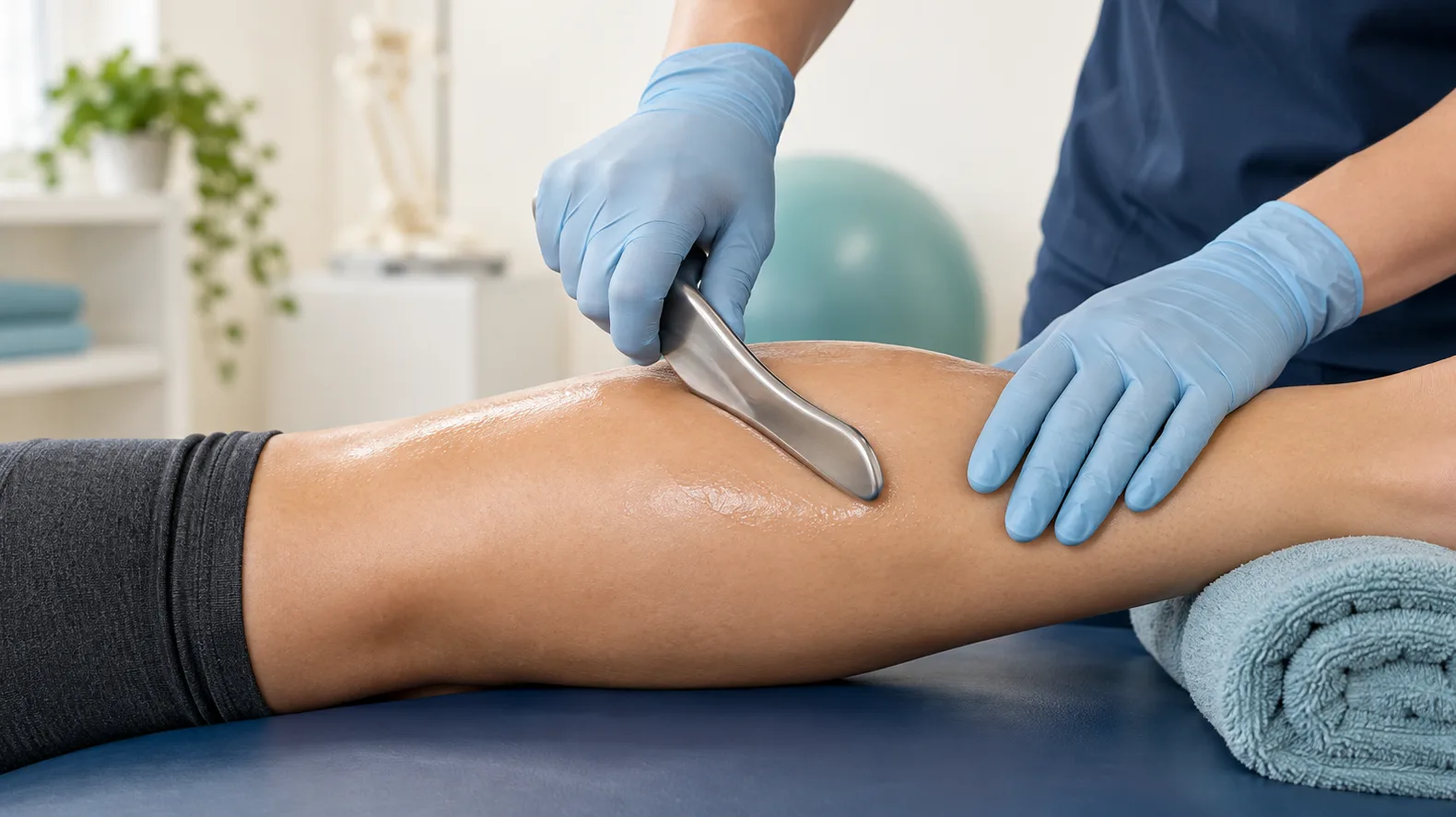
“Muscle scraping” is a patient-friendly term that may refer to instrument-assisted soft-tissue mobilization (IASTM), a branded Graston approach, or a contemporary scraping practice related to gua sha. These labels overlap, but they are not interchangeable in every clinical or research context. This page focuses on the practical questions patients ask after seeing the tool or the marks it can leave: Does it hurt? Is bruising normal? How long might recovery take? When should a clinician reassess you?
Is muscle scraping painful?
The available IASTM literature does not establish one universal during-treatment sensation or pain threshold. Severe pain is not a quality test, and a clinician should reassess rather than ask you to tolerate more simply because the technique is being used.
A “hurts so good” feeling is not a clinical target. The tool is one possible input within an assessment and rehabilitation plan; it cannot prove that a painful spot contains a particular adhesion or that a stronger sensation will produce a better result. An older IASTM review reported outcome signals in selected groups but also called for more research before broad generalization (PMID: 31322903).
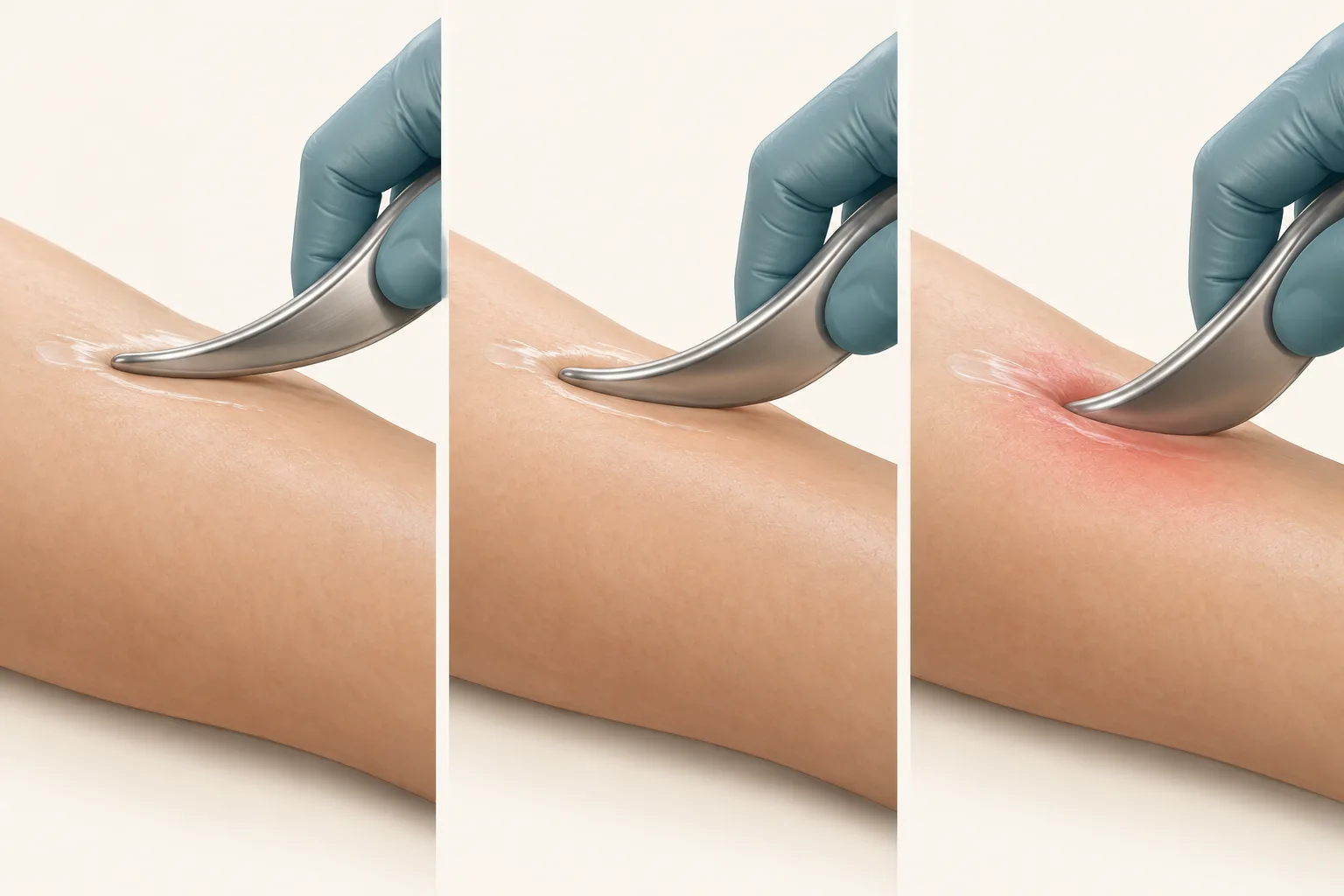
One small study of healthy men found no post-intervention petechiae after a high-pressure IASTM protocol. That result does not define what should happen in a person with an injury, a different skin response, or a different technique; it is another reason not to use a mark or pain level as a treatment score (PMID: 33884110).
What are Graston technique side effects?
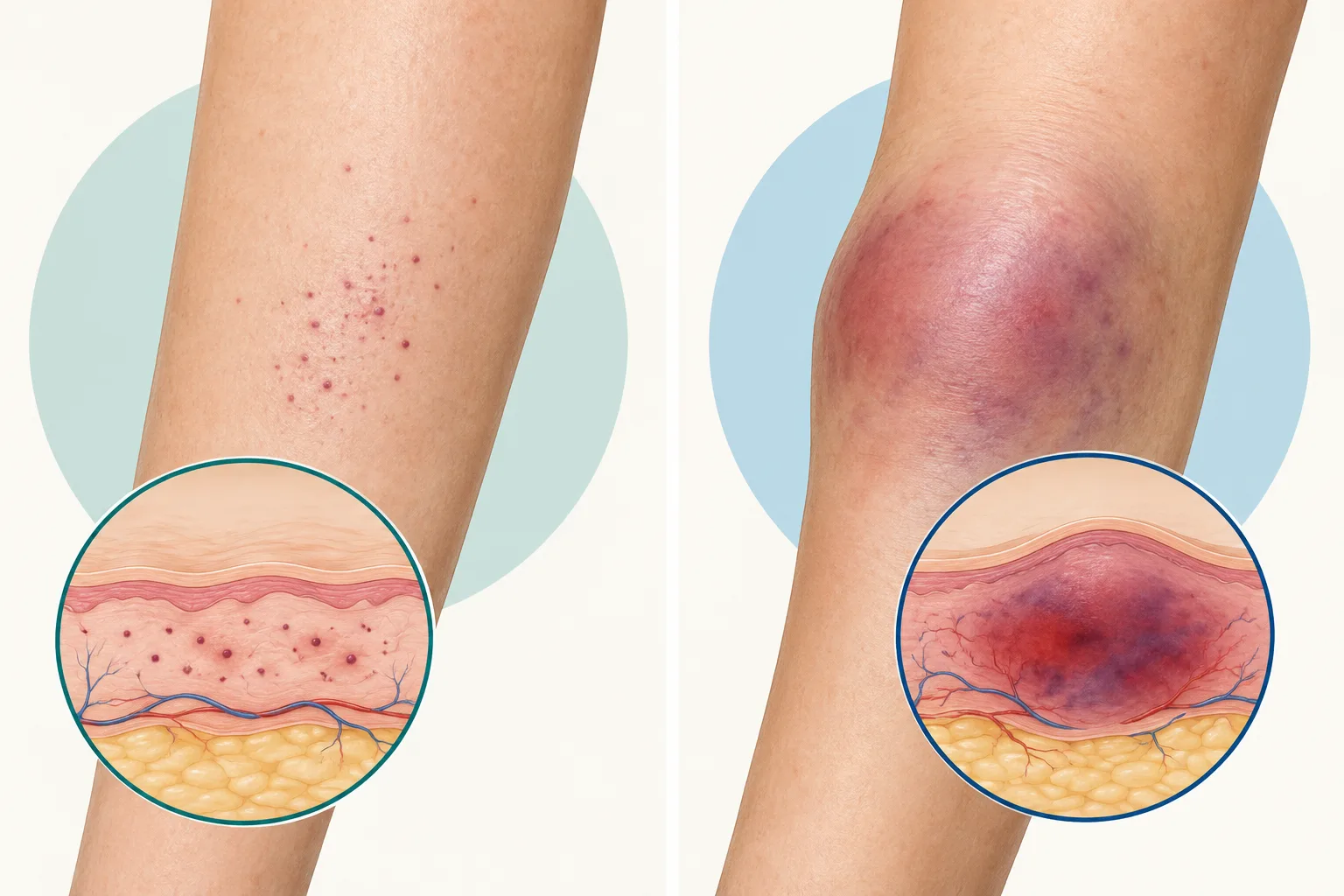
Traditional gua sha is described in the literature as intentionally creating therapeutic petechiae and ecchymosis through extravasation of blood in the subcutis. That is a related traditional practice, not a universal description of clinical IASTM or Graston treatment (PMID: 22863649). A visible mark is not proof that the correct tissue was treated or that the technique worked.
One scraping-therapy systematic review reported that only one included study reported adverse effects and none were serious. That finding is limited: sparse reporting cannot describe uncommon problems or guarantee safety for every person, body region, pressure, medicine, or diagnosis (PMID: 33436299). Tell the clinician about blood-thinning medicines, bleeding disorders, relevant skin conditions, recent surgery or fracture, vascular disease, pregnancy, or cancer before treatment.
Branded Graston, clinical IASTM, and traditional gua sha can use different tools, training, goals, and pressure. A review of gua sha notes that the mechanisms underlying the practice have not been empirically established; proposed explanations should therefore be described as hypotheses, not as a guarantee that scraping repairs tissue (PMID: 34660401).
How many Graston sessions are needed?
There is no universal number of Graston or muscle-scraping sessions. The appropriate schedule depends on the working diagnosis, the functional goal, your response, the area treated, and what active rehabilitation follows. A schedule used in one trial is not a prescription for another person.
For example, one small trial studied eight IASTM sessions over four weeks in college students with chronic mechanical neck pain. It found no significant difference between IASTM and myofascial release, and the lack of a control group limited causal interpretation (PMID: 37270471). That kind of study can inform questions about treatment planning; it cannot tell you that you need eight visits.
A useful plan states what will be measured and when it will be reassessed. The measure might be a specific movement, walking tolerance, lifting task, or activity goal. If the response is absent, brief, or followed by a flare, the clinician should reconsider the plan rather than automatically increasing pressure or frequency. The updated IASTM review found very-low-quality evidence and no clinically meaningful improvements across its main outcomes, so a session package should never substitute for diagnosis-led care and active rehabilitation (PMID: 35611579).
Is bruising normal after muscle scraping?
Traditional gua sha can intentionally create petechiae and ecchymosis, but that related practice does not establish how often a clinical IASTM session should produce a mark. A small high-pressure IASTM study found no post-intervention petechiae in healthy men, which shows why there is no single “normal” photograph for every patient or technique (PMID: 22863649; 33884110).
The safest question is not “Is this mark proof that it worked?” It is “Is this response settling as expected, and does it fit the treatment plan?” A visible petechia or bruise is not proof that treatment was effective; the mechanisms proposed for gua sha have not been empirically established (PMID: 34660401). Ask the treating clinician about a mark that is changing, unexpectedly painful, or paired with worsening symptoms.
Is muscle scraping supposed to hurt?
Severe pain or new numbness or tingling should be reported immediately. The 2025 international Delphi consensus lists severe pain felt by the patient and abnormal sensation such as numbness or tingling among IASTM precautions, which supports speaking up rather than testing your tolerance (PMID: 40150492).
Do not use pain tolerance as a measure of toughness or treatment value. Scraping is usually considered as one adjunct alongside assessment, movement practice, education, and load planning. The updated IASTM review found very-low-quality evidence that did not support clinically meaningful improvements in function, pain, or range of motion, reinforcing the need to keep the technique subordinate to a broader rehabilitation plan (PMID: 35611579).
What does muscle scraping bruising mean?
In traditional gua sha, petechiae and ecchymosis are described as visible results of extravasation of blood in the subcutis. Clinical IASTM and Graston are related but not identical practices, so this description should not be transferred automatically to every session (PMID: 22863649).
Keep the interpretation modest. A mark may fade while symptoms improve, stay the same, or worsen; those outcomes are not interchangeable. Also remember that evidence from knee osteoarthritis or other conditions cannot be transferred automatically to an individual with a muscle strain or another diagnosis. A 2024 knee osteoarthritis meta-analysis rated its available evidence low using GRADE and called for further high-quality trials (PMID: 39066523).
What is muscle scraping recovery time?
Recovery time varies. Follow the treating clinician’s individualized plan for the area, the reason for treatment, and your response. There is no single timeline that applies to every scraping session, and a study’s schedule should not be presented as a guarantee.
Follow the individualized instructions you were given. The IASTM literature does not establish a universal aftercare protocol or recovery timeline, so the plan should reflect the diagnosis, treatment area, response, and rehabilitation goal.
Recovery is not defined by how colorful the skin becomes. If pain worsens, feels disproportionate, or does not settle as expected, contact the treating clinician rather than trying to push through it.
When should I call a clinician after muscle scraping?
Stop and contact the treating clinician if pain is severe or worsening, or if new numbness, tingling, or another concerning change in sensation appears. Ask for individualized assessment of any unexpected mark or symptom rather than relying on color, pain tolerance, or an online description.
Who should avoid muscle scraping or ask first?
Ask for an individualized assessment before instrument work if you have an unhealed or unstable fracture, an acute inflammatory skin condition, an open skin wound, fever or an acute systemic infection, a bleeding disorder, vascular disease or insufficiency, varicose veins, a healing surgical scar, cancer, or a high-risk pregnancy. The 2025 Delphi study describes its list as a starting point based on expert consensus, not a universal substitute for examination; it recommends evaluating risk factors, modifying treatment parameters for precautions, and choosing a safer alternative when a contraindication is present (PMID: 40150492). It separately lists blood-thinning medicines among moderate precautions, so disclose them before treatment without changing prescribed medicine. Ask the clinician to explain the process, precautions, and stop signals before treatment.
Do not delay an evaluation because a video says a painful technique is expected. The published literature includes different conditions, tools, doses, and comparison treatments; one systematic review of IASTM specifically called for more high-quality research before its findings could be generalized broadly (PMID: 31322903).
Want help deciding whether IASTM fits?
A rehabilitation assessment can connect your symptoms, goals, and treatment options before any instrument technique is chosen.
References & Clinical Evidence
- [1] Seffrin CB, Cattano NM, Reed MA, Gardiner-Shires AM (2019). Instrument-Assisted Soft Tissue Mobilization: A Systematic Review and Effect-Size Analysis. Journal of Athletic Training. PMID: 31322903.
- [2] Wang XQ, Duan PB, Zheng M, Yang LH, et al (2021). Effect of Scraping Therapy on Chronic Low Back Pain: A Systematic Review and Meta-analysis of Randomized Controlled Trials. Journal of Manipulative & Physiological Therapeutics. PMID: 33436299.
- [3] Chu ECP, Wong AYL, Sim P, Krüger F (2021). Exploring scraping therapy: Contemporary views on an ancient healing - A review. Journal of Family Medicine and Primary Care. PMID: 34660401.
- [4] Dandan C, Qianhong J, Yuanjuan S, Qing W, et al (2024). Scraping therapy for knee osteoarthritis: a systematic review and Meta-analysis. Journal of Traditional Chinese Medicine. PMID: 39066523.
- [5] Shewail F, Abdelmajeed S, Farouk M, Abdelmegeed M (2023). Instrument-assisted soft tissue mobilization versus myofascial release therapy in treatment of chronic neck pain: a randomized clinical trial. BMC Musculoskeletal Disorders. PMID: 37270471.
- [6] Nazari G, Bobos P, Lu SZ, Reischl S, et al (2023). Effectiveness of instrument-assisted soft tissue mobilization for the management of upper body, lower body, and spinal conditions: an updated systematic review with meta-analyses. Disability and Rehabilitation. PMID: 35611579.
- [7] Cheatham SW, Baker RT, Loghmani MT, Schleip R (2025). International Expert Consensus on Instrument-Assisted Soft-Tissue Mobilization Precautions and Contraindications: A Modified Delphi Study. Healthcare. PMID: 40150492.
- [8] Myburgh C, Hammern A, Mannfjord P, Boyle E (2018). Effects of Instrument-Assisted Soft-Tissue Mobilization on Ankle Range of Motion and Triceps Surae Pressure Pain Sensitivity. Journal of Rehabilitation Medicine–Clinical Communications. PMID: 33884110.
- [9] Nielsen A, Kligler B, Koll BS (2012). Safety protocols for gua sha (press-stroking) and baguan (cupping). Complementary Therapies in Medicine. PMID: 22863649.
- [10] Vardiman JP, Siedlik J, Herda T, Hawkins W, et al (2015). Instrument-assisted soft tissue mobilization: effects on the properties of human plantar flexors. International Journal of Sports Medicine. PMID: 25347141.
* Clinical references are provided to support the medical claims made in this article. TeraCare adheres to evidence-based practices in physical medicine and rehabilitation.

Dr. Ben Rabara
Dr. Ben Rabara is a Board-Certified Physiatrist specializing in Physical Medicine and Rehabilitation. He focuses on non-surgical, precision treatments for musculoskeletal conditions, utilizing advanced diagnostics like MSK Ultrasound.
Medical Disclaimer: The information provided in this article is for educational purposes only and does not substitute for professional medical advice, diagnosis, or treatment. Always consult a qualified physician for your specific health conditions.