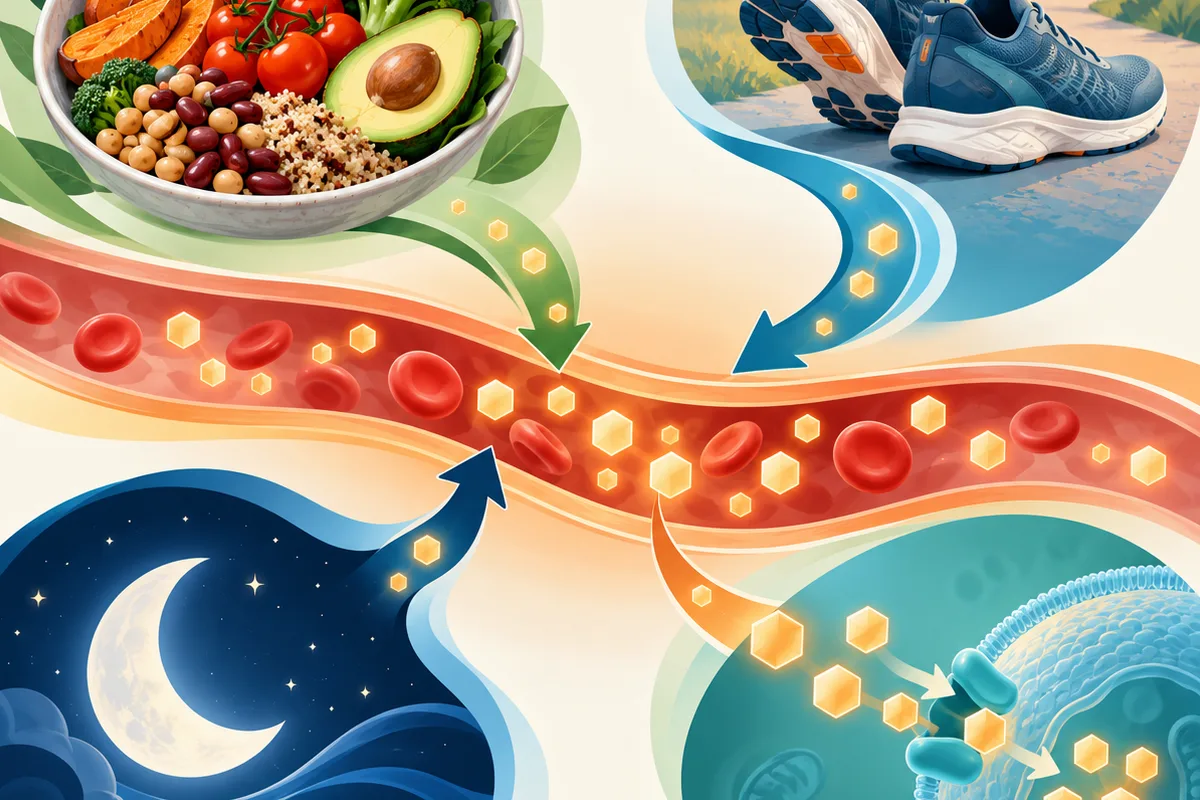
- — You can often improve blood-sugar risk factors with sustainable eating, regular movement, sleep, stress support, and medical follow-up, but no safe guide can promise that metabolic syndrome will be completely reversed for everyone.
- — Metabolic syndrome is a cluster of findings, not a diagnosis made from symptoms alone. Testing and clinical context matter more than a home “blood-sugar rollercoaster” theory.
- — Do not stop diabetes or blood-pressure medicines, start supplements, or begin prolonged fasting without the clinician who knows your history.
- — Widespread pain or fibromyalgia symptoms need their own assessment; this page does not claim that blood-sugar changes cause or cure fibromyalgia.
If a blood test is higher than expected, it is reasonable to ask how to lower blood sugar naturally. The safest answer is not a detox, supplement, or promise that one food will “reset” metabolism. It is a steady plan that combines eating patterns, movement, sleep, stress support, appropriate testing, and treatment of the risk factors that are actually present.
Metabolic syndrome is a cluster of cardiometabolic findings rather than one single disease. Lifestyle interventions can improve several components for many people, but studies are heterogeneous and do not justify a promise of complete reversal for every reader (Yamaoka et al., 2012; PMID: 23151238). This page is education, not a personal diagnosis or a reason to change prescribed medicines without your clinician.
How to lower blood sugar naturally: what is a safe first step?
Begin with changes you can repeat for months: build meals around vegetables, protein, beans or other high-fiber carbohydrates when suitable, and water; reduce frequent sugar-sweetened drinks and heavily processed snacks; and increase physical activity gradually. These steps support health, but the right plan changes if you use insulin or medicines that can cause hypoglycemia, have kidney disease, are pregnant, or have another medical condition.
“Natural” does not mean automatically safe. Cinnamon, berberine, unregulated weight-loss products, prolonged fasting, and abrupt carbohydrate restriction can interact with medicines or delay needed care. A clinician-guided plan is more useful than stacking several untested remedies.
Which metabolic syndrome lifestyle changes are practical?
Lifestyle change works best as a set of small, connected habits rather than a short challenge. The evidence and international recommendations support improving food quality, physical activity, smoking status, sleep, and weight-related risk where appropriate, while acknowledging gaps and variation in the evidence (Pérez-Martínez et al., 2017; PMID: 28521334).
- Meals: choose mostly minimally processed foods, add vegetables and protein, and keep portions realistic for your work, budget, and culture.
- Drinks: water is a practical default; reduce sweetened beverages and frequent liquid calories.
- Movement: start with safe walking, household activity, resistance work, or rehabilitation matched to your ability.
- Sleep: address a short sleep schedule, loud snoring, or possible sleep apnea rather than treating fatigue with sugar or stimulants.
- Smoking and alcohol: ask for support if stopping is difficult, and discuss alcohol with your clinician if medicines, liver disease, pregnancy, or low glucose is relevant.

What is metabolic syndrome?
Metabolic syndrome describes a combination of findings that increase cardiometabolic risk. Depending on the definition used, clinicians consider waist or abdominal adiposity, blood pressure, fasting glucose or other glucose measures, triglycerides, and HDL cholesterol. Different definitions produce different risk estimates, so a diagnosis should be based on a clinician’s interpretation of your results rather than on a social-media checklist (Peterseim et al., 2024; PMID: 39714021).
The phrase does not mean that every person has the same cause, prognosis, or treatment. Some people have a strong family history, sleep problems, medication effects, endocrine disease, limited mobility, food insecurity, or another factor that needs attention. “Reverse metabolic syndrome” should therefore mean improving and monitoring the relevant risk factors—not promising that the underlying risk can never return.
What prediabetes lifestyle changes are sustainable?
Prediabetes often has no obvious symptoms. When testing shows an intermediate glucose pattern, the practical goals are to reduce progression risk, improve fitness and nutrition, and identify the person’s broader cardiovascular risk. A review in JAMA describes lifestyle intervention as central, while emphasizing that treatment should be individualized (Echouffo-Tcheugui et al., 2023; PMID: 37039787).
Do not turn this into a crash diet. A sustainable Filipino meal pattern can include rice or other staple carbohydrates; the clinician or dietitian can help adjust portions, pair carbohydrates with protein and fiber, and choose changes that fit your schedule. If weight loss is appropriate, the target and pace should be individualized rather than copied from an online challenge.
Which tests check blood sugar and metabolic risk?
Common assessments include HbA1c and blood-glucose testing, sometimes with additional testing such as an oral glucose tolerance test when clinically appropriate. Test selection depends on symptoms, medicines, pregnancy, anemia or other conditions, recent illness, and the laboratory method. Reviews of glycemic testing describe important differences between impaired fasting glucose, impaired glucose tolerance, and HbA1c; a home meter cannot replace diagnostic interpretation (Bergman et al., 2020; PMID: 32497744).

Ask what the result means, whether it should be repeated, and which other risk factors need checking. Do not chase a single “perfect” number. Targets used for people with diabetes are individualized and are not automatically targets for someone without a diagnosis.
What does diet and exercise for metabolic syndrome look like?
Use the meal you already eat as the starting point. A simple approach is to add vegetables, include a reasonable protein source, choose water more often, and reduce the frequency of sweetened drinks and highly processed snacks. Then observe energy, hunger, activity, and—if your clinician asked you to monitor it—glucose readings over time. One meal does not define your metabolic health.
Food rules should become more specific when another condition is present. Kidney disease can change protein and mineral advice; diabetes medicines can change the safety of meal skipping; gout can change alcohol and hydration advice; pregnancy requires its own targets; and a history of disordered eating makes rigid restriction risky. Coordinated advice is safer than a universal food blacklist.
Which blood sugar lifestyle changes are safest?
Regular activity can improve fitness and insulin sensitivity, but the safest starting point depends on your symptoms, conditioning, medicines, and complications. Walking after meals, active household tasks, resistance exercise, and a structured rehabilitation plan may all be useful options. Start below the level that causes concerning symptoms and increase gradually.
If you use insulin or a medicine that can lower glucose, ask how to prevent and treat hypoglycemia before changing exercise or meal timing. Shakiness, sweating, confusion, unusual weakness, or faintness should not be dismissed as a normal “detox.” Follow the action plan provided by your care team.
Are fibromyalgia symptoms caused by blood-sugar changes?
This page does not make that claim. Metabolic syndrome and its components may be associated with peripheral neuropathy risk, but that does not prove that fibromyalgia is caused by glucose fluctuations or that lowering blood sugar treats fibromyalgia (Kazamel et al., 2021; PMID: 33098165). Widespread pain, sleep disturbance, fatigue, numbness, and weakness can have different causes and may require different assessments.
If you have repeated episodes of sweating, shaking, palpitations, confusion, or near-fainting, record what happened and seek medical advice. Those symptoms can reflect low glucose, medication effects, anxiety, dehydration, heart rhythm problems, or other conditions. Do not self-diagnose a “rollercoaster” or stop medicines based on symptoms alone.
Can metabolic syndrome be reversed safely?
A safe plan starts by defining the problem: which test is abnormal, how often, what medicines you take, and what symptoms or goals matter to you. It then chooses one or two changes that are practical, sets a follow-up point, and adjusts the plan from real measurements and function—not from promises. Lifestyle medicine can support primary care and specialist care; it should not replace urgent assessment or needed medication.
Seek prompt medical assessment for repeated high readings or symptoms such as unusual thirst, frequent urination, unexplained weight change, fatigue, or blurred vision. Seek urgent care for vomiting, dehydration, confusion, severe weakness, trouble breathing, or rapidly worsening illness. If you are in Vigan or nearby, bring your medicine list, prior laboratory results, home readings with dates, and your usual meal and activity pattern to the consultation.
The goal is not a perfect label or a dramatic promise. It is safer glucose care, lower risk where possible, adequate nutrition, and a plan that can be reviewed as your health changes.
For another evidence-informed lifestyle perspective, read our anti-inflammatory diet and joint-pain guide.
References & Clinical Evidence
- [1] Yamaoka K, Tango T. Effects of lifestyle modification on metabolic syndrome: a systematic review and meta-analysis. BMC Medicine. 2012. PMID: 23151238.
- [2] Pérez-Martínez P, et al. Lifestyle recommendations for the prevention and management of metabolic syndrome. Nutrition Reviews. 2017. PMID: 28521334.
- [3] Peterseim CM, Jabbour K, Kamath Mulki A. Metabolic Syndrome: An Updated Review on Diagnosis and Treatment for Primary Care Clinicians. Journal of Primary Care & Community Health. 2024. PMID: 39714021.
- [4] Echouffo-Tcheugui JB, Perreault L, Ji L, Dagogo-Jack S. Diagnosis and Management of Prediabetes: A Review. JAMA. 2023. PMID: 37039787.
- [5] Kazamel M, Stino AM, Smith AG. Metabolic syndrome and peripheral neuropathy. Muscle & Nerve. 2021. PMID: 33098165.
- [6] Bergman M, et al. Review of methods for detecting glycemic disorders. Diabetes Research and Clinical Practice. 2020. PMID: 32497744.
- [7] American Diabetes Association. Glycemic Goals, Hypoglycemia, and Hyperglycemic Crises: Standards of Care in Diabetes—2026.
* Clinical references are provided to support the medical claims made in this article. TeraCare adheres to evidence-based practices in physical medicine and rehabilitation.

Dr. Ben Rabara
Dr. Ben Rabara is a Board-Certified Physiatrist specializing in Physical Medicine and Rehabilitation. He focuses on non-surgical, precision treatments for musculoskeletal conditions, utilizing advanced diagnostics like MSK Ultrasound.
Medical Disclaimer: The information provided in this article is for educational purposes only and does not substitute for professional medical advice, diagnosis, or treatment. Always consult a qualified physician for your specific health conditions.