
- — A medical-grade PRP injection in the Philippines costs between ₱15,000 and ₱35,000. At Rabara Rehabilitation in Vigan, the fee is ₱25,000 per ultrasound-guided injection.
- — The standard evidence-backed protocol for KL Grade II-III knee osteoarthritis is a series of three injections, bringing the total course to ₱60,000.
- — Price variations across clinics largely reflect the platelet concentration achieved (low-yield vs. high-yield double-spin protocols) and whether ultrasound guidance is used.
- — When compared to the long-term cycle of temporary steroid injections or the ₱350,000+ out-of-pocket cost of total knee replacement, PRP is a highly cost-efficient joint preservation strategy.
In my clinic in Vigan, most patients who ask about PRP have already been to two or three other doctors. They have tried mefenamic acid, at least one corticosteroid injection, and sometimes a gel injection — and the knee still aches when they stand from a chair, stiffens on cold mornings, and grinds with a dull, grinding sensation on stairs. They are not asking whether PRP works. They are asking whether they can afford it — and whether it will actually last.
Those are the right questions. This page answers both, with actual peso figures, the clinical reasoning behind them, and an honest comparison to the alternatives.
What Does a PRP Injection Cost in the Philippines?
A single PRP injection for knee osteoarthritis at a PM&R or orthopedic clinic in the Philippines currently costs between ₱15,000 and ₱35,000, depending on the facility, the preparation protocol, and whether ultrasound guidance is included. At Rabara Rehabilitation in Vigan, Ilocos Sur, the price is ₱25,000 per injection. For most patients with established knee osteoarthritis, a complete treatment course requires three injections spaced 2–4 weeks apart — bringing the total to ₱60,000. The bundled protocol applies a ₱20,000 per-session rate instead of the ₱25,000 single-injection price. A single injection is not the standard of care for moderate joint disease; it is reserved for early-stage or isolated presentations.
| Protocol | Per Injection | Total Cost |
|---|---|---|
| Single injection (early-stage / minor joint pathology) | ₱25,000 | ₱25,000 |
| Standard 3-injection protocol (KL Grade II–III) | ₱20,000 | ₱60,000 |
| Maintenance injection (12–18 months post-protocol) | ₱25,000 | ₱25,000 |
Included in ₱25,000:
- Medical-grade single-use PRP preparation kit
- Blood draw and centrifugation (approximately 30–45 minutes of processing time)
- Real-time ultrasound guidance for intra-articular accuracy
- The intra-articular injection performed by a board-certified physiatrist
- Post-procedure written activity instructions and monitoring
Not included: Initial consultation fee (charged separately on the first visit), follow-up visits, and any diagnostic imaging ordered before the procedure.
Why Does Price Vary So Much Between Clinics?
The range of PRP prices in the Philippines — from ₱7,000 at some general practice clinics to ₱30,000 at tertiary hospital sports medicine centers — reflects a real biological difference in what is being delivered, not simply a difference in branding. The most important variable is the platelet concentration in the final injection.
Here is what that means in practice.
A low-volume preparation draws 15–30cc of blood, applies a single centrifuge spin, and produces a platelet concentration modestly above baseline. A medical-grade protocol draws 60–180cc of blood, applies a double-spin technique, and concentrates platelets to 5–8 times the normal resting level. The clinical relevance of this difference is now established by evidence. In a 2025 meta-analysis of 18 randomized controlled trials involving 1,995 patients, high-platelet PRP — defined as achieving at least 1,000,000 platelets per microliter — produced pain relief and functional improvement that remained clinically significant at 12-month follow-up. Low-platelet PRP did not sustain that benefit beyond 6 months (Bensa et al., 2025; PMID: 39751394).
The most common misconception I hear — and I hear it regularly from patients who have done their research online — is that PRP is PRP. That the brand or kit does not matter. This is biologically incorrect, and it is worth understanding why before anyone books an appointment anywhere.
The mechanism of PRP is concentration-dependent. Growth factors released by platelets — PDGF (platelet-derived growth factor), TGF-β1, and VEGF — are delivered in proportion to platelet dose. A preparation using 20cc of blood and a single spin may fall well below the therapeutic platelet threshold. That is not the same biological procedure as a 90cc draw with a verified double-spin yield. The price difference between a ₱7,000 injection and a ₱25,000 injection largely reflects this: the kit cost, the blood volume drawn, and the processing protocol. Paying less does not give you a lower dose of the same thing — it may give you a clinically insufficient dose of a different preparation entirely. Filipino patients researching this in Reddit and YouTube community forums and community Facebook groups frequently compare prices without knowing that these prices reflect fundamentally different preparations.
Beyond kit quality, two other variables legitimately affect pricing: ultrasound guidance and physician training. Blind intra-articular knee injections — placed without imaging confirmation — have a published inaccuracy rate of 15–30%, meaning the platelet concentrate may land in periarticular soft tissue rather than the joint space itself. Ultrasound guidance eliminates that uncertainty. It also adds procedure time, equipment cost, and the technical skill of a trained operator, all of which appropriately affect the fee.
One Injection or Three? What the Evidence Actually Supports
For most patients with knee osteoarthritis, one PRP injection is not sufficient. The protocol supported by the highest-quality evidence — and the one I follow in my clinic — is three injections spaced 2–4 weeks apart for KL Grade II–III disease.
The second thing I address in nearly every consultation: the idea of trying one injection first to see if it works before committing to three.
I understand this reasoning. The problem is that a single injection has not been shown to produce the same magnitude of response as a properly sequenced series — and evaluating PRP based on an underdosed protocol produces a misleading result. PRP does not instantly repair cartilage. It initiates a growth-factor cascade that unfolds over weeks. Each injection sustains and amplifies that biological signal during a time when the joint tissue is actively remodeling. Judging PRP by the response to one injection — at a dose that was never designed to be clinically complete — and concluding it did not work is a methodological error that costs the patient both time and money. Evidence comparing single versus repeated injection protocols consistently favors the latter for knee osteoarthritis outcomes. The three-injection course is not a commercial upsell. It is what the evidence actually prescribes.
Standard protocol timeline:
- Injection 1 (Day 0): Initiates the inflammatory-anabolic cascade; platelet degranulation releases growth factors into the synovial environment
- Injection 2 (Week 2–4): Sustains growth factor availability as early tissue remodeling begins
- Injection 3 (Week 4–8): Consolidates the biological effect as the joint responds to the sustained signal
- Expected onset of sustained relief: 6–12 weeks after the third injection
- Expected duration: 12–24 months in appropriately selected KL Grade II–III patients
Is PRP Worth the Cost Compared to Steroid Injections?
PRP costs more per injection than a corticosteroid. That part is accurate. But the financially relevant comparison is not per-injection cost — it is per-year-of-functional-benefit. Framed that way, the arithmetic changes considerably.
A corticosteroid injection for knee pain costs ₱2,000–₱5,000 at a private clinic and provides symptom relief for 6–12 weeks before the effect fades. Most patients require 3–4 injections per year to maintain control — totaling ₱8,000–₱20,000 annually. Across two years: ₱16,000–₱40,000, and each subsequent injection is less effective than the one before it.
A complete 3-injection PRP protocol at ₱60,000 provides 12–24 months of sustained improvement in appropriately selected patients. The two-year cost gap narrows — before accounting for what steroids are doing to the joint tissue during that time.
That second point is the one most patients have never been told. A 2024 network meta-analysis analyzing 9,338 knees across 48 randomized trials ranked intra-articular injection therapies by cumulative outcome at a minimum of six months. PRP ranked first with a SUCRA score of 91.54 out of 100. Corticosteroids scored 15.18 — nearly identical to placebo at 13.70 (Jawanda et al., 2024; PMID: 38331363). Steroids, by 6 months, perform at the level of a saline injection. Many patients in the Philippines accept repeat steroid injections every 3 months for years — and I see them in clinic with knees that feel increasingly stiff and swollen each cycle, never having been told that this trajectory is predictable and well-documented.
There is a tissue-level consequence to that pattern. Repeated corticosteroid injections have documented chondrotoxic effects — they may accelerate the cartilage degradation the patient is trying to prevent. The joint feels temporarily less tender after each shot, then aches again sooner than the last time. The AAOS limits corticosteroids to a maximum of 3–4 per joint per year for this reason. PRP does not carry this risk. In patients with KL Grade II–III OA receiving a full PRP course, imaging studies using T2 cartilage mapping have shown no worsening — and in some cases modest stabilization — of cartilage quality at 12 months.
If the goal is two years of functional stability while protecting the cartilage that remains, ₱60,000 for a complete PRP protocol is a defensible decision. If the goal is monthly symptom suppression without regard to long-term joint health, steroids cost less per visit. The clinical distinction matters.
Schedule a PM&R assessment in Vigan to determine whether your knee OA profile is appropriate for PRP — before any injection is planned.
Book an EvaluationPRP vs. Knee Replacement Surgery: The Real Financial Comparison
Total knee replacement (TKR) is what most patients with moderate-to-severe osteoarthritis are eventually told about — and what most of them are quietly terrified of, for reasons that are financially as well as medically legitimate.
PhilHealth's benefit schedule sets the implant contribution for TKR at ₱225,900. That is PhilHealth's portion. The patient's real out-of-pocket cost includes:
- Hospital room (3–5 days): ₱20,000–₱60,000
- Anesthesia: ₱25,000–₱50,000
- Surgeon's professional fee: ₱40,000–₱80,000
- Post-operative physiotherapy (8–12 weeks): ₱30,000–₱60,000
- Assistive devices, medications, and supplies: ₱10,000–₱20,000
- Lost income during recovery (4–8 weeks off work): variable
Total real patient cost: ₱350,000 to ₱600,000 — plus 3–6 months of recovery, a 30-day restricted weight-bearing period, and the risks inherent in general anesthesia and major joint surgery at any age.
A complete PRP protocol: ₱60,000. No hospital admission. No general anesthesia. 24–48 hours of activity modification, then a gradual return to function under a supervised rehabilitation plan.
The ESSKA-ICRS consensus — the joint position statement of two of the largest orthopedic societies in Europe — identifies PRP as appropriate for patients aged 80 years or younger with KL Grade 0–III knee OA who have failed conservative or first-line injective treatment (Kon et al., 2024; PMID: 38961773). For KL Grade IV (severe bone-on-bone disease), PRP is rated inappropriate — and joint replacement becomes the more relevant discussion.
This is precisely where a physiatrist's role is distinct. I am not an orthopedic surgeon. I perform no joint replacements. I have no financial interest in recommending surgery, and I have no interest in recommending PRP to a patient for whom it will not produce meaningful benefit. My role is to assess the degree of structural involvement, the patient's functional limitations, their comorbidities, and their realistic expectations — then make an honest recommendation about whether a biologic delay strategy makes clinical and economic sense.
A cost-utility analysis published in Arthroscopy compared PRP as a surgical delay strategy against immediate TKR in a 55-year-old patient with Grade II–III knee OA. In an uncomplicated patient, the cost difference between the two strategies was marginal. But the analysis also identified the subgroup where PRP becomes clearly cost-superior: patients with significant comorbidities — cardiovascular disease, morbid obesity, or uncontrolled diabetes — for whom surgical risk is elevated and complications carry substantial additional cost (Hohmann, 2020; PMID: 33276894). In the Philippine population, this subgroup is common. When I assess a patient with a HbA1c of 9.5% and a resting blood pressure of 160/100 who has been told they need knee replacement, a 12–18-month PRP strategy — combined with medical optimization of blood sugar and blood pressure — is often the more defensible path. Not because PRP cures osteoarthritis. Because it may buy enough time to make the eventual surgery safer, or to avoid it altogether if the joint responds adequately. That calculation does not happen in a five-minute orthopedic referral. It is the kind of assessment I conduct during a PM&R consultation.
If you have been told you need knee replacement and want an independent assessment from a physiatrist, that evaluation is where the decision should start — not the operating room.
Book an EvaluationIs PRP Covered by PhilHealth or HMO in the Philippines?
PRP for knee osteoarthritis is not currently included in PhilHealth's standard benefit package. Patients pay for it entirely out of pocket. That is the accurate, honest answer for 2026.
I want to be direct about a common assumption patients bring to this topic.
Insurance coverage and clinical evidence are not the same clock. PhilHealth and private HMOs make coverage decisions based on local health technology assessment processes that lag behind published research by years — sometimes a decade. The American Academy of Orthopaedic Surgeons' 2024 Technology Overview reviewed 54 clinical trials — 36 of which were high-quality — and formally acknowledged PRP's clinical utility for knee osteoarthritis (Dubin et al., 2024; PMID: 38295392). PRP is recognized by the largest orthopedic society in North America. It is used in major tertiary centers across Europe, Asia, and the Philippines. The absence of a PhilHealth benefit code reflects administrative process, not scientific uncertainty.
On partial HMO coverage: a small number of Philippine private HMO plans may cover a portion of PRP under musculoskeletal or specialist consultation benefits if filed under an eligible procedure code with documentation of prior treatment failure. This requires pre-authorization, a letter of medical necessity from a specialist, and proof that conservative treatment (physiotherapy, NSAIDs, or corticosteroid) was attempted and insufficient. If your plan carries orthopedic or musculoskeletal benefits, it is worth requesting a formal pre-authorization before treating the cost as entirely fixed. I can provide the supporting clinical documentation for this process during a consultation.
A published qualitative study from the University of Santo Tomas Hospital, Manila — the only published Filipino patient study on PRP for knee OA — noted that some patients reported partial coverage through PhilHealth, though the specific mechanism was not formally documented (Pineda-Cortel et al., 2025; PMC12138209). My recommendation: contact your insurer, ask in writing, and submit your specialist documentation before assuming the answer is no.
Who Is a Good Candidate — and Who Is Not
At ₱25,000 per injection, I am direct about this: PRP is not appropriate for everyone with knee pain. Recommending it to a patient who will not benefit is a disservice — financially and clinically.
Appropriate candidates, per ESSKA-ICRS consensus (Kon et al., 2024; PMID: 38961773):
- Age 80 years or younger
- Kellgren-Lawrence Grade 0–III knee OA confirmed on X-ray
- Prior failure of conservative treatment: at least one adequate course of physiotherapy, weight management program, or NSAID therapy
- Or prior failure of a first-line injective treatment (corticosteroid or hyaluronic acid)
- No active infection, no active bleeding disorder, no therapeutic anticoagulation without a supervised hold
Not appropriate:
- KL Grade IV (severe bone-on-bone loss) — joint replacement is the more appropriate discussion at this stage
- Active infection at the injection site or systemic infection
- Active gout flare in the target joint — uric acid and inflammation must be managed first
- Platelet dysfunction disorders or active malignancy near the target joint
- Poorly controlled diabetes (HbA1c above 10%) — platelet function is impaired and healing is compromised; glycemic optimization is the priority
I regularly see patients who have been told their X-ray shows Grade 4 and that PRP will not work, so they need surgery. Some of them walk into my clinic with a heavy, stiff-feeling gait that tells me far more than the image. I look at the X-ray, then I look at the patient.
Radiographic grading describes structural anatomy. It does not perfectly predict functional outcome or treatment response. I have assessed patients with Grade III findings who are walking without significant limitation, and patients with Grade II findings whose lives are substantially restricted. Structural severity and functional severity are related — but they are not the same variable. KL grading on an X-ray is one input in a clinical assessment. It is not a sufficient basis, on its own, to rule out a biologic intervention, nor to approve one. A proper PM&R evaluation — gait analysis, manual joint assessment, range-of-motion measurement, and review of functional goals — determines PRP candidacy with far more precision than a single radiograph.
Where to Get PRP in the Philippines — Including Ilocos Sur
PRP centers offering medical-grade orthobiologic injection are concentrated in Metro Manila (Makati, BGC, Quezon City, Ortigas) and Cebu. Patients from Ilocos Norte, Ilocos Sur, Mountain Province, and La Union have had no local access — requiring them to travel 6–8 hours south, adding ₱3,000–₱6,000 in round-trip transport and one to two days of accommodation and lost income per visit.
Rabara Rehabilitation in Vigan, Ilocos Sur offers ultrasound-guided intra-articular PRP using a medical-grade double-spin protocol, performed by a board-certified physiatrist. For a patient completing a 3-injection course from Ilocos, local access represents a practical saving of ₱9,000–₱18,000 in travel alone across three visits — before counting the days of work not lost.
Before booking PRP at any clinic, ask these five questions:
- What centrifuge system do you use, and what is the documented platelet yield for your protocol?
- Do you use real-time ultrasound guidance during the intra-articular injection?
- What blood volume do you draw for preparation?
- Does the fee include post-injection activity instructions and a follow-up assessment?
- What is your protocol if I do not respond adequately after the first injection?
If those questions cannot be answered specifically, that is clinically relevant information.
What Happens After the Injection — and Why Rehabilitation Determines the Outcome
PRP works by initiating a controlled inflammatory cascade. For 48–96 hours after injection, the knee will feel sore — sometimes more tender and slightly swollen than before the procedure. That dull, heavy ache is not a sign that something went wrong. It is the biological signal the treatment is designed to trigger, and it is what I tell every patient to expect before they leave the clinic.
The most common mistake following PRP is taking an NSAID for the soreness. Ibuprofen, mefenamic acid, and celecoxib suppress the prostaglandin-mediated inflammation that PRP relies on to recruit growth factors into the joint environment. Taking any NSAID within 2–3 weeks of injection blunts the therapeutic mechanism. Use paracetamol (acetaminophen) if pain management is needed during this period. NSAIDs should be avoided.
The second most common mistake is passive rest. PRP initiates a growth-factor environment. Mechanical loading is what converts that environment into functional tissue remodeling. A phased rehabilitation protocol substantially improves outcomes versus rest alone:
Weeks 1–2 (Isometric phase): Straight-leg raises, VMO squeezes — 4 sets × 30-second isometric holds, 3 times daily. No loaded movement, no impact. Weeks 3–4 (Low-load phase): Wall slides to 60° knee flexion, terminal knee extensions with light resistance band, straight-leg raises with 0.5–1kg ankle weight. Pain-free range only. Weeks 5–12 (Progressive loading): Stationary cycling (zero impact), pool walking, partial squat loading from 60° to 90° as pain permits, progressive quadriceps strengthening. Restrictions throughout: No running, no court sports, no heavy loading for 4–6 weeks post-injection.
Supervised physiotherapy — not just a home program — produces consistently better outcomes because load progression must be guided by clinical judgment, not by how much pain the patient is willing to tolerate on a given day. This is something I supervise directly as part of a post-injection rehabilitation plan for patients seen through my clinic in Vigan.
If you are considering PRP, the injection is the start of the process — not the end of it. Patients who treat it as a one-time fix and skip rehabilitation consistently underperform those who complete the full protocol.
References & Clinical Evidence
- [1] Bensa A, Previtali D, Sangiorgio A, Boffa A, Salerno M, Filardo G. PRP Injections for the Treatment of Knee Osteoarthritis: The Improvement Is Clinically Significant and Influenced by Platelet Concentration: A Meta-analysis of Randomized Controlled Trials. *Am J Sports Med*. 2025 Mar;53(3):745–754. doi: 10.1177/03635465241246524. PMID: 39751394.
- [2] Dubin J, Leucht P, Murray M, Pezold R; AAOS PRP for Knee OA Technology Overview Workgroup. American Academy of Orthopaedic Surgeons Technology Overview Summary: Platelet-Rich Plasma (PRP) for Knee Osteoarthritis. *J Am Acad Orthop Surg*. 2024 Apr 1;32(7):296–301. doi: 10.5435/JAAOS-D-23-00957. PMID: 38295392.
- [3] Xu H, Shi W, Liu H, et al. Comparison of hyaluronic acid and platelet-rich plasma in knee osteoarthritis: a systematic review. *BMC Musculoskelet Disord*. 2025 Mar 11;26(1):236. doi: 10.1186/s12891-025-08474-6. PMID: 40069655.
- [4] Belk JW, Lim JJ, Keeter C, et al. Patients With Knee Osteoarthritis Who Receive Platelet-Rich Plasma or Bone Marrow Aspirate Concentrate Injections Have Better Outcomes Than Patients Who Receive Hyaluronic Acid: Systematic Review and Meta-analysis. *Arthroscopy*. 2023 Jul;39(7):1714–1734. doi: 10.1016/j.arthro.2023.03.001. PMID: 36913992.
- [5] Kon E, de Girolamo L, Laver L, et al.; ESSKA-ICRS Consensus Panel. Platelet-rich plasma injections for the management of knee osteoarthritis: The ESSKA-ICRS consensus. *Knee Surg Sports Traumatol Arthrosc*. 2024 Nov;32(11):2938–2949. doi: 10.1002/ksa.12320. PMID: 38961773.
- [6] Jawanda H, Khan ZA, Warrier AA, et al. PRP, BMAC, and HA Injections Outperform Corticosteroids in Pain and Function Scores at a Minimum of 6 Months: A Systematic Review and Network Meta-analysis. *Arthroscopy*. 2024 May;40(5):1623–1636. doi: 10.1016/j.arthro.2024.01.037. PMID: 38331363.
- [7] Hohmann E. Editorial Commentary: Platelet-Rich Plasma and Hyaluronic Acid Injection for Knee Osteoarthritis Are Both Cost Effective. *Arthroscopy*. 2020 Dec;36(12):3079–3080. doi: 10.1016/j.arthro.2020.09.039. PMID: 33276894.
- [8] Raeissadat SA, Rahimi M, Rayegani SM, Moradi N. Cost-utility analysis and net monetary benefit of Platelet Rich Plasma (PRP), intra-articular injections in compared to PRGF, HA and ozone in knee osteoarthritis in Iran. *BMC Musculoskelet Disord*. 2023 Jan 11;24(1):22. doi: 10.1186/s12891-022-06114-x. PMID: 36631861.
- [9] Mojica ES, Lin CC, Kirschner N, et al. Platelet-rich plasma outcomes do not correlate with patient satisfaction or perceived cost-effectiveness. *Phys Sportsmed*. 2023 Jun;51(3):223–227. doi: 10.1080/00913847.2021.2025163. PMID: 34985383.
- [10] Pineda-Cortel MRB, et al. Exploring Patients' Motivations in Using Platelet-Rich Plasma as Their Primary Care Therapy for Managing Knee Osteoarthritis. University of Santo Tomas Hospital, Manila, Philippines. 2025. PMC12138209.
* Clinical references are provided to support the medical claims made in this article. TeraCare adheres to evidence-based practices in physical medicine and rehabilitation.
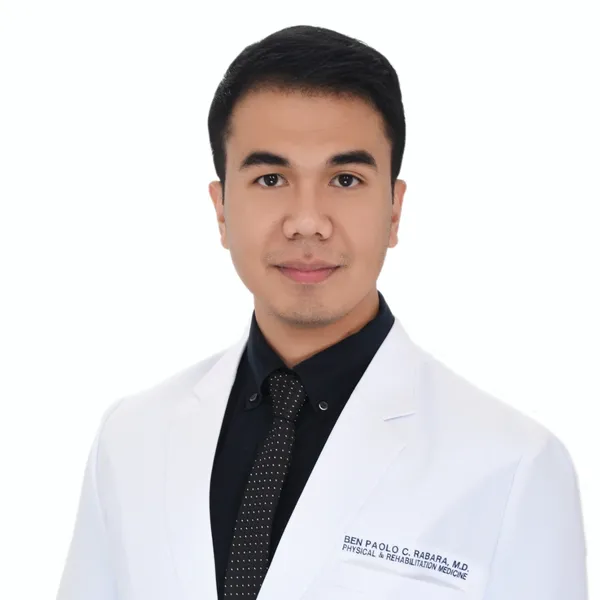
Dr. Ben Rabara
Dr. Ben Rabara is a Board-Certified Physiatrist specializing in Physical Medicine and Rehabilitation. He focuses on non-surgical, precision treatments for musculoskeletal conditions, utilizing advanced diagnostics like MSK Ultrasound.
Medical Disclaimer: The information provided in this article is for educational purposes only and does not substitute for professional medical advice, diagnosis, or treatment. Always consult a qualified physician for your specific health conditions.