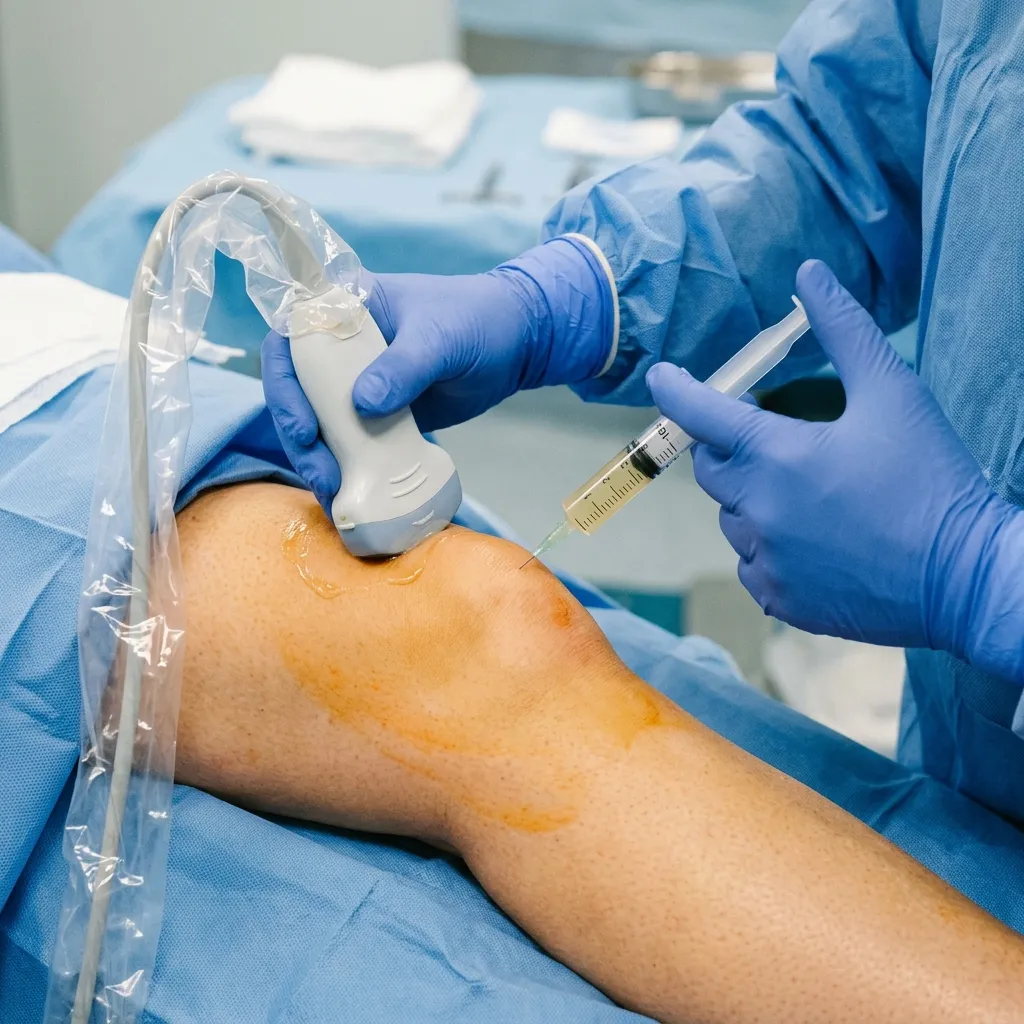
- — Platelet-Rich Plasma (PRP) uses concentrated growth factors from your own blood to stimulate healing in deep tendon tears and degenerated joints.
- — Dextrose Prolotherapy uses hypertonic sugar water to initiate a controlled local inflammatory response, strengthening lax ligaments and stabilizing loose joints.
- — Every injection in our Vigan clinic is performed under real-time point-of-care ultrasound guidance to ensure 100% precision and avoid surrounding tissue injury.
- — Injections only open a biological healing window; structured tissue mechanical loading (mechanotransduction) is mandatory to organize and strengthen new collagen.
Chronic joint pain and tendon wear significantly restrict the lives of patients in Vigan City and across the Ilocos region. Simple activities like standing up from a low wooden chair, walking down to the local market, or commuting to Vigan from outlying farming municipalities over uneven provincial roads become grueling tasks. When knees feel unstable, or shoulder tendons are frayed, many patients turn to temporary solutions. In my clinical practice, I see many individuals who have relied on oral pain relievers for years, only to suffer from stomach irritation while their joint cartilage continues to degrade.
Musculoskeletal pain is rarely a single sensation. In clinic, patients describe their discomfort using distinct sensory words: some feel a sharp and catching pain during sudden movements, while others experience a constant, dull ache that makes their limbs feel heavy. In cases of nerve compression, a tingling or burning sensation may travel down the arm or leg, accompanied by a radiating discomfort that flares at night. When joint wear is severe, a physical grinding sensation occurs, leaving the joint feeling stiff and weak in the morning.
When reading patient discussions on online communities like Reddit and patientslikeme, or reviewing patient comments on YouTube therapy videos, a common theme is the fear of long-term disability and the search for an honest treatment pathway. My approach at TeraCare Vigan focuses on long-term structural repair rather than temporary mask-and-forget strategies. Platelet-Rich Plasma (PRP) therapy and Dextrose Prolotherapy are advanced non-surgical interventions designed to stimulate the body's natural healing cascade. However, these treatments are not magic pills. Their success depends entirely on structural diagnosis under point-of-care musculoskeletal ultrasound (POCUS), a highly sterile laboratory preparation process, and a staged mechanical loading rehabilitation program.
What is Platelet-Rich Plasma (PRP) Therapy?
Platelet-rich plasma (PRP) therapy is an autologous medical procedure where a patient's own blood is centrifuged to concentrate platelets, which are then injected into damaged musculoskeletal tissue to release growth factors that stimulate natural healing and cell recruitment. The treatment relies on the concentration of platelets, which contain small storage compartments called alpha-granules. When these platelets are injected into damaged ligaments, joints, or tendons, they degranulate, releasing proteins like platelet-derived growth factor (PDGF), transforming growth factor-beta (TGF-β), and vascular endothelial growth factor (VEGF). These cytokines signal the body to recruit stem cells, clear away cellular debris, and build new blood vessels to nourish the recovering tissue.
Filipino patients suffering from chronic wear often describe their condition as rayuma sa tuhod or pamamanhid sa binti. In many local clinics, the standard treatment for a grinding joint is a quick steroid injection. While steroids act as a powerful temporary fire extinguisher to put out acute inflammation, they do not repair structural tissue. In fact, repetitive steroid injections can accelerate cartilage damage and weaken tendons. PRP offers a biological alternative, targeting the root cause of joint degeneration by altering the chemical environment inside the joint capsule (Masiello et al., 2023; PMID: 36346880).
Physician's Contrarian Insight 1:
"A common misconception is that a PRP injection will immediately grow back thick, pristine cartilage inside a severely arthritic, 'bone-on-bone' knee joint. Peer-reviewed literature indicates that PRP does not act as a structural builder that replaces worn cartilage layers overnight. Instead, the primary therapeutic benefit of PRP in moderate osteoarthritis is metabolic and chemical: it downregulates pro-inflammatory cytokines like interleukin-1 beta (IL-1β) and tumor necrosis factor-alpha (TNF-α), creating a healthier joint environment, protecting existing cartilage cells from death, and providing significant, long-term pain relief."
To deliver these benefits safely, the preparation process must be meticulous. At TeraCare Vigan, we do not use low-cost, commercial "closed kits" that are spun in standard centrifuges without specialized clinical oversight. Instead, we utilize a highly sterile open lab centrifuge preparation protocol, meticulously executed by a dedicated, PRP-trained medical technologist. This allows us to customize the platelet concentration and remove unwanted red blood cells and pro-inflammatory granulocytes, ensuring maximum safety, sterility, and clinical efficacy for each joint or tendon targeted.
The Difference Between PRP and Dextrose Prolotherapy
The primary difference between PRP and dextrose prolotherapy lies in their active ingredients and physiological pathways: PRP delivers autologous growth factors directly via platelets, while dextrose prolotherapy uses hypertonic sugar water (12.5 % to 25 % dextrose) as a localized irritant to trigger a controlled inflammatory response that recruits the body's natural healing elements. While PRP brings its own repair kit in the form of concentrated growth factors, Prolotherapy relies on a chemical stimulus to trick the body into restarting a stalled healing process.
The Cellular Path of Prolotherapy
- Hypertonic Injection: A solution of D-glucose (dextrose) is injected into lax ligaments or degenerated tendon attachments.
- Osmotic Gradient: The high sugar concentration creates an osmotic pressure gradient, drawing water out of the surrounding cells and causing local, harmless cell dehydration.
- Inflammatory Cascade: This micro-trauma triggers a localized, controlled inflammatory cascade.
- Cellular Recruitment: The immune system responds by sending healing cells, including fibroblasts and chondrocytes, to lay down new collagen fibers.
In my clinic, I use dextrose prolotherapy to address joint instability and ligament laxity, which patients often describe as a loose or clicking joint (tumutunog na litid). Prolotherapy is highly effective at strengthening the outer stabilizing bands of a joint, whereas PRP is typically reserved for deeper tendon degeneration, such as a rotator cuff tear or severe patellar tendinopathy.
Physician's Contrarian Insight 2:
"Many believe that Prolotherapy and PRP are identical treatments that can be swapped interchangeably. Clinically, they target different tissue states. Prolotherapy works exceptionally well for structural ligament laxity and joint capsule instability, where building a dense, tight scar-tissue bridge is the goal. PRP, however, is far superior for chronic intrasubstance tendon degeneration (tendinosis) where the tissue is starved of blood flow. Using Prolotherapy inside a severely degenerated tendon without vascularity may fail because the tissue lacks the baseline blood supply needed to respond to the inflammatory stimulus, making the direct growth-factor delivery of PRP necessary."
Why Ultrasound-Guided Injections Are Mandatory for Joint Healing
Ultrasound-guided injections are mandatory because real-time musculoskeletal ultrasound (POCUS) allows a physician to visualize the needle tip and target structures directly, achieving accuracy rates of over 95 % to 100 % compared to landmark-guided (blind) injections which miss the target space 30 % to 40 % of the time. In many general clinics, injections are performed using "tactile landmark guidance"—meaning the doctor feels the bone and inserts the needle blindly. While this may be acceptable for a large, fluid-filled knee recess, it is highly risky and inaccurate for complex joints, deep hip structures, and narrow spaces like the carpal tunnel or subacromial space.
If the needle tip is off by even a few millimeters, the clinical outcome changes:
- Injecting PRP into the surrounding fat pad rather than a torn tendon base prevents the platelets from degranulating inside the target lesion, wasting the growth factors.
- A blind injection into the shoulder can accidentally deposit the solution into the subacromial bursa instead of the supraspinatus tendon, failing to treat the actual tear.
- Injections near peripheral nerves (such as during carpal tunnel hydrodissection) require microscopic precision to avoid direct nerve trauma.
By performing every injection under real-time diagnostic MSK ultrasound imaging, I can visually track the needle as it enters the joint space, verify that the tip is correctly positioned, and watch the injectate distribute precisely within the target tissue.
Physician's Contrarian Insight 3:
"There is a common assumption that 'any injection placed in the general area of a sore joint will wash over the tissue and work.' Biologically, this is incorrect. In orthobiologics, target-specific localization dictates the healing response. Platelets must activate and degranulate directly in contact with the exposed collagen fibers of the torn tissue. If the PRP is deposited even 5 mm away into adjacent vascular muscle tissue, the local blood flow will wash away the growth factors before they can bind to the damaged tendon cells, yielding little to no functional improvement."
The Injection-Rehab Closed Loop: Why Movement Determines the Cure
The injection-rehab closed loop is the clinical integration of an ultrasound-guided injection with a staged, progressive mechanical loading program (such as the Rathleff or Alfredson protocols) to force newly deposited collagen fibers to align along lines of functional stress, translating the biological healing window into structural strength. Patients often believe that the injection itself does 100 % of the work, and that they must completely rest the joint afterward. In my clinic, I emphasize that the injection only opens a temporary biological "healing window" of cell recruitment; structural recovery requires guided movement.
The cellular mechanism relies on mechanotransduction—the process by which physical forces applied to cells are converted into chemical signals that stimulate collagen synthesis. If a patient remains completely sedentary after an injection, the new collagen fibers will lay down in a random, disorganized web. This leads to a weak, stiff joint that is highly prone to re-injury. To prevent this, we pair every injection with a structured rehabilitation program that guides the tissue through four distinct phases:
- Phase I: Protection and Analgesic Holds (Weeks 0-2): We restrict aggressive range of motion but introduce pain-free isometric holds. For example, for patellar or Achilles tendons, we use static single-leg holds to maintain muscle activation and trigger cortical inhibition to reduce pain.
- Phase II: Progressive Isotonic Loading (Weeks 2-6): We transition to slow, controlled concentric and eccentric movements (3 s up, 3 s down) to stress the tendon fibers without placing excessive impact on the joint.
- Phase III: High-Load Remodeling (Weeks 6-12): We implement progressive resistance training. For plantar fasciitis, we use the Rathleff protocol: single-leg heel raises with a rolled towel under the toes, performed every 48 hours, slowly adding load via a weighted backpack (Rathleff et al., 2014; PMID: 25145882).
- Phase IV: Return to Function (Weeks 12+): We focus on sport-specific or work-specific movements, restoring dynamic stability and power.
Physician's Contrarian Insight 4:
"The standard discharge advice of 'absolute bed rest and immobilization for two weeks after a joint injection' is obsolete and counterproductive. While a brief 48 hours quiet period is necessary to allow the initial inflammatory flare to settle and prevent premature platelet washout, prolonged rest causes rapid muscle atrophy, joint capsule tightening, and disorganized tendon healing. Cells require mechanical stress to know how to organize new tissue. Restricting movement for weeks results in a weaker joint than before the treatment."
Realities of Local Commuting and Bumpy Roads in Ilocos Sur
The geographic and infrastructure realities of Northern Luzon present unique challenges for post-injection recovery. For a patient traveling to Vigan City from remote municipalities in Ilocos Sur or Abra, the commute involves riding tricycles, jeepneys, or public buses over bumpy roads. This repetitive, high-frequency mechanical vibration acts as a direct irritant to a recently injected joint, potentially worsening the post-injection flare and causing early displacement of the therapeutic solution.
To bridge the gap between ideal clinical evidence and the practical realities of provincial life, I implement an adapted post-care protocol:
1 Immediate In-Clinic Rest (30-Minute Window)
After the ultrasound-guided injection, the patient rests in a reclined position for 30 minutes in our Vigan clinic to allow initial platelet stabilization and monitor for any early reactions.
2 Stabilization & Commute Protection
Before leaving our Vigan clinic, we apply a compressive sleeve or orthosis to stabilize the joint against high-frequency vibrations from tricycle or jeepney rides home.
3 The 48-Hour Offloading Phase
Absolute rest is avoided; instead, we prescribe gentle active range-of-motion exercises in bed. NSAIDs (mefenamic acid, ibuprofen) are strictly prohibited; paracetamol is used for pain.
4 Graduated Loading & Rehabilitation
At week 2, on-site physical therapy begins in Vigan, utilizing progress-based loading protocols (Rathleff or Alfredson eccentric exercises) to structurally align new collagen fibers.
In the clinical literature, guidelines suggest immediate resumption of low-impact walking (Dickinson & Kuhn, 2023; PMID: 37003656). However, in my practice, I require patients who must travel on rough roads to wear a stabilizing sleeve or soft orthosis for the commute home and the first 48 hours. I instruct patients to avoid active weight-bearing commutes during the first two days post-injection. Instead of using anti-inflammatory drugs like mefenamic acid or ibuprofen—which block the cyclooxygenase (COX) pathways necessary for platelet-mediated tissue repair—I guide patients to use acetaminophen for pain control and rely on gentle, non-weight-bearing range-of-motion movements in bed to keep the joint fluid moving without structural strain. We monitor the joint closely for localized heat or neurological changes, scheduling the first progressive physical therapy session in our Vigan facility once the initial 48 hours inflammatory window has safely closed.
Costs, Packages, and What to Expect at TeraCare Vigan
At TeraCare Vigan, a dextrose prolotherapy session costs 5000 pesos and a PRP injection session costs 25000 pesos—both including real-time ultrasound guidance—with a typical recommendation of one to three sessions depending on the severity of the joint or tendon pathology.
When planning these treatments, we evaluate the clinical severity of the joint or tendon condition. Mild or acute injuries often resolve with a single session combined with a structured loading plan. Moderate-to-severe degeneration (such as Grade II knee osteoarthritis) typically requires a series of three injections spaced 2 to 4 weeks apart. Maintenance booster sessions are recommended every 12 to 18 months to sustain joint function.
| Treatment Option | Price Per Session | Recommended Series |
|---|---|---|
| Dextrose Prolotherapy | 5000 pesos | 1 to 3 sessions |
| Platelet-Rich Plasma (PRP) | 25000 pesos | 1 to 3 sessions |
It is important to note that orthobiologic procedures are classified as premium, non-surgical services in the Philippines. As such, they are not covered by PhilHealth or standard HMO plans, requiring out-of-pocket payment. However, when compared to the long-term financial burden of chronic pain management—including years of prescription NSAIDs, physical therapy clinic packages, and the 350000 pesos to 600000 pesos cost of a Total Knee Replacement (TKR) surgery in the Philippines—these guided regenerative procedures represent a highly cost-effective, joint-preserving investment that avoids the risks of major surgery.
Schedule an ultrasound-guided joint assessment at TeraCare Vigan to explore your regenerative treatment pathway.
Book ConsultationPRP vs. Dextrose Prolotherapy
Comparing the active mechanisms and targets of regenerative therapies.
Vigan Regenerative Treatment Realities
Understanding the clinical expectations of biological therapies.
Permanent Resident Physiatrist
Dr. Ben Rabara is a permanent resident PM&R specialist in Vigan City, ensuring you have continuous follow-up care rather than visiting a fly-in physician.
Customized Open Lab Prep
We use a sterile open lab preparation process by a PRP-trained technologist, allowing precise leukocyte control tailored to your tissue state.
No Magic Quick Fixes
Biological repair takes 4 to 12 weeks. Injections only trigger the cellular window; dedicated rehab loading exercises are required to complete the repair.
References & Clinical Evidence
- [1] Masiello F, et al. Ultrasound-guided injection of platelet-rich plasma for tendinopathies: a systematic review and meta-analysis. *Blood Transfus*. 2023;21(4):300-311. doi:10.2450/2022.0087-22. PMID: 36346880.
- [2] Tseng WC, et al. Efficacy and safety of dextrose prolotherapy for chronic musculoskeletal pain: an updated systematic review and meta-analysis. *J Orthop Surg Res*. 2023;18:354. PMID: 38264606.
- [3] Dickinson RN, Kuhn JE. Nonoperative Treatment of Rotator Cuff Tears. *Phys Med Rehabil Clin N Am*. 2023;34(2):333-345. doi:10.1016/j.pmr.2022.12.002. PMID: 37003656.
- [4] Rathleff MS, et al. High-load strength training improves outcome in patients with plantar fasciitis: a randomized controlled trial with 12-month follow-up. *Scand J Med Sci Sports*. 2015;25(3):e292-e300. doi:10.1111/sms.12313. PMID: 25145882.
- [5] Alfredson H, et al. Heavy-load eccentric calf muscle training for the treatment of chronic Achilles tendinosis. *Am J Sports Med*. 1998;26(3):360-366. doi:10.1177/03635465980260030301. PMID: 9706675.
* Clinical references are provided to support the medical claims made in this article. TeraCare adheres to evidence-based practices in physical medicine and rehabilitation.
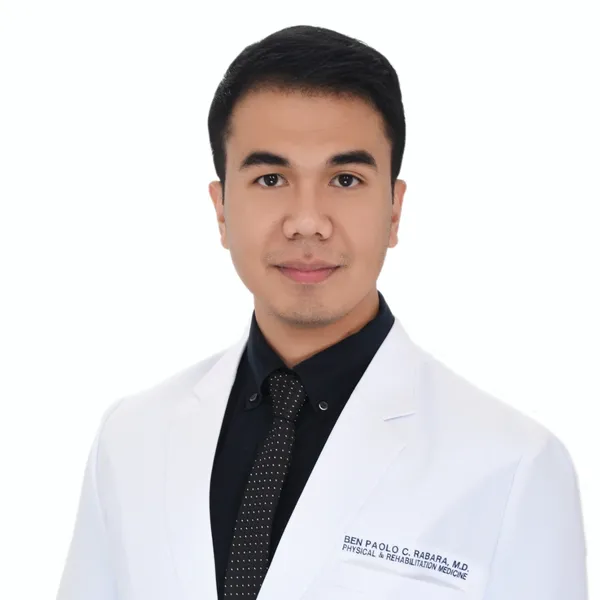
Dr. Ben Rabara
Dr. Ben Rabara is a Board-Certified Physiatrist specializing in Physical Medicine and Rehabilitation. He focuses on non-surgical, precision treatments for musculoskeletal conditions, utilizing advanced diagnostics like MSK Ultrasound.
Medical Disclaimer: The information provided in this article is for educational purposes only and does not substitute for professional medical advice, diagnosis, or treatment. Always consult a qualified physician for your specific health conditions.