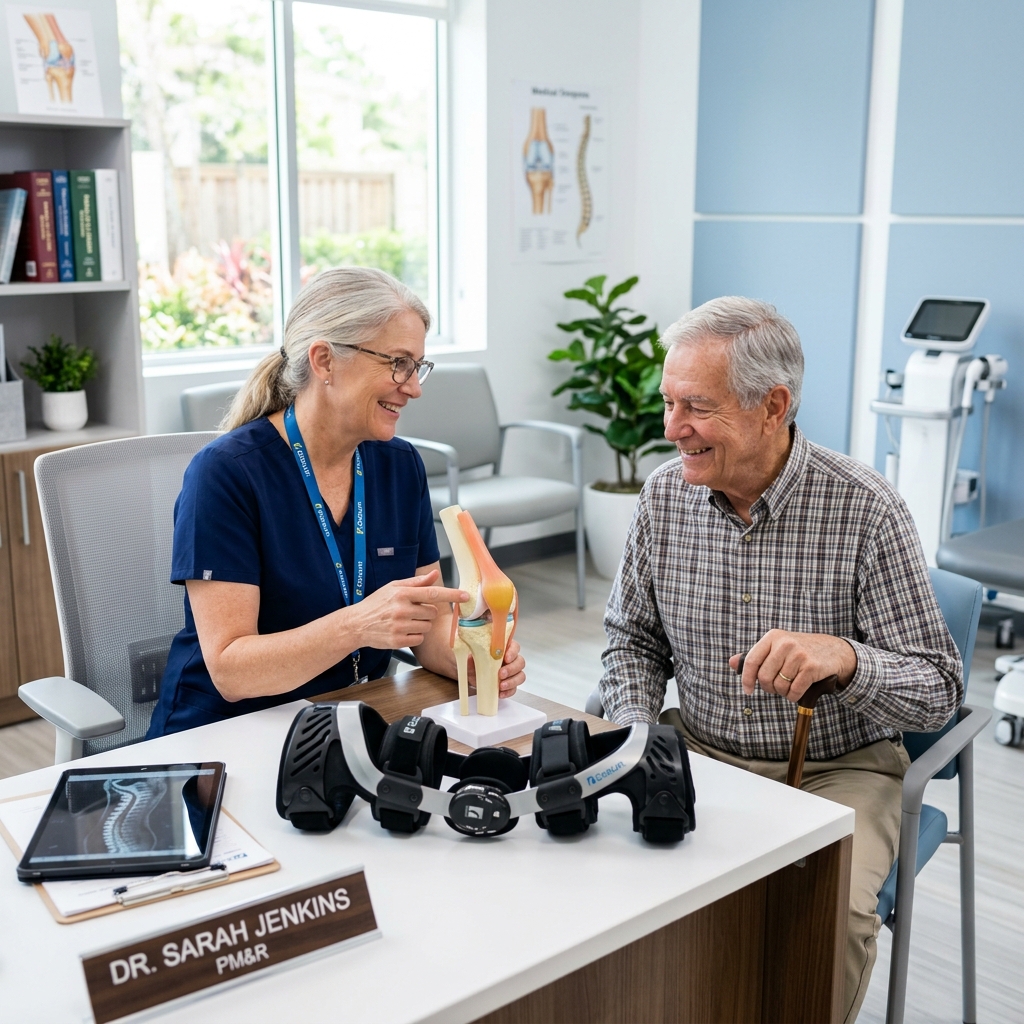
- — Total knee replacement is a highly invasive surgery that should be positioned as the absolute last resort after all conservative options are exhausted.
- — FDA-approved, high-molecular-weight Hyaluronic Acid (HA) injections physically cushion and lubricate the joint to protect remaining cartilage.
- — Viscosupplementation acts as a bridge therapy, safely delaying the need for metal implants for years while preserving your natural anatomy.
- — Natural remedies like anti-inflammatory diets, acupuncture, and weight management help cool the overall inflammatory environment in the body.
- — No amount of green leafy vegetables or rest can mechanically lubricate a dry, grinding joint that has lost its natural synovial fluid.
When you are living with chronic knee osteoarthritis, the simple acts of walking to the market, playing with your grandchildren, or standing up from a low chair can feel like monumental challenges. If you have been told by an orthopedic surgeon that you are "bone-on-bone" and need a total knee replacement, it is completely natural to feel a deep sense of fear and hesitation. The prospect of an invasive surgery involving sawed bones, metal hardware, and months of painful recovery is terrifying.
In this guide, we want to deliver a message of hope and clinical clarity. We will outline the most effective non surgical knee osteoarthritis treatment pathways, discuss the leading alternatives to total knee replacement, explore natural remedies for systemic inflammation, and explain how we use premium, FDA-approved viscosupplementation to cushion your joints and delay surgery for years.
If your question is more about biological repair than lubrication, compare this page with our PRP for osteoarthritis and meniscus tears guide.
What are the best knee osteoarthritis treatment options without surgery?
Non-surgical knee osteoarthritis treatment options encompass a comprehensive spectrum of conservative interventions designed to reduce pain, halt mechanical wear, and preserve the natural joint space. These treatments are structured around physical medicine, dynamic biomechanical bracing, clinical nutrition, non-invasive therapeutic modalities, and image-guided joint lubrication.
Too often, patients are presented with a binary choice: either pop pain pills forever or get a total knee replacement. In physical medicine and rehabilitation (PM&R), we reject this oversimplification.
A comprehensive non-surgical pathway does not rely on masking symptoms. Instead, we use advanced modalities like focused shockwave therapy or deep-penetrating high-intensity lasers (HILT) to cool down inflamed tissues, prescribe custom-molded orthotics to correct foot alignment, use knee unloader braces to physically shift weight away from the worn cartilage, and inject dense lubricating gels under precise ultrasound guidance to cushion the joint. This multi-layered approach preserves your natural joint anatomy and restores pain-free mobility without surgery.
Why total knee replacement surgery should be your absolute last resort
Total knee replacement surgery should be positioned as the absolute last resort due to its highly invasive nature, extensive rehabilitation timeline, and the finite lifespan of the metal-and-plastic implants. Choosing conservative joint preservation techniques first keeps your natural bone and cartilage intact, avoiding the risks of surgical complications and future implant revisions.
In my clinical experience, patients are often rushed toward surgery because they are unaware of the structural alternatives. A knee replacement is not a minor cleanup; it is a major orthopedic overhaul. The surgeon physically saws off the ends of your thigh bone and shin bone, replacing them with a metal cap and a plastic spacer.
While this surgery can be highly successful for extremely advanced, non-responsive cases, it carries significant risks:
- Permanent Anatomical Loss: Once your natural bone is sawed off, there is no going back. If the implant fails, subsequent "revision" surgeries are much more complex and carry lower success rates.
- Surgical Risks: Anesthesia complications, blood clots (deep vein thrombosis), and post-operative joint infections are rare but serious dangers.
- Limited Implant Lifespan: Modern implants last about 15 to 20 years. If you get a replacement in your early 50s or 60s, you will likely need a highly complex revision surgery later in life.
Natural remedies for osteoarthritis: What the clinical guidelines suggest
Clinical guidelines from major international rheumatology and orthopedic associations support natural remedies such as progressive weight loss, low-impact exercise, and acupuncture as safe, non-pharmacological pillars of early-stage osteoarthritis management. These conservative interventions are highly effective at reducing systemic joint load and optimizing the body's natural cellular recovery pathways.
When we discuss "natural remedies," we must look at the hard evidence. The American College of Rheumatology (ACR) and the Osteoarthritis Research Society International (OARSI) strongly recommend weight loss for overweight individuals.
This is not a matter of aesthetics; it is simple physics. Every single pound of body weight you lose removes four pounds of crushing pressure from your knees with every step you take, a core focus of our medical weight loss and joint program and clinical guide on joint pain and weight management. Additionally, low-impact exercise—such as swimming, stationary cycling, or guided isometric quad strengthening—stimulates the joint lining to circulate fluid, acting as a natural pump to deliver nutrients to the cartilage.
Foods to avoid with osteoarthritis: Stopping the inflammatory fire
Foods to avoid with osteoarthritis include highly processed sugars, trans fats, refined carbohydrates, and excess omega-6 vegetable oils, all of which directly fuel systemic inflammation by triggering the release of pro-inflammatory cytokines. Eliminating these chemical triggers from your diet cools down the body's background inflammatory levels, making your joints significantly less sensitive to mechanical friction.
In our Vigan clinic, I recommend that patients aggressively eliminate specific inflammatory foods:
- Refined Sugars: Found in sodas, commercial sweet pastries, and packaged snacks. Sugar spikes your insulin, which directly upregulates pro-inflammatory chemical pathways.
- Industrial Seed Oils: Refined canola, corn, and soy oils are rich in omega-6 fatty acids. While we need some omega-6, an excess creates a highly inflammatory balance in your tissues. We advise swapping these for healthy monounsaturated fats like extra virgin olive oil or coconut oil.
- Refined White Flour: White bread and processed bakery items quickly convert to sugar in your bloodstream, fueling cellular swelling.
Why natural remedies fail for mechanical bone-on-bone friction
Natural remedies and dietary changes fail to resolve advanced osteoarthritis because they cannot repair structural cartilage tears or mechanically lubricate a joint that has lost its natural synovial fluid. While an anti-inflammatory diet can cool the chemical environment, it cannot stop the physical bone-on-bone grinding caused by a lack of physical fluid cushioning.
If your knee joint has progressed to moderate or severe osteoarthritis, your natural "motor oil" (synovial fluid) has thinned out and become watery. The protective cartilage caps on your bones have worn down, leaving rough, exposed bone surfaces that grind against each other.
This is a purely mechanical, physical problem. No amount of turmeric capsules, green tea, or organic vegetables can physically lubricate a dry, grinding hinge. The dry joint demands a physical, structural lubricant to coat the grinding surfaces and absorb the vertical loading forces.
FDA approved knee injections: Navigating your non-surgical choices
FDA-approved knee injections represent the clinical gold standard for non-surgical interventional joint care, offering patients a safe, minimally invasive pathway to manage chronic pain and swelling. These localized treatments bypass the systemic side effects of oral medications, delivering therapeutic agents directly into the irritated joint capsule.
When exploring knee injections, it is critical to understand the three primary FDA-approved options:
- Corticosteroids (Steroids): A powerful chemical anti-inflammatory via targeted cortisone shots that rapidly shuts down acute, painful swelling within 48 hours. It functions as a localized "fire extinguisher" but carries long-term cartilage-softening risks if repeated too frequently.
- Viscosupplementation (Hyaluronic Acid Gel): A thick, structural gel through knee lubrication gel shots that replaces your joint's thinned synovial fluid, acting as a physical "lubricant and shock absorber." It is structurally safe for long-term use and can be repeated every six months to preserve joint spaces.
- Orthobiologics (PRP - Platelet-Rich Plasma): Utilizes PRP regenerative therapy with a concentrated dose of your own blood platelets to deliver active growth factors, helping to heal micro-tears in ligaments and cartilage naturally.
Viscosupplementation: The leading alternative to total knee replacement
Viscosupplementation has emerged as the premier non-surgical alternative to total knee replacement by physically replenishing the joint's missing synovial fluid cushion and coating the highly sensitive bone endings. This structural intervention eliminates grinding friction, breaks the mechanical wear loop, and safely postpones or completely cancels the need for surgery.
For patients who are terrified of the orthopedic scalpel, viscosupplementation represents the ultimate safety net. We are not introducing a foreign chemical that alters your body's hormones. Hyaluronic Acid is a natural structural molecule that your knee lining is supposed to produce, but in osteoarthritis, this fluid has dried up.
By injecting a premium, high-molecular-weight gel under precise ultrasound guidance, we restore that essential cushion. The gel physically separates the grinding bone surfaces, absorbs the vertical loading forces when you walk, and allows your knee to glide smoothly. This local, mechanical solution buys your joint precious years of active, pain-free mobility without touching a scalpel.
How premium high-molecular-weight HA gels delay the need for surgery
Premium, high-molecular-weight Hyaluronic Acid gels delay the need for joint replacement by physically coating the rough articular cartilage and exposed bone endings, shielding them from the crushing forces of daily movement. This structural protection slows down the progression of joint wear, allowing you to walk, climb stairs, and exercise without pain.
In our Vigan clinic, we select premium HA gels (such as **Synolis HA injection Philippines** or Synvisc-One) because they are chemically cross-linked to resist enzymatic breakdown. Standard, cheap generics are quickly degraded by the body's natural enzymes within weeks, offering only short-lived relief.
In contrast, premium high-molecular-weight gels possess high viscoelasticity, meaning they act as a slippery fluid during walking and instantly transform into a firm, protective shock absorber when you step heavily. This advanced mechanical protection cushions your bones, prevents micro-fractures in the subchondral bone, and stops the chronic friction that makes your nerves scream.
Evidence-based ideal vs. practical adaptation in the Philippines
While international evidence supports viscosupplementation as the premier alternative to joint surgery, practicing in regional Philippine settings like Vigan, Ilocos Sur, requires adapting these ideal protocols to match local economic, transport, and family caregiving realities. We design feasible, lower-cost pathways to ensure high-quality care is accessible to all.
| Evidence-Based Ideal Plan | Feasible Philippine Clinic Adaptation |
|---|---|
| Attend 3 weekly supervised physical therapy sessions at a modern city rehab facility. | Conduct 1 supervised clinic session for precise instruction, followed by an structured, stop-rule guided home program. |
| Complete avoidance of all physical loading, farming, or walking on uneven provincial terrain. | Implement dynamic joint protection: prescribe cost-effective unloader knee braces and custom orthotics and teach safe body mechanics. |
| Purchase imported, organic anti-inflammatory meal kits and expensive specialty supplements daily. | Swap cheap processed foods for locally sourced, affordable whole foods (fresh local fish, moringa/malunggay, olive oil). |
| Immediate high-resolution MRI scans to check every microscopic cartilage tear. | Perform highly accessible, low-cost dynamic MSK Ultrasound in-clinic to verify joint fluid and guide treatments. |
The joint preservation checklist: Assessing if you can safely avoid surgery
Determining if you can safely avoid a total knee replacement requires a thorough clinical assessment that weighs your cartilage thickness, muscle strength, degree of joint deformity, and your personal pain tolerance. This joint preservation checklist helps us identify if viscosupplementation can act as a successful bridge therapy.
| Excellent Candidate for Non-Surgical Preservation | Borderline/Severe Candidate (Surgery May Be Needed) |
|---|---|
| Moderate arthritis (Kellgren-Lawrence Grade 2 or 3) with visible remaining joint space. | Extreme, bone-on-bone deformity (Grade 4) with severe leg bowing (varus/valgus). |
| Pain is primarily mechanical, occurring with movement, standing, or climbing stairs. | Constant, severe pain that occurs at rest and wakes the patient up every night. |
| Thigh muscles (quadriceps) are relatively intact but need targeted strengthening. | Severe muscle wasting or progressive neurologic weakness in the leg. |
| Patient is highly motivated to perform home exercises and wear supportive bracing. | Complete structural joint instability or failed prior non-surgical interventions. |
A physiatrist's perspective: Dynamic offloading and joint protection
From a physiatrist's perspective, joint preservation is not achieved by the injection alone, but by combining viscosupplementation with dynamic offloading and structural joint protection to physically reduce the daily forces acting on your knee. We focus on rebuilding your body's natural shock absorbers to protect your joint permanently.
An injection of Hyaluronic Acid is a powerful tool—it greases the gears and cushions the joint. But if your thigh muscles remain weak, your knee will continue to experience crushing forces when you walk, causing the gel to wear out prematurely.
That is why our PM&R approach is focused on dynamic offloading. We analyze your walking pattern, identify weak hip and core muscles that cause your knee to twist, and design a targeted physical therapy program to strengthen your quadriceps. Strong quads act as a powerful muscular spring, physically absorbing impact forces and offloading the cartilage. By combining precision gel injections with expert rehabilitation, we give you the ultimate non-surgical shield to avoid the scalpel and walk with ease.
Explore Your Alternatives to Surgery
Schedule an expert, physician-led PM&R evaluation with Dr. Rabara in Vigan to assess your knees under ultrasound and find the safest non-surgical pathway.
References & Clinical Evidence
- [1] American Academy of Orthopaedic Surgeons (AAOS). (2021). Treatment of Osteoarthritis of the Knee: Evidence-Based Clinical Practice Guideline.
- [2] Bannuru, R. R., et al. (2019). OARSI guidelines for the non-surgical management of knee osteoarthritis. Osteoarthritis and Cartilage, 27(11), 1578-1589.
- [3] Concoff, A. L., et al. (2021). Hyaluronic acid injections for knee osteoarthritis: Systematic review and meta-analysis of randomized controlled trials. Cartilage, 13(1_suppl), 1228S-1240S.
- [4] Zhang, W., et al. (2010). OARSI recommendations for the management of hip and knee osteoarthritis. Osteoarthritis and Cartilage, 18(4), 476-499.
* Clinical references are provided to support the medical claims made in this article. TeraCare adheres to evidence-based practices in physical medicine and rehabilitation.

Dr. Ben Rabara
Dr. Ben Rabara is a Board-Certified Physiatrist specializing in Physical Medicine and Rehabilitation. He focuses on non-surgical, precision treatments for musculoskeletal conditions, utilizing advanced diagnostics like MSK Ultrasound.
Medical Disclaimer: The information provided in this article is for educational purposes only and does not substitute for professional medical advice, diagnosis, or treatment. Always consult a qualified physician for your specific health conditions.