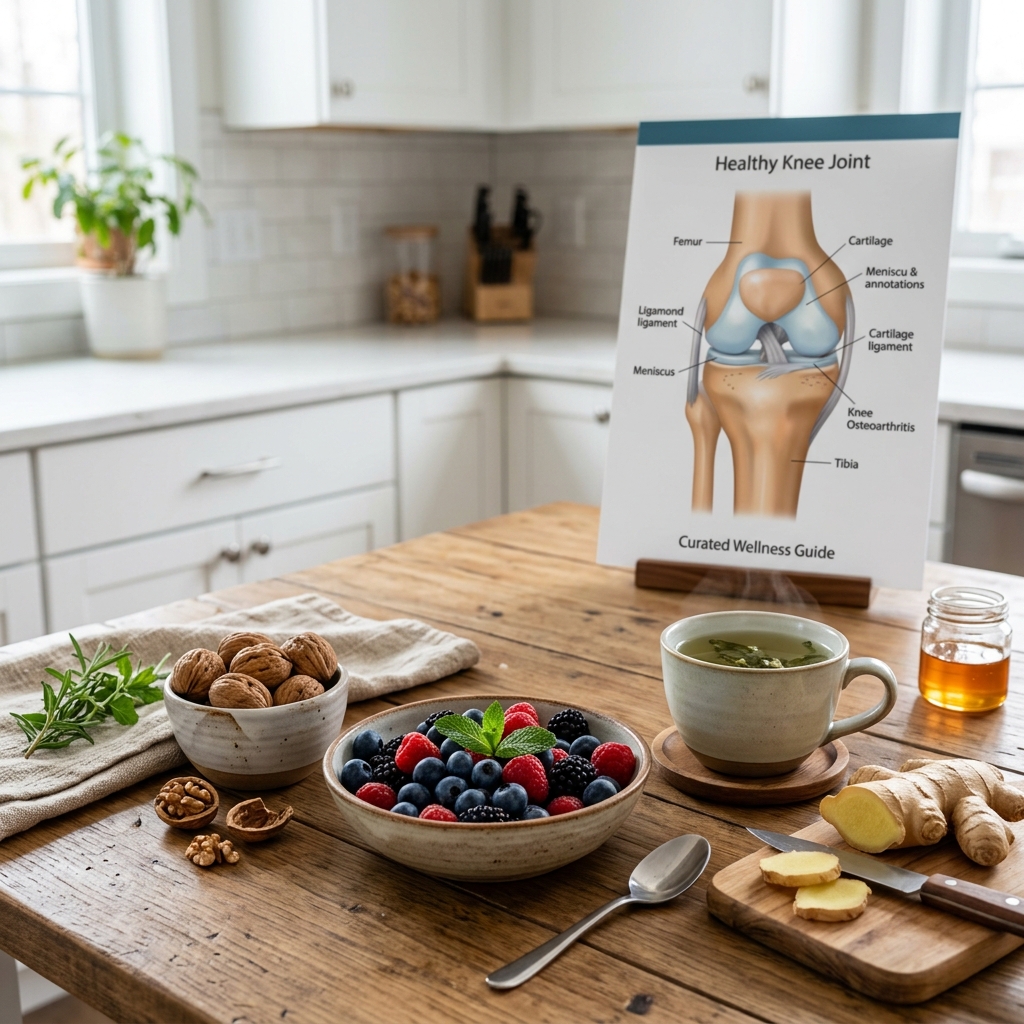
- — Osteoarthritis treatment requires a dual approach: cooling the biochemical inflammation first, and then correcting the mechanical friction in the joint.
- — Natural remedies like anti-inflammatory diets, acupuncture, and weight management help cool the overall inflammatory environment in the body.
- — Highly processed sugars, trans fats, and excess omega-6 seed oils trigger cytokine releases that actively worsen knee swelling and pain.
- — No amount of green leafy vegetables or rest can mechanically lubricate a dry, grinding joint that has lost its natural synovial fluid.
- — Precision viscosupplementation acts as a mechanical shock absorber, providing the direct lubrication needed to make therapeutic exercises safe and tolerable.
When patients are first diagnosed with knee osteoarthritis, their immediate reaction is often a desire to avoid medical interventions entirely. They search the internet for natural cures, buy copper compression sleeves, and stock their kitchens with ginger, turmeric, and various herbal extracts. They hope that by eating a "clean" diet or resting their leg, the grinding pain in their knees will quietly resolve itself.
In this comprehensive clinical guide, we will examine the scientific reality of osteoarthritis treatment, outline the specific foods to avoid with osteoarthritis to cool systemic inflammation, and discuss why mechanical joint grinding ultimately requires a precise physical solution like viscosupplementation to protect your mobility.
What is the most effective osteoarthritis treatment approach?
The most effective osteoarthritis treatment utilizes a staged, multimodal pathway that combines chemical anti-inflammation with mechanical joint preservation to manage symptoms and restore function. Rather than relying on a single pill or procedure, a successful plan coordinates dynamic offloading, clinical nutrition, physical therapy, and targeted joint lubrication depending on your disease severity.
Many patients view arthritis as a single, simple problem—a structural wear-and-tear issue. However, in physical medicine and rehabilitation, we analyze osteoarthritis as a complex loop. The physical wear of the cartilage generates microscopic debris, which irritates the joint lining (synovium). This irritation triggers a chemical inflammatory response, which floods the joint with cytokines, making the nerves hyper-sensitive and leading to pain, swelling, and muscle inhibition.
To break this cycle, we must address both the chemical fire (using anti-inflammatory diets or localized modalities) and the mechanical friction (using muscle strengthening, bracing, or viscosupplementation gel).
How to relieve knee pain fast during active flare-ups
To relieve knee pain fast during an acute flare-up, you must focus on calming the highly irritable chemical environment inside the joint capsule using targeted physical compression, elevation, and strategic cryotherapy. Bypassing systemic oral pain relievers prevents common gastrointestinal and renal complications while delivering immediate relief directly to the hypersensitive nerves.
When a knee joint is throbbing, swollen, and warm to the touch, it is experiencing an acute chemical "fire." Popping a strong oral anti-inflammatory pill might seem like the easiest answer, but it takes hours to work and exposes your stomach and kidneys to systemic drugs.
Instead, I advise my patients to utilize localized cryotherapy immediately. Applying a gel ice pack wrapped in a thin towel for 15 to 20 minutes constricts the dilated blood vessels, reduces fluid leakage into the joint space, and slows down nerve conduction velocity, effectively numbing the sharp pain. Pairing this with a snug elastic compression wrap and elevating your leg above heart level dramatically accelerates the drainage of inflammatory fluid, lowering pressure inside the capsule and providing rapid, drug-free relief.
Natural remedies for osteoarthritis: What the clinical guidelines suggest
Clinical guidelines from major international rheumatology and orthopedic associations support natural remedies such as progressive weight loss, low-impact exercise, and acupuncture as safe, non-pharmacological pillars of early-stage osteoarthritis management. These conservative interventions are highly effective at reducing systemic joint load and optimizing the body's natural cellular recovery pathways.
When we discuss "natural remedies," we must look at the hard evidence. The American College of Rheumatology (ACR) and the Osteoarthritis Research Society International (OARSI) strongly recommend weight loss for overweight individuals.
This is not a matter of aesthetics; it is simple physics. Every single pound of body weight you lose removes four pounds of crushing pressure from your knees with every step you take. Additionally, low-impact exercise—such as swimming, stationary cycling, or guided isometric quad strengthening—stimulates the joint lining to circulate fluid, acting as a natural pump to deliver nutrients to the cartilage. Acupuncture and thermal treatments (alternating hot and cold packs) are also recognized as safe, drug-free methods to modulate pain signals in the nervous system.
Foods to avoid with osteoarthritis: Stopping the inflammatory fire
Foods to avoid with osteoarthritis include highly processed sugars, trans fats, refined carbohydrates, and excess omega-6 vegetable oils, all of which directly fuel systemic inflammation by triggering the release of pro-inflammatory cytokines. Eliminating these chemical triggers from your diet cools down the body's background inflammatory levels, making your joints significantly less sensitive to mechanical friction.
Your kitchen is directly connected to your joints. When you consume highly processed foods, your gut lining can become irritated, allowing inflammatory proteins to enter your general circulation. These proteins travel through your blood vessels and accumulate in the synovial fluid of your joints, lowering your pain threshold.
In our Vigan clinic, I recommend that patients aggressively eliminate specific inflammatory foods:
- Refined Sugars: Found in sodas, commercial sweet pastries, and packaged snacks. Sugar spikes your insulin, which directly upregulates pro-inflammatory chemical pathways.
- Industrial Seed Oils: Refined canola, corn, and soy oils are rich in omega-6 fatty acids. While we need some omega-6, an excess creates a highly inflammatory balance in your tissues. We advise swapping these for healthy monounsaturated fats like extra virgin olive oil or coconut oil.
- Refined White Flour: White bread and processed bakery items quickly convert to sugar in your bloodstream, fueling cellular swelling.
Why natural remedies fail for mechanical bone-on-bone friction
Natural remedies and dietary changes fail to resolve advanced osteoarthritis because they cannot repair structural cartilage tears or mechanically lubricate a joint that has lost its natural synovial fluid. While an anti-inflammatory diet can cool the chemical environment, it cannot stop the physical bone-on-bone grinding caused by a lack of physical fluid cushioning.
If your knee joint has progressed to moderate or severe osteoarthritis, your natural "motor oil" (synovial fluid) has thinned out and become watery. The protective cartilage caps on your bones have worn down, leaving rough, exposed bone surfaces that grind against each other.
This is a purely mechanical, physical problem. No amount of turmeric capsules, green tea, or organic vegetables can physically lubricate a dry, grinding hinge. If you run a car engine completely out of oil, eating a healthy salad will not stop the pistons from grinding and seizing. The dry joint demands a physical, structural lubricant to coat the grinding surfaces and absorb the vertical loading forces.
The clinical role of viscosupplementation in joint preservation
Viscosupplementation provides the essential mechanical solution to osteoarthritis by injecting a highly viscoelastic Hyaluronic Acid gel directly into the dry joint space, immediately restoring the missing lubrication barrier. This clinical intervention physically cushions the rough bones, dampens impact forces, and breaks the mechanical wear cycle so that patients can safely perform their rehabilitation exercises.
We view lubricant injection for knee not as a drug, but as a structural medical device. Hyaluronic Acid is the identical natural molecule that your body uses to keep its joints slippery, but in osteoarthritis, the local production has failed.
By injecting a premium, dense gel under precise live ultrasound guidance, we coat the frayed cartilage and exposed bone endings. This physical cushion instantly lowers joint friction, stops the generation of mechanical crepitus (grinding noises), and creates a comfortable, pain-free "rehabilitation window." It allows you to perform the necessary lower-extremity exercises to rebuild your leg muscles, ensuring long-term joint preservation without relying on surgery.
Feasible lower-extremity offloading strategies for Philippine lifestyles
Applying evidence-based joint care in Vigan and the broader Ilocos region requires translating ideal medical guidelines into highly practical, low-cost offloading strategies that fit local occupational physical demands and transportation realities. We adapt our clinical protocols to make recovery highly feasible and realistic for our patients.
| Evidence-Based Ideal Plan | Feasible Philippine Clinic Adaptation |
|---|---|
| Attend 3 weekly supervised physical therapy sessions at a modern city rehab facility. | Conduct 1 supervised clinic session for precise instruction, followed by an structured, stop-rule guided home program. |
| Complete avoidance of all physical loading, farming, or walking on uneven provincial terrain. | Implement dynamic joint protection: prescribe cost-effective offloader braces and teach safe body mechanics. |
| Purchase imported, organic anti-inflammatory meal kits and expensive specialty supplements daily. | Swap cheap processed foods for locally sourced, affordable whole foods (fresh local fish, moringa/malunggay, olive oil). |
| Immediate high-resolution MRI scans to check every microscopic cartilage tear. | Perform highly accessible, low-cost dynamic MSK Ultrasound in-clinic to verify joint fluid and guide treatments. |
When to seek professional PM&R assessment
You should seek a professional Physical Medicine & Rehabilitation (PM&R) assessment when your knee pain begins to limit your walking distance, when you experience morning stiffness lasting longer than 30 minutes, or when your joint makes constant grinding noises accompanied by swelling. Delaying a professional diagnostic evaluation allows mechanical wear to progress, narrowing your non-surgical treatment options.
If you find yourself constantly popping over-the-counter pain pills, avoiding stairs, or sitting down because your knees feel heavy, weak, or grinding, you have passed the boundaries of safe home self-care. Grinding noises (crepitus) with pain are a clear mechanical warning sign.
At TeraCare, we look at the big picture—evaluating your joint spaces, tracking your muscle strength, and screening your alignment under live ultrasound. We will help you understand exactly where your joint stands, design a practical anti-inflammatory nutritional plan, and determine if precision viscosupplementation is the key to cushioning your joint so you can walk with absolute confidence again.
Take Control of Your Joint Health
Schedule an expert, physician-led PM&R evaluation with Dr. Rabara to stop the grinding, protect your cartilage, and find the safest next step for your knees.
References & Clinical Evidence
- [1] American College of Rheumatology (ACR). (2020). Guidelines for the Management of Osteoarthritis of the Hand, Hip, and Knee. Arthritis & Rheumatology, 72(2), 220-233.
- [2] Bannuru, R. R., et al. (2019). OARSI guidelines for the non-surgical management of knee osteoarthritis. Osteoarthritis and Cartilage, 27(11), 1578-1589.
- [3] Hunter, D. J., et al. (2020). The knee osteoarthritis management program (Komp): A randomized controlled trial. Osteoarthritis and Cartilage, 28(9), 1214-1223.
- [4] Thomas, S., et al. (2018). Dietary changes and physical therapy in the management of osteoarthritis of the knee: A systematic review. Clinical Rehabilitation, 32(3), 290-302.
- [5] Zhang, W., et al. (2010). OARSI recommendations for the management of hip and knee osteoarthritis. Osteoarthritis and Cartilage, 18(4), 476-499.
* Clinical references are provided to support the medical claims made in this article. TeraCare adheres to evidence-based practices in physical medicine and rehabilitation.

Dr. Ben Rabara
Dr. Ben Rabara is a Board-Certified Physiatrist specializing in Physical Medicine and Rehabilitation. He focuses on non-surgical, precision treatments for musculoskeletal conditions, utilizing advanced diagnostics like MSK Ultrasound.
Medical Disclaimer: The information provided in this article is for educational purposes only and does not substitute for professional medical advice, diagnosis, or treatment. Always consult a qualified physician for your specific health conditions.