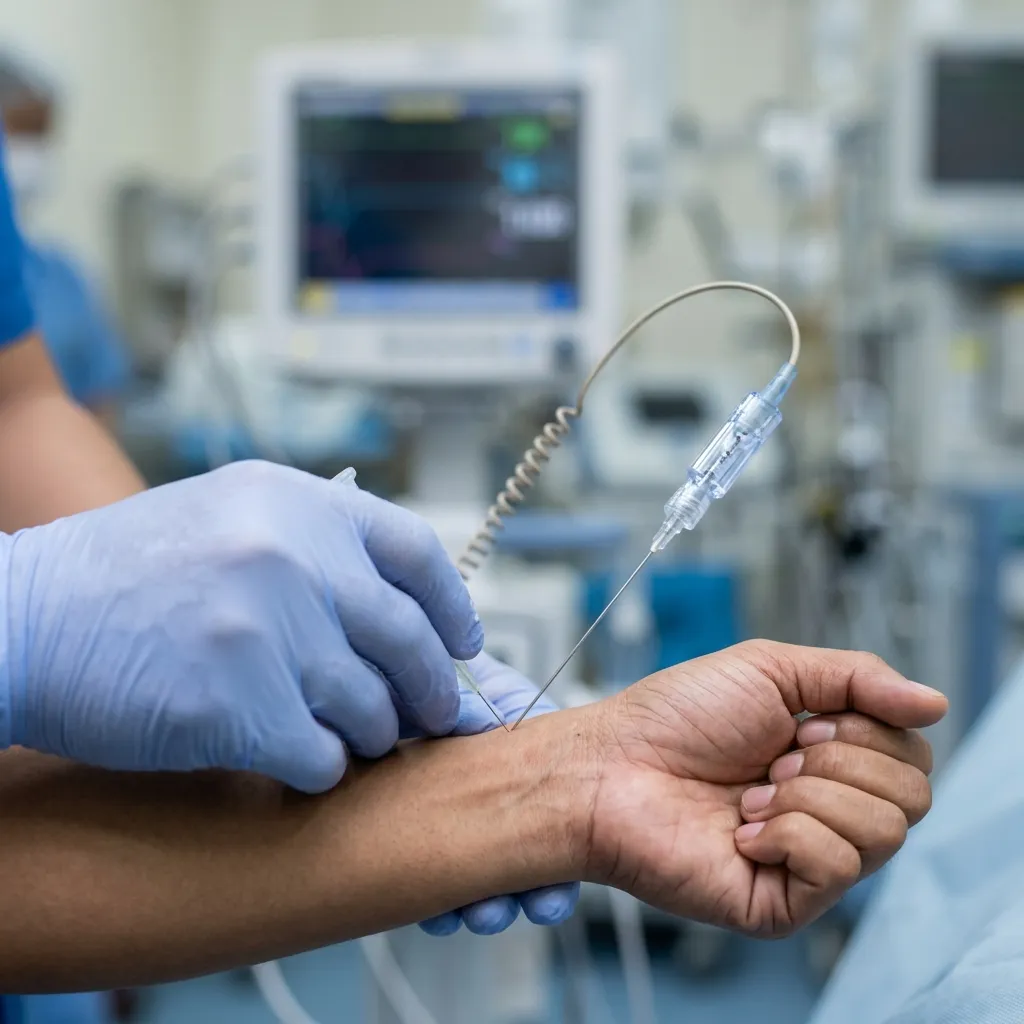
What is Medical Botox for Spasticity & Migraine?
When you hear "Botox," you likely think of cosmetic treatments. However, in physiatry, Botulinum Toxin Type A is a powerful, globally recognized medical intervention for neurological recovery. Following a stroke or brain injury, the brain loses the ability to tell certain muscles to relax, resulting in painful, involuntary stiffness—a condition known as spasticity.
Medical Botox acts as a "chemical key." When injected precisely into the overactive muscle, it temporarily blocks the signals that cause the spasm. Unlike oral muscle relaxants that travel through your entire bloodstream and cause brain fog, Botox works only where it is injected. This "unlocks" the limb, providing a critical window for intensive physical therapy to rewire the brain and restore movement.
Conditions We Actively Manage with Botox
Is Medical Botox Right for Your Recovery?
Ideal indications
You have a clenched fist or stiff leg that prevents you from dressing or walking.
You suffer from chronic migraines and are exhausted by daily painkillers.
You experience 'dynamic' spasticity (where the joint can still be moved).
You want to avoid the cognitive side effects of systemic muscle relaxants.
Clinical precautions
You have a 'fixed' joint contracture (the joint is frozen and cannot be moved).
Systemic neuromuscular disease like ALS or Myasthenia Gravis.
Generalized weakness without a specific focal muscle spasm.
Active infection at the proposed injection site.
Medical Botox Realities
Understanding the clinical expectations of Botulinum Toxin therapy for spasticity.
Targeted Muscle Weakness
Patients may experience transient weakness in the specific muscle groups injected, a normal response to the neurotoxin reducing spasticity.
Delayed Therapeutic Onset
Unlike local anesthetics, the antispasmodic effects of Botulinum Toxin take 7 to 14 days to reach their peak clinical efficacy.
Need for Concurrent Therapy
Botox is not a standalone cure; it must be aggressively paired with physical therapy to stretch the newly relaxed muscles.
Botox vs. Oral Muscle Relaxants
Oral Muscle Relaxants
Pills that travel through your entire body and brain to reach the target muscle.
Precision Medical Botox
Localized injection that relaxes ONLY the specific muscle causing the problem.
The 3 Stages of Botox Recovery
The Binding Phase
No immediate change. The toxin is chemically binding to your nerve endings. Continue your standard exercises.
Peak Relaxation
Your 'Golden Window.' Spasms decrease, limbs open easily, and migraines shield up. This is the time for maximum PT intensity.
Assessment Phase
As the body heals, stiffness may return. We reassess your function for the next precision session.
Clinical Science & Technical Details
For our medical colleagues and highly analytical patients, we provide these transparent technical details on the pathophysiology and interventional protocols.
Explore the Clinical Science: SNAP-25 and Neuromuscular Blockade
The physiological mechanism of Botulinum Toxin Type A involves the cleavage of the SNAP-25 protein within the presynaptic terminal of the neuromuscular junction.
This inhibits the release of acetylcholine, effectively 'taking the brakes off' a spastic limb. By reducing hypertonia locally, we minimize the velocity-dependent stretch reflex associated with Upper Motor Neuron Syndrome.
Detailed Diagnostic Pathways: Selective Muscle Targeting in Stroke
In post-stroke 'flexor synergy,' we selectively target the Pectoralis Major, Biceps Brachii, and Flexor Digitorum. This specific targeting improves caregiver hygiene and prevents fixed joint contractures.
For lower limb spasticity, we target the Gastrocnemius and Tibialis Posterior to restore a plantigrade foot position, which is essential for safe weight-bearing and gait training.
Managing Chronic Migraine: Blocking the Calcitonin Gene-Related Peptide (CGRP)
For chronic migraine (15+ days/month), Botox is injected into 31 specific sites across the head and neck. It is believed to inhibit the release of peripheral nociceptive neurotransmitters.
By silencing the overactive pain networks, Botox prevents the 'central sensitization' that makes migraines so debilitating, effectively raising the patient's pain threshold for months at a time.
Preventing Fixed Contractures: The Critical Window for Intervention
Spasticity is a dynamic state that can evolve into a fixed structural contracture if left untreated. Once the joint is frozen and muscles have fibrotically shortened, Botox is no longer effective.
Early intervention with Medical Botox and simultaneous serial casting or intensive stretching is the only clinical pathway to prevent permanent orthopedic deformity after a brain injury.
Our Precision 'Guidance-First' Pathway
Neuromuscular Mapping
Dr. Rabara performs a clinical assessment and reflex test to pinpoint the exact 'offending' muscles causing the stiffness.
EMG-Guided Injection
We use Electromyography (EMG) to 'listen' to the muscle's electrical noise, ensuring the needle is perfectly placed before injecting.
The Rehab Window
Within 10-14 days, your limb will relax, opening a 3-month 'golden window' for intensive neuro-rehabilitation therapy.
Clinical decision support
Goal-directed botulinum toxin care for spasticity
Botulinum toxin can reduce overactivity in selected muscles, but reducing tone is not the same as restoring strength or normal movement. Treatment is most useful when the team identifies a specific goal such as easier hygiene, improved brace tolerance, reduced painful spasms, safer positioning, or better access to active therapy. Fixed contracture, weakness, poor motor control, and other causes of stiffness must be distinguished because they may respond differently.
Dosing and muscle selection are individualized. Possible adverse effects include injection-site discomfort, unwanted weakness, swallowing or breathing difficulty, and rare spread of toxin effect; urgent assessment is needed for new breathing, swallowing, or generalized weakness. Injections normally sit within a broader plan that may include therapy, stretching, splinting, medications, caregiver training, or other procedures.
Chronic migraine uses a different assessment and injection protocol from spasticity. NICE limits its recommendation to adults with at least 15 headache days per month, including at least 8 migraine days, after appropriate preventive-treatment and medication-overuse review. Headache-day response is reassessed after two cycles rather than assuming continued treatment will help.
How this evidence is applied at TeraCare
Dr. Rabara documents the patient’s baseline pattern and agreed functional goal, selects target muscles from the examination, and reassesses whether the measured benefit justifies future treatment.
Medical review: Dr. Ben Rabara, Physiatrist · Evidence reviewed August 22, 2026. This information supports shared decision-making and does not replace an individual examination or emergency care.
Clinical sources: AAPM&R Consensus Guidance on Spasticity Assessment and Management (2024); NICE TA260: Botulinum Toxin Type A for Chronic Migraine.
How this treatment fits your care plan
Neurological Rehabilitation
Coordinated recovery of movement, communication, swallowing, positioning, and daily function.
Your exact sequence depends on the diagnosis, safety screening, and response to treatment. A physiatrist will recommend only the steps that fit your case.
Where this treatment is available
Availability is generated from each active branch’s service record.
Common Questions
How is Medical Botox different from cosmetic Botox?
Does the injection hurt?
Is it covered by PhilHealth?
Why do you use EMG guidance?
Will it make my muscles permanently weak?
References & Clinical Evidence
- [1] Clinical guidelines and evidence-based research supporting Medical Botox for Spasticity & Migraine in Vigan City.
- [2] Relevant peer-reviewed literature on efficacy and safety outcomes in rehabilitation.
* Clinical references are provided to support the medical claims made in this article. TeraCare adheres to evidence-based practices in physical medicine and rehabilitation.

Dr. Ben Rabara
Dr. Ben Rabara is a Physiatrist in Vigan City specializing in Physical Medicine and Rehabilitation. He focuses on non-surgical, precision treatments for musculoskeletal conditions, utilizing advanced diagnostics like MSK Ultrasound.
Medical Disclaimer: The information provided in this article is for educational purposes only and does not substitute for professional medical advice, diagnosis, or treatment. Always consult a qualified physician for your specific health conditions.
Medical Botox & Neurological Guides
Comprehensive resources for stroke recovery, chronic migraine prevention, and spasticity management.