- — Diabetic neuropathy is not a simple sensory annoyance; it is progressive microvascular nerve starvation caused by high blood sugar.
- — Symptoms follow a strict 'stocking-glove' distribution, starting in the toes and slowly climbing up the legs before affecting the hands.
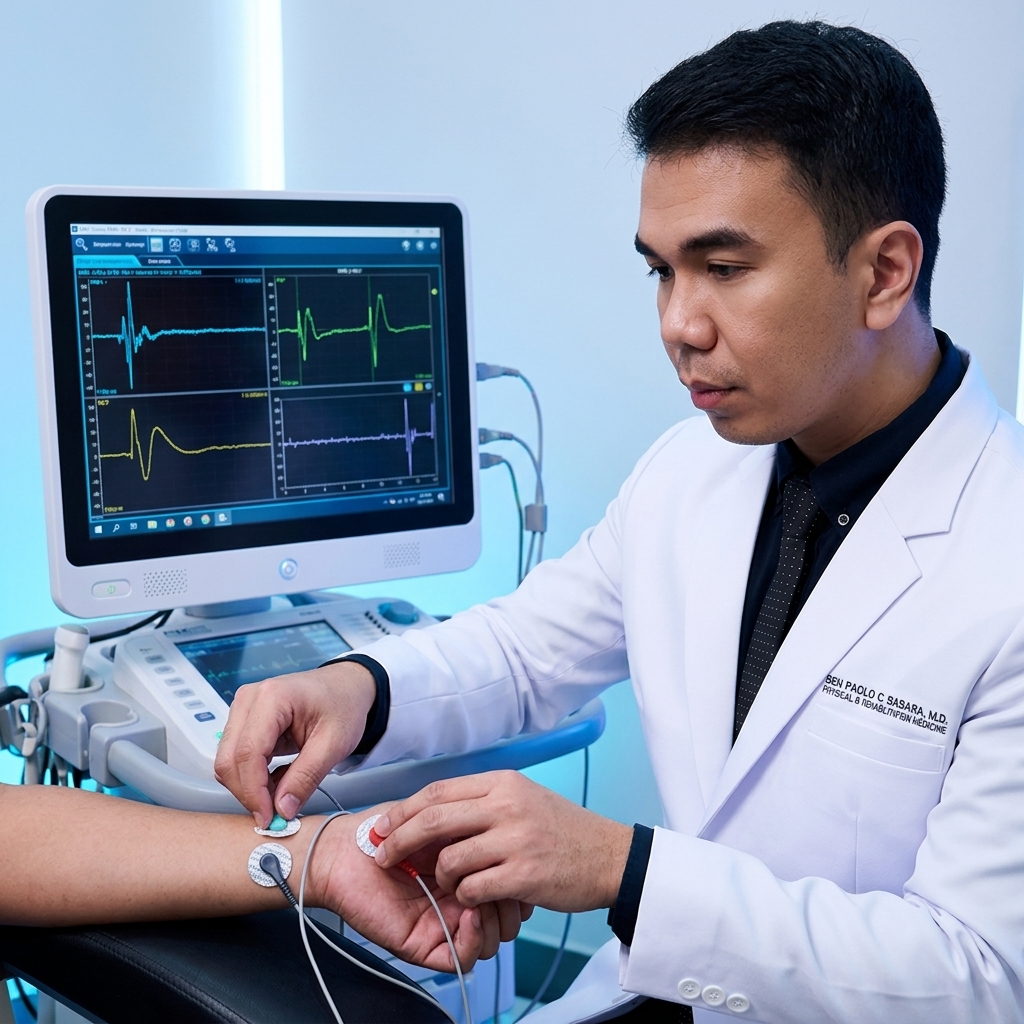
- — An NCV test acts as an electrical speedometer for your legs, mathematically measuring conduction velocity and signal size to map damage.
- — Taking blind nerve supplements or B-complex vitamins cannot repair mechanical microvascular blockages or reverse advanced axon death.
- — Early detection via NCV is critical to prevent silent sensory loss, which leads to unnoticed diabetic foot ulcers, infections, and amputations.
It starts in the quiet hours of the night—a subtle, irritating sensation in your toes, like wearing a sock that is slightly damp or filled with tiny grains of sand. But within weeks, the annoyance transforms into something far more distressing. The tingling intensifies into a persistent, deep burning sensation in feet, as if you are walking on hot coals, accompanied by sudden, needle-like electric shocks that wake you from a sound sleep.
If you are one of the millions of individuals living with diabetes, pre-diabetes, or chronic circulatory issues, this experience is a severe warning signal. Yet, the most common response to these early symptoms is self-treatment. Patients routinely spend thousands of pesos on over-the-counter B-complex supplements, rubbing herbal oils onto their soles, or soaking their feet in hot water, hoping the "circulation" will return.
In my clinical practice as a Physical Medicine & Rehabilitation (PM&R) specialist, I meet patients every single week who have spent months—sometimes years—relying on these blind remedies. Many only seek help when the burning suddenly stops, replaced by a complete, hollow numbness.
The truth is, nerves are the electrical wiring of your lower limbs, and they are incredibly sensitive to your body's chemistry. When high blood sugar is left unmanaged, it doesn't just cause temporary pain; it systematically starves and destroys the nerves from the ground up. To protect your mobility and prevent irreversible damage, you must stop guessing. Navigating the recovery pathway requires a professional, objective NCV test for neuropathy.
What is Diabetic Neuropathy? The Microvascular Breakdown
To understand why tingling in feet occurs, we must look beneath the skin at how nerves survive.
Your peripheral nerves are living tissue. Just like your heart or brain, they require a constant supply of oxygen and nutrients to survive and transmit electrical signals. Because your leg nerves are the longest in your body—stretching all the way from your lower spine down to your toes—they are supported by a massive network of microscopic blood vessels called the vasa nervorum.
When blood sugar levels are chronically high, the excess glucose molecules act like microscopic shards of glass inside your blood vessels. This triggers chronic inflammation and chemical stress that damages the delicate lining of the *vasa nervorum*.
As these tiny vessels narrow and become blocked:
- Oxygen Deprivation: The blood supply to the nerve endings in your feet is slowly choked off. Starved of oxygen, the nerve fibers undergo microscopic ischemia.
- Myelin Erosion: The protective insulation wrapping your nerves (the myelin sheath) begins to break down. This causes electrical signals to "leak" or short-circuit, which your brain interprets as tingling, buzzing, or pins and needles.
- Axon Death: If the starvation continues, the core electrical wire (the axon) dies, leading to permanent structural nerve degeneration.
Because this process is systemic and metabolic, it targets the longest, most vulnerable nerves first. This is why diabetic neuropathy symptoms always begin at the absolute tips of your toes, slowly climbing up your foot and ankle over time.
Peripheral Neuropathy Symptoms: The Stocking-Glove Warning
Diabetic peripheral neuropathy symptoms follow a highly specific, symmetrical anatomical pattern known in physical medicine as the "stocking-glove" distribution.
Because the longest nerve fibers are choked first, symptoms emerge in your feet long before they reach your hands. The progression typically follows a predictable clinical timeline:
- The Sensory Flare (Positive Symptoms): Nerves are dying, but they are still actively firing. You feel tingling, buzzing, deep burning, coldness, or sharp, electric-shock-like pains. Your skin may become so hypersensitive (allodynia) that even the light touch of a bedsheet feels agonizing.
- The Silent Phase (Negative Symptoms): As the axons die, the pain and tingling fade. This is a dangerous transition. You begin to lose the ability to feel temperature, pain, or touch. You may feel like you are walking on cardboard, cotton, or a thick cushion, even when barefoot.
- Fine Motor Decline: Leg nerves also control the small muscles of your feet and calves. As motor fibers are damaged, you may notice your balance deteriorating, your toes clawing inward, or your feet slapping the ground when you walk.
If you are experiencing symmetrical tingling or burning in both feet, even if it is mild, your nervous system is actively struggling. Relying on subjective home tests or waiting for the symptoms to disappear is a critical clinical risk.
Why an NCV Test is Critical: Establishing Your Leg Nerve Speedometer
If you suspect nerve damage, a standard blood test or visual skin check is completely insufficient. A blood test can measure your HbA1c (blood sugar level), but it cannot tell you how much structural damage has already occurred in your legs.
This is why a nerve test for legs—specifically a Nerve Conduction Velocity (NCV) study—is the absolute gold standard for diagnosis.
An NCV test serves as an objective, mathematical speedometer for your nervous system. By delivering tiny, completely controlled electrical stimulations to specific nerve pathways in your legs (such as the sural, peroneal, and tibial nerves), we capture two vital clinical metrics:
- Conduction Velocity (Speed): Measured in meters per second (m/s). This tells us how healthy the nerve's myelin insulation is. If the speed is significantly slowed, it proves that the protective coating of your nerves is actively eroding.
- Amplitude (Signal Size): Measured in microvolts (µV) or millivolts (mV). This tells us how many living axons are left inside the nerve bundle. A drop in amplitude mathematically proves that nerve fibers are actively dying.
With this objective data, Dr. Rabara can definitively map your neuropathy. This is crucial because it allows us to differentiate metabolic diabetic neuropathy from other common causes of foot pain, such as a pinched nerve in your lower back (sciatica), a localized nerve compression in the ankle (Tarsal Tunnel Syndrome), or poor arterial blood flow (peripheral artery disease).
Clinical Analysis: Active Diagnostic Care vs. Blind Supplements
Many patients delay getting a professional diagnosis because they believe taking off-the-shelf B-complex vitamins or neuropathic supplements will resolve the issue. Let us look at the clinical realities of these two approaches:
| Clinical Parameter | Blind Supplements & Self-Care | Active NCV Diagnostics & Care |
|---|---|---|
| Diagnostic Targeting | None: Assumes all tingling is a simple vitamin deficiency. | Precise: Identifies the exact type of nerve fibers damaged (sensory vs. motor). |
| Reversing Blood Starvation | Inability to open microcapillaries blocked by glucose sludge. | Targeted: Integrates metabolic reset, physical therapy, and circulation rehab. |
| Ulcer and Amputation Risk | High: False security allows progressive sensory loss to go unnoticed. | Preventative: Catches early sensory deficits to initiate protective foot-care plans. |
| Scientific Validity | Anecdotal or temporary masking of superficial pain. | 100% Objective: Proven by microsecond electrical waveforms Distally. |
What to Expect During a Leg NCV Test: Comfort and Precision
It is entirely normal to feel anxious about undergoing a nerve test for legs that uses electrical impulses. However, understanding the exact process at TeraCare Vigan can help set comfortable, clinical expectations:
Phase 1: Skin Preparation
Dr. Rabara will clean your lower legs and feet with a mild antiseptic to remove natural oils. This is essential to ensure that the recording sensors can capture the microscopic electrical signals traveling through your skin with absolute accuracy.
Phase 2: Electrode Placement
Small, soft recording stickers (electrodes) will be applied to specific areas of your feet and calves, such as the outer ankle, the top of the foot, or the toes. These stickers act purely as listening sensors, recording the signal as it passes.
Phase 3: The Stimulations
Dr. Rabara will place a small, handheld stimulator against your skin at various points—such as the side of your knee, behind your ankle, or at the base of your toes. The stimulator will deliver brief, localized electrical pulses.
Each pulse lasts less than a millisecond. You will feel a sudden tapping or twitching sensation, similar to a static shock when touching a metal surface after walking on carpet. While it may startle you slightly on the first few pulses, it is entirely tolerable, and the discomfort resolves instantly the moment the pulse stops.
The entire test takes between 30 to 45 minutes. There are absolutely no side effects, no injections, and zero downtime. You can drive yourself home immediately and return to your daily routines.
Comprehensive Neuropathy Care: Why TeraCare Vigan is the Region's Trusted Hub
When dealing with metabolic nerve damage, receiving a generic printed report is not enough. You need an expert who can translate the numbers into a functional recovery plan.
As a Board-Certified Physiatrist, Dr. Ben Paolo C. Rabara is uniquely trained to handle diabetic peripheral neuropathy at TeraCare Vigan:
- Real-Time Waveform Analysis: Dr. Rabara personally conducts every single NCV test. This allows him to adjust the testing parameters in real-time, mapping atypical nerve branches or ruling out spinal pinches in a single diagnostic session.
- Preventative Foot Protection: In diabetes, the greatest risk of nerve damage is silent numbness. A patient may step on a tack or develop a friction blister without feeling it, leading to a severe infection, bone osteomyelitis, and amputation. Dr. Rabara utilizes NCV data to design strict preventative protocols, custom orthotics, and footwear modifications to protect your feet.
- Comprehensive local Rehab: We don't just identify the damage; we treat it. Under one roof in Vigan City, we combine advanced physical therapy to improve balance and coordination, targeted laser therapy to stimulate microcapillary healing, and close coordination with your endocrinologist to optimize your metabolic health.
- Accessible Care for Northern Luzon: Patients in Ilocos Sur, Ilocos Norte, and Abra no longer need to travel to Manila for university-grade electrodiagnostics. Our Vigan clinic provides state-of-the-art diagnostic equipment and board-certified physiatric care right in your home province.
Conclusion: Protect Your Mobility Before the Numbness Takes Over
Do not ignore the nightly burning, and do not wait for the tingling in your feet to turn into complete numbness. Numbness is not a sign of recovery; it is the silent proof of structural nerve death.
A precision NCV test at TeraCare Vigan takes less than an hour, but it provides the definitive, mathematical answers you need to stop the progressive decline. Take the first step toward protecting your leg health and restoring pain-free mobility today.
Protect Your Foot and Leg Mobility
Stop guessing why your feet are tingling. Schedule a precision, board-certified NCV diagnostic study with Dr. Ben Rabara in Vigan City.
Clinical Review Note: This educational guide was drafted under direct physician supervision and thoroughly reviewed for electrodiagnostic accuracy, anatomical precision, and patient safety before publication.
References & Clinical Evidence
- [1] American Diabetes Association (ADA). (2023). Standards of Care in Diabetes: Cardiovascular Disease and Risk Management (Includes Microvascular Complications and Foot Care).
- [2] American Association of Neuromuscular & Electrodiagnostic Medicine (AANEM). (2021). Consensus statement: Clinical utility of nerve conduction studies in the diagnosis of diabetic distal symmetric polyneuropathy.
- [3] Feldman, E. L., et al. (2019/Re-evaluated 2022). Diabetic neuropathy. Nature Reviews Disease Primers.
- [4] Boulton, A. J., et al. (2018/Current standard). Diabetic neuropathies: A statement by the American Diabetes Association. Diabetes Care.
* Clinical references are provided to support the medical claims made in this article. TeraCare adheres to evidence-based practices in physical medicine and rehabilitation.

Dr. Ben Rabara
Dr. Ben Rabara is a Board-Certified Physiatrist specializing in Physical Medicine and Rehabilitation. He focuses on non-surgical, precision treatments for musculoskeletal conditions, utilizing advanced diagnostics like MSK Ultrasound.
Medical Disclaimer: The information provided in this article is for educational purposes only and does not substitute for professional medical advice, diagnosis, or treatment. Always consult a qualified physician for your specific health conditions.