- — Foot drop is commonly caused by compression of the peroneal nerve at the outer knee, stopping signals needed to lift the foot.
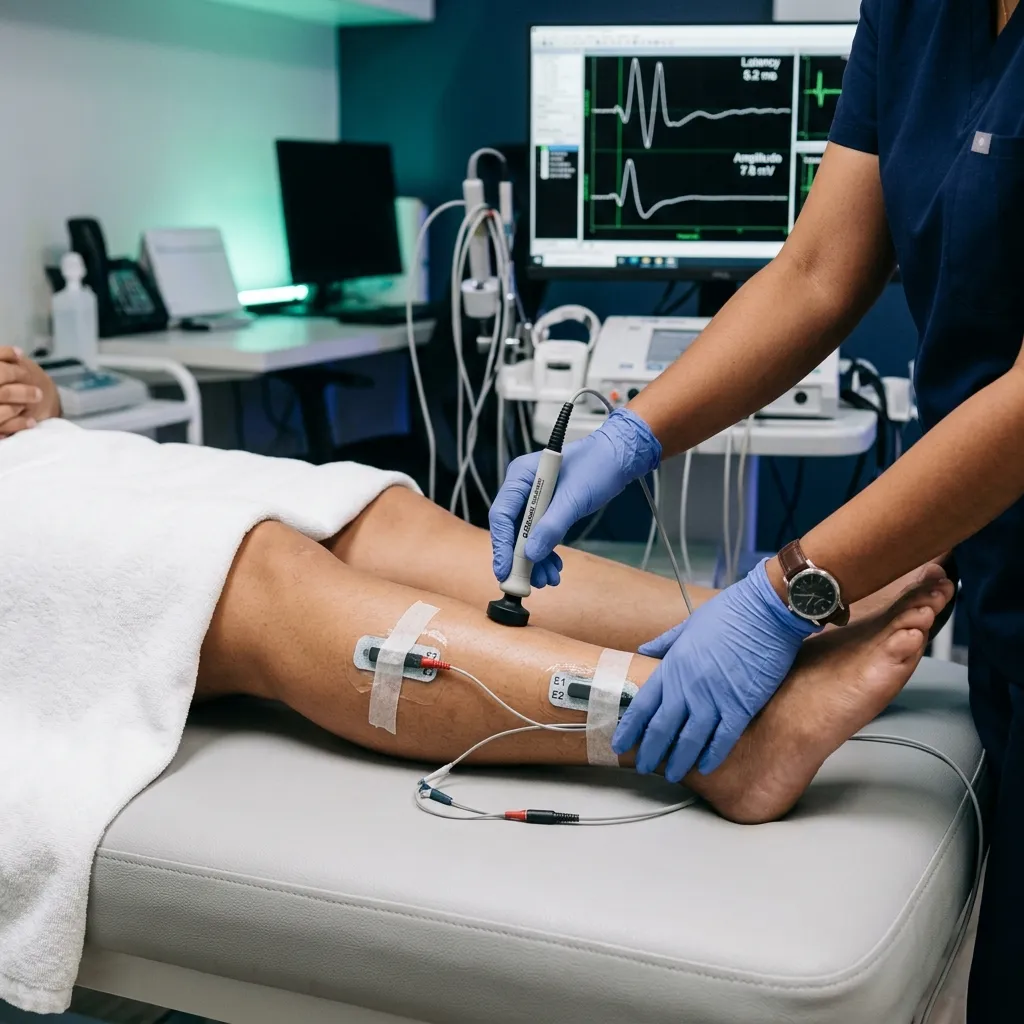
- — An EMG-NCV study is the only objective diagnostic tool that can physically differentiate temporary nerve bruising (Neuropraxia) from active fiber death (Axonotmesis).
- — Serial EMG-NCV studies are critical to track nerve regeneration speed (typically 1 millimeter per day) and guide targeted athletic rehabilitation.
After a hard impact to the outside of your knee, you stand up only to find that your foot feels unusually heavy, and you physically cannot lift your toes off the turf. You're forced to high-step just to avoid tripping. This is a highly debilitating condition known as foot drop, characterized by the physical inability to lift the front part of the foot (dorsiflexion).
A nerve injury is not a simple structural tear that can be verified on a standard X-ray or MRI scan. It is a functional disruption of your body's communication grid. A precision EMG NCV test is the absolute gold standard for mapping the severity of the damage and establishing a safe recovery pathway.
Common Peroneal Neuropathy at the Knee
The vast majority of sports-related foot drop cases are caused by compression or trauma to the common peroneal nerve. This nerve is a major branch of the sciatic nerve that travels down the back of the thigh and wraps tightly around the outer side of the knee, immediately below the joint line, hugging the neck of the fibula bone.
Because the peroneal nerve lies immediately beneath the skin with virtually no cushioning muscle, it is incredibly vulnerable to:
- Direct Impact: A hard kick, knee-to-knee collision, or impact from a fall directly crushes the nerve against the underlying fibula bone.
- Joint Sprains and Fractures: A severe ankle sprain or a fracture of the upper fibula can stretch or tear the peroneal nerve along its pathway.
- External Compression: Repetitive wear of tight athletic braces, shin guard straps, compression boots, or tight leg wraps can cut off the microscopic blood flow to the nerve, starving it of oxygen.
The Physics of Nerve Damage: Grading Severity
To design a successful athletic recovery plan, we must first determine the exact grade of the nerve injury. In physical medicine, we use the classic Seddon Classification to grade nerve trauma: Neuropraxia (temporary bruising), Axonotmesis (active fiber death, slow recovery), and Neurotmesis (complete severing, requires surgery).
The Role of EMG-NCV in Athlete Recovery & Return-to-Play
An electrodiagnostic study provides critical clinical answers by isolating the exact compression site, measuring conduction velocity and axon loss, and tracking real-time reinnervation long before an athlete can physically contract their muscle.
Map Your Nerve Recovery
Stop struggling with foot drop. Schedule a precision EMG-NCV study with Dr. Ben Rabara in Vigan City.
Physiatrist-Led Sports Rehab: Our Multi-Phase Protocol
At TeraCare Vigan, Dr. Ben Paolo Rabara combines state-of-the-art diagnostic mapping with advanced, non-surgical sports rehabilitation to return athletes safely to their peak performance. We immediately address the mechanical forces pinching the nerve. For foot drop, we utilize customized, lightweight Ankle-Foot Orthoses (AFO) and custom joint braces to stabilize the ankle, paired with targeted neurological physical therapy and gait training to prevent tripping while the nerve regenerates.
References & Clinical Evidence
- [1] Poage, C., Roth, C., & Grantham, B. (2016). Peroneal Nerve Palsy: Evaluation and Management. Journal of the American Academy of Orthopaedic Surgeons, 24(1), 1-10.
- [2] Preston, D. C., & Shapiro, B. E. (2020). Electromyography and Neuromuscular Disorders: Clinical-Electrophysiologic Correlations (4th ed.). Elsevier.
* Clinical references are provided to support the medical claims made in this article. TeraCare adheres to evidence-based practices in physical medicine and rehabilitation.

Dr. Ben Rabara
Dr. Ben Rabara is a Board-Certified Physiatrist specializing in Physical Medicine and Rehabilitation. He focuses on non-surgical, precision treatments for musculoskeletal conditions, utilizing advanced diagnostics like MSK Ultrasound.
Medical Disclaimer: The information provided in this article is for educational purposes only and does not substitute for professional medical advice, diagnosis, or treatment. Always consult a qualified physician for your specific health conditions.